Throttling Valve vs Control Valve: When Continuous Modulation Pays Off
A throttling valve and a control valve do the same hydraulic job: they hold back flow and drop pressure. Only the control valve is built to do it continuously under a signal. Throttle where flow is set once and left alone; use a control valve where the load moves and something has to follow it.
Search results for “throttling valve” are a dictionary entry, a Pinterest board, and two Facebook posts, which tells you how loosely the term gets used. The looseness hides a real decision, and most buildings get it wrong the same way: they throttle a circuit that should have been modulating, or buy modulation for a circuit whose flow never changes.
This covers throttling in HVAC, process liquid and steam service, and leaves out automotive throttle bodies and refrigeration expansion devices. Three criteria, one energy comparison, one body table, and a worked example you can redo with your own pump curve.
Key Takeaways
- A throttling valve sets a restriction and leaves it; a control valve moves the restriction on a signal and holds it against changing differential pressure.
- Three criteria decide the strategy: part-load hours, pump energy cost, and valve life. Nothing else moves the answer as far.
- Against a constant-speed pump, a throttling valve turns surplus pump work into heat, noise and seat erosion. Nothing recovers that energy.
- Shaft power falls with the cube of speed, so a drive at 60% speed needs about a fifth of design power. On a variable load that usually beats throttling.
- Throttling remains correct for fixed flow on a constant-speed pump. A page that only recommends modulation is a sales page, not an engineering page.
What a Throttling Valve Actually Is
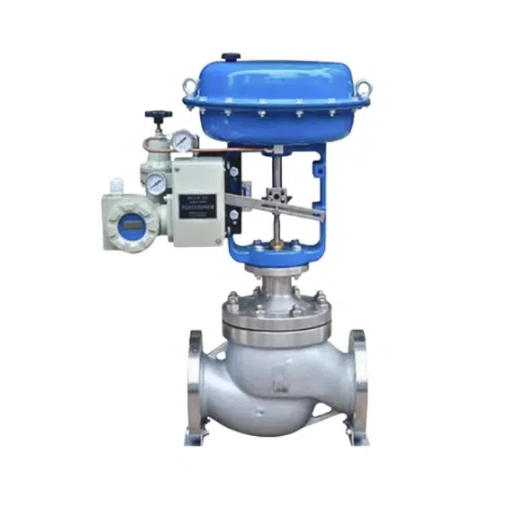
A throttling valve is any valve used to hold back flow by creating a deliberate restriction, so pressure drops across it, and downstream flow falls. The phrase describes a job, not a product family. Every valve sitting partly closed in a live circuit is throttling something.
Three Meanings, One Phrase
The term carries three meanings, and mixing them up is why so much of what ranks is a definition rather than an answer.
- The act. Any valve partly closed is throttling, whether it was designed for that duty or not.
- The device. A needle valve, globe valve, V-port ball valve, or orifice plate, chosen because restriction is the whole point of it.
- The product category. Mining chokes and turbine trip-and-throttle valves, which solve a different problem at a different pressure scale.
This article is about the first two, in buildings and process plants. Choosing a body rather than a strategy? The electric valve selection guide covers body type, torque, characteristic, and leakage class in the order a project meets them. What follows is the strategy decision underneath it.
What the Restriction Does to the Fluid
At the narrowest point, the vena contracta, velocity rises, and static pressure falls. Downstream, the flow re-expands and pressure stays low, because the energy in that drop went into turbulence and heat rather than useful work. Engineers treat the process as isenthalpic: specific enthalpy stays roughly constant.
Nitrogen throttled from 200 bar and 300 K to 1 bar arrives at about 270 K, the cooling that refrigeration depends on (Joule-Thomson effect). In a chilled or heating water circuit, that same drop is where cavitation starts.
Where the Phrase Gets Used Loosely
A gate valve half open is acting as a throttling valve, and it’s a bad one: the disc vibrates, the seat erodes, and the flow curve is useless for control. The difference between a throttling valve and a control valve isn’t what they do to the water. It’s what they’re built to keep doing.
Throttling Valve vs Control Valve: The Difference
The distinction is one sentence. A throttling valve is a passive restriction: somebody sets it, and it stays. A control valve is an actuated restriction: it takes a signal, moves to a position, and holds that position while differential pressure changes.
The first is priced for set-and-forget duty. The second carries characterised trim, an actuator sized against the real differential, position feedback, and a bus or analogue signal, because its job is to answer one question repeatedly: where should the restriction be right now?
The Three Strategies
Most comparison pages stop at two devices. The decision a project faces has three answers, and only two involve a valve.
| Strategy | What sets the restriction | Energy behaviour | Controllability | Typical failure |
|---|---|---|---|---|
| Fixed throttling valve | A manual setting locked at commissioning | Pump at full speed; surplus head dissipated at the valve | None once set | Re-adjusted by hand whenever load shifts |
| Modulating control valve | Controller signal, 0-10 V, 4-20 mA or bus | Pump at full speed; valve dissipates head the load doesn’t need | Continuous, follows setpoint | Poor valve authority, so flow barely changes |
| Variable-speed pump (VFD) | Pump speed, from differential pressure or flow | Pump power falls with speed; little dissipated | Continuous, slower to settle | Speed driven by one sensor, so other branches starve |
All Control Valves Throttle
All control valves throttle, but not all throttling valves control. A control valve at 40% travel is throttling. A manual globe valve at 40% open is throttling too, and will still be at 40% in July when the load halves. The difference isn’t the restriction; it’s the response.
One boundary, since the two ideas blur: whether a valve should modulate at all is a valve-type question covered in modulating control valve. Whether to restrict flow in the first place is the strategy question here.
The Three Criteria That Decide It
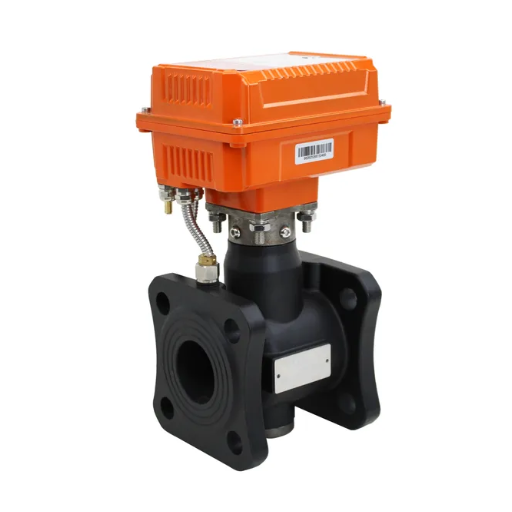
Three questions decide this, and none is “which valve is better”: how many hours the circuit spends below design flow, what the pump energy costs, and how long the valve must last.
Criterion 1: Part-Load Hours
If a circuit runs at design flow most of the year, a fixed restriction costs nothing and a modulating valve buys nothing. You’d pay for a control loop that never receives a command worth acting on. If it runs below design flow most of the year, a fixed setting becomes an annual maintenance task.
Criterion 2: Pump Energy
A valve throttling against a constant-speed pump converts pump work into heat and noise at the seat. The pump doesn’t know the valve is closed; it keeps pushing against a system that got harder to push through. This criterion decides valve versus variable speed.
Criterion 3: Valve Life
A throttling device wears where the pressure drop is: the seat and the plug, fastest when held near closed, because the whole differential acts across the smallest gap at the highest velocity.
What This Looks Like on a Real Circuit
Owen managed a twelve-storey office block with 96 fan coils on one constant-speed pump. The branch valves had been throttled at commissioning and left alone for four years. Every summer the fourth floor overheated while the ground floor ran cold, and every summer the answer was to adjust branch valves by hand behind two replaced seats.
The diagnosis wasn’t a valve fault. The pump was producing head the building didn’t need at part load, and the valves were absorbing it. A drive on the pump changed the behaviour in a week. The valves were fine; the strategy wasn’t.
Illustrative example, not a customer case study.
The Decision Table
| Situation | Part-load hours | Pump type | Recommended strategy | Why |
|---|---|---|---|---|
| Fixed design flow, no control loop, tight budget | Very few | Constant speed | Fixed restriction or balancing valve | A modulating valve would never receive a useful command |
| Variable load, existing constant-speed pump | Many | Constant speed | Modulating control valve, then check authority | The valve is the only device that can follow the load |
| Variable load, capital for a drive | Many | Variable speed | VFD with a control valve at minimum | Speed removes the head loss instead of dissipating it |
| Isolation only | Not applicable | Any | On/off valve | Throttling a valve built for isolation wears the seat |
When Throttling Is the Right Answer
Plainly, because most pages won’t say it: constant-speed pump, fixed design flow, no control loop, modest budget. A throttling or balancing valve is correct, and a modulating valve is money spent on capability nobody will use. That isn’t a compromise. It’s the right specification.
To learn more technical information, please read our article on control valve flow characteristics.
Throttling Valve vs Variable Speed: The Pump-Energy Argument
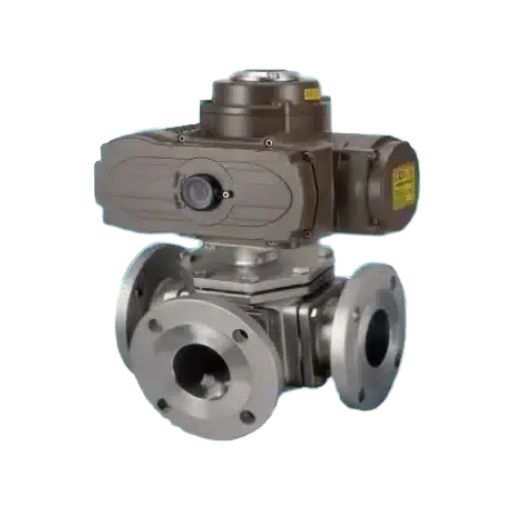
A variable-speed pump usually beats a throttling valve not because of manufacturer preference but because of geometry on the pump curve. The affinity laws put numbers on it: flow scales with speed, head with speed squared, and shaft power with speed cubed, at constant efficiency. Halve the speed and power falls to roughly one-eighth.
Throttling does something else. The pump stays at full speed, the valve adds head loss to the system curve, and the absorbed energy leaves as heat, noise, and seat wear. None of it is recovered.
A Worked Example With the Assumptions Printed
Take a constant-speed pump at 36 m³/h and 32 m head on a mostly dynamic circuit, at 70% pump efficiency. Hydraulic power is ρgQH, so 1,000 × 9.81 × 0.01 × 32 ÷ 0.70 gives about 4.5 kW at design.
Hold flow at 60% by throttling. The system needs 32 × 0.36, about 11.5 m, while the pump delivers roughly 35 m at that flow. Shaft power lands near 3.0 kW, and about 23.5 of those 35 metres sits across the valve, so roughly 2.0 kW is dissipated at the seat.
Run the same flow on a drive and power falls to 0.6³, or 21.6% of 4.5 kW, about 1.0 kW. Across 4,000 part-load hours, the gap is roughly 8,000 kWh, and the valve wasn’t doing anything with it.
Worked example with illustrative figures and stated assumptions, not a measured installation. Real results depend on the pump curve, the system curve, and how the drive is controlled.
The point isn’t the 8,000 kWh. It’s that the number is calculable before you buy anything, and nobody on the current search results page invites you to calculate it. Much of this load sits at the terminal level, where the fan coil valve control article makes the same argument. Air conditioning and fans account for nearly 20% of the electricity used in buildings and about a tenth of global electricity consumption, according to the IEA, so terminal decisions accumulate.
When the Drive Isn’t the Answer Either
Low part-load hours, a pump already at minimum, a circuit needing guaranteed minimum flow, or a capital programme that won’t carry a drive this year. Throttling then remains correct, and so does a three-way valve on a constant-flow branch.
Want this arithmetic with your own numbers? The control valve sizing method covers Kvs, valve authority, and the travel check, which is what turns the estimate above into a specification.
Thermodynamics of a throttling process with solved examples, from Question Solutions. It covers the physics, not valve selection.
What Continuous Throttling Costs the Valve
If the strategy is right, the cost is small. If it’s wrong, the valve pays for it.
Seat Erosion and Wire Drawing
At small openings, the whole differential acts across a narrow gap at high velocity, and the seat and plug erode. Engineers call it wire drawing. The visible result is a valve that no longer shuts off, which matters because a leaking control valve keeps passing energy into a zone that’s already satisfied. The fix is selection, not maintenance: a harder trim, a cage that breaks the pressure down in stages, or a larger valve running further open.
Noise and Cavitation
Cavitation starts when local pressure at the vena contracta falls below vapour pressure. The bubbles collapse downstream and take seat material with them. Throttling a liquid hard is the most reliable way to create the condition, and the noise is the announcement.
Marisol ran maintenance at a district heating substation where a steam valve had been held near 15% travel since commissioning. Her team replaced the seat every eighteen months and had accepted it as normal. It wasn’t: the valve was two sizes too large, so it lived in the worst part of its travel. One size down, running near half open, moved the wear point out of the damage zone.
Illustrative example, not a customer case study.
The Actuator and Maintenance Cost
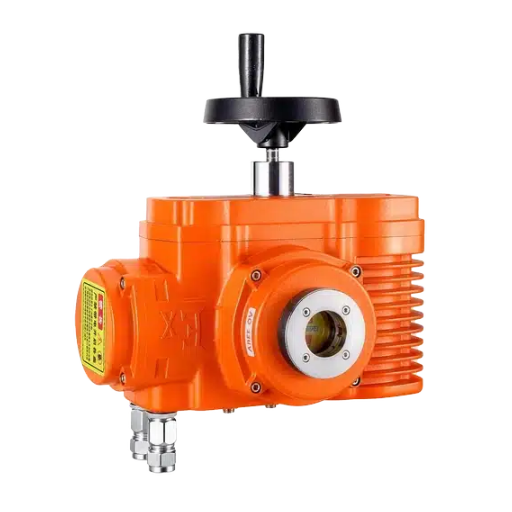
An on/off actuator asked to hold intermediate positions continuously, and its duty cycle becomes the life limit before the body does. On/off duty is a switch; modulating duty is a positioner, and the actuator spec follows from which one the circuit actually needs. And a valve replaced every few years isn’t cheap, whatever its purchase price, because the labour costs more than the seat.
Choosing the Body: Which Valve Actually Throttles Well
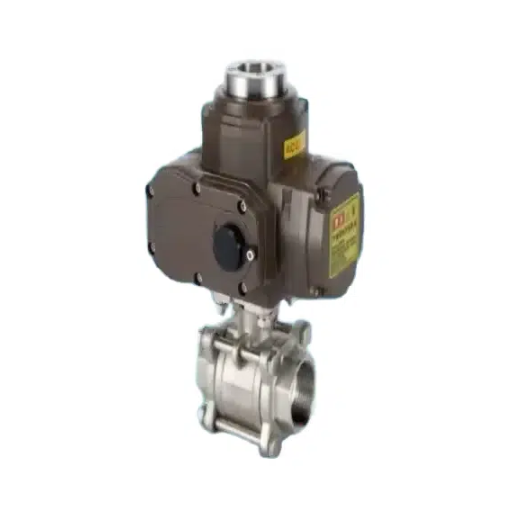
Once you’ve decided to throttle, the body has to tolerate it. Body differences are largest at part-open positions, which is where a throttling valve lives.
Globe Valves
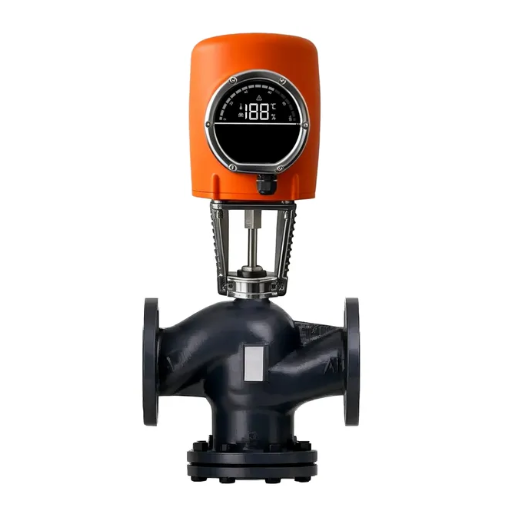
The globe valve is the usual choice for throttling in process practice, for physical reasons. The plug travels linearly, so travel maps predictably to flow. The trim can be characterised as equal percentage or linear. And the flow path turns twice, so it tolerates high internal velocity at part-open without disc flutter.
Black Ant’s electric globe control valves cover DN15 to DN150 in flanged PN25 bodies, working from −20°C to 220°C with leakage of 0 to 0.01% and linear or equal-percentage characteristic. Control is by 4-20 mA, RS485, or M-Bus, with saturated steam and thermal oil on the media list. The trade-off is real: more pressure drop when fully open than a gate or butterfly valve, so it isn’t an isolation device.
For a detailed comparison, please see our article on globe valve vs ball valve.
V-Port, Needle and Gate Bodies
A characterised port gives a predictable curve in a quarter-turn body, suiting projects that want a rotary actuator, tight shut-off and throttling in one device. A standard full-port ball valve partly open is a poor throttling device: the curve is steep near closed, and the seat sees the full differential. Black Ant’s electric ball valves run DN15 to DN300 at PN16 with a 1,200 kPa maximum shut-off differential, torque from 50 to 5,000 N·m, and equal-percentage, linear or quick-opening characteristics.
A needle valve sets a fine low flow with more turns of resolution, and an orifice plate gives a fixed, cheap, permanent drop with no moving parts. Both belong on the list, because the head term includes them. A gate valve does not: throttling one produces vibration and seat damage.
| Body | Throttling suitability | Why | Failure if mis-applied |
|---|---|---|---|
| Globe | Good | Linear travel, characterisable plug, flow path tolerates part-open velocity | Higher permanent pressure drop than a rotary valve |
| V-port or segmented ball | Good | Characterised port gives a predictable curve in a quarter-turn body | Standard full port gives a steep, unusable curve |
| Standard full-port ball | Poor | Curve is steep near closed; seat takes the full differential | Chatter and seat damage at part-open |
| Butterfly | Fair | Adequate at large DN and moderate differential, poor near closed | Disc erosion and noise when held near closed |
| Gate | Poor | Disc vibrates, seat erodes, no usable flow characteristic | Vibration and seat damage |
| Needle or orifice plate | Good for fixed duty | Fine resolution, or a permanent fixed drop | Cannot follow a changing load |
Industry practice based on body geometry. Black Ant specification figures come from the live product pages.
Weighing the two most common bodies against each other rather than against a control valve? Globe and gate bodies compared cover that ground properly.
Frequently Asked Questions
Is a throttling valve the same as a control valve?
No. All control valves throttle, but a throttling valve is set and left, while a control valve moves on a signal and holds position against changing differential pressure.
Which valve is best for throttling?
A globe valve is the usual choice in process practice. V-port ball valves throttle acceptably. Gate valves and standard full-port ball valves do not, because their curves and seats tolerate part-open service badly.
Does throttling a valve increase pressure?
No, it reduces pressure downstream. The drop leaves as heat, noise, and wear rather than being recovered, which is why the restriction costs energy against a constant-speed pump.
Can I throttle a gate valve?
Technically yes, practically no. Gate valves are isolation devices, and part-open service makes the disc vibrate and the seat erode. For a fixed restriction, use a globe or balancing valve.
Is a VFD always better than throttling?
No. A drive wins where load varies for many hours. With a constant-speed pump at fixed flow, throttling is cheaper, simpler, and correct, and a drive would sit at constant speed doing nothing.
Do throttling valves change temperature?
For gases and refrigerants, yes: the pressure drop cools the fluid through the Joule-Thomson effect. For water in an HVAC circuit, the change is negligible next to the heat the pump adds.
Conclusion
Run the three criteria in order. How many hours below design flow? What does the pump energy cost? How long must the valve last?
Those answers pick the strategy, and body type comes afterwards.
Here’s the sentence worth keeping: throttling isn’t the wrong answer, but throttling the wrong circuit with the wrong valve is. Every failed case I’ve seen is one of three: a fixed restriction on a variable load, a constant-speed pump doing work the valve then destroys, or a body selected for isolation and asked to modulate.
Tomas specified a three-way valve on a constant-flow branch last year, and his client’s consultant asked him to justify it twice. He was right both times: the branch needed constant flow. Telling a customer not to buy something is part of the job.
Illustrative example, not a customer case study.
Once you know the circuit needs a throttling valve, size it for the duty. Then send us the duty and the differential through our engineering contact. We’ll tell you which body we’d put on it, including the case where the answer is a plain balancing valve.
< class="ct-module-title">
Trending now