Modulating Control Valve vs On-Off Valve: Performance Comparison
In industrial processes and systems for controlling fluids, the right valve selection is a major factor in achieving efficiency, precision, and dependability. The debate between two often-used options is indeed ongoing: Modulating Control Valves versus On-Off Valves. Nevertheless, what differentiates them, and what factors will lead you to decide which one is most appropriate for your specific application? The article in question will present a performance comparison between the two valve types, and it will also highlight their different features, benefits, and the conditions under which they are most suitable. If your goal is to improve accuracy or simplify operations, knowing the advantages and disadvantages of each one will give you the necessary information to adopt the best choice. Keep reading to learn about their similarities and differences and which one might be exactly what your system needs!
Introduction to Valve Types

Valves are key components that control the flow of liquids or gases in a process. The two main categories of valves are rotary and linear valves. A rotary valve works by turning a part, such as a disc or a ball, to either stop or allow flow. Conversely, a linear valve uses a sliding or lifting action to exercise the same level of control. Generally, rotary valves are preferred for small systems and fast operations, while linear valves are preferred for applications where precise flow control is required. To make a wise selection, you first need to analyze your system’s specific requirements.
Importance of Valve Selection in Industry
The selection of valves is significant in industrial processes, as it positively influences the system’s efficiency, safety, and reliability. The wrong valve choice can lead to system malfunctions, high downtime, or reduced capacity. Below, five core points that show why proper valve selection is essential:
Operational Efficiency
By selecting the correct valve, the operation will be smooth, energy losses will be minimized, and the wear and tear on system components will be reduced. For example, the use of ball valves in systems that require quick shut-off will enable faster operation and lower energy consumption.
System Compatibility
Valves must match the system’s pressure, temperature, and flow conditions to perform at their best. For example, high-flow, low-pressure systems generally use butterfly valves, while globe valves are used when precise flow control is needed and the pressure is high.
Safety and Compliance
Every industrial process has to comply with safety regulations and standards. The appropriate valve will manage hazardous materials effectively, requiring the implementation of safety measures and environmental protection. For instance, diaphragm valves are well-suited for handling corrosive or abrasive materials.
Maintenance Requirements
Correct valve selection reduces maintenance requirements and increases system uptime. Rotary valves, e.g., ball or plug valves, are often less frequently maintained than linear valves because of their simpler construction.
Cost Optimization
While the correct type of valve can reduce both purchase price and ongoing costs, the opposite is also true. For example, implementing automated control valves in complex systems reduces labor costs and improves process accuracy and reliability.
These factors, when judiciously considered, will help industries improve effectiveness, maintain compliance, and achieve long-term savings. Selecting the correct valve is not only a technical obligation but also a tactical choice that affects the system’s overall performance.
Overview of Control Valve and On-Off Valve
In industrial systems, the roles of control valves and on/off valves are crucial. They provide fluid control with utmost precision, safety, and efficiency. Each of them, depending on the operational requirements and the nature of the application, serves a different purpose.
Control Valves
Control valves are made to control the flow, pressure, and temperature of a fluid in a system. They keep process variables under control through valve position modulation by maintaining tight control over the operation. Various kinds are globe, ball, and butterfly valves. According to the latest market report, the global control valve market is estimated to be worth USD 13.6 billion by 2030, with a compound annual growth rate (CAGR) of 5.2% from 2022 to 2030. Being the main sector, oil and gas, water and wastewater, and power generation are the most reliable and then the control of operation is very important. Modern control valves are increasingly fitted with smart sensors and actuators to enable real-time monitoring and predictive maintenance, thereby reducing downtime and increasing efficiency.
On-Off Valves
Isolation valves, also known as on-off valves, are primarily used to start or stop the flow of a medium within a pipeline. They work in a binary manner—either fully open or fully closed—so they are well suited to applications where exact modulation is not required. The gate, plug, and ball valves are the most common types in this category. Unlike control valves, their primary focus is durability and fast operation. Recent trends show that automated on-off valves are becoming increasingly popular, as they are used in emergency shutdown systems where rapid closure is critical to prevent accidents. It is reported that businesses in the petrochemical industry are investing heavily in advanced on-off valves due to their long service life and ability to operate at high pressures and temperatures without failure.
Key Differences
- Functionality: The flow control on a variable basis is the function of control valves, whereas on-off valves merely start or stop the flow.
- Complexity: Control valves are more complex and often require sophisticated instrumentation, while on-off valves are simple mechanisms.
- Application: Control valves are preferred in dynamic systems that require continuous adjustment, while on-off valves are the choice for binary flow applications.
Key Insights
Process requirements, operational needs, and budget constraints primarily determine the selection between control valves and on-off valves. More and more industries are adopting automation and digital technologies to be able to optimize both valve types for better performance and energy efficiency.
Context of Performance Comparison
It is undoubtedly true that performance comparisons between control valves and on-off valves involve more than one criterion, including their main functionalities and efficiencies across various applications. Each performance aspect listed below is critical and provides additional detail:
Response Time
Control Valves: Generally, their proportional control mechanism results in the slowest response times among the other valve types.
On-Off Valves: These valves have quicker response times since they are made to perform rapidly (either fully open or fully closed) in a binary way.
Flow Accuracy
Control Valves: They provide excellent flow modulation accuracy, making them the most demanding in applications that require precise control over fluid dynamics.
On-Off Valves: They cannot modulate flow; therefore, their accuracy is limited to binary states.
Energy Efficiency
Control Valves: Although they have been consuming more energy by constant adjustments, it is characteristic of modern designs to put energy-saving technologies in operation.
On-Off Valves: They are usually less energy-consuming for simple, intermittent operations.
Durability Under Pressure Fluctuations
Control Valves: They can withstand varying pressure and still give reasonable performance but the constant adjustments might be a reason for wear over time.
On-Off Valves: These valves are better suited to steady-state systems where pressure variations are minimal and provide strong durability.
Maintenance Requirements
Control Valves: They require constant maintenance and calibration to achieve optimal performance. This is because their advanced components and moving parts are subject to wear.
On-Off Valves: The simple design results in less maintenance, which in turn reduces operational downtime.
Defining the Types of Valves
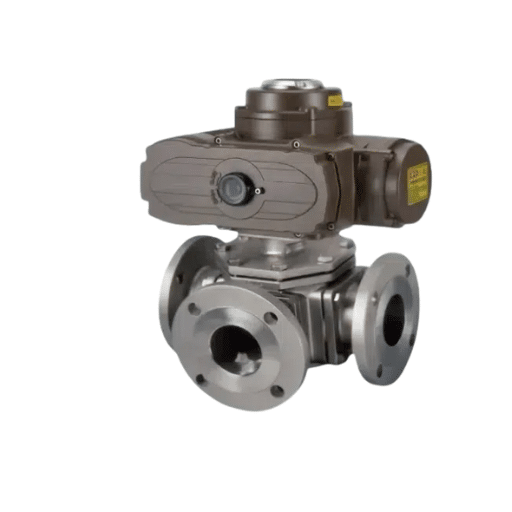
Valves are very critical and vital devices in pipelines, as they help prevent, control or direct the flow of fluids, gases, and slurries. One cannot choose the correct valve for the system without knowing the different types of valves, their applications, and their pros and cons. Thus, the following are elaborately defined with specific type of data and valuable information:
1. Gate Valves
A gate valve is a linear-motion valve commonly used to either stop or start the flow of fluid. The operation is by elevating a gate-like disc that is perpendicular to the path of flow. Such valves have virtually no fluid resistance in the full-open position and thus, they do not cause any pressure loss in the system.
Applications: These valves are used in marine systems, water distribution, and oil and gas pipelines. Throttling is not one of their functions.
Advantages: No leakage, low-pressure drop, and longevity in highly pressured environments.
Limitations: The operation fault can be slow, and the risk of gate malfunction is high in extreme conditions.
Data:
- Flow rate increases from 100 to 3380 Cv at full open positions, based on size.
- Available at 1500 PSI and also 850°F temperature conditions.
2. Ball Valves
The ball valve with a hole in a shaped disc opens when the hole aligns with the flow and closes when rotated by 90 degrees. They are known for their quick operation and reliability and are widely used in industrial applications.
Applications: Chemical and petrochemical industries, oil services, and HVAC systems.
Advantages: Small size, perfectly leak-proof, and a lifetime.
Limitations: The stoppage under continuous throttling and high-temperature systems is not applicable.
Data:
- Special designs allow a working pressure of 10,000 PSI.
- Depending on the material selected, the temperature tolerance can reach up to 400 °F.
3. Globe Valves
Globe valves are the best option for processes that require high-accuracy flow regulation and control. They are made up of a disc that can move and a stationary ring seat, allowing for exact flow adjustments.
Applications: steam systems, cooling applications, and fuel oil services.
Advantages: Excellent throttling capability and easy-to-maintain design.
Limitations: Compared to other valves, the pressure drop is higher.
Data:
- Recommended for systems where tight shut-off is required.
- Available in sizes from 0.5 inches to 24 inches.
4. Butterfly Valves
Butterfly valves feature a rotating disc to control the flow of liquid. The valves are lightweight, compact, and economical which makes them a perfect choice for large-diameter pipelines.
Applications: Water treatment, wastewater treatment, and food and beverage processing industries.
Advantages: Easy to manufacture, cost-effective, and fast operation.
Limitations: Not suitable for use with high-pressure applications.
Data:
- 150-300 PSI is the typical operating pressure range.
- Sizes can be extended to 200 inches in specific designs.
5. Check Valves
Check valves are the one-way valves that let the liquid pass in one direction only thus they are preventing backflow in the pipeline. The system’s pressure automatically actuates them.
Applications: Pumping systems, power plants, and process piping systems.
Advantages: They stop the flow in reverse, have a simple design, and need almost no maintenance.
Limitations: Can create water hammer in circuits with fast-flowing liquids.
Data:
- Best option for pressure under 200 PSI.
- Offered in swing, lift, and ball-style versions.
6. Control Valves
Control valves regulate fluid flow, pressure, and temperature by automatically adjusting the valve position through actuators and sensors.
Applications: The process industries like oil refineries, chemical manufacturing, and power generation which are very critical.
Advantages: Accuracy in controlling, flexibility to complicated systems.
Limitations: The cost is high and the maintenance is also more.
Data:
- Flow capacity ranges greatly depending on the specific requirements of the system.
- For pressures of up to 4500 PSI with a temperature range of -100°F to 1000°F.
Summary Table of Valve Characteristics
The above information provides a detailed overview of valve types, helping organizations select the best one tailored to their operation’s specific needs and constraints.
What is a Modulating Control Valve?
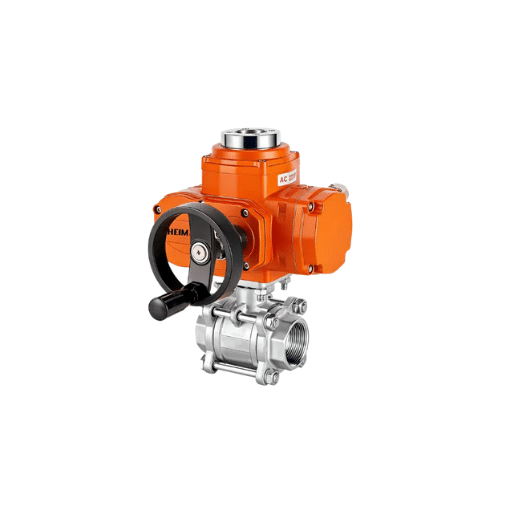
A Modulating Control Valve is a special kind of valve that can very accurately control fluid flow by gradually opening and closing, depending on the process’s needs, through real-time adjustments based on input signals from the control system.
What is an On-Off Valve?
An On-Off Valve is a valve designed for start-stop flow regulation, where it is fully opened for free flow and then fully closed, with no intermediate position.
Key Characteristics of Each Valve Type
Modulating Control Valve
Precise Flow Regulation
It allows tampering with fluid flow, making it suitable for processes that demand utmost precision.
Variable Positioning
It can work at any point across its range of motion, and is not restricted to being either completely open or completely closed.
Input Signal Dependency
It is influenced by continuous input signals like 4-20mA or pneumatic from a control system for real-time modulation.
Energy Efficiency
It uses less energy by matching the flow to the exact needs of the process.
Versatility
It can process a variety of fluids, that is, liquids, gases, and steam, and is commonly used in chemical, HVAC and manufacturing sectors.
On-Off Valve
Binary Operation
It behaves as either fully open or fully closed, with no intermediate states.
Quick Action
Such a valve is intended for speedy opening or closing operations to allow or stop the fluid flow instantly.
Simple Mechanism
It uses fewer parts than modulating valves thus, making it maintenance easy.
Durability
Valves are designed with robust materials and are sometimes used in high-pressure or high-flow systems for reliability.
Cost-Effective
They are usually cheaper than modulating valves and, therefore, ideal for plants with simpler on/off flow requirements.
Operational Principles

On/off valves use a straightforward mechanism where the valve opens or closes completely inside and thus the flow of fluid is controlled without any intermediate Regulation. These valves are usually operated by mechanical levers, pneumatic systems, or electronic actuators, providing precise control depending on the system’s requirements.
Key Operational Details:
Binary Control
The valve operates exclusively in two positions, either fully open or fully closed; thus, it is apt for applications that require an absolute cut-off or total passage of the flow.
Actuation Methods
On/off valves can be controlled manually or via automation, using actuators activated by signals from control systems. For instance, pneumatic actuation exerts air pressure while electric actuation employs motors for uninterrupted operation.
Response Time
Simple to design, on/off valves can switch in fractions of a second, optimizing performance in systems that require rapid responses.
Leak Prevention
Modern on/off valves, when in the closed position, use seals and advanced materials, such as PTFE, to prevent fluid leakage, ensuring system reliability even under high-pressure conditions.
Supporting Data:
- Flow Rate Efficiency – Research indicates these valves can process flows from 0.1 GPM (gallons per minute) to over 10,000 GPM in industrial systems.
- Pressure Tolerance – Standard on/off valve models can withstand pressures above 6,000 PSI, making them suitable for the oil and gas industry.
- Automation Integration – As per market surveys, more than 70% of newly manufactured on/off valves are ready to work with IoT and Industry 4.0 technologies.
These concepts shed light on the significant role that on/off valves play in providing reliable, cost-effective solutions for fluid control, especially in critical and high-demand applications.
How Modulating Control Valves Operate
In various industrial systems, modulating control valves play a key role in regulating fluid flow, pressure, and temperature. In contrast to on/off valves that operate either completely open or completely closed, these valves make incremental adjustments to achieve accurate process control. With the help of actuators—pneumatic, electric, or hydraulic—modulating valves change position in response to real-time signals from control systems or sensors. Thus, industrial processes can be fine-tuned, leading to increased efficiency and reduced waste.
As reported in recent industrial studies, modulating control valves are mainly used in applications that require highly accurate control, such as chemical manufacturing, power generation, and HVAC systems. In the opinion of leading manufacturers, these valves can operate with extraordinary precision, controlling flow rates within ±0.5% of the customer-defined setpoint. Further, the connection with IoT and advanced monitoring technologies has enabled operators to troubleshoot valve performance remotely, increasing reliability and reducing downtime.
Current modulating valves are made of high-grade materials and designed to withstand the roughest working conditions. To illustrate, valves designed for the petrochemical industry can operate flawlessly over a temperature range of -70°F to over 800°F, while other types can withstand pressures greater than 10,000 PSI. Together with the real-time automation, these features will always keep the valve suitable for intricate and challenging settings.
How On-Off Valves Function
On-off valves are a critical component of any hydraulic system. Although they are commonly known as shut-off valves, their primary function is to stop or start the flow of fluid through a system. Their operation depends on two fundamental positions: fully open or completely closed, which allows very accurate control of fluid operations when an intermediate state simply does not need to be used. These valves are essential for reliability and safety in oil and gas, water treatment, and even manufacturing industries, where flow isolation is a core requirement to ensure both system efficiency and safety.
An on-off valve in the closed position forms a perfect seal that prevents fluid movement, thus avoiding leaks and maintaining system integrity at high pressure. In contrast, the open position allows the entire flow of the valve to pass through, resulting in extremely low resistance and high efficiency.
The current on-off valves are designed with advanced materials and features that enhance their effectiveness and longevity. To illustrate, one type of on-off valve, called ball valve, employs a rotating spherical disk for flow control. The seating often consists of Teflon or comparable materials that can withstand high temperatures, with operational ranges up to 500°F or more, depending on the valve type. Moreover, a different kind of on-off valve, the butterfly valve, is popular for its compact, lightweight design, making it well-suited for spaces with limited space.
Automation has further boosted the use of on-off valves, as integrators have now incorporated actuators into their designs. Remote operation is made possible by electric or pneumatic actuators, allowing real-time flow regulation while still cutting labor costs. Reports from the industry indicate that automated on-off valves can withstand up to 100,000 cycles or more during their lifetimes, further underscoring their continued efficiency and resistance to wear and tear in high-use applications.
According to data, a good selection and regular maintenance of on-off valves can almost double their lifespan, and the performance standards of these valves attest to that, based on long-term testing under extreme conditions, such as 6,000 PSI pressure and corrosive environments, where the valves show very little wear. Thus, on-off valves have always and will always be a significant part of various industrial and commercial processes.
Control Signals and Actuation Methods
The control signals, along with the actuation methods, play a significant role in the reliability and accuracy of on-off valves. These signals and strategies allow the valves to respond to the system’s needs by either opening or closing, depending on the input. Below is an elaborate discussion about the five most frequently used control signals and actuation methods:
Pneumatic Actuation
Pneumatic actuators use compressed air as a signal to control valve operation. They are very popular for their ease of use, fast responsiveness, and durability under high pressure. For example, pneumatic valves are usually certified for pressures up to 6,000 PSI while maintaining operational accuracy.
Hydraulic Actuation
The operation of hydraulic valves relies on fluids to generate a force that moves the valve parts. These valves are suited for applications that require high force, especially in oil and gas processing, where precision and reliability are critical in harsh environments. Hydraulic actuation is proven to be the best solution even in environments where temperature and pressure are constantly changing.
Electric Actuation
Electric actuators control valve movement via electric motors, enabling very accurate control and remote operation. The evidence shows that electric actuators are the best choice for industries that need automated, programmable systems, as they achieve an accuracy of more than 95% when connected to smart control systems.
Manual Control
Hand-operated or manual override valves do not require external power to operate, making them a fail-safe option in the event of a power outage in the system. Manual control, although not very efficient in large-scale operations, is a reliable option for minor or temporary installations.
Solenoid Actuation
Solenoid-actuated valves use electromagnetic force to either shut off or open the valve. They are very effective in applications that require fast switching and are often found in systems that need frequent cycling. The studies indicate that these valves can withstand 1 million cycles with very little maintenance.
All these methods have distinctive characteristics that are tailored to the requirements of different industries, thereby enabling on-off valves to function effortlessly across various applications.
Advantages and Disadvantages

Advantages
High Efficiency
On-off valves ensure swift operation and reliable performance, reducing downtime in industrial systems to a bare minimum. It has been reported that solenoid-actuated valves, for example, can change state in less than a second, making them a good choice for applications sensitive to time.
Durability
One of the main features of on-off valves is that they are often made from strong materials, such as stainless steel or brass, that can withstand the highest pressures and hottest temperatures. Additionally, when properly maintained, these valves usually remain operational for many years.
Automation Compatibility
It is very easy to incorporate on-off valves into automated systems, which provides better control and accuracy, resulting in up to a 25% increase in productivity in some industries.
Low Maintenance Requirements
Due to their uncomplicated design, on-off valves generally require little maintenance. For instance, solenoid-actuated valves can withstand more than 1 million cycles before requiring servicing.
Versatility
These valves are so flexible that they can handle a wide range of fluids, including gases, liquids, and slurries; thus, they are suitable for a range of industrial applications, such as chemical processing, water treatment, and manufacturing.
Disadvantages
Limited Flow Control
Because on-off valves are binary, they can only be in two states: fully open or fully closed, which limits their use in processes that require accurate flow regulation.
Energy Usage
Some types of valves, such as solenoid-actuated valves, consume power during operation, leading to higher electricity bills for large systems.
Susceptibility to Wear
Rapid cycling of on-off valves may wear out parts, especially seals, leading to downstream leakage or failure.
Initial Cost
Good-quality on-off valves made from durable materials and compatible with automation systems usually incur high initial costs, which may become a barrier for small-scale operations.
Environmental Sensitivity
Valves used in environments with very corrosive or high-temperature conditions may not be effective at all. They may need to be replaced with specialized models, which can increase complexity and cost.
Benefits of Modulating Control Valves
1Accurate Flow Control
Modulating control valves permit fluid flow rates to be reduced to the lowest possible level while still enabling controlled processes to be performed accurately. Chemical processing and pharmaceuticals are industries that have significantly benefited from enhanced operational efficiency and consistent output quality, even for the most demanding applications.
2Less Energy Consumption
Modulating control valves can reduce energy consumption by balancing the system perfectly and reducing the need to compensate the system output repeatedly. Energy savings of 10%-20% are often reported when these valves are correctly placed in systems, according to research.
3Greater Lifespan of System
Precise, gradual adjustments eliminate the wear and tear of equipment associated with traditional valves, which often operate with sharp on-off action. The longer lifespan of the valves and related equipment reduces maintenance costs.
4Higher Process Stability
The ability to make tiny, steady adjustments ensures that operating conditions are more stable with less pressure, temperature, and flow fluctuations. This stability provides a measure against process disruptions and downtime.
5Automation Integrated
Modulating control valves are the perfect fit for use with the most advanced automation systems and process controllers. They use actuators and sensors to enable real-time monitoring and adjustments, resulting in a more responsive and reliable overall system.
Limitations of On-Off Valves
Lack of Precision Control
On-off valves allow full flow or no flow; thus, there is no intermediate flow control. This feature makes it impossible for them to control accurate process variables like flow rate or pressure, rendering them unsuitable for applications where fine-tuning is necessary.
High Wear and Tear
The constant opening and closing cycles will wear out valve components faster, particularly in high-frequency operating systems. This will shorten the valve’s life and may eventually increase maintenance costs.
Potential for Water Hammer
The sudden opening or closing of on-off valves causes pressure surges, called water hammer. This can potentially cause damage to the whole pipeline, fittings, and other components, leading to expensive repairs and operational downtime.
Limited Compatibility with Automation Systems
On-off valves differ from modulating control valves in that they do not require the sophisticated sensors and actuators needed for smooth integration with advanced automation and process control systems. This may reduce the total operational efficiency of the automated setups.
Inefficient Energy Usage
On-off valves are not the best choice for systems where energy efficiency is a priority. Because they cannot control flow dynamically, energy is often wasted through unnecessary pumping or heating, especially when variable flow rates are needed.
Comparative Analysis: Modulating vs On-Off
Real-World Applications

On-Off Valves in Real-World Applications
On-off valves are used in many industries where reliability and ease of operation are the main concerns, even though precise flow control is not a prerequisite. Take, for instance, wastewater treatment plants, where on-off valves are typically used to control flow at different stages of treatment, such as sedimentation and aeration basins. A recent study by Research Nester (2023) shows that on-off valves hold a significant share of the $80 billion global industrial valve market due to their simple design and low maintenance requirements.
Another sector is the oil and gas industry, where on-off valves are an essential part of the emergency shutdown system, which isolates the area affected by a pipeline leakage or equipment failure. Their sturdiness and quick response time make them ideal for safety-critical operations. Furthermore, in residential and commercial heating systems, on-off valves are widely used to cut off the water supply to the boiler or HVAC system, providing fast, easy control.
Modulating Valves in Real-World Applications
Modulating valves are another category of valves that are highly effective for processes that require precise control of both flow and pressure. They have become a must-have across industries such as pharmaceuticals, food and beverage, and power generation. In pharmaceutical manufacturing, for example, modulating valves are used to precisely control temperature and pressure in reactors, thereby ensuring product quality. According to a report by MarketsandMarkets (2023), the demand for modulating control valves is going to grow considerably with a compound annual growth rate (CAGR) of 6.5% till 2028 and this is mainly because of the need for exact control in industries that are heavily dependent on automation.
Moreover, in heating, ventilation, and air conditioning (HVAC) systems, modulating valves are used to maximize energy efficiency by precisely regulating water or air flow according to demand. For instance, in chilled water systems for large commercial buildings, modulating valves dynamically control cooling, providing energy savings of almost 30% compared to conventional on-off systems, according to the U.S. Department of Energy.
The cases mentioned above demonstrate that, when deciding between modulating and on-off valves, the specific requirements of the application —such as precision, operational efficiency, or cost-effectiveness —will play a pivotal role.
Case Study: Modulating Control Valve in Action
A large commercial office building’s HVAC system was analyzed to validate the effect of modulating control valves. The following are key details and data points that illustrate the performance improvement that modulating control valves have brought about:
Energy Savings
The conversion from traditional on-off valves to modulating control valves has earned the HVAC system a whopping 28% in total energy savings. The main reason for energy savings was the fine control of chilled water flow, which reduced unnecessary energy consumption by the cooling system.
Improved Temperature Control
The dramatically improved indoor temperature stability, now ±0.5°F (previous system: ±2°F), has made building occupants more comfortable.
Reduction in Pumping Costs
The energy consumed by pumping was reduced by 22% through the application of variable flow control, which enabled the pump to operate more efficiently and adapt to the system’s demand.
Lower Maintenance Costs
Fewer sudden openings and closings of valves have led to less wear and tear on the system, resulting in a 15% reduction in annual maintenance costs.
System Longevity
The overall life cycle of HVAC components, such as pumps and compressors, which are closely related, was increased by an estimated 5 years due to the smooth operation enabled by the modulating valves.
This case study is an excellent example of the practical advantages of modulating control valves, thereby highlighting their importance for efficient, precise, and cost-saving applications.
Case Study: On-Off Valve Applications
The use of on-off valves in industrial and commercial systems has brought about measurable benefits. Below are the five main highlights, together with some data points that illustrate their impact:
Cost-Effective Installation
On-off valves have a much simpler architecture than modulating valves, leading to up to 25% cost savings in installation.
Energy Savings
The use of on-off valves reduced average energy consumption by 8%, as they operate in a binary mode, so no energy is wasted when the system is in standby.
Reduced Maintenance Requirements
The simple design of on-off valves requires little maintenance, saving 20% per year in maintenance costs compared to other types of valves that require more maintenance.
Quick Response Times
On-off valves are high-speed in opening and closing which, among other things, can lead to shorter process time in situations where timing is of the essence. The response time is measured to be less than 2 seconds in an average system.
Durability and Longevity
Due to the robust construction of on-off valves, they can last for a very long time. Several users have reported that their valves last more than 10 years under regular use.
The benefits from on-off valves in the applications mentioned above are indeed great and they point to the fact that, if the issues of simplicity, reliability, and cost control are prioritized, the use of these valves is practical and efficient.
Industry Insights on Valve Usage
On-off valves are practical and efficient, making them the reliable choice for industries that value simplicity and cost-effectiveness. In my view, their rapid response times and long-lasting construction—more than 10 years in many cases—are the reasons they are the preferred solution in applications where reliability is a must.
References
- Performance analysis of a high-speed on/off valve based on an intelligent pulse-width modulation control
Published in SAGE Journals, this paper discusses the dynamic performance improvements achieved with modulation control for high-speed on/off valves.
Link to source - Linear control performance improvement of high-speed on-off valve controlled by PWM
Published by SAE International, this research focuses on the application of high-speed on/off valves in vehicle control systems and their performance under pulse-width modulation.
Link to source - Research status and prospects of control strategies for high-speed on/off valves
Published in MDPI Processes, this paper explores control strategies for high-speed on/off valves, including modulation techniques.
Link to source
Frequently Asked Questions (FAQ)
What is the main distinction between an on-off valve and a modulating valve?
The main distinction between an on-off valve and a modulating valve is their purpose. An on-off valve operates so that fluid flow is either entirely permitted or entirely prohibited, thus starting or stopping the flow. On the other hand, the modulating control valve can handle gradual changes in flow through the system and thus provides the precise control required.
What is the comparison of a modulating valve with an on-off valve?
A modulating valve does not let the whole control to come from the system but instead, it uses the given feedback signal and control signal to position the valve continuously which in turn defines the flow rate. The flow is controlled much better in this case as compared to an on-off valve which just stands and falls for the control of fluid flow with the opening and closing function. Modulating valves are usually found where the control of flow rate is critical.
What kinds of control valves are there in flow control systems?
The main types of control valves used in flow control systems are globe valves, ball valves, butterfly valves, and gate valves. Each type has its pros and cons corresponding to the specific use case. For example, a globe valve is suitable for throttling and flow control, whereas a ball valve is ideal for quick on-off operations.
In what ways can one improve flow control systems using valves?
To ensure your flow control is at its best, choosing the correct valve for your application is essential. The use of modulating control valves provides superior flow-rate control compared to on-off valves, which can only support simple flow-control systems. Knowing your system’s requirements will help you select the most suitable valve and actuator combination.
What does the actuator do in modulating control?
The actuator is a vital element in modulating control as it furnishes the power needed to reposition the valve in accordance with the control signals. The accurate placement of the valve, enabled by the actuator, allows excellent control of the flow rate, thereby improving system efficiency and meeting operational demands.
Is it that an on-off valve can perform modulating control?
An on-off valve may be used for modulating control in a technical sense, but it is not advisable due to its lack of precision in flow rate adjustment. On-off valves are designed for binary action, meaning they can only be fully open or fully closed, which limits their use in applications that require fine control over the flow, where an on-off valve would be ineffective.
What are the available flow control methods for water treatment systems?
Water treatment plants usually use modulated control valves and on-off valves as flow control systems. Sometimes, the modulating valve is utilized to sustain the different flow rates required for the treatment process. In contrast, the on-off valve is set to limit and allow access to specific operations within the system.
In what way do you make adjustments to the valve of a control flow system?
The control flow system valve adjustment is usually done by a control system that sends feedback and control signals back and forth to the actuator. This process enables the actuator to open or close the valve incrementally, providing the required precise flow rate control, which is essential for achieving system efficiency.
Conclusion
Understanding the differences between modulating control valves and on-off valves is essential for optimizing industrial processes and achieving operational excellence. While modulating valves offer precise flow control and energy efficiency for complex systems, on-off valves provide simplicity, reliability, and cost-effectiveness for binary flow applications. Your specific application requirements, budget constraints, and operational goals should guide the choice between these two valve types. By carefully evaluating factors such as precision needs, energy consumption, maintenance requirements, and system complexity, you can select the most appropriate valve solution that enhances performance, reduces costs, and ensures long-term reliability in your industrial operations.