
Centralized Meter Reader: Advanced Remote Metering SolutionIntelligent Data Collection for Utilities Management
A comprehensive remote metering system designed for heat, water, electricity, and gas utilities, enabling seamless data collection and transmission across multiple communication networks.


Features of Centralized Meter Reader
Our centralized meter reader combines cutting-edge technology with reliable performance to deliver efficient utility management solutions across various industries.
Built with advanced ARM processors and real-time operating systems, featuring lightning protection and EMC anti-interference design. Ensures stable operation with hardware watchdog for automatic recovery from anomalies and power failures.
Multiple upstream data transmission methods including 4G, 5G, LAN (Ethernet), and WiFi connectivity. Choose the most suitable network solution based on your deployment environment and infrastructure requirements for reliable data transmission.
Supports mainstream domestic and international water, electricity, heat, and gas meters. Compatible with CJ/T188 and Modbus protocols, providing M-Bus and RS485 interfaces for flexible device integration across different utility systems.
Automatic scheduled meter reading with protocol parsing, offline operation capability, and local data storage. Supports fault reporting, real-time clock synchronization, and breakpoint resume transmission to ensure complete data integrity and reliability.
Our Centralized Meter Reader Models
We offer a comprehensive range of centralized meter reader models tailored to meet diverse utility monitoring requirements.
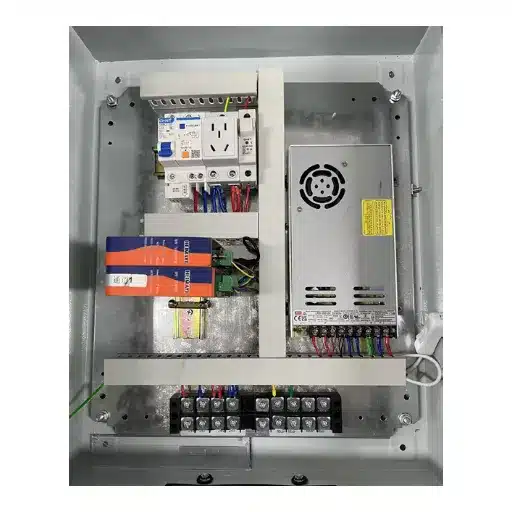
HGC Centralized Supermeter
Benefits of Using Centralized Meter Reader
Implementing our centralized meter reader system delivers significant operational advantages and cost savings for utility management across residential, commercial, and industrial applications.
Detailed Technical Specifications
| Category | Basic Model |
|---|---|
| Processor & Storage | 32-bit industrial processor: 256KByte RAM & 16Mbits Flash (standard); |
| Optional: 256KByte RAM, 256KByte RAM & 64Mbits Flash & 32Mbits Flash; | |
| 256KByte RAM & 48Mbits Flash; | |
| Supported Protocols | CJ/T188, EN1434-3, Modbus, DL/T645-2007, DL/T645-1997; |
| M-BUS Data Format | Baud rate: 1200bps~9600bps, 8-bit, 9-bit data bits; Odd/Even/None parity; 1 stop bit; |
| M-BUS Load Capacity | Provides 150W, 350W, 600W, 800W four load specifications; |
| Note: If the static current of each M-Bus device is 2 mA, 60~250 M-Bus devices can be loaded respectively; | |
| If more load is needed, it can be increased by adding M-Bus load modules; | |
| RS485 Data Format | Baud rate: 1200bps~9600bps, 8-bit, 9-bit data bits; Odd/Even/None parity; 1 stop bit; |
| RS485 Load Capacity | Provides 128-point load specifications; |
| M-BUS Bus Voltage | High voltage: 36V, Low voltage: 20V; |
| Upstream Communication | Upstream communication supports 4G, 5G, LAN (Ethernet), WIFI, any one can be selected; |
| Downstream Interface | Downstream communication supports: RS485 interface, M-Bus interface, LoRa. Other interfaces: RS232 (debugging interface); |
| Data Storage | Data storage time: 100 years, Data storage capacity: Standard 16M; |
| Meter Reading Current/Voltage | Voltage: DC12V, Current: 1.5A, Power: 1.8W; |
| Meter Box Voltage | Voltage: AC220, Current: 3A; |
| During centralized meter reading, M-Bus module, DTU operation, average power <20W; | |
| Operating Temperature | -20°C ~ 80°C; |
| Operating Humidity | 5~90% (non-condensing); |
| Clock | Clock error: <5s/d, Normal operation time after power failure: ≥ 36 months; |
| Box Dimensions | 400300150MM. Can be adjusted according to project requirements; |
| Waterproof Rating | Standard IP54, Can be upgraded to IP65 as needed; |
Uses and Applications of Centralized Meter Reader
Our centralized meter reader systems are deployed across diverse industries and sectors, providing reliable utility monitoring solutions for various metering requirements.
Heat Supply Management
Ideal for district heating systems and thermal energy monitoring. Supports remote reading of heat meters and ultrasonic heat meters, enabling efficient heat consumption tracking and billing management across residential and commercial properties.
Water Utility Operations
Perfect for municipal water supply networks and building management. Collects data from multiple water meters simultaneously, monitoring consumption patterns and detecting anomalies for improved water resource management and leak detection.
Electricity Metering Systems
Designed for power distribution networks and smart grid applications. Enables centralized collection of electricity meter data, supporting demand management, load monitoring, and accurate billing for residential, commercial, and industrial consumers.
Natural Gas Monitoring
Suitable for gas distribution companies and pipeline networks. Facilitates remote gas meter reading and valve control, ensuring safe operations, consumption tracking, and efficient management of natural gas supply infrastructure.
Positive Displacement Water Meters: How They Work
A worn positive displacement water meter doesn’t fail. It keeps turning, keeps billing, and quietly under-reports. A burst main gets…
Choosing a 4-20 mA Signal Isolator for Pressure Transmitters: Ground Loops and Active/Passive Inputs
Choose a 4-20 mA signal isolator by matching the power roles on both sides, the required isolation boundaries, and each…
NAMUR NE43 for Pressure Transmitters: Fault Current vs Measurement Saturation
NAMUR NE43 separates failure signals from pressure readings in an analog current loop. At saturation, the transmitter has reached its…
Maintenance and Care for Centralized Meter Reader
Conduct periodic checks of system status through the embedded web server or management software. Monitor communication quality, data transmission rates, and device connectivity. Review fault reports promptly and verify that automatic time synchronization functions correctly to maintain accurate meter readings.
Ensure the meter reader box remains sealed and protected from moisture, dust, and extreme temperatures. Verify waterproof rating compliance and inspect cable entry points regularly. Maintain ambient temperature within -20°C to 80°C operating range and humidity levels below 90% non-condensing for reliable system operation.
Utilize remote online upgrade capabilities to keep system software current with latest features and security patches. Schedule firmware updates during low-activity periods to minimize service disruption. Backup configuration settings and historical data before performing major updates to prevent data loss and ensure quick system recovery.


Why Choose Our Centralized Meter Reader
Our centralized meter reader stands out in the market with proven reliability, advanced technology, and comprehensive support. Engineered for demanding utility environments, it delivers consistent performance while offering flexibility for future expansion and integration with evolving metering infrastructure.
Frequently Asked Questions (FAQs)
Find answers to common questions about our centralized meter reader systems, their capabilities, and implementation process.
01
01
Our system supports mainstream domestic and international water meters, electricity meters, heat meters, gas meters, ultrasonic heat meters, and flow meters. It’s compatible with devices using M-Bus or RS485 interfaces and supports CJ/T188, EN1434-3, Modbus, DL/T645-2007, and DL/T645-1997 protocols.
02
02
The capacity depends on the load specification selected. For M-Bus connections, with 150W-800W load options available, you can connect 60-250 M-Bus devices (assuming 2mA static current per device). For RS485 connections, the system supports up to 128 data points. Additional M-Bus modules can be added to increase capacity.
03
03
The system offers multiple upstream communication options including 4G, 5G, LAN (Ethernet), and WiFi. You can select the most suitable method based on your deployment environment and existing infrastructure. Downstream interfaces include RS485, M-Bus, LoRa, and RS232 for debugging.
04
04
Yes, the centralized meter reader supports offline operation with local data storage capacity. Data can be cached locally during network interruptions and automatically uploaded to the management center once connectivity is restored through the breakpoint resume transmission feature.
05
05
The system features local data storage with 100-year retention capability and standard 16M storage capacity. It includes automatic time synchronization, fault reporting functions, and breakpoint resume transmission to ensure complete data integrity even during network disruptions.
06
06
Absolutely. The system supports remote online upgrades, configuration, and maintenance. An embedded web server allows browser-based management, and the monitoring center can remotely access real-time meter data, fault information, and control devices like motorized valves and switches.
07
07
The meter reading current is DC12V/1.5A with 1.8W power consumption. The meter box operates on AC220V/3A with average power consumption below 20W during operation. It operates in temperatures from -20°C to 80°C and humidity levels of 5-90% (non-condensing). Standard waterproof rating is IP54, upgradeable to IP65.
