
Balancing Valves – Hydronic Balancing SolutionsMeet the Balancing Valve: Total Smart—absolute Peace of Mind
Using IoT and advanced sensors, our balancing valves optimize energy use, improve reliability, and provide actionable insights. Remote management and performance analysis enable proactive maintenance, lower energy costs, and greater peace of mind.

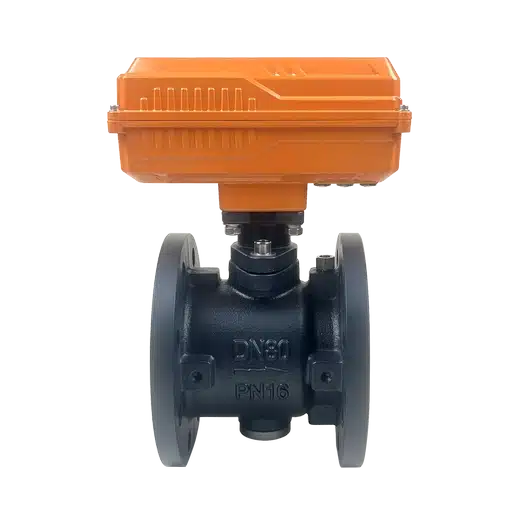
Installation process of our Balancing Valves
Learn how to properly install our balancing valves with our step-by-step guide. Ensure optimal performance and efficiency in your HVAC system.
A successful deployment starts with careful pre-installation planning and site preparation. This includes assessing system requirements to choose the right Balancing Valve model, connection type, and communication protocol (M-Bus, RS485, NB-IoT, or 4G). It’s essential to ensure the valve’s temperature and pressure ratings match the operational conditions.
Once the site is prepared, begin by mechanically securing the valve to the pipeline. The valve’s design matches industry-standard footprints, simplifying retrofitting for system upgrades. After the mechanical work, establish power and communication. For wired models, connect to the M-Bus or RS485 network using the provided diagrams. For wireless models, insert the long-life battery, position the antenna for optimal signal, and activate the communication module.
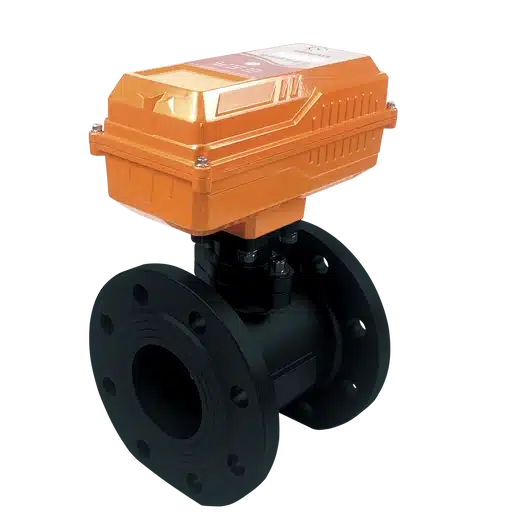
With the valve installed, commissioning brings the device to life and integrates it into the control system. The process begins with powering up the unit and running diagnostic checks via its LCD screen or commissioning software. Operators then configure the valve’s key operational parameters. Finally, the valve is connected to the central management platform—whether a Building Management System (BMS), SCADA software, or a cloud dashboard—for unified, intelligent control.
The final phase ensures flawless performance and equips the end-user team to manage the system effectively. This includes comprehensive functionality tests, such as full-range actuation to confirm the valve’s mechanical response to commands. All digital functions are checked to ensure accurate remote monitoring, reliable alarm transmissions, and proper data logging. After testing, a formal handover provides complete documentation and training for site operators and maintenance teams.
Our Smart Balancing Valve Models
Explore our range of smart balancing valve models designed for optimal efficiency and control in HVAC systems. Find the perfect solution for your needs.”

V9 Unit IoT Intelligent Valve
Choosing the Right Balancing Valve for Your HVAC System
Discover how to select the optimal balancing valve for your HVAC system. Learn about different types, their functions, and key considerations for improved efficiency and performance.
Detailed Technical Specifications
| Feature | V9 IoT Balancing |
|---|---|
| Communication | V901: M-Bus/RS485 |
| V902: NB-IoT/4G Cat.1 | |
| Power Supply | Wired DC24V or Battery DC3.6V |
| Aperture Control | Optional, 0–100% |
| Temp. Sensing | Optional, dual probes |
| Protection Rating | IP67 (IP68 optional) |
| Body Material | 304 SS / Carbon Steel / Ductile Iron |
| Output Torque | 80–1000 N.m (Customizable) |
| Display | Scale Display + Manual Interface |
Uses and Applications of Balancing Valves
Balancing valves are a type of valve used in various applications to regulate the flow and pressure of fluids such as water, steam, or gas. These valves play a crucial role in maintaining optimal functioning and efficiency in systems involving fluid movement. They work by adjusting the flow and direction of the fluid, ensuring that all parts of the system receive an equal amount of fluid and operate at appropriate pressures.
District Heating and Utilities
Balancing Valve supports utility companies in optimizing network-wide heat or water delivery, enabling remote monitoring and control of supply and return lines. Enhanced data acquisition drives proactive maintenance and leak detection while reducing operational losses.
Building Automation and Smart Buildings
Integration with building management systems is seamless. The Balancing Valve ensures automated regulation of heating and cooling circuits, optimizing energy use for commercial complexes, office buildings, and multi-tenant residential facilities.
Industrial Process Control
Maintain precise control over fluid distribution, pressure, and operational safety. Balancing Valve’s robust communication protocols and data tracking make it a reliable choice for manufacturing plants, chemical processing, and food and beverage operations.
Retrofit Projects
Balancing Valve’s dual protocol compatibility (wired and wireless) makes it suitable for both new installations and retrofitting existing systems, offering a flexible, low-impact upgrade path for legacy heating, cooling, and utility control infrastructure.
Positive Displacement Water Meters: How They Work
A worn positive displacement water meter doesn’t fail. It keeps turning, keeps billing, and quietly under-reports. A burst main gets…
Choosing a 4-20 mA Signal Isolator for Pressure Transmitters: Ground Loops and Active/Passive Inputs
Choose a 4-20 mA signal isolator by matching the power roles on both sides, the required isolation boundaries, and each…
NAMUR NE43 for Pressure Transmitters: Fault Current vs Measurement Saturation
NAMUR NE43 separates failure signals from pressure readings in an analog current loop. At saturation, the transmitter has reached its…
Learn About Our Balancing Valve Compatibility and Integration Options
The balancing valve’s digital architecture is built for universal connectivity, allowing it to integrate seamlessly into virtually any control and monitoring ecosystem, from traditional industrial setups to modern iot platforms.
Open for Customization: For bespoke system requirements, the valve supports standard APIs for straightforward custom software development and offers the option for custom interface development to ensure perfect alignment with proprietary platforms.
Broad Protocol Support: The valve supports a full spectrum of communication protocols to bridge the gap between legacy and modern infrastructure. This includes wired options like M-Bus and RS485 for robust industrial control, as well as wireless options like NB-IoT and 4G Cat.1 for wide-area IoT deployments.
Multi-Platform Integration: Designed for high-level system integration, the valve can easily connect to and be managed by enterprise-grade platforms such as SCADA (Supervisory Control and Data Acquisition) and BMS (Building Management Systems).
The balancing valve is engineered for maximum physical compatibility, ensuring it can be installed in a wide array of new and existing systems with minimal effort. Its design focuses on accommodating diverse mechanical and power requirements.
Retrofit-Friendly Construction: The valve is specifically designed for easy upgrades. It features a low-profile actuator and is supplied with adapter kits, ensuring it can serve as a direct, hassle-free replacement for most legacy manual or electric valves, significantly reducing installation time and complexity.
Comprehensive Size and Material Options: The product line covers a vast range of sizes, from DN15 for small-scale residential plumbing to DN350 for large industrial pipelines. To match specific system needs and local standards, valve bodies are available in national standard brass, stainless steel, and cast iron, with both threaded and flanged connection variants.
Flexible Power Supply: Acknowledging that power availability varies by site, the valve is offered in two configurations: a DC-powered option for locations with a stable power source and a long-life battery option for remote or difficult-to-wire installations.
To ensure trust, safety, and successful implementation worldwide, the product is backed by internationally recognized certifications and a robust support system for customers and integrators.
Comprehensive Documentation and Support: To facilitate smooth installation and integration, every valve is accompanied by comprehensive installation manuals and detailed integration guides. For more complex or custom projects, dedicated engineering support is available to provide expert guidance and ensure project success.
Certified to Global Standards: All products are certified to meet major international standards, including CE (Conformité Européenne), RoHS (Restriction of Hazardous Substances), and ISO 9001 (Quality Management). These certifications affirm the product’s quality, safety, and regulatory suitability for deployment in markets across the globe.
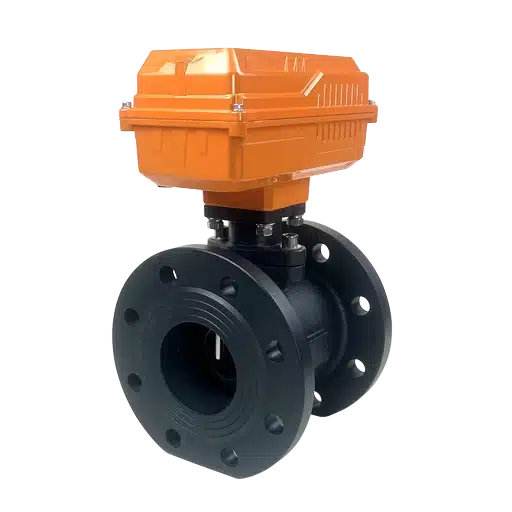


Why Choss Our Balancing Valve
Using a balancing valve significantly improves your system’s performance and saves you money. Its robust design, with a 100,000-cycle lifespan and automated self-diagnostics, reduces annual maintenance costs by up to 20% and unplanned downtime by up to 30%. The valve is universally compatible, offering a wide range of sizes, materials, and communication protocols (M-Bus, RS485, NB-IoT, 4G). This ensures seamless integration into new or existing systems for better control and a quick return on investment.
Frequently Asked Questions (FAQs)
Discover answers to common questions about balancing valves, including their purpose, benefits, and how they improve system efficiency.
01
01
A Balancing Valve is an electronically controlled valve used in heating/cooling systems. Its primary purposes are to remotely or automatically control flow, enable pre-payment for services, collect system data, and improve overall network efficiency and management.
02
02
The main types are: Prepaid IC Card Valves (e.g., V2), Wired Communicating Valves (e.g., V1, V5), Wireless IoT Valves (e.g., V7Plus), and Large Balancing Valves (e.g., V9).
03
03
Choose wired valves for new constructions or buildings where installing communication wiring is feasible. They are highly reliable and don’t require battery changes. Choose wireless valves for retrofit projects, older buildings, or sites where running cables is too difficult or expensive.
04
04
A red and green flashing or solid light typically indicates a fault condition. You should consult the manual or contact maintenance. A continuous beep (5 beeps) also signifies a serious fault.
05
05
The standard residential valves (V1, V2, V5, V7Plus) do not have a manual override. The V9 large balancing valve does include a manual switch interface for this purpose. In a power failure, most valves are designed to “fail in place,” meaning they stay in their last position.
06
06
Models V1, V2, V5, and V7Plus are available for standard residential piping: DN20, DN25, DN32, and DN40. The V9 model is for larger main pipes, ranging from DN50 up to DN350.
07
07
To prevent the valve from seizing or getting stuck due to scale buildup, most models automatically open and close slightly once a month. This keeps the mechanism free and ensures reliable operation.
