Butterfly Valve vs Gate Valve: Which Fits Your Main?
A butterfly valve isolates a line with a quarter-turn disc that stays in the flow, and a gate valve isolates it by winding a wedge out of a clear bore over many turns. Fit the butterfly where space, weight, and actuation decide. Fit the gate where the line is pigged, buried, hot, or has to run for years at full bore.
Both bodies stop the flow, so the butterfly valve vs. gate valve question is never about stopping it. Only one leaves an obstruction in the pipe for the twenty years in between, and that obstruction has a price the catalogue does not print. This page puts a number on it, calculates the surge it can cause, and tells you when to buy the other body anyway. Scope is isolation valves from about DN80 upward in water, chilled water, and light process duty.
Key Takeaways
- The gate wins on pressure loss when open, the butterfly on space, weight and actuation, and neither wins all four.
- On a 150 L/s DN300 main the loss difference is about 270 W of shaft power, roughly 1,600 kWh a year, which rarely repays a valve swap.
- A throttled gate erodes its own seat rings, a butterfly throttles coarsely but survives, and a modulating line suits neither.
- Pigging, burial and temperature rule out the butterfly before any efficiency argument starts.
Butterfly Valve vs Gate Valve: What Actually Differs
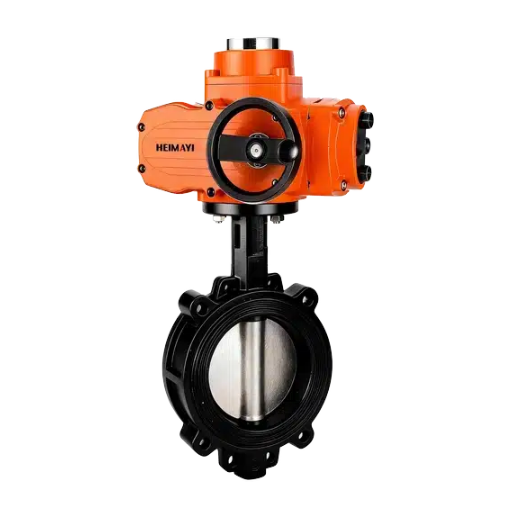
The butterfly turns a disc 90° inside the bore and seals it against a seat around its rim. The gate drives a wedge along a threaded stem into a bonnet cavity, and when the wedge withdraws, it leaves a bore close to the pipe’s own. One body crosses the stream, the other clears it.
| Feature | Butterfly Valve | Gate Valve |
|---|---|---|
| Motion | Quarter-turn | Multi-turn |
| Closure member | Disc on a shaft | Wedge on a stem |
| Bore when open | Disc and shaft in the flow | Clear bore |
| Throttling | Possible, coarse | Not recommended |
| Pressure loss when open | Higher | Very low |
| Face-to-face length | Short | Long |
| Weight at DN300 | Moderate | Often close to twice the mass |
| Actuation | Rotary, compact | Linear thrust, larger actuator |
| Buried service | Needs access to the flange pair | Bonnet serviceable in place |
| Pigging | Not possible | Possible |
| Typical failure mode | Seat wear, disc edge erosion | Seat scoring, stem wear |
Industry comparison. No manufacturer-specific figures.
Specifying a main and not sure which body the line wants? Send us the duty and the differential, and we will confirm the answer before you order.
Connection Type Decides More Than the Body
A wafer butterfly valve sits between two flanges and depends on both for support and sealing. A lug butterfly valve has threaded inserts, so one side of the line can come apart while the other stays bolted. A double-flanged body carries the pipe load itself.
A lug body does not automatically have a dead-end rating. A lug-style butterfly valve with one flange removed at the end of a line generally carries a reduced pressure rating. That decision belongs in a butterfly valve installation guide, not a body comparison.
Two Families, Several Constructions
Butterflies come in three constructions: concentric with a resilient seat for HVAC and water, double-offset to reduce seat rubbing, and triple-offset with a metal seat for high temperature and pressure. Gates follow a similar pattern, with resilient-seated gate valve wedges in the low-pressure water range, metal-seated wedges for higher duty, and the knife gate for slurry.
Pressure Drop and What It Costs to Run
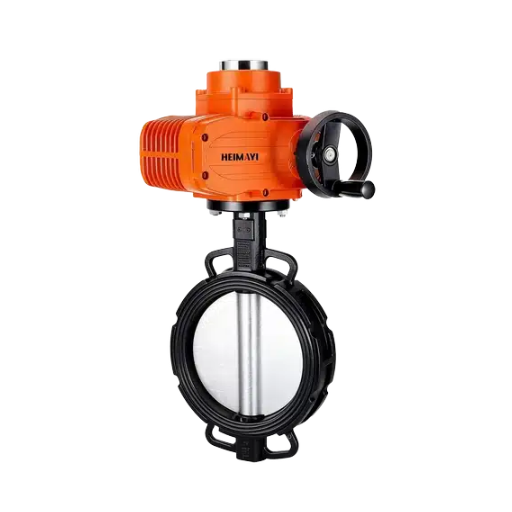
A gate has almost no obstruction when fully open, so its loss is close to a straight length of pipe. A butterfly keeps its disc and shaft in the stream. The question isn’t which loss is lower. It’s whether the butterfly valve pressure drop matters on your line.
Loss is written as a coefficient K multiplied by the dynamic pressure, or the other way round as a flow coefficient: Cv in US gallons per minute at 1 psi drop, Kvs in cubic metres per hour at 1 bar.
| Step | Value | Basis |
|---|---|---|
| Flow | 150 L/s | Assumed design flow |
| DN300 internal diameter | 300 mm | Standard nominal bore |
| Velocity | 2.12 m/s | Flow divided by area |
| Dynamic pressure | 2.25 kPa | ½ × 1,000 kg/m³ × velocity squared |
| Loss coefficient, open | K 0.2 gate, K 0.8 butterfly | Typical industry values |
| Head loss | 0.45 kPa gate, 1.80 kPa butterfly | K × dynamic pressure |
| Excess loss | 1.35 kPa | Difference between bodies |
| Extra shaft power | 270 W | Flow × excess loss ÷ 0.75 efficiency |
| Annual energy and cost | 1,620 kWh, about USD 240 | 6,000 hours at USD 0.15/kWh |
Worked example, illustrative assumptions. Not a measured result for any product.
Two hundred and forty dollars a year is real, and it grows with hours and velocity. It’s also small against the installed cost of replacing a valve. What changes a decision is the margin: three large valves in series, or a pump selected tightly against the system curve.
Illustrative example, not a customer case study. A district heating operator replaced eight DN250 gate valves with butterfly bodies in a crowded plant room to save space. Four years later an energy review put the extra loss at about 1,100 kWh a year across the eight valves. Nobody regretted it, because the plant room could not have taken the gates.
The Ten Times Claim Examined
One widely shared comparison says butterfly valves can consume up to ten times more pumping power. That figure is reachable only by pairing a high butterfly loss with a near-zero gate loss at one velocity, so it is not a general rule.
The assumptions above give a loss ratio of about 4:1, which is not 4:1 in pump power. The valve is one element in a circuit, and the pump curve, pipework, and terminals absorb most of the head. Here, the valve difference is 270 W out of a pump duty in the tens of kilowatts.
If your line runs continuously, send us the flow, the hours, and the diameter, and we will run this calculation on your duty before you order. The number is usually smaller than the claim suggests.
Butterfly Valve vs Gate Valve: Throttling and Surge
Neither body is a control valve, and the two fail differently when someone treats one as if it were. A gate erodes its own seat. A hand-operated butterfly closes fast enough to create surge.
What Happens When You Throttle a Gate
Part-open, the gap between wedge and seat rings becomes a nozzle and local velocity across it rises sharply. The lower edge of the wedge and the seat rings are scoured by the jet, and the industry name for the damage is wire drawing. A gate treated this way often stops sealing even when fully closed again.
The gate valve reference notes that flow area changes nonlinearly with stem travel and that a partly open gate can vibrate. A vibrating wedge also wears the stem threads and packing, which is why most specifications forbid throttling a gate at all.
What Happens When You Throttle a Butterfly
The disc edge meets the seat at a shallow angle, and the characteristic is close to quick-opening: most of the flow change happens in the last third of the travel. That makes the butterfly coarse for regulation, but it does not destroy itself doing it, which is why it is the better of the two for occasional trimming.
It is still not a control valve. Where a line has to modulate continuously, the right answers are a globe valve or a characterised butterfly, and the butterfly valves for control duty comparison covers that choice separately.
Surge Pressure and Critical Closing Time
Water hammer follows the Joukowsky relation: surge equals density times wave speed times the change in velocity. At 1,000 kg/m³, a wave speed of 1,200 m/s in steel pipe and a velocity change of 2.12 m/s, the ceiling is about 2,540 kPa, or 25 bar.
That ceiling is reached only if the valve closes faster than the pipe’s critical time, twice the length divided by the wave speed. For a 200 m main, that is about 0.33 seconds. A geared or actuated butterfly closing in 10 seconds is far slower, so actual surge is a fraction of the ceiling. The hand lever is the risk, not the butterfly.
Illustrative example, not a customer case study. A plant replaced hand-lever butterfly valves on a condenser water header with new levers for faster isolation. Two seasons later a pump start against a partly closed valve split a flange gasket. The fix was gear operators and a slow-close setting, not a different body.
Above roughly DN150 on a pumped main, specify a gear operator or actuator with a closing time long against the critical time, and check the closed differential at the same time.
For a deep understanding, please read our article on valve torque and actuator sizing.
Butterfly Valve vs Gate Valve: Matching the Valve to the Line
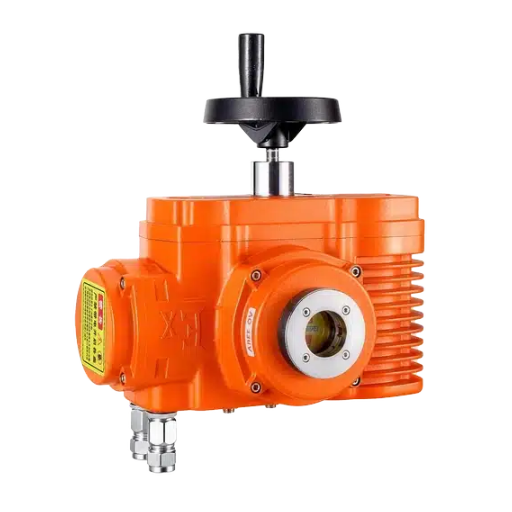
Four conditions decide the body before efficiency, price, or preference get a vote. Run them in order, because the first three eliminate the butterfly and the fourth eliminates both.
| Test | If the answer is yes | Body to fit |
|---|---|---|
| 1. Is the line pigged or scraped? | A disc in the stream stops the pig | Gate |
| 2. Is it buried without access? | The bonnet has to come off in place | Gate |
| 3. Is the media above the seat’s temperature limit? | The elastomer is the constraint | Metal-seated butterfly or metal-seat gate |
| 4. Does the line modulate continuously? | Neither body holds the characteristic | Globe or characterised rotary |
If all four answers are no, the butterfly is usually the better engineering choice. The decision then moves to connection type and actuation.
| Duty | Butterfly | Gate | Third Option |
|---|---|---|---|
| Buried municipal main | Poor | Preferred | None needed |
| Piggable transmission line | Unusable | Preferred | None needed |
| Plant room isolation | Preferred | Workable | Ball valve at small bores |
| Chilled water riser | Preferred | Workable | None needed |
| Lift station, wastewater | Workable | Poor | Eccentric plug valve |
| Slurry, fibrous solids | Poor | Poor | Knife gate or eccentric plug valve |
| Steam and hot utility | Limited by seat | Preferred | Metal-seated butterfly |
Buried and Inaccessible Lines
A gate can be serviced by removing the bonnet and pulling the wedge and stem with the body still in the line. That is the argument for a gate on a buried main, and it is only half the sentence. The section still has to be isolated and drained, and the bonnet joint remade and tested.
A butterfly has to come out of the flange pair, which means splitting the pipe. On a riser, that is an hour. Under a road, it is an excavation.
Temperature, Media and Leakage Class
A resilient-seated butterfly is limited by its elastomer. EPDM, the seat material Black Ant uses, is typically rated to about 120°C in water service, and the live product page states -20°C to 120°C. Above that, a metal-seated butterfly or a metal-seat gate is the answer.
Leakage is specified by class, not by adjectives. ISO 5208 and EN 12266-1 define the class systems used for industrial valves, and a specification should name the class the application needs. Where the media carries solids, a disc and a wedge both suffer.
To learn more information, please read our article on control valve leakage classes.
Actuated Butterfly Valves in Building Services
Most comparison pages describe a handwheel. On a building main, the valve is actuated, which changes the mechanics of the decision.
Quarter-turn travel suits a compact rotary actuator, a short stroke and a simple spring-return fail-safe. There is no stem thread to drive and no thrust bearing to size, which is why the actuated butterfly is the cheapest automated isolation valve at large bores.
Black Ant’s electric butterfly valve covers DN50 to DN500, PN16, a 1,200 kPa maximum differential, an EPDM seat, a ductile iron or stainless steel body, -20°C to 120°C, and 50 N·m to 5,000 N·m of output torque. Control is by 4-20 mA, RS485, or M-Bus at ±1% accuracy, on AC220V, AC380V, or DC24V supply.
Torque Is Not a Single Number
The figure that sizes the actuator is breakaway torque at the closed position under differential, not running torque mid-stroke. It rises with differential, with diameter, and with the time since the valve last moved, because a seat that has sat closed takes more to release.
Seat material changes it, and so does scale on the disc edge. The site’s pillar page on electric valve selection covers the sizing method, Kvs, authority, and shut-off classes, so this page does not repeat them.
Why the Gate Actuator Is Different
A gate needs thrust on a stem rather than torque on a shaft, so mounting standards, actuator families, and fail-safe designs all differ. A spring-return rotary actuator has no direct equivalent on a multi-turn stem, and the thrust bearing and stem nut become part of the sizing. That is why an actuated gate costs more at the same bore.
Where This Site’s Range Ends
Black Ant manufactures electric butterfly, ball, and globe valves, plus the miniature body for small-bore work. It does not manufacture a gate valve. A manufacturer’s comparison is only useful if it says when not to buy, and the four tests sometimes point at a body we do not sell.
For more information, please read our article on V-port ball valves.
Cost, Maintenance and Replacing a Gate with a Butterfly
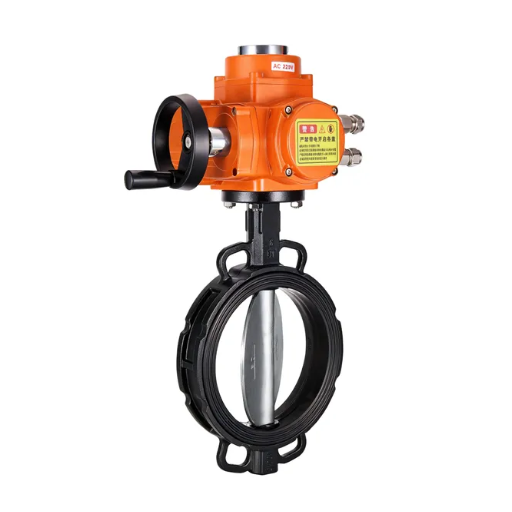
Four cost elements decide the lifecycle question, and purchase price matters least in large sizes.
Purchase falls with size for the butterfly, because a disc and a short body use far less material than a wedge and a long body. Less weight then means less support steel, less lifting and less headroom. A short face-to-face length can also save pipework in a crowded plant room.
Maintenance goes the other way. A gate can be serviced from its bonnet with the body in the line, while a butterfly has to come out of the flange pair. Energy favours the gate, by the amount calculated earlier.
| Cost Element | Butterfly | Gate | What Drives It |
|---|---|---|---|
| Purchase | Lower at large sizes | Higher | Body mass and machining |
| Installation | Lower | Higher | Weight, support, headroom |
| Maintenance | Body out of the line | Bonnet service in place | Access and isolation |
| Energy | Higher loss when open | Lower loss when open | Flow, hours, velocity |
| Actuation | Lower torque | Higher thrust | Differential, stem load |
Relative comparison. No price band or currency is implied.
Can a Butterfly Replace a Gate?
Yes, if the line is not pigged, is accessible for body removal, the media and temperature suit the seat, and the closing time is controlled. These retrofits are routine on plant room headers and risers.
No, if the line is pigged, buried without access, or above the seat’s temperature limit. There the gate is doing a job the butterfly cannot do at any price.
Check either way: the closed differential against the new body’s rating, the actuator torque margin, and whether the surge analysis still passes with a faster-closing element in the line.
Illustrative example, not a customer case study. A utility specified butterfly valves on a 2.4 km DN400 transmission main in 2021 to cut capital cost, then scheduled the line for pigging. Four of the new valves had to be replaced with gates before the pig could run, so the saving on the first order was real and so was the cost of the second.
Where a line needs both isolation and regulation, the globe valve vs ball valve comparison covers the regulating case.
FAQ
Which is better, a butterfly valve or a gate valve?
Neither in general. Butterfly for space, weight, cost, and easy actuation; gate for pigged, buried, or hot lines and minimum pressure loss.
The four tests above decide it on your line, and no efficiency argument overrides them.
Can a butterfly valve replace a gate valve?
Yes on accessible, unpigged, moderate-temperature lines with a controlled closing time. No on pigged or buried lines and above the seat’s temperature limit.
Can you throttle a gate valve?
You can, and it will erode. Part-open flow scours the wedge edge and seat rings, and the valve may not seal afterwards. Use a globe valve or a characterised butterfly instead.
Which valve has lower pressure drop?
A gate valve, when fully open, because its bore is clear. The difference is real and usually small compared to the rest of the circuit.
Which is better for a buried main?
A gate valve, because the bonnet can be serviced with the body left in the line. A butterfly usually has to be cut out.
Do butterfly valves cause water hammer?
Only if they close faster than the pipe’s critical time. A geared or actuated butterfly closing over several seconds does not. A hand lever can.
At what size does a butterfly valve become cheaper than a gate?
The crossover moves with the market, and this site sells no gate valve to quote against. Above about DN200, the weight and actuator gap usually favours the butterfly, so ask for both on the same bore.
Conclusion
The decision runs as a sequence. Pigged, buried, hot, or modulating? If any of those is yes, the butterfly is out, and the gate, a metal-seated butterfly, or a globe valve takes over. If all four are no, the butterfly is usually right, and the remaining questions are connection type, seat material, and actuator torque.
Cost the energy before assuming it decides anything. On a DN300 main, the difference is a few hundred dollars a year, worth knowing and rarely worth a swap. What usually decides it is a plant room without the space, a line that cannot be excavated, or a pig that has to pass.
The butterfly valve vs. gate valve question resolves in that order, and the answer belongs to the line rather than to either body. The butterfly suits most accessible building mains and fails on most buried transmission mains.
If the butterfly valve vs. gate valve call is still open on your line, send us the duty and the differential with the diameter and the operating temperature. We’ll confirm the body, the torque, and whether the gate is the right answer.
< class="ct-module-title">
Trending now