

IP68 Water Immersion Testing: How Manufacturers Prove Waterproofing
In the spring of 2024, a QA engineer named Priya Raman opened a returned smart manhole cover at her desk in Rotterdam and found three centimetres of water pooled on the circuit board. The unit wore an IP68 label. It had passed its factory immersion test eleven months earlier.
Her problem wasn’t a defective product. It was a misunderstanding of what an IP68 water immersion test actually proves. The test measures how one sample behaves in a tank under controlled conditions. On its own, it doesn’t promise that every unit off the line will survive a decade underground.
This guide walks through the IEC 60529 immersion procedure step by step. You’ll see what the standard fixes and what it leaves open, how depth converts to pressure, how the test tank works, and how manufacturers keep the rating honest across a mass-production run. By the end, you’ll read a test claim the way an engineer does.
What IP68 Actually Tests: IP6X Dust Plus IPX8 Immersion
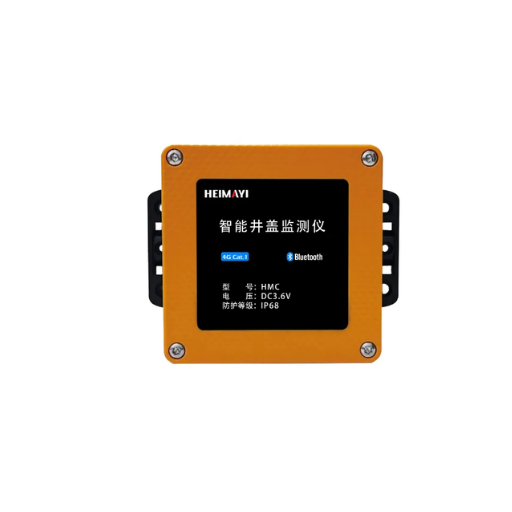
IP68 is two tests, not one. The “6” is an IP6X dust test, and the “8” is an IPX8 water test. A product earns a full IP68 rating only when both are run and both pass.
The dust half is simple to picture. A sample sits in a chamber filled with talcum powder whose particles are no larger than 75 µm, and the chamber runs under negative pressure for roughly 8 hours. The unit is then opened, and any dust inside is a fail.
The water half is where the confusion lives. IPX8 is an “open” grade. Unlike the lower water ratings, IEC 60529 does not fix a single depth or a single duration. Clause 14.2.8 states that the conditions are agreed between the manufacturer and the user, with one rule: the test must be more severe than the IPX7 immersion it builds on.
That sentence explains why two products can both carry “IP68” and mean different things. One might be tested at 1.5 m for 30 minutes. Another might be tested at 10 m for 72 hours. Both claims are valid, and neither tells you anything until you know the numbers behind it. If you want to understand how those claims translate into procurement reality for underground hardware, see IP68 Smart Manhole Cover Certification: What It Really Means and What to Verify Before You Buy.
A second rule trips people up. Ratings are not cumulative, and an IPX8 water rating never saw a water jet.
If your installation also faces hose-down or high-pressure washdown, that is a separate test. IEC 60529 covers jets; IP69K comes from ISO 20653, a different standard.
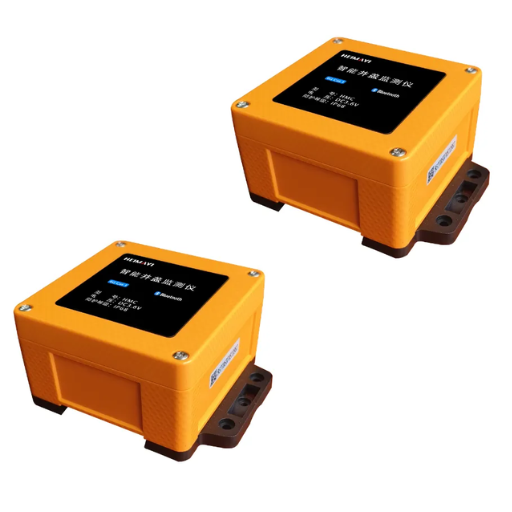
Specifying covers for flood-prone chambers? We build and immersion-test our own hardware, so we hand you the declared depth and duration up front. See how the IP68 smart manhole cover is tested and built.
The IP68 Water Immersion Test Procedure, Step by Step
Here is the sequence a competent lab follows for the water half of an IP68 rating.
- Stabilise the sample. The unit sits at 23 ± 5 °C and 45-75% humidity for about 24 hours, so the test doesn’t start on a device that’s colder or warmer than the water.
- Mount it in its service position. The unit goes in the way it will be installed. The test record states whether it is mated or unmated, and powered or off.
- Immerse it completely. The enclosure goes fully under water, at the depth and duration agreed in clause 14.2.8.
- Hold the water within 5 K of the sample. The temperature gap between water and unit is capped, because a cold sample in warm water draws moisture inward.
- Remove, open and inspect. After the soak, the unit is dried, opened, and checked for water ingress under clause 14.3. It then runs a functional test, plus any dielectric strength test the product committee specifies.
The IPX7 baseline that IPX8 must beat is precise, and worth knowing because it is the floor the rating sits on. For an enclosure under 850 mm tall, the lowest point sits 1,000 mm below the water surface. For one 850 mm or taller, the highest point sits 150 mm below the surface. The hold time is 30 minutes.
From there, the parameters open up. Declarations on real hardware cluster into a few patterns you’ll recognize.
| Declared IP68 condition | Where it shows up |
|---|---|
| 1.5 m / 30 minutes | Consumer handhelds and phones |
| 2 m / 24 hours | Outdoor sensors and enclosures |
| 3 m / 72 hours | Underground and utility hardware |
| 10 m / 1 hour | Pressure-rated instruments |
None of those is more “IP68” than the others. Each is a specific promise, and it’s only meaningful when it matches your deployment.
Depth, Duration and Hydrostatic Pressure
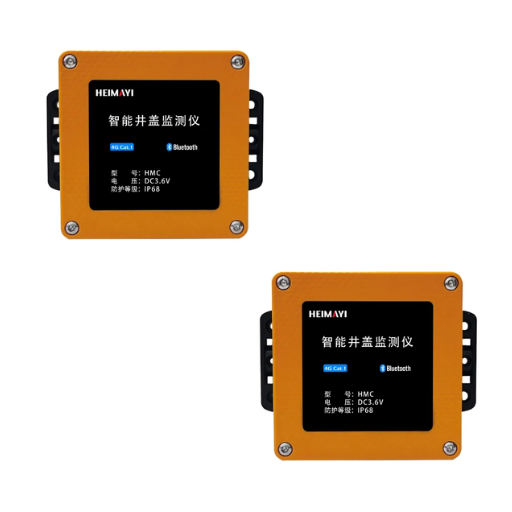
Depth is the number buyers ask about first, but depth is really a stand-in for pressure. Every metre of water above a seal adds hydrostatic head, and the conversion is simple enough to do in your head.
| Immersion depth | Hydrostatic pressure |
|---|---|
| 1 m | 0.1 bar ≈ 10 kPa ≈ 0.01 MPa |
| 1.5 m | 0.15 bar ≈ 15 kPa |
| 3 m | 0.3 bar ≈ 30 kPa |
| 5 m | 0.5 bar ≈ 50 kPa |
| 10 m | 1 bar ≈ 100 kPa ≈ 0.1 MPa |
The rule behind those numbers is P = 9.8h, where h is depth in metres. Round it in practice to 0.1 bar per metre. That means a 1 m soak equals the IPX7 baseline, and anything you call IPX8 has to sit above it.
For underground hardware, this table turns into a specification tool. A manhole chamber that floods to 1.5 m for several hours imposes roughly 0.15 bar on a cover’s seal. A stormwater vault that backs up to 3 m imposes 0.3 bar.
If a datasheet declares “IP68” with no depth, you can’t tell whether the tested condition covers the flood your site will actually see. For the site-side view of keeping a unit sealed in the field, our IP68 outdoor installation guide covers mounting, glands and drainage.
Deep tests need a workaround. Building a 10 m column of water is impractical, so labs use a pressurised tank instead. Roughly 1 bar of applied pressure stands in for 10 m of water. The tank reproduces the pressure a deep immersion would create, without the height.
The Immersion Test Tank and Sample Preparation
A constant-temperature immersion tank covers shallow declarations like 1 m or 2 m. The unit sits in clean water, held at a set temperature, for the agreed duration. For deeper equivalents, a pressurised stainless-steel tank applies the pressure of the water column directly.
Most labs run this equipment under a quality system, and the mark to look for is CNAS accreditation in China, or an ILAC-recognised equivalent elsewhere.
Test gear matters as much as the tank. You need calibrated pressure sensors, a booster pump to reach deep-equivalent pressures, and fixtures that hold the unit in its service orientation.
Orientation isn’t cosmetic. A connector that faces up in the fixture pools water on a seal, while the same connector facing down sheds it. If the fixture doesn’t match the installed position, the test measures the wrong thing.
Sample preparation carries its own traps. Seals, gaskets, glands and the antenna aperture must be fitted exactly as they ship. An enclosure tested with a port left open, or with a connector capped, proves nothing about the assembled product.
That’s the part most specifiers miss. The water test doesn’t just grade the plastic shell. It grades the seal points, and those seal points are exactly where a real unit fails in the field. If you want a closer engineering look at these failure paths, read IP68 Enclosure Seal Design: Where a Sealed Manhole Cover Actually Leaks.
Building a wireless sensor into a sealed cover? The aperture and the gland are where we spend the most design time. Talk to our engineering team about how we seal and test the RF path.
Prototype vs Production Sample: Where IP68 Is Really Won
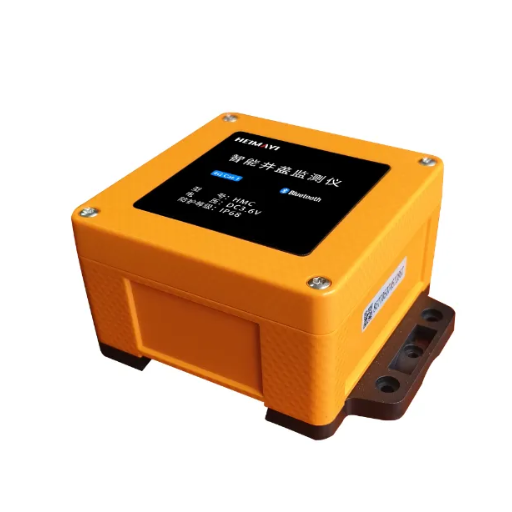
This is the gap that flooded Priya’s returned cover. The lab test is a type test on a submitted sample. The certificate covers that sample, not the thousands of units that follow it. What keeps IP68 true across a run is a quality-control regime, and it has three gates.
The first gate is first-article confirmation. After every production start-up, mould change or material change, the line produces two or three pieces and inspects them fully: appearance, critical dimensions, and the condition of the sealing surfaces. Mass production starts only when the first article passes. If it fails, the line adjusts and runs the first article again.
On our own cover line, a first-article check once caught a sealing surface that looked flat to the eye but warped by 0.3 mm across the face. Leave it undetected, and 4,000 covers would’ve cleared the leak screen on borderline readings, then failed in the field within a year. The tooling was re-clamped, and the run restarted clean.
The second gate is a 100% in-line leak screen. Every assembled unit goes through a differential-pressure air test against a sealing fixture. The tester charges the unit, lets it settle, then watches for pressure loss, and an out-of-tolerance unit triggers an alarm. Air works where water can’t, because it’s fast, it’s dry, and you can run it on every single unit instead of a sample.
When a unit does leak, a bubble test finds the spot. Inflate the housing, submerge it, and watch where bubbles rise. Bubbles at the O-ring point to a seal fault. Bubbles on the casting surface point to porosity, or sand holes, which sends the fix back to mould flow and pressurisation rather than to the rubber.
The third gate is the batch soak. A sampled batch is immersed in real water at the declared rating, and the leak-test data from the run is trended against it. If a batch drifts, the team traces it back to the process parameters, such as mould temperature, holding pressure or weld energy.
| Gate | What it covers | Frequency |
|---|---|---|
| First-article confirmation | Appearance, dimensions, sealing-surface condition | Every start-up or production change |
| 100% air-leak screen | Differential-pressure leak test on the assembled unit | Every individual unit |
| Batch real-immersion soak | Real water test at the declared IP68 rating | Sampled batch, with leak-data trending |
Put together, those three gates answer the question a certificate can’t. The type test proves the design can hold IP68. The gates prove the run actually does. And when you’re reviewing supplier evidence, it helps to know exactly how to interpret the documentation itself—especially the declared depth, duration, sample description and pass/fail notes in the lab paperwork. For that, see How to Read an IP68 Test Report: Verifying IEC 60529 Certification.
Ordering at volume? Ask any supplier which of these gates each unit clears. We run all three on our edge computers and smart covers, and we’ll show you the IP68 edge data acquisition hardware that comes off that line.
What Fails an IP68 Water Immersion Test
Failures in production come from process, not usually from design. The design already passed on a sample. What breaks the rating afterward is drift and assembly.
| Failure cause | What the test shows |
|---|---|
| Twisted or misaligned O-ring | Dye-penetration trail along the seal face |
| Warped sealing surface | Uneven compression at teardown |
| Uneven wall thickness and shrinkage | Seal faces pulled apart; leak appears in the batch soak |
| Casting porosity (sand holes) | Bubble test shows bubbles on the casting, not the O-ring |
| Welding or assembly parameter drift | Leak-test data trends out of tolerance across the run |
Each cause has a matching detection method, and each method points to a different fix. A teardown or dye-penetration check finds where water entered and leaves a visible trail. A bubble test finds a near-field leak fast. A batch soak paired with leak-data trending catches slow drift before it becomes a field return.
This is why an IP68 claim without a production-test answer is incomplete. The test tells you the design is sound. The QC chain tells you the units are.
Five Questions to Ask a Supplier About IP68 Testing
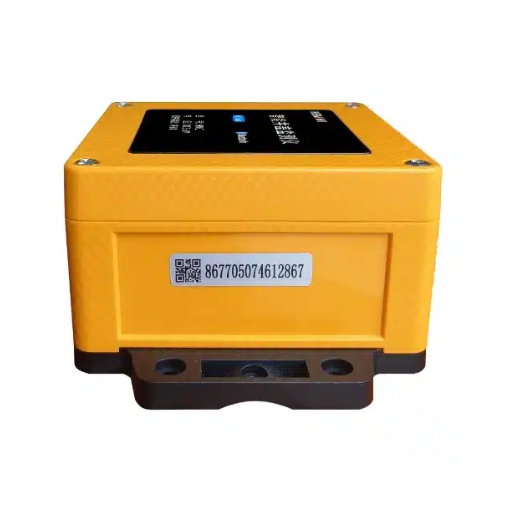
Everything above compresses into a short checklist you can run before a purchase order. Ask these five, and you’ll learn more than any datasheet tells you.
- What exact depth and duration is our product’s IP68 declared at, and who agreed it? Push for the numbers. “IP68” alone is unverifiable, and it may not match your site’s worst-case flood.
- Is the test run by an accredited lab, and on a production sample? Look for accreditation to ISO/IEC 17025 through an ILAC-recognised body, and check that the tested unit was a production representative, not a hand-built prototype.
- Is every unit air-leak screened in line, and what is the reject threshold? A supplier who screens every unit knows their process. One who ships only on a sample certificate is guessing.
- How often is a batch re-immersed in real water? You want a stated interval and the leak-data trend, not a one-time pass from two years ago.
- Does the tested assembly include the antenna pass-through, gland and battery hatch? The rating has to cover the sealed assembly you actually buy, not an empty shell.
Conclusion: A Rating Is Only as Real as the Test Behind It
An IP68 water immersion test is a controlled experiment, and its value depends on the numbers behind it. IP68 combines a dust test with an immersion test, and the immersion half is open-ended: depth and duration are declared by the manufacturer, and valid claims run from 1.5 m for 30 minutes to 10 m for 72 hours.
Depth is pressure in disguise. One metre of water adds about 0.1 bar, which is why a specifier can turn a flood depth into a test requirement. The lab proves the design on a sample; first-article inspection, a 100% air-leak screen and a batch soak are what carry that proof into every shipping unit.
Two years after Priya’s flooded cover, her team rewrote its tender to demand the declared depth, the accredited report, and the batch-soak interval. Not one cover has failed since.
The next time a datasheet says “IP68”, ask for the depth, the lab and the production data. That’s what an IP68 water immersion test needs to mean. If you’d like to see how far that goes on real hardware, explore our IP68 smart manhole covers and our environmental monitoring stations. Tell us your flood depth and service-life target, and we’ll match the test regime to your deployment.
IP68 Water Immersion Testing: Frequently Asked Questions
How long is an IP68 immersion test?
There’s no single duration. Under IEC 60529 clause 14.2.8, depth and time are agreed between manufacturer and user, and the test must exceed the IPX7 baseline of 30 minutes. Common declarations include 30 minutes, 1 hour, 24 hours, or 72 hours, so always read the specific number on the datasheet.
How deep is an IP68 water immersion test?
The standard sets no fixed depth. It only requires the condition to be more severe than IPX7, whose baseline for a small enclosure is a lowest point 1,000 mm below the surface. Real declarations range from 1.5 m to 10 m, and deeper tests are simulated in a pressurised tank rather than a tall water column.
What is the difference between IPX7 and IPX8 testing?
IPX7 is a defined test: full immersion with the lowest point 1,000 mm below the surface for 30 minutes. IPX8 is open-ended. It must be more severe than IPX7, but the manufacturer and user agree the depth and duration, which is why IPX7 gives buyers a fixed benchmark and IPX8 does not.
Does IP68 testing require the device to be switched on?
It depends on the product and what the test is meant to prove. The test record states whether the unit was powered or off. For electronics that must keep working underwater, a powered functional check after the soak matters as much as the water-ingress inspection, because water can reach a live circuit without pooling visibly.
Is every unit tested for IP68, or only a sample?
The laboratory type test runs on a submitted sample, so a certificate covers the sample. In good production, every individual unit still clears a 100% air-leak screen, and a sampled batch is re-immersed in real water at the declared rating. A certificate alone does not mean each unit was soaked.







