

IP68 Enclosure Seal Design: Where a Sealed Manhole Cover Actually Leaks
In the spring of 2023, a systems integrator we’ll call Daniel commissioned 180 IP68-rated smart manhole covers across a Rotterdam drainage district. Every unit arrived with a factory certificate. By the second winter, 14 had flooded their sensor cavities, fogged from the inside and dead at the connector. Not one of them had failed its original immersion test.
That result isn’t a manufacturing defect. It’s the predictable outcome of treating IP68 enclosure seal design as a certificate to collect rather than an engineering problem to solve. The test certifies an empty, factory-fresh box. The field deploys a mated, glanded, antenna-fitted assembly that heats in the sun, cools in the rain, and sits in a sewer for a decade. To see what that certificate actually covers, read our guide to IP68 smart manhole cover certification: what it really means and what to verify before you buy.
This guide is written from the side of the people who build the enclosure. You’ll see where a sealed cover actually lets water in, how each seal point is engineered, why IP68 gaskets relax over time, and which material survives methane and hydrogen sulfide. You’ll finish able to read a seal design the way an engineer does, and to ask a supplier the five questions that separate a real seal from a datasheet claim.
Where an IP68 Enclosure Actually Leaks: The Four Seal Points
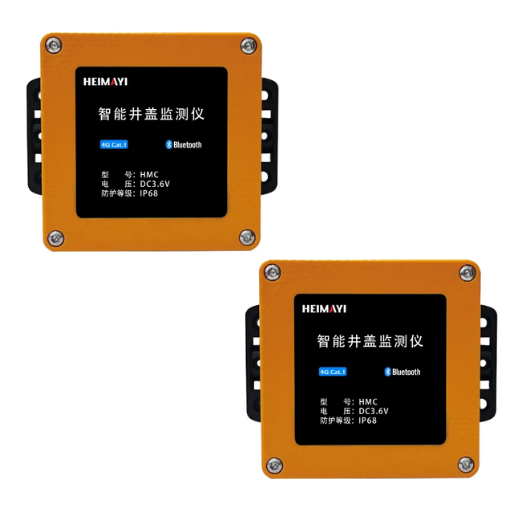
Water gets into a sealed enclosure at interfaces, not through walls. The molded housing and the cast cover are rarely the problem. Water enters at the joints where different parts meet, and good IP68 enclosure seal design controls four of them on a smart manhole cover. Here they are, in rough order of risk.
- The perimeter or cover gasket. The largest seal, and the one that takes the most thermal cycling, because the cover is the biggest heated surface.
- The battery hatch or access cover. A small, serviceable lid that is opened in the field and resealed by hand, so its performance depends on the installer as much as the design.
- The antenna pass-through. The aperture that lets a radio signal out through a metal cover. It is the most under-designed seal point and the most common point of failure.
- The cable gland. Or glands, if the unit has more than one cable. Glands are the single most common failure point across all outdoor electronics, not just manhole covers.
There’s a fifth element that isn’t a leak point but decides how long the other four last: a pressure-equalization vent. The physics of thermal cycling won’t let you skip it.
The framing matters. A specifier who thinks in terms of “the enclosure” approves a product on its IP68 certificate and stops. One who thinks in terms of four seal points asks about each one. Only the second conversation prevents a flooded cavity.
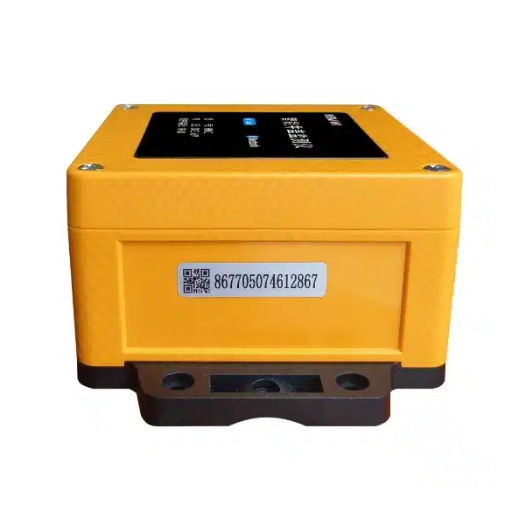
Specifying sealed covers for a sewer network? We build the sensor cavity and seal it ourselves, so we can tell you exactly how each point is closed. See how the IP68 smart manhole cover is constructed before you write the specification.
How Enclosure Gaskets and O-Rings Seal: The 20-30% Compression Window
The perimeter gasket is a simple idea. Squeeze a rubber ring between two surfaces, and the compressed material presses back hard enough to block water. The engineering lives entirely in how much you squeeze it.
The 20-30% Window
Gaskets and sealing ribs are designed to sit at 20-30% compression. Outside that window, both directions of error cause leaks.
Below about 15%, the compressed material doesn’t generate enough contact stress. The seal touches the mating surface, but not firmly enough. Under hydrostatic pressure, water finds a path across it. The accepted minimum contact pressure for IP67-class sealing is roughly 0.2 N/mm².
Above about 40%, the material is crushed. It deforms permanently, extrudes into gaps, and loses the springback that keeps it pressing against the surface. Over-compression doesn’t make a seal “safer.” It makes a seal that will leak later.
That’s why a gasket spec is a working window, not a target to exceed. A supplier who answers “we compress it as much as possible” has just told you they don’t control the variable that matters most.
Groove Design, Surface Finish and the Corner Trap
The gasket sits in a groove machined or molded into one of the mating faces, and the groove decides whether compression stays even. Two details dominate.
First, surface finish. A rough face forms capillary channels across the sealing surface, and water creeps along them. The target is SPI A-2 (roughly 2-5 µm Ra) or better. Groove edges should be chamfered so that assembly does not scratch the gasket, because a scratch across the seal path is a permanent leak channel.
Second, corners. In a rectangular enclosure, the gasket has to turn four corners, and that is where compression goes wrong. The material bunches on the inside of the turn and stretches on the outside, so the corner seals unevenly. Corner bunching is cited as the number-one leak point on outdoor electronics enclosures, ahead of any material failure.
This is the detail that separates a cover designed for a sewer from a cover designed for a shelf. Look at a candidate product and ask how the gasket behaves at the corners, not just in the straight runs.
O-Ring or Flat Gasket?
An O-ring works in a defined, continuous groove. It’s compact and repeatable, but it needs a groove to sit in. A flat or die-cut gasket covers a broader, irregular face, but it depends on even screw torque across its length. Manhole covers usually combine both: a channel gasket for the main cover and O-rings for the small ports and the antenna. The right question isn’t “gasket or O-ring,” but “which interface, and what compression can we hold across it.”
Why a Seal That Passed the Test Fails in Year Three
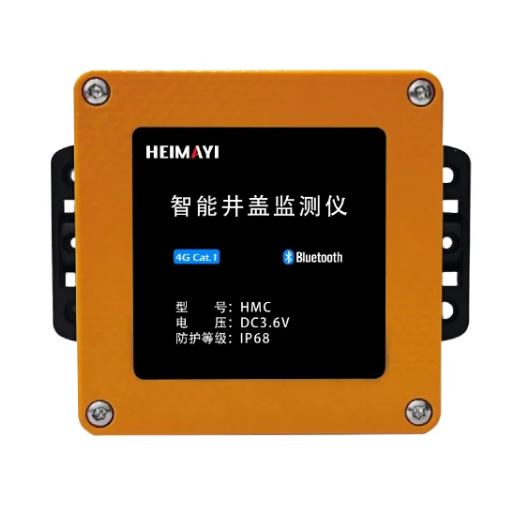
A gasket that seals perfectly on day one can leak on day one thousand without any single defect. Three mechanisms do the damage, and all three are invisible on a certificate.
Compression Set, Creep and Fatigue
Rubber is not perfectly elastic. Hold it compressed for years, add heat, and it takes a permanent set: it stops springing back to its original thickness. Engineers call this compression set. The seal is still physically there, but it has relaxed, and its contact pressure has dropped.
Creep and fatigue compound the problem through repeated thermal cycling. A well-formulated, post-cured silicone can hold under 15% compression set after prolonged compression and heat. A cheap elastomer in the same groove can relax far more. That difference, and not the nominal hardness on the datasheet, is what decides whether the seal is still pressing in year six.
The Thermal-Cycling “Vacuum Pump”
This is the failure mode that surprises people most, and it has nothing to do with water pushing in. It has to do with the enclosure pulling water in.
When a cover heats in the sun, the air inside expands. When it cools in rain or flood water, that air contracts, and the enclosure interior drops into partial vacuum. Air has to come from somewhere, and it draws humid air in through every imperfect path in the seal. Over a day-night cycle, the enclosure behaves like a very small pump.
The numbers make the mechanism concrete. A temperature drop from 60 °C to 10 °C creates roughly 15-18 kPa of negative internal pressure. Even a modest 20-40 °C swing produces about 7 kPa. Those pressures are enough to pull moisture through micro-gaps that resist liquid water under a static test. Each cycle moves a few microliters. Over years, those microliters become corrosion.
Condensation: The Water You Never Let In
There’s a second path that no seal can block. If a cover is assembled on a humid day at the factory, the trapped air already carries water vapor. At night, when the internal surfaces cool below the local dew point, that vapor condenses on the coldest surface, which is usually the circuit board.
Daniel’s 14 flooded covers likely faced both effects at once. No vent meant the thermal cycling pulled vapor in, and the trapped vapor condensed on the boards. The IEC 60529 rating tests for water entering from outside. It says nothing about water forming from the air you sealed inside. To see exactly what a lab immersion test records, and what it leaves out, learn how to read an IP68 test report and verify IEC 60529 certification.
The industry fix for both mechanisms is to stop fighting pressure and equalize it instead. A pressure-equalization vent is a small membrane of expanded PTFE that passes air and water vapor freely, but blocks liquid water. In one documented case, a wireless router enclosure that failed a temperature-driven seal test couldn’t be rescued by stronger gaskets alone; adding a protective vent solved it.
Two vent parameters matter. Its airflow must be matched to the internal volume and how fast the enclosure cycles, or it can’t keep up with the pressure swing. Its water-entry pressure (WEP) must exceed the worst-case hydrostatic head at the installed depth, or water will push through it in a flood. A vent without both numbers is decoration.
This is exactly where most seal failures hide. Our IP68 outdoor installation guide covers how venting, drip loops and entry orientation come together on real deployments.
The Antenna Pass-Through: The Most Common IP68 Failure Point
Of the four seal points, the antenna pass-through gets the least design attention and causes the most failures. It is also the point where enclosure design and RF design collide.
Why a Metal Cover Forces an External Antenna
A ductile-iron manhole cover is, electrically, a shield. Put an antenna inside a metal box and the box attenuates the signal hard enough to make the radio useless. So the antenna has to live outside the cavity, mounted through the cover wall. That single requirement creates an aperture through the seal, and the aperture becomes the weakest point in the assembly.
Bulkhead Connector vs Direct-Fit Antenna
The robust pattern is a bulkhead connector through the wall. An N-type or SMA bulkhead fitting passes the signal through the cover, sealing against it with an O-ring and washer, with the antenna mounted on the outside. It separates two jobs: the bulkhead seals, and the antenna radiates.
Two connector details matter. First, SMA is not inherently weatherproof, and RP-SMA is no better; exposed SMA joints corrode, and corrosion on an RF joint changes the impedance. For a permanent underground installation, N-type is more weatherproof than SMA and is the better default. Second, the seal must be on the connector body against the cover, not on the antenna’s connection to the connector, because the latter is a joint a technician can loosen in the field.
Sealing the Aperture and the Radial Path
Where the aperture sits matters as much as how it is sealed. A top-facing connector invites water to pool and to track down the threads by capillary action. Aim for a downward or side-facing aperture so gravity moves water away, not in.
The exposed joint between antenna and connector gets supplementary protection: self-amalgamating silicone tape wrapped tightly over the joint, or a weather boot, plus dielectric grease on the threads. Self-amalgamating tape fuses into a solid rubber sleeve, which is why it outperforms ordinary electrical tape on an RF joint.
The risk is not theoretical. A project in a humid coastal city shipped covers with a top-mounted SMA whip screwed directly into the cover. Within a season, salt spray had corroded the joint and water wicked down the thread into the cavity. The redesign swapped the SMA whip for a downward-facing N-type bulkhead on an O-ring, wrapped in self-amalgamating tape. Field failures fell to zero over the next two years, for a few dollars per cover.
Building a wireless sensor into a sealed cover? The pass-through decision is one of the first we settle with a customer. Talk to our engineering team about how we seal the RF aperture on our hardware.
Cable Entry and Cable Glands: The Other Weak Point
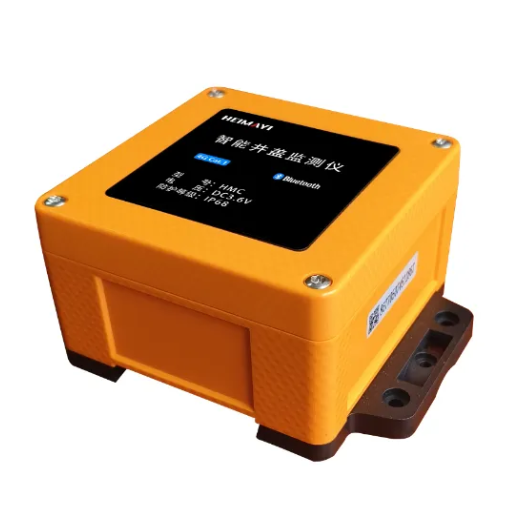
If a cover has any cable at all, the gland is a seal point, and across the industry cable glands are the most common failure point on a “sealed” assembly. The rule that catches most buyers is simple and severe: a gland rated lower than the enclosure drags the whole system down to the gland’s rating. An IP68 cover fitted with an IP65 gland is an IP65 assembly, no matter what the cover’s certificate says. If you’re unsure which rating each component in your deployment truly needs, our comparison of IP68 vs IP67 vs IP69K for outdoor and underground IoT explains the differences.
Gland failures cluster into a few predictable causes:
- Wrong range for the cable. If the cable’s outer diameter falls outside the gland’s clamping range, the seal cannot compress and a gap remains.
- Installation errors. Wrong drill diameter, a damaged inner or outer washer, under-torque that fails to compress, or over-torque that cracks a plastic gland body.
- Unsealed threads. The gland’s own thread into the wall needs PTFE tape; it is not a sealing surface on its own.
- Cable leverage. A cable pulling sideways, or a sharp 90° bend right at the gland exit, distorts the seal and lets the gland nut back off under vibration.
The fixes are standard once you know the points: match the gland to the cable OD, torque it correctly, tape the threads, add strain relief, and form a drip loop so water sheds at the bottom of the loop rather than tracking into the gland.
Gasket Material Selection for a Sewer Environment
Here’s where generic enclosure guidance quietly fails. A cover can be sealed perfectly and still leak because the rubber itself breaks down against the chemistry of a sewer. Material selection is application-specific, and the intuitive choice is often the wrong one. Industry gasket selection guides rate materials family by family against specific media, and they’re worth reading line by line.
| Material | Sewer water / wastewater | Methane (CH₄) | Practical heat range | Notes |
|---|---|---|---|---|
| FKM / Viton | Special grades only (standard FKM is not rated for wastewater) | Suitable | up to ~200-225 °C | Best chemical and heat resistance; specify a wastewater-rated grade |
| NBR | Standard white NBR is not for wastewater | Suitable | up to ~120 °C | Excellent oil and hydrocarbon resistance; check the grade for wastewater |
| EPDM | Good for water and chemical service | Not suitable | Moderate | Not for petroleum or hydrocarbons |
| Silicone (VMQ) | Poor steam resistance | Not suitable | Excellent heat resistance | Weak mechanical strength; degrades in some media |
Three takeaways from that table. For methane, FKM or NBR work and silicone, EPDM and CR do not; SBR is worse still, swelling more than 60% in methane. For the aqueous sewer environment, standard FKM grades are flagged as unsuitable for wastewater, so a wastewater-rated FKM grade or a suitable EPDM compound is the safer call. And for hydrogen sulfide, be honest about the limits of generic compatibility charts: H₂S resistance must be confirmed with the gasket material supplier for the specific grade, not assumed from a family-level rating.
This is a decision a specifier should make explicitly and put in writing, because the cheapest rubber that meets the IP rating may be the faster-failing rubber in a sewer. Methane also raises a question that goes beyond the gasket: if the cover sits in a potentially explosive atmosphere, the electronics inside must comply too. Our ATEX manhole cover for sewer gas: Zone 1 compliance guide covers what that requires.
Potting, Overmolding or Conformal Coating?
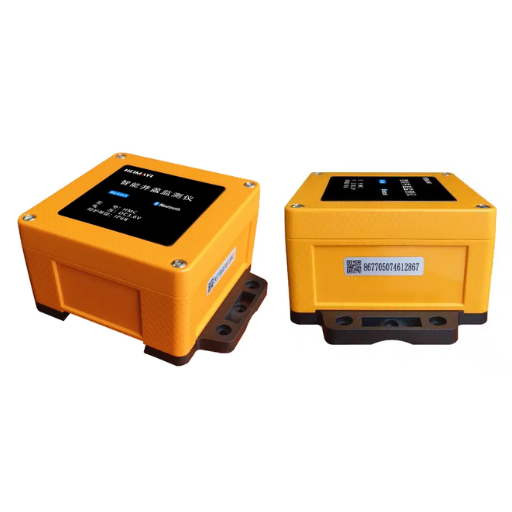
The enclosure seal keeps outside water out. A second layer inside the cavity handles whatever still gets in. Three approaches dominate, with different reliability profiles.
- Overmolding gives the most predictable IP68 result, because the mold creates the seal rather than an assembly step. One documented polyurethane case took field failures from 5.2% down to 0.08%, qualified through -40 to +85 °C cycling over 50 cycles.
- Potting fills the cavity with a compound, but it risks concealed voids and cure-shrink stress that can crack a component or leave a hidden water path.
- Conformal coating is thin protection best used as a supplement behind a primary seal. Its weakness is shadowing, where recessed areas and lead roots can miss the coating.
The lesson is that IP68 enclosure seal design is decided at the design-for-manufacture stage, not at final test. By the time a unit reaches the test tank, the seal’s fate is already set by the groove, the material, the gland and the vent.
Five Questions to Ask a Supplier About IP68 Enclosure Seal Design
Everything above collapses into a short checklist you can run before a purchase order. Ask these five, and you will learn more than any datasheet tells you. If you’re buying for a European network, pair them with the documentation checks in our CE certified smart manhole cover: the European procurement guide.
- What gasket material and grade, and is it rated for the media at our site? Push for the grade, not the family. “FKM” alone is not an answer for wastewater.
- What compression do you specify, and how do you hold it in production? You want a number in the 20-30% range and a control method, not a promise to “compress well.”
- How is the antenna pass-through sealed, and is the connector rated to the enclosure? Look for a downward or side-facing bulkhead on an O-ring, not a top-mounted SMA whip.
- Is there a pressure-equalization vent, and what are its airflow and water-entry pressure? If there is no vent, ask how the design handles thermal cycling. A vague answer here predicts a flooded cavity.
- How does the design hold IP68 over a 6-10 year life? Ask for first-article inspection records and any aging or cycling test evidence, not just a fresh-sample certificate.
Conclusion: The Rating Is a Test; the Seal Is the Engineering
An IP68 certificate is a starting point, not a guarantee. The rating proves that a factory-fresh sample survived immersion under controlled conditions. What keeps water out of a real cover for six to ten years is a set of engineering decisions made long before the test.
The core lessons fit on one page:
- A sealed cover has four seal points: the perimeter gasket, the battery hatch, the antenna pass-through and the cable gland. The antenna pass-through is the most common point of failure.
- Gasket and O-ring compression must sit in the 20-30% window. Under-compressed seals bypass; over-compressed seals take permanent set.
- Thermal cycling pumps water in. A 60-10 °C swing creates 15-18 kPa of vacuum, and only a correctly sized pressure-equalization vent relieves it.
- Gasket chemistry must match the sewer. FKM or NBR for methane, a wastewater-rated grade for the water itself, and H₂S confirmed with the material supplier.
- The gland cannot be lower-rated than the enclosure, or it becomes the new system rating.
The next time you evaluate a “sealed” cover, read it as a sealing system rather than a stamp. Ask about each of the four points, demand the compression number, and check for the vent. That is what IP68 enclosure seal design means in practice.
If you want to see how far this goes on real hardware, explore our IP68 smart manhole cover range and our environmental monitoring stations. Tell us your deployment environment, the media in your sewers, and your service-life target, and we will help you specify a seal design that meets it.
IP68 Enclosure Seal Design: Frequently Asked Questions
How do you seal an antenna on an IP68 enclosure?
Use a bulkhead connector through the enclosure wall, sealed against the wall with an O-ring and washer, with the antenna mounted outside. Position the aperture so it faces down or sideways, not up, and protect the exposed joint with self-amalgamating silicone tape. N-type connectors are more weatherproof than SMA for permanent installations.
Why does water get inside a sealed enclosure?
Usually not through the wall. Water enters at seal points like the gasket, gland or antenna aperture, and it is often pulled in by thermal cycling: as the enclosure cools, the air inside contracts into a partial vacuum and draws humid air through micro-gaps. A pressure-equalization vent relieves that vacuum and prevents the effect.
What is compression set and why does it cause IP68 seal failures?
Compression set is the tendency of a rubber gasket to take a permanent shape and stop springing back after long compression and heat. When it happens, the gasket relaxes, its contact pressure drops, and it stops sealing. A recommended 20-30% compression window and a low-compression-set material (under 15% set) protect against it.
What gasket material is best for a sewer environment?
It depends on the media. For methane, FKM and NBR are suitable and silicone, EPDM and CR are not. For the aqueous sewer environment, standard FKM grades are not rated for wastewater, so specify a wastewater-rated FKM grade or a suitable EPDM. Hydrogen sulfide resistance should be confirmed with the gasket material supplier for the specific grade.
What is the difference between an O-ring and a flat gasket?
An O-ring seals in a defined, continuous groove and is compact and repeatable when the gland dimensions and squeeze are controlled. A flat or die-cut gasket covers a broader or irregular face but depends on even screw torque to seal. Many manhole covers use both: a channel gasket for the main cover and O-rings for small ports and the antenna.







