How to Read an IP68 Test Report: Verifying IEC 60529 Certification
The document in Omar Haddad’s inbox looked official. A company logo, a signature, a red “PASS” stamp, and the letters IP68 printed in bold across the top. Omar, a procurement engineer at a stormwater utility, approved a batch of smart manhole covers on the strength of that one page.
Fourteen months later, after the first heavy rainy season, six of the covers had stopped reporting.
The problem wasn’t the covers. It was the document.
That one-pager had no immersion depth, no test duration, and no laboratory accreditation number. It wasn’t a test report at all. It was a decoration that happened to say IP68.
If you buy hardware for underground or outdoor deployment, you will be handed documents like this constantly. This guide shows you exactly what a valid IP68 test report contains under IEC 60529, how to confirm the laboratory that issued it is real, and how to reject an inadequate report before it costs your project. By the end, you will be able to read a report the way an engineer does, not the way a sales deck hopes you will.
Not sure your supplier is genuine in the first place? Start with our guide to verifying a Chinese smart manhole cover manufacturer →, then come back here to read the test paperwork.
Is an IP68 Test Report the Same as a Certificate?
No. An IP68 test report is a record of a type test performed on a product enclosure, issued by a testing laboratory. It isn’t a certificate in the way most buyers imagine one.
This distinction matters because it changes what you verify. IP ingress testing under IEC 60529 produces a test report, not a certification. In China, a passing IP68 test yields a detection report stamped with the lab’s CNAS or CMA accreditation mark.
Elsewhere, it appears as an ISO/IEC 17025 test report. There is usually no public “IP68 certificate registry” to look up, because there is often no certificate.
So a buyer who asks “what is the certificate number?” is asking the wrong question. The right questions are: which laboratory ran the test, is that lab accredited, and what exactly did the report test? That is the real IP68 certification vs test report distinction.
Want to see what a properly documented product looks like? Request Black Ant’s certification documentation pack for smart manhole covers →
What a Valid IP68 Test Report Must Contain: The 9 Fields to Check
A credible report is a multi-page document with signatures, equipment lists, and measurement-uncertainty statements. If you are handed a single page, that alone is a warning sign.
Here are the nine fields to verify, in order.
- Report number and page count. Look for “Page X of Y.” A report with no report number, or with no declared total page count, may be a summary sheet rather than the full report.
- Laboratory name, address, and accreditation. This is the anchor. The lab should be accredited to ISO/IEC 17025 and should print its accreditation mark and number.
- Applicant and exact model / EUT description. “EUT” means equipment under test. The model and configuration named here must match the product you are buying.
- Standard edition. Look for the precise version, for example
IEC 60529:1989/AMD2:2013or a national adoption such asEN 60529. A vague “tested to IP standard” is not enough. - Clause and test mode. IPX8 immersion is tested under clause 14.2.8. The report should state the clause and that the mode is continuous immersion.
- Immersion depth and duration. The two numbers that make or break the claim. More on these below.
- Water-vs-EUT temperature difference and atmospheric conditions. The standard requires the water and the device to differ by no more than 5 K. The report should record ambient temperature, pressure, and humidity.
- Verdict and ingress observation. A PASS or FAIL, plus a note such as “no visible water ingress” or “water did not penetrate in harmful quantities.”
- Appendices: equipment, lab description, measurement uncertainty. Serious reports include the test tank, stopwatch, and thermometer used, a laboratory description, and an uncertainty statement.
If any of these nine is missing, you cannot treat the document as evidence.
| Report field | What it proves | Why it matters to you |
|---|---|---|
| Report number + page count | The document is complete and traceable | Stops a summary sheet masquerading as a full report |
| Lab + accreditation | An accredited body actually ran the test | An unaccredited report carries no cross-border weight |
| Model / EUT match | The tested unit is the unit you buy | Catches the “similar model” substitution trap |
| Standard edition | The correct version of IEC 60529 was applied | Older editions can have different procedures |
| Clause + depth + duration | The exact test envelope | “IP68” alone tells you nothing about how deep or how long |
| Verdict + ingress note | The device passed under those conditions | Confirms the result is a pass, not an inconclusive test |
Reading the Test Specification: Depth, Duration, and Clause 14.2.8
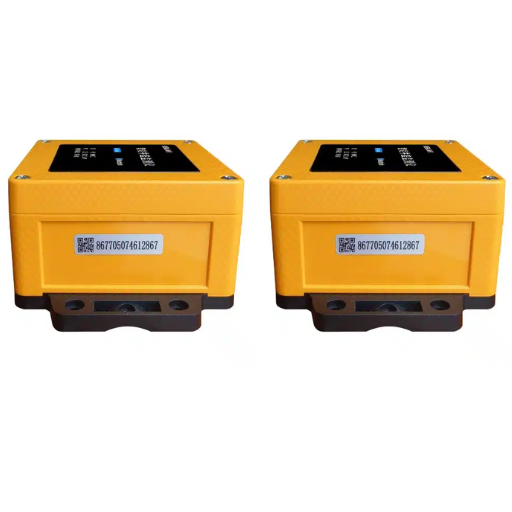
Here is the single most misunderstood fact about IP68. The rating does not define a fixed test. It defines a category, and the manufacturer fills in the numbers.
Why “IP68” Alone Is Unverifiable
Under IEC 60529, the IPX8 immersion condition is agreed between the manufacturer and the user. That means a device tested at 1 m for 30 minutes and a device tested at 10 m for 72 hours can both call themselves IP68, and both would be technically correct.
A legitimate product’s IPX8 test report therefore states its parameters, for example “IP68 (2 m / 24 h)” or “IP68 (5 m / 24 h).” A datasheet that prints plain “IP68” with no depth or duration has given you nothing you can verify.
When Lena Vogt, an EPC engineer, specified manhole covers for a low-lying road junction, the supplier’s brochure simply said “IP68.” The test report, once she finally obtained it, read 1 m for 30 minutes. Her junction flooded to 1.5 m for hours at a time.
The report was real. It just didn’t cover the condition she was buying for. Catching that mismatch before tender saved a costly replacement cycle two winters later.
Does the Rating Cover Your Worst-Case Exposure?
Translate the report’s numbers into your site conditions. If a manhole chamber floods to 1.2 m during storms, an “IP68 (1 m / 30 min)” report doesn’t cover it. Demand parameters that exceed your worst case, not the datasheet headline.
This is where a test report becomes a procurement tool rather than a formality. For the manufacturing side of how those parameters are proven, see our guide to IP68 outdoor sensor installation and testing →.
Who Can Issue an IP68 Test Report, and How to Verify the Lab
IP testing is a laboratory service, so the credibility of the report comes almost entirely from the credibility of the lab.
The number that matters is ISO/IEC 17025. This is the international standard for testing and calibration laboratories, and it is what gives a report weight across borders. In China, the equivalent national accreditation is CNAS, which is a signatory to the ILAC Mutual Recognition Arrangement. An ILAC-MRA report from a Chinese lab is recognised by accreditation bodies worldwide, just as reports from A2LA in the United States or UKAS in the UK are recognised internationally.
To verify a lab, check three things. First, confirm it holds ISO/IEC 17025 accreditation. Second, take its accreditation number and cross-check it against the accreditation body’s member list, including the ILAC directory. Third, for any report carrying a body certificate rather than only a test report, use the issuing body’s public register.
Common public registers include TÜV Rheinland Certipedia, UL Product iQ, the Intertek ETL Listed Directory, TÜV SÜD’s Certificate Finder, and SGS Certificate Verification. A report from a laboratory with no accreditation mark or number is not evidence of anything.
The Scope Trap: Does the Report Cover the Product You Are Buying?
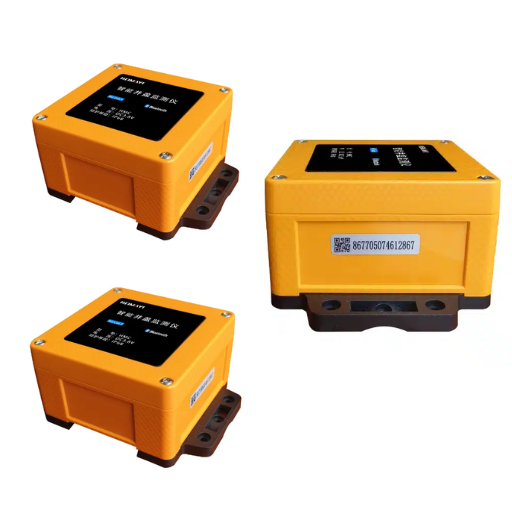
Even a genuine, accredited report can fail you if its scope does not match your purchase. Two scope problems cause most disputes.
Model and Configuration Match
The model number on the report must match the model number you are buying, character for character, including suffixes. In this market, “model-number substitution” is a documented fraud pattern: a visually similar model sits outside the tested scope, and a buyer never notices. Check the applicant, the model, and the configuration line by line.
The Whole Assembly, Not Just the Enclosure
A test report does not cover the whole assembly. It covers the sample submitted, and the accessories listed as part of the tested assembly. In IoT hardware, the common scope miss is the antenna pass-through and the sensor cavity.
The report should name the antenna, the cable gland, and the battery hatch as part of the device under test. If it only certifies a closed enclosure, then a production unit with an antenna port has never been tested as a system. Confirm the accessories list matches what you will install.
Prototypes, Gold Samples, and Production Reality
Certification bodies test a carefully prepared sample. That sample may not match a mass-produced unit. This is sometimes called the “gold sample” problem.
The defense is first-article inspection (FAI). Ask for the IP68 test to be repeated on a production sample, not a prototype. For large municipal orders, request batch soak testing or a witnessed factory test.
That step isn’t theoretical. When Daniel Osei, a distributor’s QA lead, demanded FAI on a 500-unit order, the production sample revealed an antenna pass-through that had been sealed differently from the prototype.
The prototype passed. The production unit wouldn’t have. FAI caught it before a single cover shipped.
Red Flags: How to Reject an Inadequate IP68 Test Report
Keep this rejection checklist. If a report trips two or more of these, treat the IP68 claim as unverified.
- No accreditation mark or number on the report.
- No immersion depth or duration stated.
- Generic language such as “compliant with IP68” with no measured parameters.
- Model number that does not exactly match your purchase.
- A test report older than about three years with design changes that were never reconciled.
- A “certificate” with no underlying test report behind it.
- The tested sample differs from the production configuration.
- Photographs of a different enclosure, or no photographs at all.
- Accessories such as the antenna, gland, or battery hatch absent from the tested assembly.
Two more caveats belong on your evaluation sheet.
First, IP ratings cover fresh water only. IP68 says nothing about saltwater, detergents, oils, or solvents, so a coastal or chemical-exposure deployment needs its own evidence.
Second, ratings aren’t cumulative. An IPX8 rating doesn’t imply IPX5 or IPX6 jet protection, so if your site involves washdown, that must be tested separately.
How to Verify an IP68 Rating: The 5-Step Workflow
Run this workflow on every supplier before you approve an IP68 claim.
- Request the complete, unedited report. Not a summary, not a certificate number. The full document with appendices.
- Check the nine fields. Confirm report number, lab, model, standard edition, clause, depth, duration, verdict, and uncertainty statement are all present.
- Verify the lab’s accreditation. Confirm ISO/IEC 17025 status and cross-check the accreditation number against the ILAC directory or the relevant body such as CNAS.
- Match the scope. Confirm the model and the tested assembly, including the antenna pass-through, match the product you will install.
- Match the exposure. Confirm the depth and duration exceed your worst-case site condition. If they do not, escalate to production-sample or witnessed testing.
The full standard itself is published by the International Electrotechnical Commission. When you need data from a checked device, Black Ant’s IoT data collection terminals → aggregate readings from field hardware that ships with its certification documentation.
Frequently Asked Questions
Is an IP68 test report the same as a certificate?
No. IP immersion testing under IEC 60529 produces a test report from a laboratory, not a certificate. In most cases there is no public register to check. You verify the laboratory’s ISO/IEC 17025 accreditation and the report’s technical fields instead of a certificate number.
How long is an IP68 immersion test?
There is no single duration. Under IEC 60529, the IPX8 depth and duration are agreed between manufacturer and user. Common values range from 1 m for 30 minutes to 10 m for 72 hours. Always read the exact parameters on the report rather than the “IP68” label.
Who can issue an IP68 certificate or report?
Any laboratory accredited to ISO/IEC 17025 for the relevant test method can issue an IP68 test report. In China, look for a CNAS-accredited lab, which is recognised internationally under the ILAC Mutual Recognition Arrangement. An unaccredited lab’s report carries little weight.
Does an IP68 test report cover saltwater or the whole assembly?
No. IP ratings cover fresh water only, so saltwater, detergents, and solvents need separate evidence. A report also covers only the sample and the accessories listed as the tested assembly, so confirm the antenna pass-through and battery hatch were included.
Conclusion
An IP68 rating is a claim until you read the IP68 test report behind it. The report, not a glossy certificate, is where the truth lives: the exact immersion depth and duration, the clause 14.2.8 methodology, the accredited laboratory, and the precise assembly that was tested.
Five habits separate buyers who get what they paid for from buyers who find out the hard way. Read the report field by field, verify the lab, match the model and assembly scope, confirm the depth and duration cover your worst-case flooding, and insist on production-sample testing for large orders.
Every one of those steps assumes the hardware was designed to pass in the first place. Black Ant’s IP68-rated smart manhole covers → are built and documented for underground deployment, and we hand buyers the full test report rather than a one-page summary. If you would like our certification documentation pack for a specific project, contact our engineering team and we will walk the IP68 test report with you. To learn more about IP68 Smart Manhole Cover Certification: What It Really Means and What to Verify Before You Buy, please refer to our accompanying guide.