

Smart Building Automation Trends for 2026: Transforming Facility Management with AI and Sustainability
For facility managers, the useful question behind smart building automation trends in 2026 is which developments deserve an operating budget. AI, connected sensors and digital twins need to be judged against the building’s actual problems: unnecessary operation, unexplained consumption, recurring alarms or control sequences that operators cannot verify.
This year’s EU Energy Performance of Buildings Directive (EPBD) implementation developments add a practical reason to review controls and records. They also require care: a dated EU announcement does not establish the rules for every building worldwide.
The priorities below connect technology choices to the data, people and evidence needed to evaluate them.
Smart building automation trends in 2026: what to evaluate
A building automation system (BAS) connects sensing, control and supervision of building services such as heating, ventilation and air conditioning (HVAC). Analytics adds tools for interpreting operational data. For the underlying components and architecture, see our BAS guide.

Start by separating an existing control function from a proposed analytical enhancement. A working schedule can switch equipment without machine learning. An analytical tool should have a defined additional task, such as identifying an abnormal operating pattern for investigation. Berkeley Lab’s building analytics research, published in October 2020, provides historical context for this distinction between operational data, analysis and corrective action.
| Development to evaluate | Practical question | Evidence to request |
|---|---|---|
| AI-assisted analysis | Which operating problem will it identify? | Relevant trend data, investigated alerts and recorded actions |
| Connected sensors and controls | Can the new data support a usable control decision? | Point mapping, data-quality checks and functional test results |
| EPBD implementation in the EU | Which national provisions apply to this building? | Applicable national rules and a building-specific assessment |
| Digital twins | Which decision needs a predictive model? | Model purpose, inputs and validation against measured behavior |
| Operational cybersecurity | Who can change controls, and how is operation restored? | Access arrangements, recovery procedures and tested responsibilities |
These are evaluation priorities, rather than a ranking of market adoption or promised financial returns.
AI needs an operating task and an accountable team
In a 23 June 2026 Messe Frankfurt interview, Tobias Frauenrath of Aachen University of Applied Sciences emphasizes cross-system integration and the expertise needed to operate smart buildings. His perspective is a useful test for an AI proposal: identify how it fits the building’s operations before judging its interface or feature list.
Distinguish fault detection from predictive maintenance
Fault detection and diagnostics (FDD) analyzes operating data to help identify problems. Predictive maintenance proposes a forward-looking assessment of equipment condition or failure risk. A tool that flags unusual consumption has not necessarily demonstrated that it can predict a breakdown.
For procurement, ask the supplier to distinguish these functions and demonstrate each claim separately. Request the points needed, the operating conditions covered and the process for confirming an alert. If failure prediction is offered, ask how the prediction was validated and how false alarms and missed events are evaluated. A maintenance reminder alone does not establish predictive capability.
Connect recommendations to operator decisions

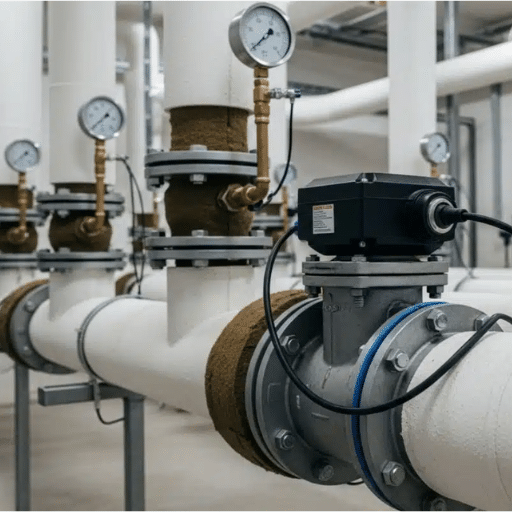
The image above illustrates application themes; it does not document a measured customer installation.
An anomaly alert becomes useful when someone can investigate it, identify the cause and record the response. Define who receives recommendations and who authorizes any control change. Where automated adjustments are proposed, agree the permitted operating limits, override method and fallback behavior before a trial.
For example, an evaluation could examine equipment operating outside an agreed occupancy schedule. Ask the team to compare the schedule, actual occupancy information, equipment commands and measured response. This is a suggested investigation, not a customer case or a forecast of savings. It gives a supplier something specific to demonstrate without assuming that AI is required to solve the problem.
Connected sensors need usable data and verified integration
More connected devices do not, by themselves, establish better operation. The June interview’s emphasis on cross-system networking makes integration a prerequisite worth examining. For a retrofit, we recommend starting with a point list rather than a device count.
Record each relevant point’s location, units, timestamp, update interval and meaning. Distinguish a command from a measured state: a command to open a valve is not proof that the valve moved or that the intended flow occurred. Ask how stale readings, missing data and manual overrides appear in the proposed system.
Occupancy-based HVAC control deserves the same scrutiny. Define what the occupancy signal represents, how unavailable data is handled and which comfort and ventilation constraints must remain in force. Do not assume that an occupancy signal can replace every existing schedule or safeguard.
Protocol names are only the beginning of an integration discussion. Use our BACnet explainer for background and the Modbus and BACnet integration guide for the related technical topic. For the proposed upgrade, request a demonstration that the required points can be read, interpreted and, where authorized, controlled correctly.
Before expanding the scope, prepare a short acceptance list: the intended sequence, expected response, alarm behavior, manual override and loss-of-communication response. Our HVAC commissioning guide covers the broader functional-verification process.
Sustainability: EPBD implementation and measurable controls
What the 2026 EU developments establish
The European Commission’s EPBD overview explains the revised directive and its national transposition deadline of 29 May 2026.
On 15 July 2026, the Commission announced formal notices concerning incomplete transposition. This is a dated implementation development. It does not establish the subsequent status of each country’s procedure or the obligations applying to a particular property today.
The public listing for the CA EPBD plenary meeting of 13–14 October 2026 includes building automation and control deployment and monitoring among its topics. The meeting is closed to the public. Its listed agenda supports reporting that implementation topic; it does not demonstrate new decisions, published outcomes or additional legal requirements.
For an EU project, have the responsible adviser identify the applicable national provisions, building scope and required evidence before selecting an upgrade. For projects elsewhere, evaluate the relevant local requirements separately. Purchasing a BAS or AI package does not, by itself, prove compliance.
Build an operational evidence file
Alongside any formal requirements, we recommend keeping a practical record of what the controls actually do. Include meter and trend logs, the comparison period, operating schedules, recorded interventions, comfort constraints and the person responsible for reviewing results.
Our building energy management implementation guide provides a related starting point for planning energy management. Keep the immediate goal specific: establish which measurements will show whether the proposed change worked. Treat energy, cost and emissions as separate reporting questions, with their respective calculation inputs documented.
Digital twins need a defined operational purpose

NIST describes a digital twin as a type of computer model of a physical system, which can include a building. Its discussion highlights prediction and model credibility. That makes the intended decision a better starting point than a visually impressive model.
Before commissioning a building twin, ask:
- Which decision will the model inform: testing an operating strategy, diagnosing a recurring issue or comparing alternatives?
- Which measured inputs and equipment relationships does it need?
- How will predictions be compared with observed operation?
- Who will update the model when equipment or schedules change?
A dashboard alone does not demonstrate predictive accuracy. Nor does a model’s simulated improvement establish measured savings in the building. Ask for validation relevant to the proposed use, and evaluate the cost of maintaining the model alongside its possible decision value. The NIST background is technical context, not evidence of a specific building’s energy result.
Compare measured value and manage operational risk
Historical analytics evidence: useful context, not an AI guarantee
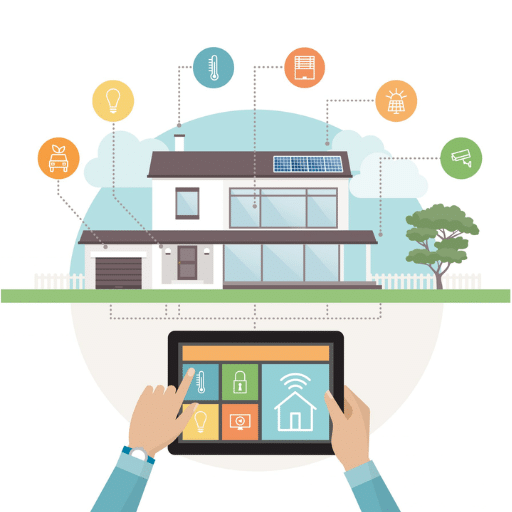
The image above is an illustration, not a photograph or evidence of a measured project in the research below.
Berkeley Lab’s October 2020 report, Proving the Business Case for Building Analytics, documents the 2016–2020 Smart Energy Analytics Campaign. It covered 104 organizations and 6,500 buildings and reported median annual energy savings of 3% for energy information systems and 9% for FDD.
These are historical campaign findings for different analytics categories. They are not a 2026 AI trial, a Black Ant customer result or an estimate for your property. The report connects analytics with monitoring-based commissioning, providing a useful reference for evaluating data analysis together with an ongoing operational process.
For a proposed upgrade, agree the measurement approach before intervention. Define the meters and equipment included, the baseline period and the comparison conditions. Record weather, occupancy, operating hours and concurrent changes where relevant. Compare energy results with comfort and service requirements, and identify who will investigate a result that fails to meet expectations.
For the business case, request itemized costs for hardware, integration, software, commissioning and continuing support. Calculate payback from the project’s stated costs and a defensible savings estimate; avoid transferring a research median directly into a budget promise.
Keep cybersecurity connected to physical operation
NIST SP 800-82 Revision 3, published in September 2023, includes building automation within operational technology (OT) and addresses security alongside performance, reliability and safety. It is a useful foundation for assessing a connected-controls proposal.
Ask who can access the system, which users can change settings, how remote support is controlled and how changes are recorded. Agree backup, recovery and fallback arrangements with the people responsible for operating the building. Evaluate security changes for their operational effects before deployment. An AI feature or internet connection is not evidence that these arrangements are adequate.
A practical upgrade checklist
Use the following sequence to turn a trends discussion into a bounded project:
- Define the problem. Identify the equipment, operating condition and service concern to address.
- Inspect existing evidence. Check points, meters, schedules and available trend history before adding sensors or analytics.
- Agree the interfaces and limits. Specify data access, permitted commands, operating constraints, overrides and fallback behavior.
- Trial a manageable scope. Choose a system or area where the team can investigate recommendations and record changes.
- Verify function and performance separately. Confirm that the sequence works, then assess measured results against the agreed comparison method.
- Assign continuing ownership. Name the people responsible for alerts, records, software access and operator handover.
For a supplier discussion, prepare the current point list, interface requirements and operating goals. Bring those requirements to Black Ant so the conversation starts with your building’s needs and the evidence you expect from a proposal.
Frequently asked questions
Which smart building automation trends matter most in 2026?
For a facility team, the relevant priorities are AI-assisted analysis, usable connected data, measurable controls, purpose-built digital models and operational cybersecurity. EU projects should also examine applicable EPBD implementation requirements. Rank these by the building’s operating problems rather than by a market forecast.
Does AI guarantee energy savings or prevent equipment failure?
No. Evaluate the specific function, required data, validation and operating response. Historical analytics findings do not establish a guaranteed AI result, and an anomaly alert does not prove that a system predicts failures.
How should a manager compare automation proposals?
Ask suppliers to address the same operating problem and measurement boundary. Compare integration work, data requirements, functional tests, operator responsibilities and total ownership costs. Request evidence for each claimed outcome rather than comparing headline savings percentages alone.
What does the EPBD news mean for a particular building?
The July announcement concerns EU transposition; the October meeting listing identifies implementation topics. Neither replaces a check of applicable national law and the property’s circumstances. Obtain that assessment before treating a particular control feature as a compliance requirement.
When is a digital twin worth evaluating?
When there is a defined decision that needs a credible model and a practical way to validate and maintain it. First identify the question, required data and expected decision benefit. Then compare the proposed model with simpler analysis that might answer the same question.







