

Building Automation Systems (BAS): Complete Guide to Smart Buildings
The smart buildings concept is fundamentally changing our mindset about the energy efficiency, comfort, and operational efficiency of modern buildings. Building Automation Systems (BAS) are the most significant advancements driving these changes. BAS is a technology that integrates and automates various systems, including lighting and HVAC, while seamlessly managing the building’s security and access control. This guide explores the crucial role BAS in making buildings intelligent, adaptive, and sustainable. You might be a building owner, facility manager, or tech enthusiast with a keen interest in the future of infrastructure. This wide-ranging overview will provide you with new insights into how smart buildings are built, run, and improved. Get set to investigate the technologies, advantages, and trends that are the driving force of next-gen buildings.
Introduction to Building Automation Systems

The Building Automation Systems (BAS) are centralized networks responsible for controlling and monitoring the major systems of a building such as heating, ventilation, air conditioning (HVAC), lighting, security, and energy management. They aim to increase efficiency, minimize energy use, and ensure occupants are comfortable. BAS enables real-time changes and data processing to enhance the building’s performance by integrating disparate components into a single system. The use of these systems greatly supports the pursuit of sustainability and the realization of smart buildings in the near future.
What is a Building Automation System?
A Building Automation System (BAS) is an integrated control system for a building’s mechanical, electrical, and plumbing systems that increases energy efficiency, improves operational performance, and maintains optimal performance with little or no human intervention.
History and Evolution of BAS
The idea of Building Automation Systems (BAS) dates back to the 1970s, when new technologies enabled energy management systems. The first BAS installations typically controlled only the HVAC (heating, ventilation, and air conditioning) system using basic analog technology, and the operator had to intervene frequently in the system’s maintenance and operation. These systems were primarily focused on reducing energy costs in response to the energy crises typical of that time.
BAS was gradually moving to digital and programmable logic controllers (PLCs) by the 1980s and 1990s. The transition to digital technology opened up new possibilities for the configurations of the systems and also made it easier to integrate the building subsystems such as lighting, security, and fire safety. This was also when communication protocols such as BACnet and LonWorks became industry standards, enabling devices from different manufacturers to work together more effectively.
The new millennium marked a significant turning point in the evolution of BAS, as the adoption of Internet of Things (IoT) technologies and cloud computing gained industry acceptance. The latest BAS leverages high-quality sensors, data analytics, and wireless technology, enabling real-time monitoring and control of building operations via remote devices. The global BAS market was estimated at approximately $65 billion in 2021 and is projected to reach $111 billion by 2028, with a compound annual growth rate (CAGR) of 8.1% over the period. This growth is a clear indication of rising demand for energy-efficient, sustainable buildings.
Currently, BAS is leading the way among innovative building projects and is making use of artificial intelligence (AI) and machine learning algorithms to foresee maintenance requirements, use energies smartly, and tailor the building to the occupants’ behavior. The reduced operational costs are one of the benefits of this technological change, but also the sustainability objectives are being met as less carbon footprint is left, and more renewable energy sources are being incorporated into the building infrastructures. The ongoing advancement of BAS continues to play an essential role in the future of urbanization and global energy management.
Key Components of BAS
Building Automation Systems (BAS) comprise integrated components that monitor, control, and optimize the operation of building systems. The main components of BAS and their essential functions are discussed below:
Sensors and Detectors
BAS is basically built on sensors that provide the real-time data for different environmental parameters. For instance, indoor climate is monitored by temperature sensors, moisture levels by humidity sensors, and occupancy by occupancy sensors, which are used to control lighting and HVAC systems. The implementation of smart sensors is considered to be the most effective way of achieving energy-efficient buildings where energy usage can be cut down by as much as 30% if done correctly.
Controllers
Controllers are regarded as the mind of the entire system, as they interpret sensor data and execute programmed instructions to control the building’s various functions. This category encompasses the PLCs and the DCS as well. Contemporary AI-enabled controllers can automatically adapt their functionality to environmental changes, ensuring uninterrupted operation and comfort.
User Interfaces (UI)
The user interfaces provide building managers or operators with a means to monitor and adjust system settings. The service usually includes dashboards and software platforms designed to provide visualized data for better understanding. The advanced UI systems are powered by the cloud and A,I which makes it possible to have remote access and conduct predictive maintenance. The cloud-based BAS interfaces are reported to have a 11.2% CAGR in a 2023 industry report.
Networking and Communication Protocols
BAS extensively uses networking and standard communication protocols such as BACnet, Modbus, and LonWorks to ensure seamless communication across all devices. One of the latest trends is to use IoT networks that will improve the range and scalability of system connectivity.
Actuators and Output Devices
Actuators convert controller commands into actions, such as opening or closing valves and adjusting dampers. They are essential for real-time operations in HVAC and other building systems. Using energy-efficient actuators can further optimize operations and reduce power consumption.
Energy Management Systems (EMS)
EMS is an indispensable component of modern BAS, providing an overview of the building’s energy usage, detailed energy analytics, and tracking consumption patterns. This enables property owners to take minor steps toward reducing energy consumption. Research conducted in 2022 demonstrates that the adoption of EMS can lead to a 20-40% reduction in the total energy consumption of a building.
The combination of these components provides BAS with an unrivaled range of benefits in efficiency, sustainability, and operational control. The integration of innovative technologies such as IoT, AI, and advanced analytics into these components is instrumental to the continuous expansion of BAS capabilities, thereby creating more innovative urban environments.
Benefits of Smart Buildings

Smart buildings present a variety of advantages that not only increase efficiency but also promote sustainability and improve tenant comfort. Here are five critical benefits with specifics and illustrative data underneath them:
Energy Efficiency
Energy demand in smart buildings is controlled and monitored using sophisticated systems such as Building Automation Systems (BAS) and energy management software. It has been documented by some research that the energy utilized in smart buildings may go down by 30% at the most, thus, cutting down operating costs and the impact on the environment significantly.
Improved Indoor Environmental Quality (IEQ)
Smart HVAC systems and real-time air quality monitoring are among the features that help ensure a healthy, pleasant indoor environment. For example, the automated ventilation systems are able to control airflow according to how many people are present in the room, and this way they can keep the indoor conditions at an optimal level.
Cost Reduction
Smart buildings can reduce their expenditures over a long period of time by making the most of their energy, doing predictive maintenance and thus, not having to replace their equipment quite often, and also by consuming less water. Industry reports indicate that smart building operating costs can be reduced by up to 25%.
Enhanced Security and Safety
The installation of integrated systems such as AI-powered surveillance, facial recognition, and smart access control has significantly enhanced the premises’ security. Furthermore, intelligent fire detection and emergency response systems have helped create safer environments for people inside buildings.
Sustainability and Environmental Impact
Smart buildings are an essential part of the puzzle in making the earth greener, as they drive the adoption of eco-friendly practices, such as reducing waste and relying on renewable energy sources. According to a report by the World Green Building Council, carbon emissions from net-zero-energy smart buildings could be reduced by up to 50% by 2030.
These advantages not only provide buildings with innovative technology a practical option, but also make the planet’s future more sustainable.
Energy Efficiency and Sustainability
Smart buildings are leveraging new technologies to reduce energy consumption and improve environmental performance, which is a good thing, at least given that they are part of the world trying to fight climate change. By the help of Internet of Things (IoT) devices and energy management systems, smart buildings keep track of their power consumption and employee waste in real time. Recent studies show that innovative energy systems can lead to reduction in energy consumption of up to 30%, and that shall result in a considerable cut in operational costs and carbon footprints.
Moreover, renewable energy integration is a key feature of eco-friendly smart buildings. Today, wind turbines, solar panels, and other renewable energy resources are becoming part of building designs, thereby enabling energy self-sufficiency. Thus, the International Energy Agency (IEA) forecasts that by 2030, the inclusion of renewable resources in smart buildings could allow 25 to 30 percent of the global energy demand to be met.
Smart lighting and HVAC (heating, Ventilation, and Air conditioning) systems in thousands of cities across the world have energy-efficient more intelligent buildings that work with those as mentioned above. They are already contributing to meeting the sustainability goals and European Green Deal, as well as the new energy-efficient building standards worldwide they are not wasting energy anymore. Thus, through these solutions, smart buildings are establishing a new standard for energy efficiency in the future urban landscape.
Improved Comfort and Productivity
Sustainable smart buildings are not just a consideration; they also significantly improve occupant comfort and productivity. The integration of modern technologies such as IoT sensors and AI enables automatic adjustment of lighting, temperature, and air quality based on user preferences. Indoor air quality is one of the most critical indoor factors affecting health and performance; hence, research from Harvard University’s T. H. Chan School of Public Health indicates that indoor air quality can increase cognitive performance by up to 61%, a significant improvement.
Moreover, simulating natural daylight through dynamic lighting systems has a positive effect on energy levels and concentration in the workplace; productivity is estimated to increase by approximately 15%. The personalization of work environments through innovative systems ensures employees remain comfortable throughout the day, reducing fatigue and stress. These innovations demonstrate how technology designed for human needs is making smart buildings more livable and productive, which in turn improves overall health and business efficiency.
Cost Savings and ROI
Smart buildings are the smartest investments, delivering significant cost savings and strong return on investment (ROI) over the years. Energy efficiency is the primary focus for cost reduction. According to the U.S. Department of Energy, up to 30% of energy costs can be saved through the installation of intelligent energy management systems. These systems achieve this by leveraging advanced sensors, automation, and data analytics to control energy consumption and detect waste, all driven by real-time conditions. For example, automated HVAC systems adjust temperature settings based on occupancy and can save large office buildings thousands of dollars a year.
Moreover, IoT devices in smart buildings enable predictive maintenance, reducing the risk of failures and costly downtime. Predictive maintenance statistics indicates that it can cut maintenance costs by 20% and improve the lifespan of critical systems by 20%. The use of predictive maintenance avoids costly unplanned outages and enables businesses to allocate resources more efficiently.
Additionally, smart buildings increase employee productivity, which in turn yields financial benefits for the organization. Research done at Harvard’s T. H. Chan School of Public Health indicates that, one of the features of smart buildings, good air quality, can give rise to an increase in employee cognitive function by as much as 61%. Productivity gains, therefore, can be viewed as a direct increase in enterprise output and profitability.
Investment Recovery: If the initial investment required to introduce innovative building technologies is the major hurdle, it is temporary, as the long-term advantages more than compensate for it. Not only do energy savings, operational cost reductions, and increased employee productivity contribute to strong ROI, but they also enable the investment to be recovered within three to five years. Hence, smart buildings are ideal from a sustainability and financial perspective, as they are the most cost-effective option for businesses seeking to survive in the future.
Understanding How Building Automation Systems Work

Building Automation Systems (BAS) are the very definition of a centralized network of hardware and software designed to monitor, control, and optimize the systems in a building, as well as energy usage. To name a few of the functions a BAS commonly handles, they include HVAC (heating, ventilation, and air conditioning), lighting, security, and all other essential operational functions. The BAS pulls together the disparate elements of the building: sensors, controllers, and communication protocols to ensure that there is the least energy wastage possible. In contrast, the building is at the most comfortable and safe conditions.
Key Components of Building Automation Systems
| Component | Function |
|---|---|
| Sensors | Sensors are the backbone of the system for data collection, measuring parameters such as temperature, humidity, occupancy, light levels, and air quality. After collecting the data, the system will make the optimal, informed adjustments to meet the desired parameters. A good case in point is occupancy sensors that help conserve energy by lowering illumination in areas where no one is present. |
| Controllers | Controllers process sensor data and issue commands to actuators or end devices. Customizable modern controllers are standard because they can be programmed to meet a building’s specific requirements. |
| Actuators | The actuators implement the physical changes—for instance, they may operate HVAC system dampers in response to sensor signals or dim lights. |
| User Interfaces | Through user interfaces, building managers can interact with the BAS, for example, through dashboards or mobile apps, to keep track of performance and make manual adjustments if necessary. |
| Communication Systems | Seamless data exchange among devices in the system is enabled by communication protocols such as BACnet, Modbus, and LonWorks. |
Benefits Backed by Latest Data
According to recent industry reports, buildings equipped with BAS can reduce energy costs by up to 30% due to automation and optimization, among other factors. One of the U.S. Department of Energy’s statements is that, for advanced BAS, functionalities such as real-time energy monitoring and predictive maintenance can reduce maintenance costs by 15% and increase equipment lifespan by 20%.
Moreover, with AI (artificial intelligence) and machine learning, the modern BAS will always be at its best at making predictions, thereby suggesting the exact energy-saving measures appropriate for the specific situation. On the other hand, a report from MarketsandMarkets indicates that the smart building market is projected to grow from $80.62 billion in 2022 to $328.62 billion by 2029, indicating increasing adoption of BAS technology due to its real benefits.
Incorporating intelligent design and high-tech BAS solutions ensures operational efficiency while also meeting sustainability goals. The continuous development of smart building systems enables businesses to gain greater control, occupy less space, and leave a smaller environmental footprint.
Overview of Control Systems
Control systems are the backbone of modern Building Automation Systems (BASs), which provide real-time management and monitoring of the entire building’s operations. With these systems, functions such as HVAC (heating, ventilation, and air conditioning), lighting, security, and energy management can be integrated seamlessly. A control system, when designed appropriately, not only improves energy efficiency but also reduces operational costs and increases occupants’ overall comfort.
The most recent industry statistics indicate that the global market for HVAC control systems was estimated at around $14 billion in 2022 and is projected to grow at a compound annual growth rate (CAGR) of more than 10% through 2030. The primary driver of this growth is the increasing adoption of energy-saving measures and innovative technologies. Furthermore, the market value of lighting control systems is projected to reach $45 billion by 2028, indicating widespread adoption of high-end control solutions.
Recently, the Internet of Things (IoT) has enabled control systems that are more connected and data-driven than ever before. A good example of this is IoT-enabled devices that can perform large-scale data collection and analysis, thereby reducing energy consumption, predicting maintenance needs, and strengthening security protocols. Besides, AI and machine learning are being integrated into these systems to allow for predictive adjustments, thus, building up an even more innovative and more responsive building sector.
By leveraging these cutting-edge technologies, companies and property owners can adopt more eco-friendly practices while enhancing tenants’ living conditions. The emergence of interconnected control systems indicates a widespread shift toward more innovative, cleaner, and more efficient building management practices worldwide.
Integration with HVAC and Climate Control
Connected control systems merging with HVAC (Heating, Ventilation, and Air Conditioning) and climate control technologies result in a myriad of advantages including energy efficiency, user comfort, and operational insights. Connected systems continuously leverage sensors, data analytics, and automation to optimize indoor environments dynamically. Here are five key points of this integration step:
- Real-time Monitoring and Adjustments: The sensors installed throughout the buildings continuously monitor temperature, humidity, and air quality. The system, based on this information, will continuously adjust to maintain the indoor climate at the optimal level.
- Energy Consumption Optimization: While the building is smart, algorithms track energy usage daily and guide HVAC operations based on peak and off-peak hours to avoid unnecessary power consumption and reduce costs.
- Zone-based Climate Control: This connectivity permits the fastening of each separate zone in the building, hence, the temperature in that particular area not only can be adjusted but also is more comfortable and efficient in terms of energy used.
- Predictive Maintenance: Performance data, when analyzed, can inform the system of the precise time when an HVAC component needs to be repaired or replaced, which will eventually save time and money by avoiding the inconvenience of sudden breakdowns.
- Integration with Renewable Energy Sources: Connected systems are capable of managing the electricity generated by on-site solar installations, which can be used to run the operations of HVAC, thus further lowering the carbon footprint.
This state-of-the-art integration delivers reduced energy consumption, improved cost management, and greater user satisfaction, making it an integral part of high-tech building solutions.
Types of Building Automation Systems
Building Automation Systems (BAS) now come in various forms to meet the operational needs of modern facilities. Among the below-mentioned BAS types, the first three, namely HVAC, Lighting, and Security Systems, along with their respective applications and recent efficiency data, are chronicled.
HVAC Automation Systems
HVAC (Heating, Ventilation, and Air Conditioning) automation has become one of the most extensively used systems. These systems are responsible for maintaining the building’s indoor environment via monitoring and regulating the temperature, humidity, airflow, and air quality. A report by MarketsandMarkets projects growth in the global HVAC control market, from $14.8 billion in 2023 to $21.1 billion by 2028, with the bulk of this demand driven by energy-efficient solutions. The innovative HVAC installations have been found to allow for up to 30% of the house energy consumption to be avoided through paired-up adoption of sensors and algorithms, as stated by the U.S. Department of Energy.
Lighting Control Systems
Modern lighting control systems are equipped with occupancy sensors, daylighting systems as well as programmed schedules, which control lighting as needed. Energy savings are high through this practice. The International Energy Agency (IEA) estimates that adopting automated/upgraded lighting systems could reduce lighting energy use by 35%-60%. When combined with the LED technologies and the IoT-enabled controls, the contribution to decreasing operational costs and the environmental impact of the systems is major.
Security and Access Control Systems
The security BAS comprises surveillance cameras, motion detectors, biometric access control, and an integrated alarm system. The latest tech innovations in the security sector have introduced AI-driven analytics that can not only detect but also prevent security threats proactively. A report by Allied Market Research estimates the global access control security systems market will reach $13.4 billion by 2030, driven by the industrialization of healthcare, commercial offices, and residential complexes, among others, placing a strong emphasis on safety as a basic requirement.
Smart Energy Management Systems
The new technology enables connecting the energy resources up to the point where the total energy consumption is less than the energy supplied to the grid. Moreover, the energy-efficient measures can be supported financially. The World Green Building Council asserts that energy management systems can reduce energy bills by up to 50% for end users while supporting sustainability goals.
Fire and Life Safety Systems
Fire systems automation, including smoke detectors, sprinkler systems, and emergency alerting mechanisms, has been updated. Thanks to IoT improvements, fire BAS now have superior data analytics and quick fault detection. The National Fire Protection Association (NFPA) reports that these modern systems integrate seamlessly with other building systems to enable more coordinated emergency responses, thereby saving lives and property.
Integrated Systems (IoT-Enabled BAS)
The most recent development in BAS is the total IoT integration, where all the necessary systems, such as HVAC, lighting, security, and energy management, come together to improve the overall efficiency and user comfort. According to Statista, the smart building market, which relies on IoT-enabled systems, is projected to reach $121.6 billion globally by 2027, driven by the growing urban population and the integration of technology into city infrastructure.
These innovations in building automation have enabled safe, comfortable, and eco-friendly facilities, as well as significant energy and operational savings.
Technological Advancements in BAS
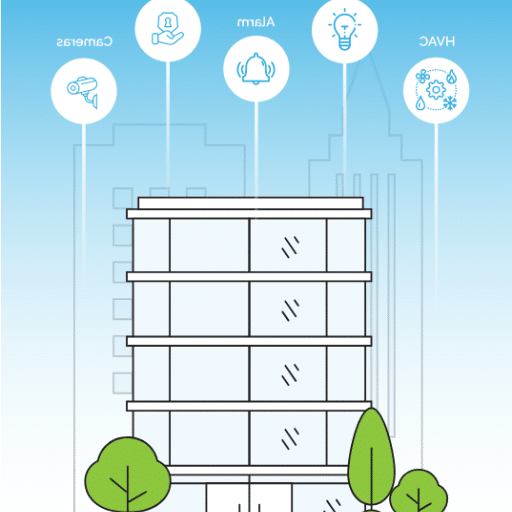
The rise of Building Automation Systems (BAS) is driving a radical shift in how buildings operate, leveraging the latest technologies and the Internet of Things (IoT). One of the main improvements in BAS is the application of Artificial Intelligence (AI) and Machine Learning (ML) algorithms. These innovations allow predictive maintenance, optimization of the whole system in real-time, and providing insights based on the analysis of the data trends over time. For instance, AI-enabled BAS can anticipate machine breakdowns, thereby preventing up to 50% time loss, according to industry estimates.
Another breakthrough in this area is the development of cloud-based platforms. The use of cloud computing greatly eases the process of supervising and operating building services from a distance, thus allowing the facility staff to be informed about the situation in the building no matter where they are. Current data indicate that the cloud BAS market is booming, with a compound annual growth rate (CAGR) of 11% through 2030. These platforms also promote scalability, making it easier to add new features or systems as needed.
One of the main factors behind this technological advancement in BAS is the introduction of smart sensors. These gadgets measure accurately the conditions for such things as heat, moisture, number of people, and power used; thus the buildings can adjust themselves according to the changes in the environment. Researchers claim that smart sensors can reduce energy consumption by up to 30%, thereby playing an essential role in achieving sustainability targets.
Furthermore, implementing cybersecurity measures has become a top priority in contemporary BAS. As IoT systems become increasingly interconnected, there is a growing need for robust cybersecurity protocols to safeguard data and thwart potential cyberattacks. There are studies that indicate almost 40% of the companies using BAS systems have had to deal with security-related issues, which has resulted in the enhanced use of encrypted communication and secure authentication in BAS settings.
Key Takeaway: These new technologies are making the BAS landscape more vibrant, enabling smarter, safer, and more operationally efficient buildings. In the end, AI, cloud computing, smart sensors, and better cybersecurity are together responsible for the transformation of intelligent infrastructure.
Emerging Technologies in Smart Buildings
The innovative building ecosystem has not yet come to a standstill. It is still progressing toward the next stage of incorporating the latest technologies that elevate living and working environments with greater efficiency, sustainability, and comfort. Among the leading technological innovations are IoT devices, AI, and modern energy management systems.
Internet of Things (IoT) Integration
IoT is enabling a major shift in buildings, turning them into interconnected data and automation infrastructures. Beside many others, contemporary IoT sensors are constantly checking the temperature, energy consumption, number of people in the building, and the air quality. A recent study projects the global IoT in smart buildings market will reach $127 billion by 2030, representing a 25.3% annual growth rate from 2023 to 2030. This hardware is the reason for real-time data and maintenance–the operational costs of 30% at least are one of many benefits of the data-driven approaches.
Artificial Intelligence for Building Optimization
AI systems are taking the lead in the energy management domain of innovative building development today by monitoring and controlling energy use. Smart buildings are, however, simply one application area for AI, which permits batched building diagnostics, for example, energy credits through different usage patterns, human activity detection (giving rise to the last one) and so forth. This predictive capability is particularly applicable to heating and cooling systems, where machine learning models can detect HVAC failures, enabling building managers to address issues and reduce the impact of outages proactively.
Advanced Energy Management Systems
Energy conservation is a significant area of concern in the innovative building sector. The most advanced energy management systems now integrate solar and wind energy with the traditional grid. These systems rely on smart grids and AI for energy consumption optimization and thus indirectly contribute to reducing the carbon footprint. The operations of these systems can lead to energy savings of up to 45% in buildings aligned with these goals, thereby achieving sustainable development.
Cloud Computing and Remote Monitoring
Cloud computing integration not only increases data storage capacity but also enables remote monitoring, allowing facility managers to control multiple buildings from a single platform. Operational efficiency will improve significantly, while the requirement for on-site labor will decrease. By 2025, Gartner expects that 80% of medium and large enterprises will have moved to a cloud-based, innovative building management solution.
Enhancing Occupant Well-Being
The new era of smart buildings, enabled by emerging technologies, focuses on improving occupants’ comfort and health. Among the products related to it are artificial lighting that mimics the natural body clock and advanced air-cleaning systems. Research has shown that smart buildings with good air quality can increase worker productivity by 11% and reduce sick days by 25%.
The victorious march of these technologies in the bright building sphere is permanently changing the scenario which will be characterized by the three main features: sustainability, user-centric designs, and smooth operations.
Role of Artificial Intelligence and Machine Learning
Artificial Intelligence (AI) and Machine Learning (ML) are at the heart of transforming smart buildings into efficient, flexible environments. The technologies as mentioned above enable real-time data analysis, predictive maintenance, and the analysis of diverse occupants’ experiences. Five principal uses of AI and ML in smart buildings are listed below:
- Energy Optimization: Data about power usage, and its regular reducing and increasing trends, are fodder for AI algorithms and hence its smart management. Energy-consuming units such as HVAC and lighting are reduced based on occupancy patterns and weather forecasts using machine learning (ML) methods, saving up to 30% on power bills.
- Predictive Maintenance: ML algorithms are constantly watching the operations of machines and the early detection of problems before they turn serious is the passive yet effective role that they play. Not only is machine life extended, but also repair costs and delays are minimized.
- Occupant Experience Personalization: AI-controlled user preferences are based on the analysis of people, helping with the automatic adjusting and control of lighting, temperature, and even workspace layouts for the purpose of comfort and productivity of the people using the space. For example, lighting and temperature in conference rooms can be adjusted automatically when people enter.
- Enhanced Security Systems: Surveillance systems powered by AI take advantage of facial recognition and behavioral analytics for identifying threats before they occur. Machine learning is employed to strengthen access control by spotting abnormal activities as they happen.< /li>
- Smart Space Management: AI and ML do not only coexist but also partner up in a very fruitful way when it comes to deciding which areas of a building are occupied and which ones are not. Management can then use these insights to adjust floor plans, avoid crowding, and identify underutilized areas, enabling those areas to be repurposed to meet new requirements.
By these AI and ML applications, smart buildings are made more responsive, efficient, and sustainable as a result, while simultaneously, the occupants’ life quality is significantly improved.
Modern BAS Operating Systems
The modern Building Automation Systems (BAS) operating systems have completely changed the methods of supervision, management, and optimization of buildings. The systems use the most advanced technology to unify HVAC, lighting, security, and other systems on a single platform. The modern BAS leverages edge computing, IoT devices, and cloud solutions to deliver real-time data analytics and advanced capabilities that improve operational efficiency.
Main Features and Functions
| Feature | Description |
|---|---|
| Interoperability | Modern BAS systems can be easily integrated with different devices and protocols such as BACnet, Modbus, and LonWorks. The combination ensures compatibility across systems, making the integration more straightforward, faster, and cheaper. |
| Energy Consumption Insights | BAS-driven insights can reduce energy consumption in commercial buildings by up to 25% (source: U.S. Department of Energy). The advanced algorithms not only monitor energy use but also adjust it based on real-time occupancy patterns and environmental conditions, resulting in significant cost savings. |
| Remote Access and Control | The cloud connection enables building system managers to observe and regulate the systems, even from the other side of the world. Instant notifications on mobile devices and dashboards for equipment breakdowns help avoid unplanned downtime, which is expensive. |
| Predictive Maintenance | With AI and machine learning, modern BAS systems can provide equipment failure forecasts before they occur. For instance, HVAC performance might be slightly out of range, triggering an alert and sparing costly repairs by enabling repairs to be completed in less than 25%-30% of the time (source: McKinsey). |
| Scalability and Flexibility | The systems can scale, making them suitable for buildings of any size, from small offices to large campuses. The modular structures also enable expansion of integration with new technologies or requirements as they arise. |
| Improved Sustainability | BAS plays a significant role in sustainable building operations, thereby reducing overall energy consumption and carbon emissions and helping achieve green building certifications such as LEED or WELL. |
Real-World Impact
The use of modern BAS in smart cities like Singapore is a prime example of how urban life can be improved through technology. With advanced BAS systems in thousands of buildings, Singapore has claimed a 15% boost in energy efficiency and a significant cut in operating costs. Large-scale applications in commercial complexes, such as those by Johnson Controls and Siemens, have resulted in energy savings of millions of kWh annually.
The forecast for modern BAS is that they will have more and more AI-powered decision-making as well as more IoT-based sensors for accurate data. These systems are leading the charge toward more intelligent, greener buildings worldwide.
Future Trends in Building Automation

The building automation industry is undergoing significant, rapid change driven by modern technologies and global demand for energy efficiency. One important trend is the integration of Artificial Intelligence (AI) and Machine Learning (ML) with Building Automation Systems (BAS), enabling real-time data processing and improved predictive maintenance. Predictive maintenance, which is an AI-based function, can predict the breakdown of machines thus saving up to 40% downtime and also prolonging the life of critical infrastructure.
Another significant trend is the widespread deployment of Internet of Things (IoT) sensors and devices. According to a 2023 report by MarketsandMarkets, the global IoT in building automation market is projected to grow from $84.4 billion in 2023 to $146.3 billion in 2028, with a compound annual growth rate (CAGR) of 11.5%. These sensors enable a detailed understanding of lighting, HVAC, and occupancy patterns, allowing buildings to fine-tune energy use with maximum accuracy.
Additionally, eco-friendly technologies are getting popular. Smart buildings use solar energy, which is integrated with Building Automation Systems (BAS), to achieve energy neutrality. For example, studies indicate that implementing intelligent energy management systems can reduce building energy use by 30%, thereby significantly advancing global decarbonization.
Moreover, advanced cybersecurity measures are needed more than ever. If a building automation system (BAS) must be breached, it is vital to safeguard it, as it is increasingly connected. It is envisaged that the future BAS will include features such as end-to-end encryption, blockchain-based data security, and high-security firewalls to protect against cyber threats.
All of these developments point to a future in which building automation is more intelligent, more efficient, and more attuned to global sustainability objectives, ultimately ushering in a new era of green, smart infrastructure.
Predictions for the Next Decade
Over the next ten years, I foresee building automation systems (BAS) becoming so integrated with artificial intelligence and machine learning that they are effectively a single system. These systems would not only maintain energy efficiency at the highest level but also enable predictive maintenance and improve inhabitants’ comfort through customized experiences. Additionally, I foresee the implementation of stronger cybersecurity measures to protect against emerging threats and the large-scale adoption of solar energy integration. All in all, I think the combination of these innovations will enable infrastructure that incorporates bright, green, and resilient characteristics worldwide.
Challenges Facing the Industry
The infrastructure sector, despite the advantages of innovative technologies and renewable energy, still faces considerable challenges that could impede its progress. One of the major obstacles is the high cost of installation and the operation and maintenance of intelligent systems. As per the recent industry report, the total worth of the global smart infrastructure market is likely to reach $352 billion by the year 2030, and the slow starting adoption, however, is due to the requirement of such significant investments upfront, which many areas or organizations cannot afford due to their budgets.
Another problem that needs to be addressed is cybersecurity. Due to the increasing number of interconnected devices and systems, the risk of cyberattacks has risen to the point that it can be considered exponential. A report of Cybersecurity Ventures from 2023 says that the annual global cost of cybercrime is going to be $8 trillion, with critical infrastructure, such as power grids and transport systems, being the most vulnerable, i.e., loss of power supply and transport, which can even cause an economic crisis.
Moreover, the logistical challenges of integrating renewable energy sources, such as the need to modernize the grid and address storage limitations, are also impeding the process. The International Energy Agency (IEA) reports that renewable energy sources accounted for nearly 30% of global electricity production in 2022; however, persistent supply intermittency and outdated networks remain, hampering the full deployment of renewables.
There is also the question of workforce readiness, which must be addressed positively; otherwise, the sector will continue to bleed. The shortage of skilled manpower in areas such as artificial intelligence, data analysis, and renewable energy is one of the factors limiting the industry’s ability to pursue innovation. A 2023 labor market study reports a global shortage of around 1.2 million skilled professionals in tech and engineering needed to support the ever-increasing demand for innovative infrastructure projects.
Moving Forward: Overcoming these hurdles will require a joint effort by governments, the private sector, and research institutions, with leading initiatives focused on developing cost-effective solutions, strengthening security, improving workforce training programs, and modernizing infrastructure systems to meet future needs.
Opportunities for Innovation
The influx of innovative infrastructure projects has allowed various sectors to integrate innovations in different ways. The global smart infrastructure market is projected to reach $434 billion by 2030, with a compound annual growth rate (CAGR) of 20.7% from 2022 to 2030. The market is being shaped by rapid urbanization, the adoption of IoT technologies, and demand for sustainable development solutions, among other factors.
Infrastructure systems are becoming more efficient and effective through the integration of AI, big data analytics, and machine learning. A case in point is the AI-powered traffic management systems used in innovative city initiatives that reduce urban congestion and improve mobility. Likewise, IoT-enabled devices that monitor energy consumption and water usage promote sustainability while reducing utility companies’ operating costs.
Renewable energy integration is another central area for innovation. Smart grids and energy storage solutions, among others, are the technologies that receive investment and will ultimately facilitate the transition to clean energy sources. For instance, worldwide, smart grid technology installations are expected to increase in value to $90.1 billion by 2030, driven by demand for reliable, highly efficient energy management systems.
Moreover, reskilling the labor force creates an opportunity for innovation. The industries will not only bridge the talent gap but also prepare workers for advanced, technology-driven projects by improving training in fields such as cybersecurity and advanced engineering. Governments and private institutions are already investing in upskilling initiatives supported by online learning platforms to tackle these workforce issues.
It is through collaborative partnerships between the public and private sectors and sustained funding for advanced technologies, research, and education that the full potential of these opportunities will be realized. The world’s economies will be able to leverage these innovations to build infrastructure systems that are more resilient, efficient, and sustainable.
Frequently Asked Questions (FAQ)
What are building automation systems (BAS), and how do they enable smart buildings?
Huge networks of interconnected devices consist of sensors, controllers, actuators, and software, and are termed building automation systems (BAS) sometimes. In the complete guide to smart buildings, BAS is depicted as the foundation that collects data, enforces regulations, automates processes, and optimizes performance to the limits of occupant comfort, reduces energy use, and enables predictive maintenance.
Which components make up a typical BAS, and what roles do they perform?
A typical BAS typically includes field sensors (temperature, CO2, occupancy), programmable logic controllers (PLCs) or direct digital controllers (DDCs), actuators (valves, dampers), gateways, a central management platform or building management system (BMS), and analytics software. Sensors provide inputs, controllers execute control logic, actuators modify physical states, and the management platform supports visualization, scheduling, alarming, and analytics for energy management and operations.
How does BAS integration with IoT and open protocols improve brilliant building performance?
Linking to IoT devices and open protocols (BACnet, Modbus, LonWorks, MQTT) increases interoperability and data access across vendor systems. This leads to more sophisticated analytics, more straightforward commissioning, and upgradable retrofits. Open-protocol BAS enables third-party analytics, cloud connectivity, and edge computing to enhance HVAC control, lighting schedules, and troubleshooting, resulting in quantifiable energy savings and an improved occupant experience.
What energy management and sustainability benefits can I expect from deploying a BAS?
BAS-managed energy use can result in significant reductions in HVAC and lighting energy consumption through optimized schedules, demand-controlled ventilation, real-time monitoring, and automated setback strategies. Continuous commissioning and fault detection using BAS-generated data reduce energy waste, help shift peak loads, and support sustainability goals and certifications such as LEED or BREEAM.
How do you secure a BAS and protect smart buildings from cyber threats?
Security measures for BAS include network segmentation, strong authentication, regular updates, encrypted communication, secure gateways, and strictly monitored access controls. Establishing building-specific cybersecurity policies, monitoring logs for anomalous activity, and collaborating with IT and facilities teams help reduce risk. Designing for security and selecting secure IoT devices are fundamental to safeguarding valuable assets in buildings and the confidentiality of occupants’ data.
What is the role of commissioning and ongoing maintenance in BAS lifecycle management?
The process of commissioning ensures that BAS components are installed, configured, and tuned to meet performance objectives. Ongoing maintenance—which encompasses routine calibration, installing software updates, and monitoring system performance using FDD—keeps the system operating efficiently. Proper commissioning and continuous commissioning not only extend equipment life but also reduce downtime and maintain occupant comfort.
Can BAS be retrofitted into older buildings, and what are common retrofit strategies?
Modern Buildings can be retrofitted with building automation systems by using a phased approach to older buildings: first, the sensors and controllers are added to the central systems; second, the gateways are deployed to connect the existing equipment via Modbus or BACnet MS/TP; and lastly, the cloud-based management for analytics is implemented. Wireless sensors, BACnet/IP routers, and edge controllers make retrofits cost-effective, minimize disruption, and enable gradual upgrades to a smart building architecture.
How do BAS analytics and predictive maintenance work to reduce operational costs?
BAS analytics gathers time-series data and applies algorithms or machine learning to detect trends, anomalies, and equipment wear and tear. Predictive maintenance then uses this information to, for instance, schedule repairs before breakdowns, optimize heating and cooling runtime, and minimize emergency service calls. This proactive stance leads to lower lifecycle costs, improved energy efficiency, and fewer complaints from occupants.
What standards and compliance considerations should facility managers know about BAS?
Facility managers should be familiar with open communication standards (BACnet, Modbus, LonWorks), cybersecurity frameworks (NIST, ISO 27001), energy standards (ASHRAE 90.1, ASHRAE 180), and local building codes. Compliance guarantees interoperability, safety, and the right to receive incentives or certifications for smart buildings and energy-efficiency programs.
How do you evaluate ROI and business cases for implementing a BAS in an innovative building project?
ROI can be evaluated by calculating energy savings, maintenance, and lifecycle cost reductions, increased occupant productivity, and potential revenue from demand response or incentives. The upfront costs (hardware, software, and commissioning) are compared with measurable benefits over a typical payback period. Furthermore, the pilot projects, metering data, and vendor performance guarantees can be utilized to create a compelling business case for BAS investment.
References
- A systematic review and meta-analysis of building automation systems
Published on ScienceDirect
- A critical review of cyber-physical security for building automation systems
Published on ScienceDirect
- Automated design of building automation systems
Published on IEEE Xplore







