

Eccentric Plug Valves for Slurry and Abrasive Media: An Engineer’s Selection Guide
Every six months the maintenance crew at the Mesa Verde wastewater reclamation plant found themselves back at the same pair of ball valves on the raw sewage influent line. The grit and sand and organic debris chewed through the seats until the valves wouldn’t isolate. Downtime cost $4,200 per event. Plant engineer Diana Okoro finally specified eccentric plug valves as the answer. Since then, sixteen years have passed, and the valves are doing a good job.
Chances are if you are managing process lines which move slurry, tailings, ash, pulp stock, or any particulate-laden liquid, you might have been through Diana’s plight in one way or the other. Standard isolation valves are designed to handle clean media; when they are put into use in abrasive service they turn into cost consumables. I explain how an eccentric plug valve for slurry service lives while others give up, how should you specify the correct body material, liner, and actuator for your kind of service, and how the modern instrumentation takes valve maintenance away from reactive replacement to predictive, data-driven scheduling.
By the end of this article, one will derive the steps to size and select an eccentric plug valve for slurry applications, how to couple additional pressure and flow instrumentation for condition monitoring, and what one must ask about a manufacturer prior to placing the order.
Ready to minimize unplanned valve replacements? Read on for checklists that tell the difference between a five-year service life and a half-year failure.
What Is an Eccentric Plug Valve?

An eccentric (tight) seating lifted plug valve is a quarter-turn rotary control valve in which the plug is offset from the stem centerline. The plug lifts off the seat during most of its travel once it starts to rotate and meets the seat only for the last few degrees of closure. This is very useful in regard to not abrading the seat in the presence of slurry or dirty service.
Think of it as one kind of cam. The plug itself is offset from the shaft. When you turn that handle or actuator by 90 degrees, the plug is arched. During about 85 degrees of this travel, no plug surface remains in contact with the seat. Only in the last degrees of 5 to 10 will the plug be seated in compression with the seat against the seat. As the seat is not in continuous engagement with the plugs during rotation, no particulate is either dragged along the sealing surfaces. The seat is kept undisturbed. The valve will still be drop-tight.
In this particular instance, the geometry endows the eccentric plug valve as a rotary type in the field of rotary valve construction, joining its counterparts in ball and butterfly configurations. Only here you will find that in an opened seat, ES valves for isolating some washing chemicals is capped by the gate-type intermediary plate, which is promoting the so-called open-mouth sintering technique.
Why Eccentric Geometry Works for Slurry and Abrasive Media
The unsealed plug passes a height sufficient for clearance from the point where seat-to-plug contact is formed through the majority of deflection angles allowable by offset in order to kill off the ongoing detrimental contact made between the seat and plug that threatens the life of the ball valve and the headset ring immediately . With this truly reduced contact, it provides a longer service life compared to both ball and concentric designs with all the sealing done for full shutoff itself.
Lift-Off Action Eliminates Seat Scrubbing
Seat scrubbing is the silent killer in slurry duty for standard-type valves. Every time a ball valve is opened or closed, the ball drags across the metal seat. As any good valve manufacturer well knows, this rubbing effect is no harm when it’s only a trace of water. However, once it has highly abrasive limestone slurry, mining tailings, or raw sewage moving through, the seats begin to act pretty much as sandpaper. It takes less than a few months for the elastomers to be grooved, the metal to be pitted, and the valves to start facing some straight-type leakage problem.
This kind of addressing solves this on the meta-geometry level. The cam action of the frame plug causes the sealing surfaces to be apart prior to rotation and when together they will likewise be apart: that is why there is no rubbing action during any part of the motion. Abrasive particles that would be drawn under the seat while in static operation will be, instead of grinding into its sealing interface, forced to be pushed aside or compressed into the elastic liner.
Reduced Sealing Surface Wear vs. Concentric Designs
Placing the plug concentrically places the plug directly along the centerline of rotation of the plumbing; thus, the plug must roll in the seat bore so there is always contact between the plug body and the seat. This is perfectly okay for clean liquids. However, for abrasive service, the two work to wear each other at breakneck speed.
Eccentric valve designs ensure that the area of material contact as well as the time taken for their touching is minimal. The seat experiences absolutely no load except for a compressive one just until the moment the plug seats itself. The rest of the cycle, the seat is just laying loose. In practice, this serves to push the liner wear-out time all the way up from months to years for regular slurry applications.
Self-Cleaning Behavior in Particulate Flows
Due to the fact that the plug is fully out of the flow path, eccentric plug valves offer nowhere near as much hindrance when fully open. Solid flows pass in by gravity through the clear opening without any hang-up. An action wiping technique takes place, inside and out, by the plug when in contact with the seat, making cam action desirable in flushing those close tolerances with accurate velocity brutalization. In waste and FGD services, operators find that eccentric plugs require less static and less manual cleaning than ball or gate alternatives.
Eccentric Plug Valves vs. Other Slurry Valve Types

For every slurry application, no one valve type can handle it. However, the proper valve will be based exactly on solids concentration, particle size, shut-off requirements, and on whether it is a valve for isolation only, or for throttling control.
Eccentric Plug vs. Knife-Gate Valve
In comparing valve choices for use in abrasive mediums, this is where engineers basically compare the knife gate and eccentric plug designs. The knife gate is designed with a sharpened gate to slash through high-solids slurry, making it particularly good for mining tailings and pulp stock where the solids are thick enough to hold the gate. Knife gates are strictly on and off: they cannot throttle. If someone would attempt to modulate a knife gate, the seat would wear out in weeks. The eccentric plug valves can provide both excellent sealing and moderate throttling with one body, good in situations where you have to balance flow across parallel lines.
Eccentric Plug vs. Pinch Valve
Tube-type pinch valves lock over an elastomeric tube placed in the valve body. The sleeve is the only part that requires replacing, which seems like the cheapest option, until you realize that abrasive slurry will tear through the sleeve after six to eighteen months of heavy-duty usage. A line-break on every occasion of the tube, much-needed by the pinch valve: that is for a free-lugged plug valve with overlay on the plug and liner bonded, when it is usually moderate on similar service life of 3-5 years. Eccentric plug complete might save you cost if downtime is of great consequence.
Eccentric Plug vs. Ball Valve
Ball valves produce the least pressure drop and offer excellent shutoff in clean service. They perform worst handling slurry, primarily because of the direct action of the medium against the sealing seats in abrasive situations. This action, which is mandatory for having a hundred percent bubble-tight sealing, turns fatal as soon as the synthetic rubbers of any seat are exposed to large particles, particularly if they are sharp-pointed. The seat may have to be changed as often as three to six months in the gunite line at mining tailings. A valve with an eccentric plug having tungsten carbide overlay in the same line easily exceeds three years.
Eccentric Plug versus Diaphragm Valve
Diaphragm valves have their working parts isolated from the medium by a flexible diaphragm. They are quite suitable for corrosive chemical slurries in low-pressure working conditions. On the downside, the diaphragm plastic material is limited in temperature and pressure and may fatigue in service with high cycles. Eccentric plug valves are capable of accommodating higher pressures and temperatures, hence more operating cycles without fatigue failure in their components.
Comparison Table: Slurry Valve Types
|
Valve Type |
Seat Wear in Slurry |
Tight Shutoff Class (FCI 70-2) |
Pressure Drop (open) |
Solids Handling |
Typical Service Life in Mining Tailings |
Best For |
|---|---|---|---|---|---|---|
|
Eccentric plug |
Low (non-rubbing closure) |
Class IV–VI |
Medium |
Excellent |
3–5 years (hard-overlay plug) |
Slurry, dirty service, isolation + control |
|
Knife gate |
High when throttled |
Class IV (special) |
Very low |
Excellent |
1–3 years |
On/off only; high-solids slurries |
|
Pinch valve |
Sleeve wear (replaceable) |
Class VI |
High |
Excellent |
6–18 months (sleeve replacement cycle) |
Highly abrasive, low-pressure |
|
Ball valve |
High (continuous seat contact) |
Class VI |
Very low |
Poor for high-solids |
3–6 months |
Clean or low-solids fluids |
|
Diaphragm valve |
Diaphragm wear |
Class VI |
High |
Medium |
6–24 months |
Corrosive chemicals; low pressure |
When you make your selection of a slurry valve, please use the life range of the valves in service with abrasive media as an approximate indication from industry journals. Life does depend on solid concentration, particle hardness, velocity and the duty cycle. Always crosscheck with your application engineering team.
Where Eccentric Plug Valves Are Used
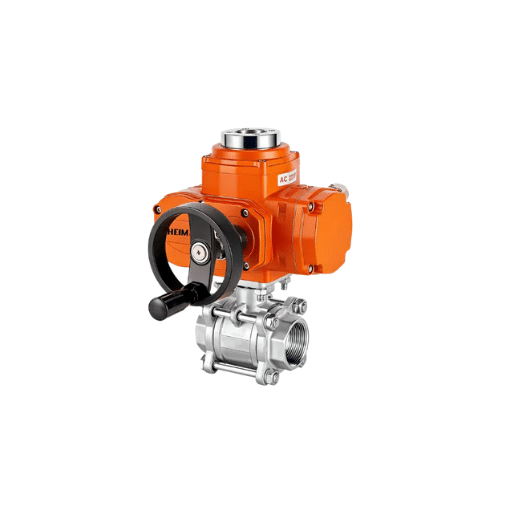
Engineering eccentric plug valves are used in industrial-scale applications where fluids with solids must be isolated, split, or fine-tuned, and the thread among them is that they work under abrasive duty.
Municipal wastewater treatment
Unprocessed sewage appears laden with scrap, soil, rags, and organic stuff. Correct treaties of the waste eccentric plug valve operate with NBR or EPDM-lined raw influent channels, primary clarifier isolation, and sludge transfer lines. AWWA C517 exclusively covers such eccentric plug valves with NBR or EPDM liners for water and wastewater subjection, endowing specification-grade eccentric plug valves to municipal engineers.
Mining And Mineral Processing Slurries
Copper tailings, iron ore concentrate, phosphate slurry-all mean aggressive fluids in the industry. Various ores have particle hardness excelling Moh hardness 6. There, though, eccentrically-placed plug valves with a tungsten carbide overlay on their plug and polyurethane or ceramic linings would gain a longer life where ball valves may be eaten out. One copper facility in Chile shared that their maintenance intervals for valves on their thickener underflow lines had leaped from 6 months to 24 months when they switched to eccentric plugs.
Pulp and Paper Black Liquor and Stock Service
Black liquor at high concentrations carries lignin, fibers, and cooking chemicals, requiring it to transport abrasively and corrosively. Eccentric plug valves with CF8M (316 stainless steel) bodies and EPDM or hard metal seats are required to guarantee chemical and abrasion resistance for this service. Also, stock consistency control valves, with a 3–6% consistency level, taking advantage of a nonclogging full bore and plug self-cleaning closure.
FGD Limestone Slurry
In coal-fueled power plants, limestone slurries are ejected into the scrubbers to abstract SO2. The slurry is abrasive, mildly corrosive, and operates at high cycle frequencies. Eccentric plug valves isolate the scrubber bleed lines, hydrocyclone feeds, and dewatering circuits. The standard specs include EPDM-coated ductile iron bodies with Stellite-coated plugs.
Cement Plant Raw Meal and Clinker Handling
Hot, abrasive weather in the cement factory creates a fine meal. Valves in kiln feed shut-offs and cooler discharges are exposed to temperatures in excess of 200°C and hard impinging particles from cool clinker nodules. For such duties, ceramic-lined eccentric plug valves with hard-faced plugs are used in preference to rubber liners that would deteriorate within days.
Chemical Processing and Dye Lines
Not all high-abrasion applications for eccentric plug valves. In the chemical and dye realm, perfect shutoff and full-bore flow path applications could then handle pigmented or filled fluids best suited to clog globe valves and tear up butterfly valve seats. Duplex stainless bodies hold their own when possessing PTFE-faced seats for corrosive, low-solids applications.
How to Specify an Eccentric Plug Valve
Specifications are where theory meets procurement. An incorrect choice of body materials, liners, or actuators in the process of selecting slurry valves may turn a highly efficient eccentric plug valve for slurry service into an unreliable part requiring maintenance. Use the checklist below to ensure getting the best from your choice.
Sizing: Cv, Kv, and Turndown
One of the most significant mistakes in selecting the proper size for slurry valves would be to consider an oversized condition for the contrast of throttling. When the valve throttles even near closed, mostly high-velocity water flow is focused on a comparatively less area of the seat. Thus accelerating erosion and making the cavitation condition worse.
With oversizing, the valve for slurry service should generally be sized for normal flow to occur in the open condition, i.e., at 60–80%. Flow then gets divided over the full surface of the plug, with a lower velocity applied across the seat, thereby protecting the pressure recovery characteristics that prevent cavitation.
Checklist for proper sizing:
- Check line size and flange standard: ANSI B16.5, EN 1092-1, or GB/T 9112.
- Lay down flow conditions, minimum, normal, and maximum flow rates; required Cv at each.
- Choose pressure class, PN10, PN16, PN25, or ANSI Class 150/ 300/ 600 according to system’s maximum allowable working pressure.
- Media shall be defined in terms of % solids by weight, particle size distribution (P50/P80), specific gravity, viscosity, pH, and temperature.
- Right-size, not oversized. Aim for normal flow at 60–80%.
- Choose your eccentric plug valve materials for slurry applications following the matrix below.
- Choose their actuation; manual, either lever or gear, pneumatic (the most usual for isolation of slurry specifying fail-safe), or electric (for control loops with 4-20 mA or Modbus).
- Also consider whether the item matches any standard (API 599, ASME B16.34, ISO 5752, AWWA C517 during operation of API 598 hydrostatic shell and seat leakage testing).
- Useful-NOTE-check and record any existing testing performed as per API with the hydraulic-leak specification; present certification of materials for the body casting and overlay coatings.
Body and Plug Material Selection
The life of the material begins with its application. Ductile iron is cheap and can bear with the harsh services of water, waste water, and ordinary slurries. Carbon steel (WCB) is used in extremely pressurized systems and in elevated temperatures. Stainless grades (CF8M, duplex, super duplex) are needed for cleanliness and chlorine-bearing media.
The plug faces wear and abrasion. Bare-faced ductile iron or carbon steel, on the other hand, lasts but for weeks with tailings in mining environments. Specify these hardened overlays:
- Nickel or Buna for light duty sewage, and water
- Tungsten carbide thermal spray for mining, cement, and ash handling
- Stellite 6 or 12 weld overlay for FGD, high temperature, and severe abrasion
- Ceramic insert or full ceramic face for severe abrasion, mineral concentrate
Liner and Seat Material Decision Tree
The liner shields the body from abrasion and provides the primary sealing surface. Choose based on temperature, chemical compatibility, and abrasion level:
|
Application |
Body |
Plug Coating / Overlay |
Seat Material |
Body Lining (if used) |
|---|---|---|---|---|
|
Municipal raw sewage / wastewater |
Ductile iron |
Nickel-plated or Buna-coated |
NBR (Buna-N) |
NBR |
|
Mining tailings (silica-rich) |
WCB or ductile iron |
Tungsten carbide spray |
Hardened SS / hard-faced |
Natural rubber or polyurethane |
|
FGD limestone / lime slurry |
CF8M (316SS) |
Stellite 6 / 12 overlay |
EPDM |
Natural rubber |
|
Ash sluice (coal / biomass) |
WCB w/ ceramic-tile lining |
Tungsten carbide |
Hardened SS |
Ceramic tile |
|
Pulp & paper black liquor / stock |
CF8M or duplex SS |
Hardened SS or Stellite |
EPDM or hard metal |
None (clean SS body) |
|
Cement raw meal / kiln feed |
Ductile iron |
Tungsten carbide or ceramic |
Hard metal |
Ceramic tile |
|
Mineral concentrate (high abrasion) |
WCB w/ liner |
Ceramic plug face |
Ceramic seat |
Ceramic tile |
|
Chemical / dye line (corrosive, low solids) |
Duplex / super duplex |
Hardened SS |
PTFE-faced or Viton |
None |
Always confirm with the manufacturer’s application engineering team. Site-specific factors, chloride concentration, temperature swings, intermittent vs. continuous duty, shift the recommendation.
Pressure Class, Temperature, and End Connections
Match the valve pressure-temperature rating to worst-case operating conditions, instead of the normal. Slurry lines can have pressure spikes during pump start-up or water hammer events. A valve with a PN16 rating should not be installed in a PN25 system even if normal operating pressure was less than PN16.
End connections influence ease of replacement. Flanged ends to ANSI B16.5 or EN1092-1 are the most common and easiest to replace in an inline orientation. Mechanical joint ends are the most common in the water and wastewater industry in ductile iron piping systems. The wafer body is light and compact, but it is not as robust for high-cycle service.
Actuation: Manual, Electric, and Pneumatic
Most slurry isolation valves are pneumatically actuated in process plants. Pneumatic actuators permit high torque for breakaway from settled solids, and spring-return failsafe configurations are simple to come by. An increase in torque 25–40% above the manufacturer’s rated breakaway figure is specified for any solid buildup after any stagnant period.
Electric actuators are ideal for modulating control loops where the valve must have intermediate positioning. Actuators may be specified to receive a 4-20 mA or Modbus RTU signal for integration with the plant DCS or SCADA system. For onerous slurry duties, select an actuator with robust torque headroom and mechanical declutching manual override.
For low-frequency isolation in easily accessible locations manual lever or gear operators are suitable. Gear operators are preferred to lever operators for valve sizes of DN150 (6 inch) and above because of mechanical advantage, which in turn halves the effort exerted by the operator.
Pairing Eccentric Valves with Process Instrumentation

An eccentric plug valve for slurry service is a part of the process line, and control instrumentation surrounding it provides information about the wearing of the valve, declining flow, and an upcoming maintenance spend that may divert failure. This is where present-day plant units distinguish reactive maintenance from predictive maintenance.
Differential Pressure Monitoring Across the Valve for Wear Detection
As an eccentric plug valve’s seat wears, internal leakage increases. That leakage creates a pressure differential across the closed valve that should not exist. A differential pressure transmitter installed across the valve body can detect this degradation in real time.
During the opration of a commissioning baseline test, read the transmitter during a fully closed valve situation. Create a predetermined alarm level at 150 to 200% of that base reading. When the DP drops showing fluid squeezing from the edge of the closed seat, a maintenance work order is triggered. An outstanding achievement was achieved by Diana Okoro and the team at Mesa Verde in the second year by installing DP monitoring in their eccentric plug and identifying seat wear six weeks before process bypass might have occurred. Valves were rebuilt during a planned shutdown. No unscheduled downtime for this!
Upstream and Downstream Pressure Transmitters
The slurry lines show pressure fluctuations due to pump cycling, line blockages or change in density. The data from pressure transmitters upstream and downstream helps explain whether a flow restriction is at the valve or in some other part of the line. They also protect the valve from overpressure events that can crack ceramic liners or delaminate rubber seats.
Pressure transmitters made in Black Ant range from 0 to 600 bar with As-20 mA, HART, and RS485/Modbus outputs. All configurations come with stainless steel wetted parts and with IP65 enclosures for mechanical room and outdoor operating environmental locations commonly encountered in slurry-processing plants.
Flow Measurement in Slurry Lines
For conductive slurry, electromagnetic flow meters are the suitable option. Also, they do have advantages like there are no moving parts in the flow stream and inflows with high solids content are tolerated. (In situations where magnetic flowmeters cannot work, ultrasonic flow meters are the best amongst others because of their inertness or low conductivities.) Irrespective of the differences in function of these two metering systems, flow data are developed in order to either validate or to prove valve sizing and to signal that an orifice has started to plug or a seat has been plugged.
Industrial flow meters from Black Ant are available in electromagnetic and ultrasonic technologies with flanged and threaded process connections. RS485 and 4–20 mA outputs integrate directly into most SCADA and DCS platforms without signal conditioning.
Level Monitoring Upstream of Slurry Valves
Many slurry valve failures occur not because the valve is wrong, but because the upstream vessel level control failed and the valve was subjected to gas or air pockets, dry running, or hydraulic shock. A submersible level transmitter in the upstream tank or sump ensures the valve never opens against an empty line or closes against a full-column water hammer.
Want to build predictive maintenance into your slurry line? Black Ant’s instrumentation portfolio, pressure, differential pressure, flow, and level, covers every measurement point you need around an eccentric plug valve installation. Explore the full industrial instrumentation range.
Predictive Maintenance Through IoT and Edge Data Acquisition
Excentric valves for slurry are wear-intensive objects whereby scheduling them for replacement either tempts you to spend unnecessary money or run in risk of operating those in a failed state. Condition-oriented maintenance resolves this contradiction.
Why Slurry Valves Benefit from Condition Monitoring
A typical mine or wastewater plant’s many hundreds of valves manage the fluids as well as the instrumentation for each valve. Manual inspection is impossible every time. Any electric motor possesses condition monitoring, which provides all the data from the DP, pressure drop, flow, temperature, etc. From the analysis provided, the predictive algorithm applies logistic regression to the trend of operationally given measuring values. Before a hardware fault occurs in the actuator drive, the frustrating time one typically faces is practical.
The payoff is actually seen. Overall, maintaining systems typically translates into around 10% to 25% discount in the maintenance costs, and into a drop in unplanned downtime by around 30% to 50%, says McKinsey. For the prominent valves of interest, it seems equally critical to speak in terms of dollars and cents: Given that a major unplanned failure could account for USD 3,000 and afterwards benannt 8,000 in associated downtime, just one avoidance of unplanned failure per annum would pay for itself in terms of instrumentation.
Edge Computing for Real-Time Wear Analysis
Not every plant has reliable cloud connectivity. Remote mining sites, municipal lift stations, and rural wastewater plants need processing at the edge. An edge data acquisition computer installed at the valve station can collect data from pressure transmitters, flow meters, and temperature sensors, run local anomaly detection algorithms, and trigger alerts within milliseconds, without depending on a cloud connection.
The Black Ant’s edge computer with its associated sensor processing ensures the end-to-end timings in the range of 10 to 50 milliseconds and is powered by a 38,000 mAh lithium battery that can last for over six years while taking readings at two-hour intervals. Any field instrumentation can be connected to it via RS485, M-Bus, and 4–20 mA input signals. Enclosures provided with an IP68 rating are designed to survive harsh outdoor as well as washdown environments in slurry-processing applications.
Building a Maintenance Dashboard from Valve and Instrument Data
An IoT data collection terminal aggregates data from multiple valve stations and transmits it to a centralized management platform via NB-IoT or LoRaWAN. Facility operators view valve health scores, trend plots, and exception reports from a single dashboard. Maintenance scheduling shifts from calendar-based to condition-based, and capital planning gains real data on actual valve life in your specific service.
Black Ant devices output four to 20 milliamp, high-speed highway addressable remote transducer, modbus remote terminal unit, and two- and four-wire RS485 product data as standard, which can all be integrated into the current architecture without a gateway.
Sourcing Considerations: What to Demand from Any Manufacturer

It is not vulgar truthfully to say there isn’t a typical standard by which everything “slurry services” would be applied. The quality varies across any supplier’s spectrum, say like, when you are talking about the selection of your slurry valve. Damn those purchasing professionals, there are what we call rigid requirements.
Warrants
Being your minimum requirements, you must demand formal recognition in the form of ISO 9001 quality management system certification. When conducting exports to the EU market or bringing a European project, provide the mandate for the CE mark and the compliance of RoHS. In North American applications, it should have valid standards for water and wastewater service compliance to AWWA C517. With regards to oil and gas or appropriate processes for chemicals, consider API 599 and ASME B16.34 conformance.
Materials Traceability and First Article Inspection
In abrasive application, the difference between a plug which lasts only three years or one that lasts three months, is often the quality of the tungsten carbide overlay, or the bonding of the elastomer liner for the materials. For example, the tungsten carbide overlay quality in Overlays is often reflected by wear or cracking. Get mill certificates for body castings, coating chemistry reports, and overlay materials hardness test results. This must be specifically written in ordering, particularly for first orders or OEM partnerships: First-article inspection in dimensional verification and seat leakage testing.
Lead Times, Spares Strategy, and Warranty Terms
Lead time for purchases of slurry valves is different in each case; it can be four to twelve weeks. The products require pearl essential paint or ceramic-lined slurry valve seat or similar-position technology. Plan accordingly on your contact-holder vendor to supply the spares list, plates, sockets, bearings, diaphragms, and so forth, as well as discuss the future availability of the spare parts for the pudding of this life of the valve. A valve warranty going up until ten years without spares is a really bad idea.
Include wording that addresses both material defects and workmanship for a minimum of twelve months from the installation date. Some owners get up to twenty-four months of factory warranty for standard water service. Negotiate this warranty in line with your maintenance cycle.
Standards Comparison for International Buyers
|
Topic |
API / ASME (US) |
EN / ISO (Europe) |
GB/T (China) |
|---|---|---|---|
|
Plug valve design |
API 599 |
EN 12516-1 |
GB/T 12235 |
|
Pressure-temperature ratings |
ASME B16.34 |
EN 12516-2 |
GB/T 12224 |
|
Face-to-face dimensions |
ASME B16.10 |
ISO 5752 |
GB/T 12221 |
|
Pressure testing |
API 598 |
EN 12266-1 |
GB/T 13927 |
|
Flange dimensions |
ASME B16.5 |
EN 1092-1 |
GB/T 9112 |
|
Water/wastewater service |
AWWA C517 |
EN 1074-2 |
GB/T 12239 |
|
Quality system |
ISO 9001 |
ISO 9001 |
ISO 9001 + GB/T 19001 |
It behooves multicode project engineers to verify that the face-to-face dimensions of the valve match those of the existing piping spool irrespective of the standard stamped on the body. Mixing ANSI flanges with a EN spool is a costly field mistake.
Conclusion
Now, the eccentric plug valves for slurry and abrasive media are not the only choice that can be recommended-for applications needing reliable isolation plus throttling capability for surviving abrasive particulate which wounds ball valves and significantly outlasting those pinch valves requiring repeated sleeve replacements. These valves occur in the process engineer’s toolkit in a class of their own.
Here, the three most important things to decide upon are: Valve must right-size for a 60–80% opening under normal flow, and one must take what is the particle hardness and chemistry into account when pairing the plug overlay and liner material-act efficiently. And never forget to size that actuator until it bears enough torque margin, feeding penetrating power to help break loose solids deposited in stagnant circumstances.
The gate valves become monitored assets from dumb hardware through instrumentation. Moreover, differential pressure transmitters can measure the gap from the seat- seals before the altogether. One can gain a good sense of proper sizing from holding a flow meter in place to catch partial restriction. Data gathering data-acquisition system permits edge anomaly detection at remote sites where always-connected cloud services are not available. The outcomes are valve life greater than yesterday and maintenance off the clock.
If you are specifying instrumentation for a slurry processing line with eccentric plug valves for slurry duty, Black Ant’s industrial measurement portfolio covers pressure, differential pressure, flow, level, and temperature with the signal outputs and process connections your DCS or SCADA platform already accepts. Download the industrial instrumentation datasheet package or contact our application engineering team to discuss your valve monitoring requirements.
Reference: AWWA C517 Resilient Seated Eccentric Plug Valves, API 599 Metal Plug Valves, Flanged, Threaded, And Welding Ends, ASME B16.34 Valves, Flanged, Threaded, And Welding Ends. Industry service life data is illustrative and is given based on published application bulletins and process industry publications. Please always validate your material selections with the valve manufacturer for your specific service conditions.







