Electric Control Valve Types: Understanding Valve Actuators and Their Functions
Electric control valves are essential in contemporary commercial and industrial settings, especially in control systems that manage flow, pressure, and temperature across multiple stages. The controllers of these valves are devices or mechanisms known as actuators with the sole purpose of converting any form of energy available into motion necessary for valve operation. However, there are several actuators manufactured for specific purposes which has led to many people being confused in distinguishing one from the other. In this write-up, the emphasis is placed on exploring numerous design features of electric control valve types and their respective actuators, explaining how they function, the elements utilized and necessary applications in the system. Therefore, if you are a systems engineer, an operations manager, or just an admirer of technology, this article will be quite relevant in your pursuits.
Overview of Electric Control Valves

Electronic valves are integral components of many control systems as they provide precise service for fluids, steam and gases alike. Most of them work on the principle of changing the valve’s opening according to a control signal, being applied for the control of pressure, temperature or flow rate. Typically, these valves include an actuator that moves the closure via electric power. There are many electric control valve types that can be chosen based on several parameters such as tensile, nature of fluid, flow rates, and suitability to your control system.
Importance of Electric Control Valves in Modern Systems
To facilitate the operation and enhancement of modern industrial and HVAC systems, electric control valves play an essential role. They are capable of taking care of the problem by ensuring the exact flow or pressure of any fluid so that the system is best utilized inside modern structures, consumes less energy and is well maintained. Here are five reasons why the inclusion of electric control valve types in modern designs is inevitable.
1. Saving Power
Regulating the flow and pressure of fluids with electric control valves reduces the power consumption significantly due to the efficient use of the systems. Case in point, there are studies that indicate optimal control valves could lower energy consumption in HVAC systems about 15% of the energy used.
2. High Process Precision
These valves provide accurate control of systems in response to their requirements, maintaining constant conditions such as flow rates and temperatures, which are critical for processes such as pharmaceutical manufacturing or food processing and storage.
3. Reliability and Support of Systems
Operational safety is achieved in part through electric control valves, which can swiftly and precisely shut off when the system fails, thereby minimizing associated dangers such as overpressure or system collapse.
4. Combining Automation Systems
They are renowned for the feature, where complex automation and monitoring can be incorporated in the system, leading to the use without any trouble, along with diagnosis and adjustments in the order we make and at our own pace, thereby enhancing control of the system and minimizing downtimes.
5. Cost of Maintenance Reduction
Mechanical components in electric control valve types are much less as compared to the pneumatic ones, hence such valves are generally associated with less maintenance, low lifetime costs, and longer operating times.
Basic Components of Electric Control Valves
An electric control valve comprises numerous essential elements, each of which depends on the others for optimal performance and effective control of fluid flow. These basic elements include the following:
The Actuators:
It is the actuators that form the mechanism that moves the valve, in accordance with the control system commands. Electric Actuators on the other hand use electric motors to convert electricity to mechanical motion. In most of today’s actuators, several improvements have been incorporated, such as position feedback controls, automatic return to safe positions, and adjustable parameters. It is evidenced in the latest research that the actuator design has been revolutionized towards more energy-saving solutions, which entail working under high torque conditions yet with relatively lower power consumption requirements.
The Valves Housing:
A valve body is an essential conduit component that forms a chamber through which a medium like water, air, steam, etc. can pass and forms the support structure that accommodates other parts of the valve. The valve housing may be made of steel, cast iron, or various metals depending on the purpose of use. Let’s say, for instance, stainless steels are utilized in applications with high corrosion exposure such as food and pharmaceutical manufacturing.
Actuating Member (Plug/Disc)
The actuating member, which is usually a plug, ball, or disc, controls the flow of the fluid medium by changing the sectional area. The shape as well as the material of the control component greatly affects the functional use of the valves. High-accuracy presentations feature hardened components in the most stressed areas to prolong their service life under extreme conditions.
Actuator Positioner
A positioner is employed to ensure the valve position is correct by comparing the control signal supplied by the system with the valve’s actual position and applying corrections as needed. Digital positioners, which have become standard for electric control valves, provide improved accuracy and diagnostic capabilities. Such systems also allow the operator or user to view or check important parameters, including stroke time, temperature, valve health, etc., using inbuilt sensors and HART or Modbus communication protocols.
Sealing Components
Proper sealing is critical to prevent leaks and ensure the process remains effective. Very common sealing elements that can be used are PTFE ( Teflon) and viton due to their ability to withstand high temperature and their chemical resistance. There have been improvements in sealing technology, which provide greater resistance to wear and tear and swelling, helping maintain smooth operation for a longer duration.
Electronics and Connectivity
Electric control valves are millimeter-accuracy components that use a processor to enable them to connect to the automation system. In addition to having wireless communication and IoT, these advanced valves enable operators to view the performance data and settings of the valve anywhere, even offsite. As per new developments, monitoring units can now also function on a cloud and foresee faults, thus eliminating downtime.
In general, all of these processes are advantageous because they increase precision, effectiveness, and operational safety, making them practicable across different industrial fields. As electric control valve types advance technologically, their performance increases and costs lessen.
How Electric Control Valves Work
Electric control valve types use a motorized actuator to control the movement of fluids such as a fluid, gases or steam within any process. In this kind of actuator, the role of patterns of electric signals is being turned to motion, which moves and maintains an array of different types of process controlling valves for flow, pressure, and others. In most cases, these signals are generated by a control system or, where necessary, a renowned programmable logic controller, depending on the application.
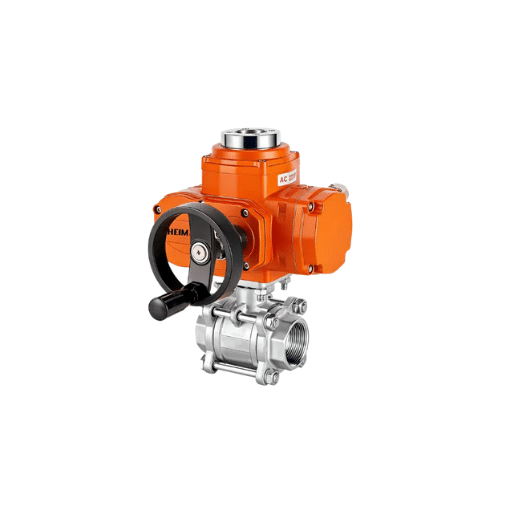
A flow control system will only send such a signal if it is found necessary to adjust the flow, and upon that the control signal is sent to the valve actuator. The actuator moves the valves’ internal parts, such as the plug or the disc, using a motor or a solenoid, which most of these actuators already have integrated. The plug of such and other valve parts moves in the housing of the valve either closing or opening partially or fully to carry out the control of fluid flow.
The current development has indeed made it far more accurate and consistent. Such examples are available in modern electric control valves, which use intelligent sensors and Internet of Things-enabled electronics for effective monitoring and feedback. MarketsandMarkets, in its report dated for 2023, estimated that the worldwide demand for the actuators which are powered by electricity will have an annual compounded growth of 6.5 percent by the year 2028.
There are also provisions to ensure that the valves can be employed under the harshest conditions, including very high pressures and up to 370 degrees Celsius (700 degrees Fahrenheit), depending on the electric control valve type used in the application. It also allows industries that implement cloud platforms to extend the capabilities of self-conducting maintenance, thereby reducing downtime by some 30%, as noted in the previous statistics.
The holy grail of industrial process control is a combination of advanced control and precise electrical actuation, with connectivity in electric control valves that are efficient, flexible, and, most importantly, cost-effective. This is aimed at the most variety of industrial sectors.
Key Types and Their Functions

Globe Valves
The globe valve is suitable for residential homes, featuring precise control of fluid flow and gas.
Ball Valves
The primary choice in systems needing rapid shutdown and preferably no leaks; where designed up to a maximum diameter of 2 inches or 3 inches are ball valves.
Butterfly Valves
Butterfly valves are lightweight, high-pressure, space-saving design ideal for open, closed, and semi-open flow control.
Diaphragm Valves
Diaphragm valves are widely used in the pharmaceutical and food industries due to their ‘aseptic’ design.
Plug Valves
Plug valves offer excellent control over flow; they are used in systems that need to be manipulated more frequently and in more complex systems, such as those in chemical mixing works.
Every type of valve is chosen in accordance with its performance, working environment and application-related conditions.
Common Types of Valves
To select a valve that’s optimal for a particular job, it is essential to understand its functioning, construction, and mechanism. Presented below is an even deeper overview of the types of valves, highlighting everyday valve types with their modern applications.
Gate Valves
Fully open or fully closed flow is the main working condition of the called gate valves. Residents opened or closed the portal and the flow of liquid and gas. However, the latest enhancement in the internal structure of the gate valves is the reconstruction of the seals and also the resin coating for corrosion protection.
A common practice is to install them in sewage and water works, oil and gas tragedies, and thermal energy production facilities. Gate valves are used in almost 30% of cases of valve utilization for the large-diameter pipelines twins. Recent findings and statistical data indicate.
Globe Valves
It is well known that globe valves possess outstanding throttling capability for precise flow control. Their construction comprises a seat perpendicular to the flow and plug moving perpendicular to the flow. Thus globe valves find extensive use in systems where the flow is frequently started, stopped, or modified, for instance, in cooling circuits or fuel systems. More recent developments take the form of globe valves fitted with smart actuators, such fitments allowing operation of the valves in far off places from the control room, this trend beginning to catch on in industrial automation electric control valve types as well.
Ball Valves
Ball valves are considered as reliable and operationally convenient. Most of them have a quick shut-off feature and provide tight closure, which allows them to be used in high-pressure applications driven primarily by the chemical and oil-based industries. These days, ball valves are produced with state-of-the-art PTFE (polytetrafluoroethylene) seats. This enhances their performance even under high temperatures and harsh chemicals. It was estimated that in 2022, the standby demand for ball valve presenters amounted to around 14 billion US dollars, with a 4.2% chance of growth through 2030.
Butterfly Valves
The compact, efficient design of butterfly valves reduces space constraints in space-constrained installations. These valves have found extensive application in water valves, HVAC units, and even industries that discharge wastewaters. Modern innovations now, however, use double- and triple-eccentric valves, making them suitable for effectively controlling such pressures and temperatures. Given their low energy consumption compared to other valve types, butterfly valves are widely used among those seeking green solutions for their systems.
Diaphragm Valves
Diaphragm valves are primarily used in the food, biological, and pharmaceutical industries because they use a flexible diaphragm to control flow within the valve fitting without causing process contamination. The current designs of diaphragm valves are sensor-enhanced and automated to control parameters, i.e., pressure, and flow, among others, which is essential in certain cleanrooms where pollutants are regulated.
Plug Valves
Plug valves are widely used in applications that require on/off more frequently than in traditional applications. These valves incorporate a cylindrical or conical plug that rotates on its own axis to regulate fluid flow. Chemical processes, in particular those that handle corrosive liquids, make these plug valves useful, as they are well-suited to harsh chemicals. Advancements in plug service materials, such as Teflon-coated plugs that prevent chemical activity, have further enhanced their durability and reduced the costs of mechanical outlay.
The individual modern electric control valve types listed below the respective categories are subject to change from time to time. The actuarial value such systems could entail has prompted numerous industries to shift towards rolling out smart control devices, automatic equipment, and, in particular, valves with sensor interfaces and internet capabilities, which is progressive, enabling continuous drilling, predictive maintenance, and preventive maintenance control.
Butterfly Valve: Features and Applications
Let’s begin by defining butterfly valves and their applications. These are flow control devices that have been popular in most industries due to their small structural adjustment, inexpensiveness and performance. Below are the five features of the butterfly valve, along with detailed descriptions of its applications.
1. Portable and Smaller Dimensions
This is because these valves are manufactured in a slender structure and are lightweight, which facilitates their installation with ease even in areas of minimal clearance.
2. Flow Regulation Superiority
The purpose of these valves is considered high, as the flow can be fully shut off or fully unrestricted, allowing efficient operation under a variety of conditions.
3. A Variety of Components
This species’ properties are one of the reasons why, with the presence of several other components —such as stainless steel, ductile iron, PVC, etc.— the temperature and chemical ranges for the use of diaphragm valves change.
4. Affordable Option
In the 1950s, they were introduced as bridging devices among check, globe and electric control valve types. Since then, there has been no looking back. Numerous other variations of valves are available in the market, but butterfly valves are much cheaper and still offer excellent functional performance and lifespan, which is why it’s preferred in most cases where the controlling devices are expensive for the available money.
5. Wide Range of Industrial Uses
The water and wastewater treatment industry, oil and gas industry, food and drink industry as well as heating, ventilation and air conditioning systems, all involved fluids or gases in sizeable amounts, necessitated the use of butterfly valves.
That is why, in many operating environments, the butterfly valve is seen as the main component of a flow control system that operates effectively and efficiently.
Gate Valve: Characteristics and Use Cases
Gate valves are an essential class of valves that can open or close the flow of liquids and gases by moving a gate up or down within the valve. These simple designs make them useful for specific purposes where the primary concern is achieving uninterrupted flow, which is perfectly straight and very low in resistance. Below are five more features of gate valves and explanations as to why they are used:
1. Full Flow Performance
Because gate valves allow fluid to pass through them without obstruction when they open fully, the gate moves up and out of the fluid’s path, so no barriers to flow exist. This makes them perfect for various processes that focus on minimising pressure drop and improving fluid handling.
2. Two-dimensional operability
All gate valves can be operated either “upstream” or “downstream,” simplifying the process and making gate valves more efficient. Such features come in handy in applications where the flow direction changes or two-way flow is required.
3. High-Temperature and High-Pressure Services
Thanks to their capacity to handle big pressures and temperatures, gate valves are extensively used in the power industry, the oil industry, and in steam, and their performance is reliable in these or even more adverse environmental applications.
4. Purpose of the Device: on-off Valve by Design
Generally, gate valves have a binary character (on or off) and are not used for throttling. They are essential for use in processes where the valve should remain either completely open or completely closed, as with pipelines or for isolation purposes.
5. Cosmic Variation of Building Materials
Also, they can be produced in some ways, for example, from cast iron, stainless steel, or brass, depending on the use of different chemicals, for instance, water or even toxic and crude chemicals, with their activities being in sectors such as water effluents, chemical industries, or oil industries, respectively.
It is clear from these features that gate valves have a wide range of applications and are beneficial in both residential and public access flow control systems.
Comparative Analysis of Different Valve Types

Butterfly Valve vs. Gate Valve: Key Differences
Design and Arrangement
Butterfly valves are constructed simply, with a central disk connected to a rotating shaft. In contrast, gate valves have a heavy-duty structure usually consisting of a disc or plug that lifts or falls to restrict or permit flow.
Requirements Regarding Space
The design of butterfly valves is space-saving, as they are smaller, making them preferable in applications with limited space. In contrast to butterfly valves, gate valves are larger and therefore require more headroom to operate, especially when maximum gate lift is required.
Time of Operation
Operation of the butterfly valve is more straightforward because their lever or actuator needs to be rotated by only 90 degrees in order for the whole valve to be opened or closed. Gate valves, on the contrary, are a bit slow due to their linear motion, requiring several turns to reach a particular position.
Pressure Loss
Gate valves experience little pressure difference when fully open because the gate does not protrude into the flow. Thus, the flow is not hindered. As for butterfly valves even when the valve is fully open, due to the presence of the disc in the flow, there will be slightly more pressure drop.
Where these are Applicable
Butterfly valves are commonly employed where electric use is frequent in the market and concerns of weight and size are in demand, for example, HVAC and water distribution systems. Whereas, to come up with some useful applications of gate valves, these will work better where total cessation is warranted and where high-pressure flow is involved, for example, oil transfer pipes and chemical process plants.
Performance Comparison of Electric and Pneumatic Actuators
Control Action: On/Off vs. Modulating Control
Innovative Technologies in Electric Control Valves

The electric control valves industry has also made fantastic leaps over many decades through the incorporation of modern technologies that provide essential support to the various sectors. The bulb in these innovative designs is part of an ever-increasing quest for high-tech management of fluids and energy.
Applications of Smart Actuator and IoT
There is an upward trend in the use of smart actuators in electric control valves, enabling near-instant monitoring, diagnostics, and maintenance. These smart actuators, for the most part, rely on Internet of Things (IoT) capabilities to enable interaction with the central control crew and the machinery systems. For instance, these promises of IoT-enabled valves can continuously record parameters, such as pressure, temperature, or flow rates, posing a challenge for operators and prompting them to become proactive in outwitting threats of any kind, thereby enhancing efficiency. Following the introduction of IoT valves into the industry, recent studies have shown that maintenance costs associated with disruptive failures have been reduced by around 30%.
Energy Cost-Saving Concepts
Today, electric control valves feature robust energy-saving concepts, such as later designs with enhanced motors, changes, and frictionless components. The stepper motors and brushless DC motors are recent developments that allow control with greater accuracy at the expense of increased energy consumption. Some reviewers have noted that such electric control valve types permit cutting of the working power consumption to the 25% of that of conventional systems.
Self-Adjusting Control Mechanisms
Electric control valve types that make effective use of new control approaches are indicators of higher efficiency. By leveraging existing AI and ML tools, the presented mechanisms continuously adapt to the dynamic operating environment. This allows for more accurate stabilization of flow and pressure. Systems that integrate AI into control processes are considered to reduce process inaccuracy by 20%, enabling the production of high-quality products with minimal losses in chemical processing, wastewater management, and related fields.
Materials Which Last Longer
For instance, new electric control valve types made from corrosion-resistant steel alloys or plastics have extended the usefulness of these devices even when installed in aggressive temperature, pressure, and chemical environments. Investigations on these new electric control valve types have shown a 40% increase in life expectancy compared to conventional ones, resulting in lower costs over time and improved installation operations.
Advantages of Wireless Communication and Remote Operation of Valves or Electric Control Systems
For instance, integrating wireless communication technologies into electric control valve systems has enabled operators in remote places or fire-prone zones to carry out their duties without encountering any external interference. Through the use of this concept, air duct loading, actuator control knobs, and also drop in nozzle assemblies can be adjusted smoothly from a remote distance through Bluetooth, Zigbee, or alternative wireless technology. This provides better safety to the workers as well as quicker reaction times which are very much needed in the case of sectors such as oil and gas production.
Thanks to these developments, we can see just how far next-generation electric control valve types can go, thus increasing not only the reliability of the product but also bringing costs down and improving ecological benefits. Using such advanced techniques, companies can gain a significant advantage over their competitors.
Recent Advancements in Valve Actuator Technology
I have worked with various electric control valve types for over a decade now and I can say that the latest innovations are primarily on the smart actuators containing sensor and diagnostic capabilities. These new features enable precise control, remote monitoring, and even predictive maintenance, increasing operational time and minimizing downtime. Thanks to these advanced technologies, performance in harsh conditions can be safe and more dependable.
Integration of Electronic Controls in Actuated Valves
With the advent of the development of advanced actuation systems and electric valve automation, industrial processes today are more efficient, easier to control, and operate at numerous ranges. This is because the integration of these systems lent remarkably few control units managing valves to an extensive program control or even risk mitigation of operating too many control points at once. According to Markets and Markets report, this demand for new and wide electric control valve types around the world will be high and the forecasted industrial valve market size is expected to total USD 125.6 billion in 2025, indicating a gradual increment at the rate of 4.3 percent compound annual growth between the years 2020 and 2025.
Among the advancements in this area are sensors with IoT capabilities to gather data in real time, thus making it easier to minimize equipment downtime to a minimum of twenty percent by predictive maintenance. These designs may include smart diagnostics that are sensitive to changes in temperature, the amount of flow, or even the deviation in valve positions with 98 accuracy or better. One example is the use of radial tracing for the modulating process in oil production and other industrial sectors operating in hostile environments.
Moreover, digital communication protocols like HART, Modbus, and PROFIBUS are providing standard means of communication for connecting different types of electronic controls to automation systems in general. It provides an efficient, uninterrupted environment for transferring data between actuated valves and control panels, thereby facilitating better operation. As the industry pushes boundaries towards more sustainable growth while being wary of costs, electric control valve types continue being the key enabler for development.
Future Trends in Electric Control Valve Technology
Smart automation measures, the creation of new materials, and improving people’s awareness with regard to how the environment works are all factors that shape the development of electric control valve types of concern. One of these notable advancements is the installation of a control valve with various smart sensors and IoT devices embedded in it, which allows for online Performance Management as well as Predictive Maintenance all in one package. The industrial Internet of Things has been forecasted to develop to more than two hundred billion dollars in sales by the year 2026 signaling increasing interest towards automation in industries such as manufacturing as well as energy.
Energy Efficiency is also a Significant aspect of modernizing control valves. Recent e-control valves control their power without compromising efficiency. For example, instead of the old valves which had the actuators using standard motors, New valves have installed actuators with brushless DC motors that enable the use of very little energy due to their innovative drives, unlike the old motors which would consume much energy in such applications.
Moreover, the employment of sophisticated materials, which include corrosion-free alloys and durable composites, increases the dependability and service life of these valves, particularly when employed in harsh activities such as chemical processing or oil extraction from the rig at sea. This effort has also been in response to some industries looking to reduce downtime and operational running costs by offering companies green solutions.
Finally, the advent of valve diagnostics that incorporate AI and machine learning will change maintenance practices entirely, putting in place mechanisms that recognize premature wear and initiate proactive measures. These developments will effectively lead to the development of futuristic electric control valve types that incorporate design improvements and stuffing box æsthetics that suits the rising industrialisation.
Practical Applications Across Industries

The use of manual and electric control valve types in different sectors has gained popularity mainly because of the many advantages that these types offer regarding precision, effectiveness, and flexibility. The following are the main five practical applications, among others that are not mentioned in this paper:
1. Oil and Gas
The electric control valve is widely applied in the transportation of compressors and pipe technologies, where oil, liquid gas, and/or refined products have to be controlled and managed. They provide optimal control of the pipeline modes that reduce energy losses in the transport operation. Empirical evidence suggests that the installation of a control valve can save pipeline energy up to fifteen percent.
2. Chemistry
Processes conducted in reactors must be properly managed through word dense control. Control valves are critical since they regulate temperature and pressure inside the reactor, hence good quality of products is produced. Statistical information has established that valve boon systems provide an enhancement of the yield range of specific chemical reactions by 20 percent to even 30 percent.
3. Water and Wastewater Systems
These waterworks can be equipped with valves whose primary function is to meter the fluid being retrieved and efficiently control the ingress of contaminants. This facilitates efficient use of water resources, but within existing laws and regulations at the same time. It has been asserted that such intelligent valve technologies can, in particular cities, limit loss of water by about one quarter of the amount.
4. Electrical Energy Production
Electric control valve types assists in the control of steam in the turbines to help maintain a certain pressure so as to assist in producing energy. A report from the sector indicates that the introduction of such sophisticated control devices in thermal power stations raises thermal efficiency by about 10%.
5. Liquid/Food Sector
Employed in eg, pasteurization processes and also carbonation processes, electric control valves, in essence, help to maintain hygiene requirements without compromising the rate of production. Further turning to the field of sensor-based automation, the beverage sector indicates that it is possible for automated control systems to boost productivity in manufacturing lacks by 15 percent with varying quotas of reduced product consumption.
The examples provide sufficient reasons for the existence and performance of electric control valve types in various fields.
Use of Electric Control Valves in HVAC Systems
The efficiency as well as performance of HVAC Heating Ventilation and Air Conditioning systems can be significantly improved with the use of electric control valves. This serves to moderate fluids, whether cold or hot, to maintain appropriate temperature and pressure levels. The advancement of this equipment into present HVAC systems manages to save on energy while also improving services and lowering costs for end users. The following are five broad applications of electric control valves within the HVAC setup:
1. Water Chiller Units
Use of electric trimmer control valves helps to achieve better chilled water system performance in both commercial and residential constructions, enabling effective temperature control indoors.
2. Heat Pumps
These valves also regulate the flow of hot water to avoid excessive heating in the rooms and maintain desired levels of heating comfort in the rooms where they are installed resulting in minimized use of energy.
3. AHU’s (Air Handling Units)
Electric control valves are utilized within air handling units to curtail the flow of water or refrigerant to the extent that the air temperature and moisture within the building is maintained.
4. Cooling Towers
Within these systems, the control valves are used for the regulation of water flow while conserving heat transfer and the life of the system.
5. Zone Applications
In zoning applications, for temperature control, electric control valves enable the achievement of such an accuracy level throughout portions of a building disassembled into zones or rooms, which in turn results in energy saving and promotes comfort.
Due to the above reasons, there are such electric control valve types as discussed above to contribute to the efficient operations of the HVAC system and their mandatory use in modern buildings.
Applications in Water Treatment and Distribution
From power generation to transportation, communication, or manufacturing, water is a necessity. One common electric control valve types in this field is found in monitoring and regulating flow and other pressures. A few use-cases re listed below:
1. Flow Control Inside The Treatment Plant
A lot of different processes take place on a daily basis in a plant, and one of the processes that needs controlling is flow. An electric control valve would then regulate the amount of water flowing through the plant till the right moment for the filtering, settling and other chemical operations to be carried out.
2. Pressure Containment within Distribution Network
There may also be instances where excessive pressure is present, which may hamper the structural integrity of pipes. There may also be instances where pressure alone will not maintain a continuous supply. In both scenarios, these valves are used to seal the lines and hold the pressure till things get better.
3. Managing the Quality of Water
Most chemicals like chlorine or water pH manipulators are administered with the help of electric control valves – they go a long way in providing a safe and clean water supply to the population.
4. Watering Device Systems
Electric control valve types are critical components, but have always had one objective: to enable farmers to manage water for irrigation control purposes better, maximising resources and boosting agricultural yields.
5. Minimizing Leaks
The electric control valves have advanced roles in leak detection and leak minimization by adjusting the water demand and supply systems, thereby reducing waste in urban centres.
These examples show how efficient and useful electric control valves can be when it comes to systems for the treatment, and distribution of water needed explicitly for those systems in today’s life.
Role in Oil and Gas Industry Operations
Electric control valves and their advancements greatly enhance the reliability and productivity of oil and gas operations by automating various processes. They are widely used for controlling different flow media without affecting efficiency in any way. Instructions below list the five exceptional ways by which electric control valve types apply to the oil and gas business:
1. Regulation of Flow
Electric control valves are also critical equipment for enabling accurate channeling of oil, gas or other fluids through pipes in the course of operation and in different phases of production as well as distribution.
2. Control of Pressure
In order to protect the systems against malfunctions and accidents caused by high pressures, these valves will also reduce high pressures within pipelines or process equipment.
3. Prevention of Leakage
Improved sealing methods, combined with the aforementioned monitoring systems, eliminate leaks that could otherwise cause equipment loss and environmental degradation.
4. Resistance to Wear Out and to Corrosion
Electric control valves used in the oil and gas industry are made from materials treated to resist corrosion and erosion, enabling efficient operation despite harsh operating conditions.
5. Efficiency of Systems
Incorporation of smart technology, such as remote monitoring and predictive maintenance, into electronic devices and systems increases the overall efficiency, reduces manual engagement in the processes, and consequently improves productivity.
These positions highlight the necessity of using electric control valves in every operation in the oil and gas sector.
References
University of Florida – Valves in Irrigation Systems
This publication discusses electric and hydraulic controllers and actuators, including commonly used valve types like globe and angle valves.
Read more here
University of Alaska Fairbanks – Lesson on Control Loops and Valves
This lesson covers various types of control valves —globe, three-way, butterfly, and ball —along with detailed explanations of their functions.
Read more here
University of Florida – Servo Valves Presentation
This presentation provides insights into servo valves, their functionality, and their role in fluid flow control systems.
Read more here
Frequently Asked Questions (FAQ)
What are the various kinds of valves used to control flow?
The most common types of control valves include globe, ball, butterfly, and plug valves, which are very fundamental to how fluids are handled and transported. Different types perform different functions depending on the process engineering requirements such as flow rate control or pressure regulation. Valves can be opened or closed to allow fluid to pass through them incrementally as desired.
How is an electric control valve actuated in care systems?
Electric actuators are devices that transform stored electrical energy into motion so that a valve can be opened or closed mechanically. In care systems, it receives a controller’s command and adjusts the valve’s position as needed. Electric actuators have different motion ranges, such as rotary or linear motion, which enable them to operate different types of control valves properly.
How does a valve positioner aid process control?
A valve positioner is one of the most important elements of process control, ensuring that a valve’s actual position corresponds to its intended position as specified by the control signals. It helps in achieving a higher degree of accuracy in valve actuation, especially in fine control applications, by adjusting the corresponding actuator, depending on feedback of the valve position.
What are the Benefits of Electric Control Valves?
Some distinct advantages of electric control valve types include: high accuracy, reliability, and flexibility for incorporation into automated control systems. These can better control the flow and process because they can respond to control signals faster. Furthermore, these valves do away with the issue of pneumatic air, hence are more effective in some applications where their design is suitable.
Forms of Actuated Valves Used, What is the Common Types and Examples of These Valves?
Valves classified as actuated are normally rotary valves, such as butterfly and ball valves, or linear valves, such as globe and gate valves. Electric actuators enable valves such as these for remote control of fluid flow and system pressure within the limits of the system.
What is the role of a control signal in actuating valves?
Control of the opening and closing of a valve is dependent on the control signal that is received and decoded to the actuator. Configuring the actuator to alter valve position in association with specific control details ensures the flow and pressure remain as ordered within the process control systems.
What are the variations between valves and linear rotary valves?
Control is offered through a linear motion for globe and gate valves, which restrict flow or can be turned about an axis for ball, plug, or butterfly valves. And each one of the above electric control valve types is used for particular purposes, depending on the expected issue of flow profile characteristics or system control action.
Which control signals are available for electric control valve types?
Electrically operated control valves use electrical waveforms, whether digital or analogue, to interact with the actuators. These signals help position the valve for control or to open or close it depending on the situation. Moreover, such types of systems where electric control and pneumatically driven components are used together easily utilze pneumatic control signals.
Define the final control element incorporated in any of the control loops.
This refers to the device at the end of the control architecture that makes physical adjustments to process variables, such as flow rate, for control purposes, such as an actuator or control valve. It accepts the control signal and moves accordingly until the setpoint is reached, thereby promoting sound process control and regulation.