

Manhole Cover Specification: A 12-Clause Tender Guide
A tender specifies “D400 ductile iron covers to EN 124.” Twenty-two bids arrive. Three bidders can prove the claim. The other nineteen send a certificate for a different standard, a photograph of a casting mark, or nothing at all.
The manhole cover specification wasn’t wrong. It was incomplete. It named a class and a material, but not the edition, the grade of iron, the dimensions, the marking, or the evidence that settles the question.
Priya, a public works engineer, learned this the hard way. Her 2024 tender produced six suppliers who all looked compliant on paper. The committee spent three weeks arguing about which certificates counted, then awarded on price because nobody could separate the bids technically. Two covers failed within eighteen months.
This guide sets out the twelve clauses a manhole cover specification needs, the evidence each should demand, and wording you can lift into a tender.
What Is a Manhole Cover Specification?
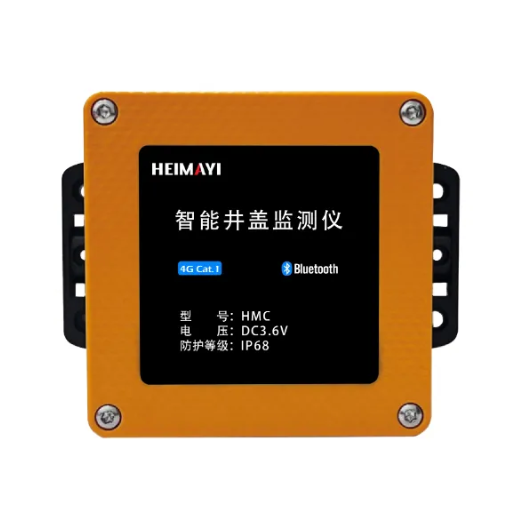
A manhole cover specification is the technical section of a tender. It defines the standard, load class, material, dimensions, seating, marking, testing and documentation a cover must satisfy, plus the evidence a supplier submits. It works only when every clause is checkable.
Most cover specifications are inherited, not written. Someone opens last cycle’s document, updates the date, and issues it, carrying forward a withdrawn standard reference, a load class with no marking requirement, and a certificate clause any trading company can satisfy with a photocopy. You can’t evaluate a bid against good intentions.
Explore the Black Ant smart manhole cover range if you want to compare your draft against a real datasheet.
| # | Clause | What to specify | Example requirement |
|---|---|---|---|
| 1 | Applicable standard | Standard, part and edition | EN 124-1:2015 plus EN 124-2:2015 for cast iron |
| 2 | Load class | Class per location, not one class for all | D400 carriageways, C250 kerbside, B125 car parks |
| 3 | Material and grade | Iron grade with mechanical properties | EN-GJS-500-7, tensile ≥500 MPa |
| 4 | Geometry | Clear opening, frame size, depth | CO 600 mm, insertion depth ≥50 mm |
| 5 | Seating | Stability under load | Three-point seating, non-rocking |
| 6 | Access and security | Keyway, hinge, locking | Anti-theft lock in public areas |
| 7 | Surface and coating | Anti-slip, coating type and thickness | Epoxy, minimum dry film thickness stated |
| 8 | Watertightness and gas | Sealing requirement, hazardous area | Gasket where odour control applies |
| 9 | Marking | Four marking elements, traceability | Cast, not applied; heat number |
| 10 | Testing | Type test, accredited laboratory | ISO/IEC 17025 report per class |
| 11 | Inspection | FAT, PSI, rejection criteria | Re-test cost borne by supplier |
| 12 | Documentation | Submittals, warranty, spares | Compliance statement per clause |
Clauses 1 to 4: Standard, Load Class, Material, Geometry
These four decide whether the product is the right product; everything after them decides whether you can prove it. Together they are the core of the manhole cover technical specification.
Clause 1: The applicable standard and the “or equivalent” trap
Name the standard, the part, and the edition. “EN 124” alone is not a specification: the 1994 edition was replaced in 2015 by a six-part series, and a tender citing the old one invites a bid nobody can evaluate.
Equivalence matters just as much. A cover marked to GB/T 23858-2009 is not automatically acceptable where EN 124:2015 is specified: China adopted the older EN 124:1994 on a non-equivalent basis, as the official SAMR standard record confirms. The class numbers align; the clause structure does not. Our guide to how GB/T 23858 maps to EN 124 has the full comparison.
Covers shall comply with EN 124-1:2015 and the relevant material part. Covers marked to GB/T 23858-2009 may be offered only with a type-test report to EN 124-1 issued by an ISO/IEC 17025 accredited laboratory. A GB/T certificate alone shall not be accepted as evidence of EN 124:2015 compliance.
That second sentence is the whole clause. Without it, the most common non-compliance in the market passes evaluation unexamined, and the specification looks rigorous while proving nothing.
Clause 2: Load class by location
Specify the class per location in the bill of quantities. One class across a whole scheme either wastes money on footpaths or fails on the carriageway.
Don’t express class as a vehicle weight. The number on the cover is a proof load applied once under test, not the daily payload it can carry. Our EN 124 load class guide covers the A15 to F900 table.
Class shall be not less than D400 for carriageways and hard shoulders, C250 within 0.5 m of the kerb, B125 for car parks and footways with occasional vehicle access, and A15 for pedestrian-only areas. A higher class may be substituted for a lower one; the reverse shall not be accepted.
Clause 3: Material and grade
“Ductile iron” alone admits material that fails the impact test. A ductile iron manhole cover specification should name the grade, and the mechanical properties make it checkable in turn.
Covers and frames shall be ductile iron to EN 1563, grade EN-GJS-500-7, with minimum tensile strength 500 MPa, minimum 0.2% proof stress 320 MPa and minimum elongation at fracture of 7%. A material test certificate traceable to the casting heat number shall be provided.
Those figures come from the EN-GJS-500-7 property table and match GB/T 1348 QT500-7. Composite covers are a legitimate alternative, but the load class test governs them too, so specify the class rather than the material.
Clause 4: Geometry
This is where most bills of quantities go wrong. “600 mm cover” could mean the clear opening, the frame outside dimension, or the overall size. Three bidders read it three ways and all three are technically responsive.
Each cover shall be specified by clear opening, frame outside dimensions and overall depth. Depth of insertion into the frame shall be not less than 50 mm for D400 and above. The traffic-contact surface shall be flat to within 1% of the clear opening, to a maximum of 6 mm.
Specify all three dimensions on separate lines. It costs one line and removes an entire class of dispute.
Clauses 5 to 8: Seating, Security, Surface, Sealing
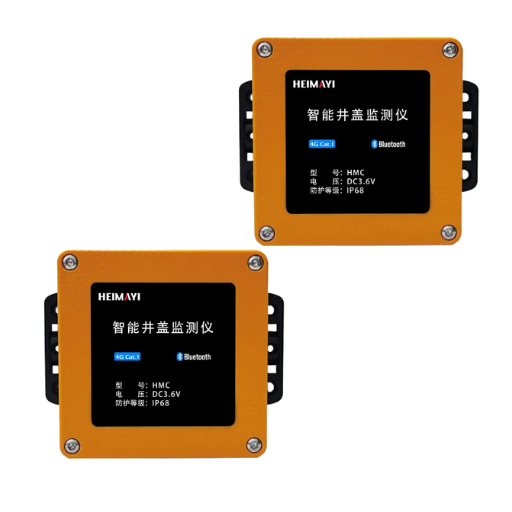
These four cover the properties that generate maintenance calls rather than procurement arguments, and they are the ones most often left out.
Clause 5: Seating and stability
Rocking is the most common in-service complaint about covers and the least commonly specified property. It is cheap to design out and expensive to fix in a live carriageway.
The cover shall seat on the frame without rock under load, using a three-point or equivalent stable bearing arrangement. A resilient insert or machined seating surface shall prevent movement and noise in service. Covers that rock, lift or rotate under normal traffic loading shall be rejected.
Clause 6: Access, lifting and security
Anti-theft protection is a specification decision, not a product upgrade. Where scrap value drives theft, its absence from the specification is why it is absent from the delivery.
The cover shall incorporate a lifting keyway or hinge suitable for single-person lifting with the standard key. Covers in publicly accessible areas shall include an anti-theft locking device operable only with a designated key. Hinged covers shall be specified where regular access is required.
Clause 7: Surface and coating
A coating clause with no thickness is a colour preference. State the dry film thickness and require it in the submittal.
The traffic-contact surface shall provide anti-slip profiling. Ferrous covers shall be coated with bitumen or epoxy to a minimum dry film thickness stated in the approved submittal. Coating shall be continuous, with no exposed casting on the traffic-contact surface.
Clause 8: Watertightness, odour and gas
Sealing is the clause that silently changes the product. A gasket alters the seating geometry and the lifting force, so specify it deliberately or leave it out deliberately.
Covers in areas requiring odour control shall incorporate a sealing gasket and shall be watertight to the specified test. Where the installation is in a classified hazardous area, gas-tight construction and the associated hazardous-area certification shall be specified.
Where a scheme includes gas sensing underground, the certification question becomes ATEX certification for gas-sensing covers, which sits outside the structural standard.
Clauses 9 to 12: Marking, Testing, Inspection, Documentation
This group decides whether the thing that arrives is the thing you specified. It is where most manhole cover tender requirements are weakest.
Clause 9: Marking and traceability
Marking is the only part of the specification a street inspector can verify without paperwork. The manhole cover marking requirements below separate a cover that carries a record from one carrying a claim.
Each cover and frame shall be permanently marked, cast or stamped, with the standard reference and edition, the load class, the manufacturer’s name and production site, the third-party certification mark where held, and a heat or batch number traceable to material and test records. Applied labels, stickers or paint shall not be accepted.
Daniel, a procurement lead for a West African municipal contractor, rejected a consignment in 2025 for exactly this reason. The covers arrived with class labels applied over the casting. Underneath, the cast marking read a lower class. The supplier said the covers had been “upgraded.” They had not.
Clause 10: Testing and certification
The supplier shall submit a type-test report for each class and product family offered, issued by a laboratory accredited to ISO/IEC 17025, covering static load, permanent set and seating tests to EN 124-1. Batch test records shall be available for inspection. Where a cover is modified after type testing, including any drilling, bracket or sensor mounting, a supplementary test report covering the modification shall be provided.
Manhole cover testing requirements come down to that clause, and its last sentence is the entire smart-cover compliance argument in one line. It also separates a manufacturer from an assembler. The BSI Kitemark accreditation page for BS EN 124-2:2015 shows what third-party certification of a cast-iron cover looks like, which is useful when a bidder offers a logo instead of a certificate. If your project also includes enclosure protection requirements for smart units, it helps to verify whether the supplier’s claim is only a marketing phrase or is supported by actual certification. See IP68 Smart Manhole Cover Certification: What It Really Means and What to Verify Before You Buy for a practical breakdown of what procurement teams should check before accepting an IP68 claim.
Clause 11: Inspection and acceptance
The purchaser may conduct a factory acceptance inspection and a pre-shipment inspection on a sampling basis. A batch shall be rejected where any sampled cover shows permanent set, dimensional non-conformance, incomplete coating, illegible marking or a seating defect. The cost of re-testing a rejected batch shall be borne by the supplier.
Acceptance criteria without a cost consequence are advisory. Naming who pays converts the clause into a control.
Clause 12: Documentation, warranty and spares
The supplier shall submit a technical submittal package for approval before manufacture, a compliance statement against every clause of this specification, O&M documentation, as-built records for installed smart covers, and a warranty covering structural integrity for a stated defects liability period. A spare cover allowance shall be quoted as a separate line item.
Spares are the clause every maintenance team wishes existed and almost none include. Pricing them separately also makes lifecycle cost visible at evaluation rather than at year three.
Adding Smart Manhole Cover Requirements to a Tender
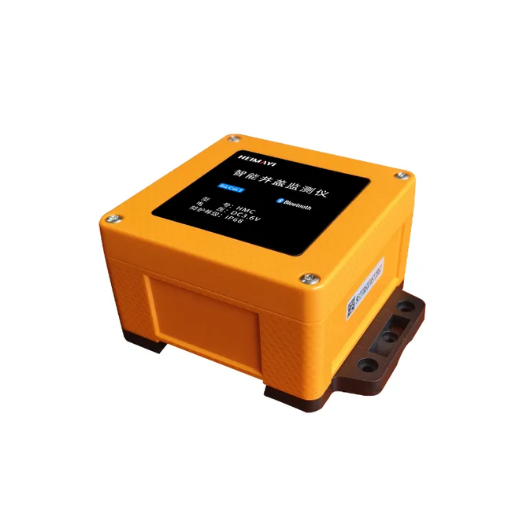
If the project includes monitoring, the structural specification stays as written. IoT requirements go in as an additional clause, not a replacement, because the two halves carry different evidence. A load class is proved by a type test; a sensor by a datasheet, a test report and a protocol document. Mixing them lets a bidder satisfy the easy half and gesture at the hard one.
| Requirement | Status | Specify |
|---|---|---|
| Tilt and displacement sensing | Required | Threshold and alarm trigger |
| Water level sensing | Required | Depth thresholds for flood warning |
| Gas detection | Conditional | Required where the network carries sewage gas |
| Alarm latency | Required | Maximum minutes from threshold breach |
| Connectivity | Required | Named technology and the project country’s bands |
| Battery life | Required | Stated years and replacement procedure |
| Ingress protection | Required | IP68 to IEC 60529, with test report |
| Platform interface | Required | Open API or documented protocol |
| Data ownership | Required | Vests in the purchaser |
| Redundant sensing or solar assist | Optional | Site-dependent |
Two clauses do most of the work here.
Smart covers shall transmit an alarm within the stated interval of a threshold breach, operate on the specified network bands for the project country, achieve a battery life of not less than the stated years with a documented replacement procedure, and meet IP68 to IEC 60529 evidenced by test report. The purchaser shall own all collected data, and an open API or documented protocol shall be provided for platform integration. If you want buyers to validate that evidence properly rather than accept an unchecked PDF, you can also point them to How to Read an IP68 Test Report: Verifying IEC 60529 Certification as a useful reference for interpreting what a real IP68 report should contain.
Sensor mounting shall not reduce the certified load class. Evidence of supplementary type testing after modification shall be submitted with the submittal package.
Marta, a smart city programme manager, inherited a pilot where that second clause had been left out. Field crews drilled covers in place to fit sensor brackets, and the covers still carried D400 markings. The city now holds an asset register of certified-looking covers with uncertified modifications, and no way to tell which are affected.
The smart manhole cover IoT guide covers how the sensing stack works, and the installation guide covers preserving the load class on site.
How to Evaluate a Bid Against a Manhole Cover Specification
Separate pass or fail requirements from scored requirements, and say which is which in the tender document. That’s the biggest design decision in a cover tender, and it’s usually left implicit.
Pass or fail items are where a wrong answer is a defect: standard and edition, load class, material grade, marking, type-test evidence. Scored items reward a better answer: coating durability, delivery programme, warranty length, spares, support.
Then rank the evidence, from strongest to weakest:
- Type test from an accredited laboratory
- Batch or routine test records
- Certificate of conformity
- Manufacturer’s declaration
A bid offering a declaration where the specification asked for a type test has not answered the question. Require a compliance statement that quotes each clause number and gives a document reference. A narrative response hides gaps; a clause-by-clause table exposes them, and it takes a bidder twenty minutes to complete.
Finally, don’t evaluate on unit price alone. Landed cost includes freight, duty, spares and the cost of a failed consignment. The European procurement certification stack explains which documents a European buyer expects. And where CE documents are part of the submittal pack, buyers should verify authenticity rather than assume the presence of a certificate means the product is compliant. For that reason, Fake CE Certificate China: How to Verify Before Buying is a useful companion reference during bid review.
10 Checks Before You Issue the Manhole Cover Specification
- The standard is named with its part and edition, not just “EN 124.”
- Load class is specified per location in the bill of quantities.
- Material grade is named with mechanical properties, not just “ductile iron.”
- Clear opening, frame size and depth are listed as separate dimensions.
- Seating and non-rocking is a stated requirement.
- Locking and lifting are specified for the locations that need them.
- Coating type and dry film thickness are both stated.
- Marking requires cast or stamped identification and a heat number.
- Testing requires an accredited laboratory and covers post-modification changes.
- Acceptance names the rejection criteria and who pays for a re-test.
A tender that answers all ten can be evaluated on evidence. One that misses three or more gets evaluated on confidence, which favours the best-written submission over the best product.
Frequently Asked Questions
What must a manhole cover specification include?
It must state the applicable standard and edition, load class by location, material grade with mechanical properties, dimensions, seating, marking, test evidence and acceptance criteria. Each item needs a document the supplier submits and you check.
Should I specify EN 124 or GB/T 23858?
Specify EN 124 where the project market enforces it. GB/T 23858-2009 remains valid for Chinese domestic projects, but it is a non-equivalent adoption of the superseded EN 124:1994, so a GB/T certificate does not evidence EN 124:2015 compliance without separate type testing.
What does “or equivalent” mean in a cover specification?
It should mean a named equivalence test, not a judgement call: a type test to the specified standard, from an accredited laboratory, covering the same class and product family. Otherwise any bidder can claim compliance and the committee arbitrates.
What test evidence should I demand from a supplier?
A type-test report per class and product family from an ISO/IEC 17025 accredited laboratory, batch records available for inspection, and a supplementary report for any modification after type testing. A certificate of conformity alone states an intent, not a performance.
Can a smart manhole cover be specified without compromising the load class?
Yes, provided the sensor integration is designed into the cover rather than drilled in after type testing, and the specification requires supplementary test evidence for any modification. The clause to add is one sentence: sensor mounting shall not reduce the certified load class.
How do I write a bill of quantities item for a manhole cover?
Write it as a supply-and-install item naming the class, clear opening, frame size, material grade and standard, then reference the clause numbers instead of repeating the requirements.
The Specification Is the Contract’s Technical Memory
A manhole cover specification is not paperwork surrounding the procurement. It is the record of every decision the project made before anyone quoted, and the clauses you leave out are the ones you will argue about later.
Run the ten checks above and the next twenty-two bids will be comparable on evidence. Price becomes the only variable left, which is where a manhole cover procurement decision belongs.
Black Ant manufactures ductile iron and smart manhole covers to EN 124 and GB/T 23858, with type-test documentation, cast marking and heat-number traceability available for tender submission.
If you are drafting a manhole cover specification, send us the clause set. Our engineering team will review it against what the factory can actually evidence. Talk to our engineering team about your tender, or download the tender specification checklist.







