EN 124 Load Class Manhole Cover: A15 to F900 Selection Guide
Two covers leave the same foundry stamped “D400.” One is installed on a city carriageway and lasts twenty years. The other goes into a logistics yard where solid-tyre forklifts turn all day, and it deforms within eighteen months. Both covers carry the same number. Only one was specified by someone who understood what that number actually guarantees.
The EN 124 load class is the most important figure on any manhole cover, and the most frequently misunderstood. Test load gets confused with permissible load. A cover marked to the Chinese GB/T 23858 standard gets rejected at a European port because nobody mapped it to EN 124. And a smart cover with a sensor bolted through its rib can quietly lose the certification it shipped with.
This guide explains the whole picture so you can specify with confidence:
- Every EN 124 load class from A15 to F900, with the test loads and applications
- How to select the right class for your installation location
- How EN 124 maps to GB/T 23858, IS 1726, and FACTA standards
- How to verify a load class claim before you sign off
- How a smart manhole cover keeps its class after sensor integration
What Is an EN 124 Load Class and Why It Matters
An EN 124 load class is a rating that states the static test load a manhole cover and its frame must withstand, measured in kilonewtons (kN). EN 124 defines six classes, A15 through F900, and maps each to a group describing the traffic environment it suits, from pedestrian footpaths to aircraft pavements.
The number on the cover equals its test load. A D400 cover has been proof-loaded to 400 kN, roughly 40 tonnes, without failing. That’s the number a municipal drawing, a port specification, or a distributor’s import file will reference.
Getting the class wrong has consequences in both directions. Specify too low and the cover deforms, rocks, or fails, creating a hazard and a liability. Specify too high and you spend carriageway-grade money on covers that sit in a garden. The load class is the balance point, and it should never be a guess.
The six classes at a glance
| Class | Test Load (kN) | Test Load (tonnes) | Group | Typical Application |
|---|---|---|---|---|
| A15 | 15 | 1.5 | 1 | Pedestrian and cyclist areas, footpaths, gardens, alleys, courtyards |
| B125 | 125 | 12.5 | 2 | Car parks, footways, private roads, occasional vehicular access |
| C250 | 250 | 25 | 3 | Kerbside channels, within 0.5 m of the carriageway edge |
| D400 | 400 | 40 | 4 | Carriageways, hard shoulders, highways, all-vehicle parking |
| E600 | 600 | 60 | 5 | Docks, ports, loading areas, aircraft pavements |
| F900 | 900 | 90 | 6 | Aircraft pavements, container quays, exceptional wheel loads |
Test load vs. permissible load: the distinction most guides miss
The number stamped on a cover is a proof load, not a daily payload. EN 124 tests the assembly at its class load once to confirm structural integrity. The permissible load a cover can carry in service, year after year, is considerably lower.
This matters because specifiers sometimes read “D400” as “safe for a 40-tonne vehicle.” That reading is wrong. A D400 cover is proven not to fail under a 400 kN test; it’s not rated to sit under a 40-tonne wheel indefinitely. If your traffic is genuinely heavy, chronic, and dynamic, select the next class up and give yourself margin. When in doubt, the standard itself advises choosing the higher class.
The EN 124 Load Class Table Explained: A15 to F900
The six classes are not arbitrary tiers. Each maps to a real installation environment, and the mapping is the working part of the standard. Understanding why each class exists is faster than memorizing it.
A15 and B125: pedestrian and light-traffic areas
A15 covers the ground only people and bicycles touch: footpaths, courtyards, garden covers, and alleys with no vehicle access. At 15 kN it is the lightest class and the cheapest to produce.
B125 raises the floor to areas with occasional vehicle traffic: car parks, private driveways, residential footways, and market squares. A delivery van crossing a footway is the design case. B125 is also the common minimum for green-space and landscape covers where maintenance vehicles occasionally pass.
C250 and D400: kerbside and carriageway
C250 occupies the narrow band along the edge of the road. The class applies to covers within 0.5 m of the kerb face into the carriageway, and 0.2 m into the footway. It is the boundary zone where a wheel can clip the cover but full traffic does not routinely cross it.
D400 is the carriageway standard. Main roads, residential streets with regular traffic, hard shoulders, and parking areas for all vehicle types sit at this class. In practice, D400 is the most specified heavy-duty class in municipal work, and the one most readers are searching for. If a vehicle drives over it as part of normal traffic, D400 is the floor.
E600 and F900: docks, ports, and airports
E600 handles the heavy, repetitive wheel loads of loading bays, docks, ports, and freight terminals. F900 covers aircraft pavements and container quays, where wheel loads are extreme. Most municipal projects never touch these classes, but ports, logistics hubs, and airfields live here.
The “when in doubt, go higher” rule
EN 124 is a minimum performance standard. A higher-class cover can always be installed where a lower class is specified. A lower-class cover must never be installed where a higher class is required. That one-directional rule is the safety net for every uncertain specification.
How to Select the Right Load Class
Selection starts with location, not budget. Work from where the cover sits, confirm the vehicle types the road is designed for, and only then check the price.
| Installation Location | Minimum Load Class | Test Load |
|---|---|---|
| Footpaths, gardens, pedestrian areas | A15 | 15 kN |
| Car parks, footways with occasional vehicles | B125 | 125 kN |
| Kerbside, within 0.5 m of carriageway | C250 | 250 kN |
| Carriageways, highways, hard shoulders | D400 | 400 kN |
| Docks, ports, loading areas, forklift traffic | E600 | 600 kN |
| Airfields, container quays | F900 | 900 kN |
Special cases: solid tyres and non-pneumatic suspension
D400 is not rated for vehicles with solid tyres or non-pneumatic suspension, including many forklifts and some port and aircraft ground equipment. For those, E600 is the true minimum. This is the trap that catches the logistics-yard specification in the opening of this article. Pneumatic tyres distribute load across the contact patch; solid tyres concentrate it into a smaller, harder point of pressure that a carriageway-rated cover was never tested against.
Before locking a class for any industrial or yard environment, list the vehicles that will actually cross the cover. If forklifts appear on that list, move up to E600.
Reconciling the drawing with the road
Always follow the drawing first. If the specification states a load class, use it.
If it doesn’t, work backward from the road’s traffic conditions and confirm the vehicle types with the designer and contractor. Don’t lower the standard to fit a budget. The difference between a C250 and a D400 cover is small next to the cost of a failed carriageway cover in year two.
If you are specifying covers for a project that includes monitoring hardware, our complete smart manhole cover guide shows how the load class sits alongside sensor selection and connectivity.
EN 124 vs Other Manhole Cover Standards
EN 124 travels well but it is not universal. If your project crosses borders, you will meet at least one other standard, and knowing how they map saves money at customs and inspection.
EN 124 vs GB/T 23858 (China)
GB/T 23858-2009 is the Chinese national standard for manhole covers, and its class system aligns with EN 124 class for class. A GB/T 23858 D400 cover is tested to the same 400 kN proof load as an EN 124 D400 cover. The equivalence is what allows Chinese-manufactured covers to be specified on EN-referenced projects, provided the marking and the test certificate are in order.
Most Chinese tenders apply the same location logic: carriageways require no less than D400, and all other locations no less than C250. The standard differs from EN 124 mainly in material and marking conventions, not in the load class a cover achieves.
EN 124 vs IS 1726, IS 12592, and FACTA
India maintains its own cover standards, IS 1726 for cast iron and IS 12592 for precast concrete, and an EN 124 class marking should not be assumed to satisfy them. The UK’s FACTA classification for steel access covers uses a separate scheme again, with classes AA, AAA, B, C, and D and its own in-service and ultimate test loads. FACTA also sits alongside BS 7903 and CD 534 guidance.
The practical rule is simple: confirm which standard the local authority enforces, and evidence compliance against that standard, not against a lookalike.
Reading the marking
A compliant cover is cast or stamped with its class, for example “EN 124 D400” or a GB/T 23858 equivalent. The marking is a claim, and it is verifiable. Treat it as the start of a check, not the end of one.
For buyers sourcing from overseas, our guide to how to verify a Chinese smart manhole cover manufacturer walks through the factory-side checks that sit behind a legitimate class marking.
How Load Class Is Verified and Certified
A class marking means nothing without the test behind it. Knowing what a laboratory actually checks turns you from a buyer into an informed one.
The test suite
EN 124 verification proves the complete unit, meaning the cover seated in its own frame, supported as it will be in service. Four tests carry the weight:
- Static load: the assembly bears the class test load without failure.
- Permanent set: deformation remaining after the load is removed stays within limits, so the cover does not sit proud or below its frame.
- Seating and tilt: the cover stays stable in its frame under load, without rocking.
- Fatigue: for composite tops, repeated loading is applied without cracks appearing.
For a D400 composite top, EN 124-5 fatigue conditions include cycles such as 100,000 at 136 kN or 500,000 at 120 kN, with no visible cracking at completion.
The test-machine margin
Testing does not simply apply the class load. The machine must exceed it, by at least 25% for A15 through D400 and at least 10% for E600 and F900. A D400 cover is therefore tested on equipment capable of 500 kN or more. That margin is what separates a genuine class certificate from an optimistic catalogue value, as the TCR Engineering testing methodology explains.
How to verify a supplier’s class claim
- Look for the marking. Confirm the class is cast or stamped into the cover, not printed on a label.
- Request the type-test certificate. Ask for the certificate that covers the specific class and material.
- Confirm the laboratory. Verify the testing was carried out by an accredited third-party testing house.
- Check the frame. D400 and above need a minimum 50 mm depth of insertion into the frame, with a traffic-contact surface flat to within 1% of the clear opening.
- Inspect the delivery. Look for permanent set, deformation, or a frame that sits poorly against the cover.
A distributor who can produce this documentation on request protects their customer from a rejected shipment and protects their own reputation. It is also the fastest way to tell a serious manufacturer from a trading company, as outlined in the Kessel load class reference and its application mapping.
Does a Smart Manhole Cover Still Meet Its Load Class?
This is the question every smart-city project eventually asks, and it deserves a straight answer. Adding sensors to a manhole cover doesn’t automatically void its load class, but doing it carelessly can. The structural work is in how the integration is done.
What sensor integration changes
A retrofit sensor module mounts to the underside of the cover, and mounting means drilling. Every hole removes material from the cover’s stress field. Drill through a high-stress zone, and you’ve weakened exactly the part of the cover the D400 test was proving. The cover may still be marked D400, but the marking no longer describes the object in the ground.
Preserving D400 compliance
The safe approach keeps the load-bearing geometry intact. Mount the sensor bracket in low-stress areas of the cover, and use load-distribution plates so the bolt load spreads across the casting rather than concentrating at the hole. This preserves the D400 integrity of the cover after modification.
Our smart manhole cover installation guide documents the full procedure, including bracket placement, bolt torque, and the load-distribution method used on real deployments.
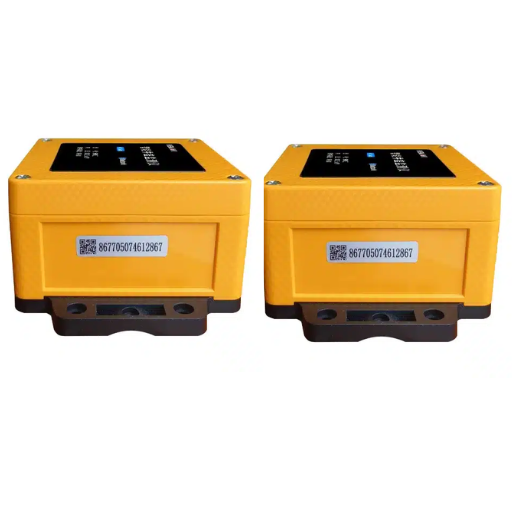
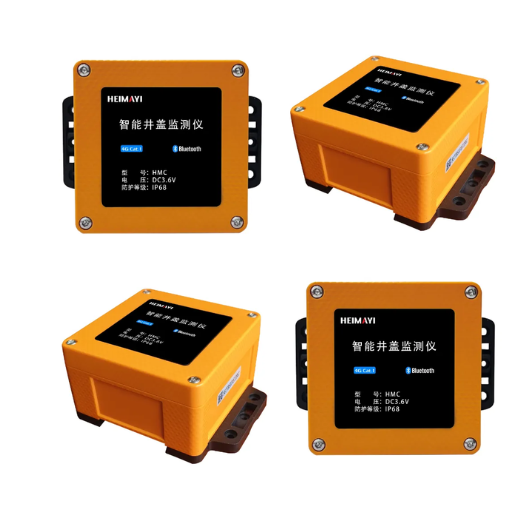
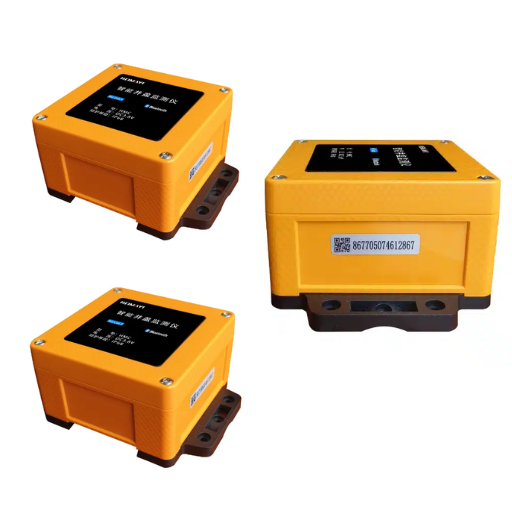
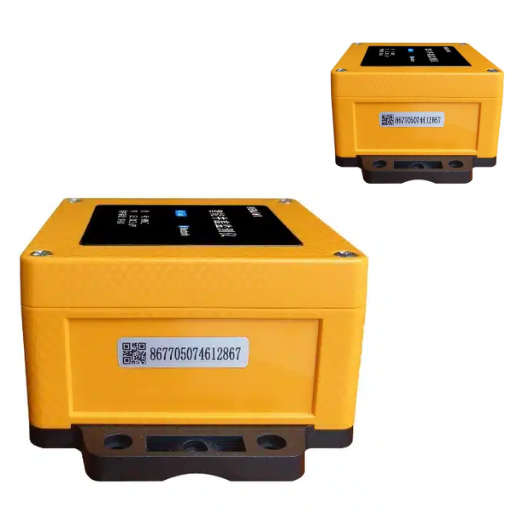
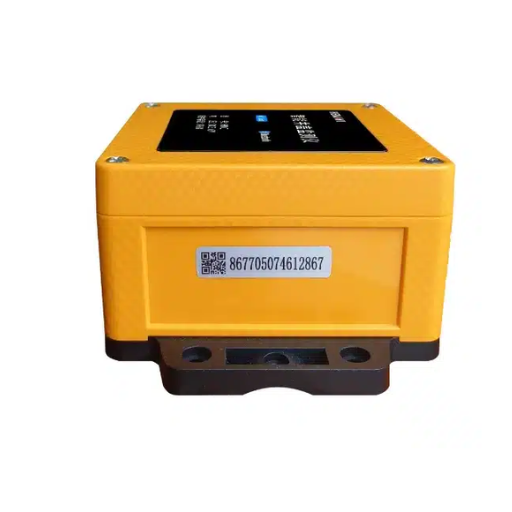
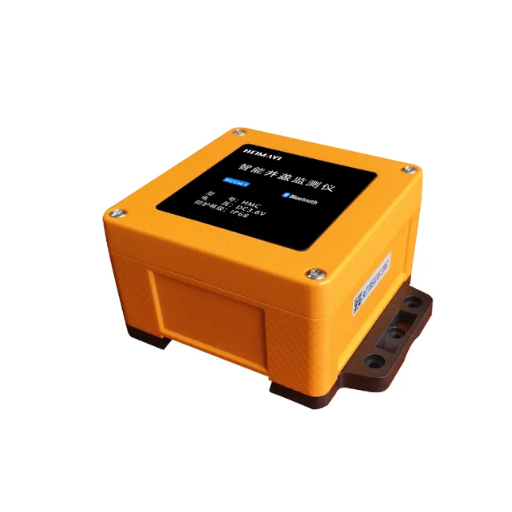
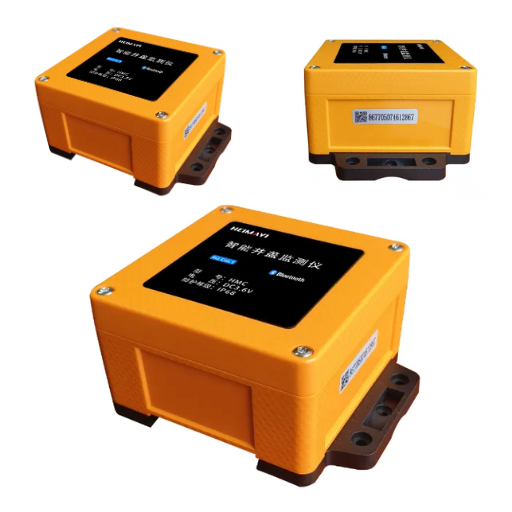
The device itself is designed to work within that constraint. Black Ant’s H501 intelligent manhole cover monitoring instrument uses a modular sensor platform that integrates with the cover structure rather than fighting it, and the underlying sensor mix is covered in detail in our smart manhole cover sensors reference.
Re-certification
Any structural modification to a load-class cover should be re-verified against the class it retains, and the resulting documentation belongs in the asset file. If a supplier cannot explain how sensor integration affects the class, that is your answer about their engineering depth. Compliance and intelligence can coexist on the same cover, but only when the integration is engineered rather than improvised.
Frequently Asked Questions
What does D400 mean on a manhole cover?
D400 means the cover and frame were proof-loaded to 400 kN (about 40 tonnes) under EN 124 and did not fail. It is the standard heavy-duty class for carriageways and roads carrying normal vehicle traffic.
What is the difference between B125 and D400?
B125 is a light-duty class rated to 125 kN (12.5 tonnes), used in car parks and areas with occasional vehicle access. D400 is rated to 400 kN (40 tonnes) and is the minimum for carriageways and roads with regular vehicle traffic.
Is D400 strong enough for a truck?
D400 is tested to 400 kN and suits normal road vehicles, including lorries on carriageways. It is not rated for vehicles with solid tyres or non-pneumatic suspension, such as many forklifts, where E600 is the minimum.
Can I use a D400 cover in a car park?
A D400 cover can be used in a car park, but it may be over-specified. Car parks with occasional vehicular access are typically served by B125. If heavy vehicles or forklifts use the car park, move up to D400 or E600 accordingly.
Does adding IoT sensors to a manhole cover reduce its load class?
Not if the integration is done correctly. Drilling in high-stress zones can weaken a cover, but mounting brackets in low-stress areas with load-distribution plates preserves the original class. Always request re-verification documentation after modification.
Is a GB/T 23858 cover acceptable where EN 124 is specified?
Yes, in most cases. GB/T 23858 classes align with EN 124 class for class, so a GB/T 23858 D400 cover meets the same 400 kN proof load. Confirm the marking and the third-party test certificate to evidence compliance for inspectors and customs.
How do I check whether a manhole cover is genuine D400?
Look for the class marking cast into the cover, request the type-test certificate, confirm the third-party laboratory, verify the frame depth of insertion, and inspect the delivered unit for deformation or permanent set.
Specifying the Right Class, Every Time
The EN 124 load class is a simple number with a lot of meaning behind it. Get it right and your covers do their job for decades. Get it wrong and you pay for it in failures, return visits, and rejected shipments.
Keep the essentials in mind:
- Test load is a proof load, not a daily payload. Choose the higher class when traffic is heavy or uncertain.
- Match the class to the location. A15 for footpaths, B125 for occasional vehicles, C250 for kerbside, D400 for carriageways, E600 and F900 for ports and airfields.
- Cross-reference the standard. EN 124, GB/T 23858, IS 1726, and FACTA map differently. Confirm which one your project enforces.
- Verify every claim. A class marking is a promise, and the test certificate is the proof.
- Protect the class during modification. A smart cover keeps its load class when sensor integration respects the structure.
If you are specifying a CE-certified smart manhole cover for a project that must meet EN 124, our engineering team can confirm the right class for your traffic conditions and provide the test documentation your tender package needs.
[Download the EN 124 Load Class Selection Chart] or contact our engineering team to match a class to your project. If you are weighing the wider case for monitored covers, our breakdown of smart manhole cover ROI connects the specification decision to the operational payback, and what a smart manhole cover is covers the basics for stakeholders new to the technology. To learn more about IP68 Smart Manhole Cover Certification: What It Really Means and What to Verify Before You Buy, please refer to our accompanying guide.
A cover that meets its class is a foundation. A cover that meets its class and reports its own condition is infrastructure that pays for itself. Both start with the same specification decision.