ATEX Manhole Cover for Sewer Gas: Zone 1 Compliance Guide
A sewer manhole looks inert: a lid on a hole. In regulation it’s something else entirely, a potentially explosive atmosphere. Decaying organic matter underground generates methane at concentrations that can ignite, and hydrogen sulfide at concentrations that can kill before anyone smells it.
That changes what a manhole cover is allowed to be. “ATEX certified” is not a marketing badge. It is the legal gate that decides whether a cover, and anything mounted inside it, may be installed on a sewer at all. The term is confused constantly, with load class, with waterproofing, and with the vague and technically inaccurate phrase “explosion proof.” Manholes get installed with no zone classification at all, and smart covers with gas sensors get ordered without anyone asking whether the electronics are intrinsically safe.
This guide fixes that. You will learn why sewer gas is an explosion hazard, how to tell whether your manhole is a classified zone, the equipment category and marking you need, how ATEX relates to EN 124 and IP68, how to add gas detection without breaking compliance, and how to verify an ATEX claim before you buy.
If you are specifying a monitored cover for a sewer asset, our smart manhole cover range is built for exactly these locations. Read on first, because the compliance gate comes before the product choice.
What Is an ATEX Manhole Cover?
An ATEX manhole cover is a cover, and any equipment housed within it, certified for installation in a potentially explosive atmosphere under EU Directive 2014/34/EU. Because sewer manholes generate methane, a gas-group IIB fuel with a 5% to 15% explosive range, most are classified Zone 1, requiring Category 2G equipment.
That definition carries three ideas that most suppliers blur together. First, ATEX is a legal framework, not a product feature. Second, it applies to the whole assembly, not just the lid. Third, the certification is specific: a marking that names a zone, a category, a gas group, and a temperature class.
ATEX is two directives, not one
The name ATEX comes from ATmosphères Explosibles, and it covers two separate pieces of EU law. Directive 2014/34/EU governs the equipment itself, what a manufacturer must test and mark. Directive 1999/92/EC governs the operator, the person responsible for the site, and requires them to classify areas and document the risk.
This split matters for buyers. A manufacturer’s job ends with equipment certification. The utility or municipality’s job begins with classifying the manhole. Both must happen, and a cover cannot be compliant in a location that nobody has classified.
“Explosion proof” is the wrong phrase
Trade listings love the term “explosion proof.” Regulators do not use it. The correct vocabulary describes how a device resists ignition:
- Flameproof (Ex d): the enclosure contains an internal explosion without letting it escape.
- Intrinsically safe (Ex ia / Ex ib): the circuit carries too little energy to ignite the atmosphere.
- Increased safety (Ex e): extra measures prevent sparks and hot surfaces.
- Non-electrical (Ex h): mechanical equipment, including covers, assessed for ignition risk without electronics.
When a supplier says “explosion proof,” ask which marking backs it. The marking is the language, and it either exists or it doesn’t.
ATEX vs EN 124 vs IP68: three certificates, one cover
This is the single most useful table in the article, because the three standards answer three different questions.
| Standard | Question it answers | What it certifies | Typical marking |
|---|---|---|---|
| ATEX (2014/34/EU) | May anything here ignite the atmosphere? | Hazardous-area safety | II 2G Ex ib IIB T3 Gb |
| EN 124 | Can the cover bear the load? | Structural load class | EN 124 D400 |
| IP68 | Will water and dust get in? | Ingress protection | IP68 |
An ATEX-certified cover is not automatically strong enough for a carriageway, and a D400 cover is not automatically safe in a Zone 1 manhole. You need all three, and each has its own certificate. We cover the structural side in our guide to EN 124 load class manhole covers and the ingress side in our breakdown of IP68 smart manhole cover certification.
Why Sewer Gas Is an Explosion Hazard
Sewer manholes are vertical confined spaces. Organic waste decomposes in low-oxygen conditions and releases gases that cannot easily escape. Two dominate the risk profile, and they behave in opposite ways.
Methane: the explosive one
Methane (CH₄) is the gas that drives manhole explosion incidents. It has an explosive range of 5% to 15% by volume in air, belongs to gas group IIB, and auto-ignites at roughly 600°C. It’s odourless, so it gives no warning.
Because methane is lighter than air, it accumulates at the roof of the manhole, directly under the cover. That single fact decides where a fixed sensor must sit: high, in the headspace, not on the floor.
Hydrogen sulfide: the lethal one
Hydrogen sulfide (H₂S) is the gas that kills workers. It becomes dangerous above 100 ppm, and it paralyses the sense of smell at those concentrations, so “no smell” does not mean safe. It is also flammable, with an explosive range of 4% to 46%.
H₂S is heavier than air, so it collects at the invert, the lowest point of the manhole. A methane sensor at the top will never see it. This is why gas density, not convenience, dictates sensor placement.
Oxygen deficiency, carbon monoxide, and carbon dioxide round out the hazard set. Confined-space entry codes commonly require oxygen between 19.5% and 23.5%, and flammable gas below a set fraction of the lower explosive limit, often 5%, 10%, or 20% of LEL depending on jurisdiction.
Why sensor placement follows gas density
A practical example: an engineer at a municipal utility fitted a single methane sensor in the headspace of a manhole on the city’s oldest trunk sewer. The methane readings stayed low, and the crew assumed the asset was clear. What the sensor could not see was H₂S pooling two metres below, at the invert. The fleet reading looked healthy; the entry risk was not. The fix was not better electronics, it was a second sensor in the right place, driven by gas density.
That principle carries straight into cover design. A gas-detecting manhole cover that puts a single sensor in a single position is monitoring half the hazard. Our article on smart manhole cover sensors goes deeper on sensor selection for these environments.
Is Your Manhole an ATEX Zone? Classification Explained
Before you can specify a single component, someone must classify the space. Zone classification follows IEC 60079-10-1, and it asks three questions about how often an explosive atmosphere is likely to occur.
To classify a manhole, work through this in order:
- Confirm a flammable gas or vapour is present. In a sewer manhole, methane and hydrogen sulfide almost always are.
- Confirm the space is enclosed or poorly ventilated, so gas can accumulate rather than disperse.
- Estimate how often an explosive atmosphere occurs during normal operation.
- Apply the zone definitions: continuous presence is Zone 0, occasional during normal operation is Zone 1, and unlikely except under abnormal conditions is Zone 2.
- Record the result, with the reasoning, in the site’s Explosion Protection Document.
For sewers, Step 4 lands on Zone 1 in the large majority of cases. Gas forms intermittently during normal operation, and the manhole holds it. That’s the definition of Zone 1.
| Zone | Explosive atmosphere present | Equipment Category | Example marking |
|---|---|---|---|
| Zone 0 | Continuously or for long periods | 1G | II 1G Ex ia IIC T4 Ga |
| Zone 1 | Occasionally during normal operation (sewer default) | 2G | II 2G Ex ib IIB T3 Gb |
| Zone 2 | Unlikely; only under abnormal conditions, briefly | 3G | II 3G Ex ic IIB T4 Gc |
One rule governs substitution: equipment certified for a lower-numbered zone may always be used in a higher-numbered one. Zone 0 equipment is safe in Zone 1. The reverse is never true. If you are unsure between Zone 1 and Zone 2, specifying Category 2G equipment is the safe direction.
Who is responsible, and the fault nobody catches
Classification is the operator’s duty, not the manufacturer’s. The most common compliance fault found in audits is not the wrong device. It’s the absence of any zone classification for the manholes and sewer sections at all, which leaves the entire network’s equipment unverified by definition.
If you can’t find a zone classification for a manhole in your documentation, that’s the finding. Everything downstream depends on it. The physical installation itself is covered in our smart manhole cover installation guide.
IECEx, ATEX, GB 3836, and NEC: one hazard, several regimes
ATEX is European law. The same hazard is governed differently elsewhere: IECEx is the international certification scheme, GB 3836 is China’s standard family, and the NEC Article 500 series covers the United States. The technical logic is remarkably consistent across them, zones map to classes and divisions, and gas groups map onto each other.
What changes is the paperwork and the marking language. An international project needs a supplier fluent in more than one regime, which is why we treat them as peers rather than tiers.
What Equipment Does a Sewer Manhole Need?
Once the manhole is classified Zone 1, every ignitable item inside it must carry the right protection. The cover itself is only the first entry on the list.
| Item | Hazard | Required protection | Typical marking |
|---|---|---|---|
| Manhole cover (non-electrical) | Friction or spark on impact, static build-up | Non-electrical ATEX assessment (EN ISO 80079-36); conductive or spark-free material | Ex h IIB T… Gb or documented no-ignition assessment |
| Gas detector (CH₄ / H₂S) | Ignition source in the electronics | Intrinsic safety | Ex ia/ib IIB T3/T4 Gb |
| Junction box and terminals | Spark, hot surface | Increased safety | Ex e II T6 Gb |
| Cable gland | Flame path transmission | Flameproof | Ex d IIB |
Decoding the marking
Take the marking II 2G Ex ib IIB T3 Gb and read it left to right:
- II: equipment group II, meaning surface industry as opposed to mining.
- 2G: Category 2, gas atmosphere, suitable for Zone 1.
- Ex: the equipment is explosion-protected.
- ib: the specific protection method, here intrinsic safety at level b.
- IIB: the gas group, which covers methane.
- T3: the temperature class, capped at a 200°C maximum surface temperature.
- Gb: the equipment protection level, one tier below the highest.
A real manhole H₂S logger, the GWF Jellox, carries the marking II 2G Ex ib IIB T3 Gb precisely because it sits in a Zone 1 sewer environment. That is what a compliant sewer instrument looks like on paper.
The cover is non-electrical, and that still matters
A plain ductile-iron cover has no electronics, so some buyers assume ATEX doesn’t apply. It does. Non-electrical equipment for explosive atmospheres is covered by the EN ISO 80079-36 standard family. The concern is mechanical ignition risk: friction, impact sparks, and electrostatic discharge from the cover surface.
This is why conductive, spark-free covers exist for Zone 1 and Zone 2 manholes. A conductive PE-el cover, for example, derives its electrical potential in a way that removes the static-spark risk. If you specify a standard cover into a classified manhole, the supplier should be able to document a no-ignition assessment. “It’s just metal, it’s fine” is not a compliance position.
The faults an inspector finds
Audits of sewer networks tend to surface the same short list:
- IIA-marked equipment (propane-rated) installed in a IIB methane zone.
- General-industrial pump motors or junction boxes inside the manhole.
- A fixed gas monitor that is missing, or present but uncalibrated.
- No confined-space entry procedure in the Explosion Protection Document.
Each one invalidates the protection the rest of the installation assumes.
ATEX-Compliant Gas Detection for Smart Manhole Covers
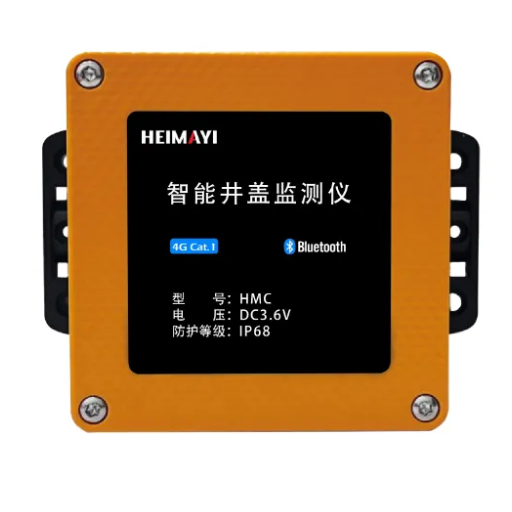
Here is the question every smart-city developer eventually asks: can you put electronics inside a Zone 1 manhole at all? The answer is yes, and this is where a correctly engineered smart cover earns its place.
The design rule is simple: the electronics must be intrinsically safe, and the cover must stay spark-free. Get both right and a gas-detecting cover is compliant by construction.
Intrinsically safe sensing
An intrinsically safe circuit, marked Ex ia or Ex ib, is engineered so that even a fault can’t release enough energy to ignite methane. That’s how a CH₄, H₂S, or CO sensor becomes safe to place inside the zone. The sensor chain, its power source, and its cabling are all part of the assessment, not just the sensing element.
Keeping the cover compliant
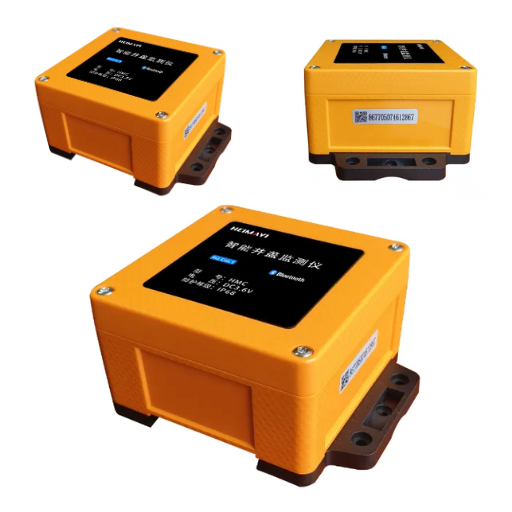
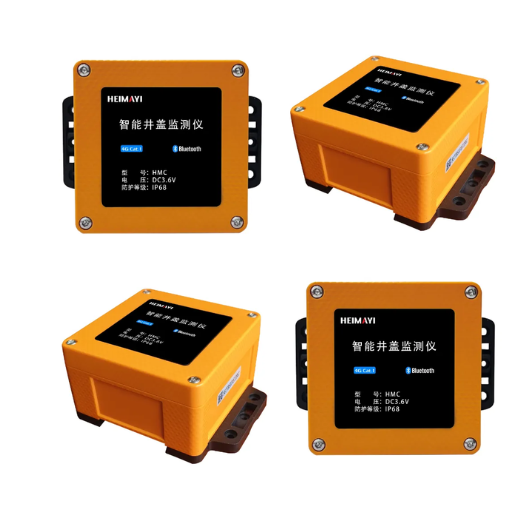
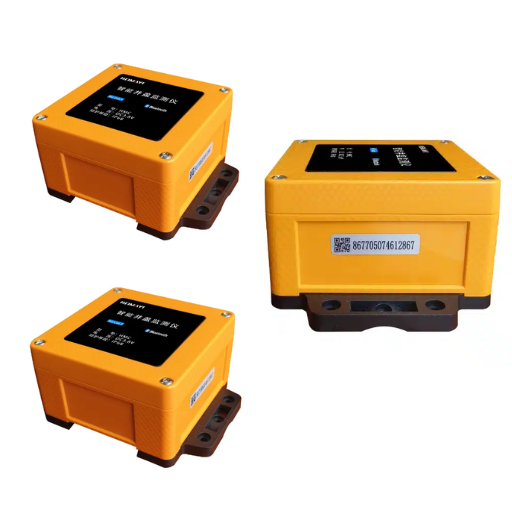
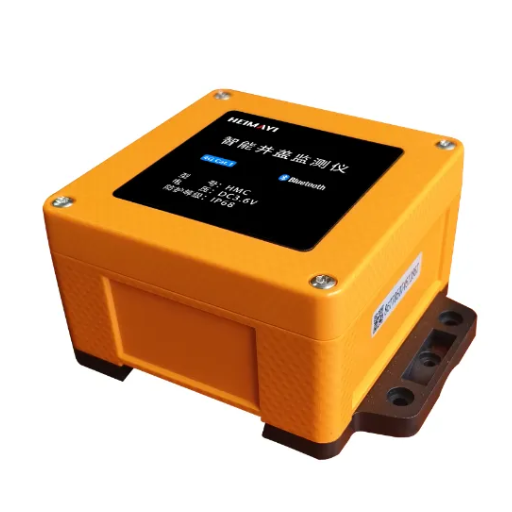
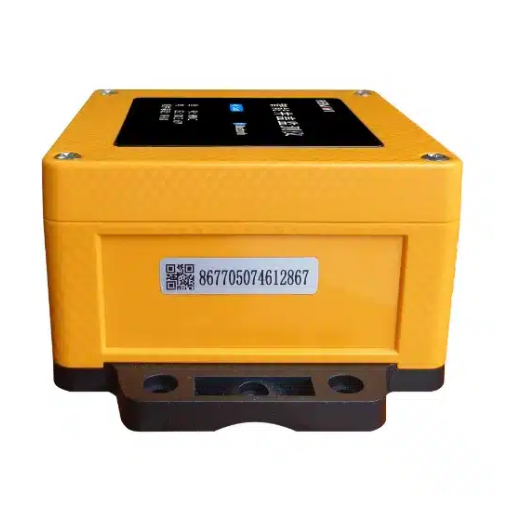
A gas-detecting cover adds two risks the lid alone did not have: an electrical device and a modified structure. The electrical side is solved by intrinsic safety. The structural side is solved by keeping the sensor integration out of the cover’s high-stress zones, the same principle that protects load class. Our overview of the H501 intelligent manhole cover monitoring instrument shows how a modular sensor platform is mounted without weakening the assembly.
Where Black Ant fits is as a manufacturer that builds the cover, the sensor platform, and the backhaul as one system. That means the intrinsic-safety and load-integrity questions get answered together, in-house, rather than patched across three suppliers.
Continuous versus pre-entry monitoring
Two monitoring modes solve two different problems. Portable detectors are mandatory for confined-space entry, and every entry needs a fresh measurement, because gas moves through connected pipe networks and a safe manhole yesterday can be dangerous today. Fixed in-cover sensors solve the other problem: they watch continuously, so the operator knows a manhole is deteriorating before anyone plans an entry.
A utility team in a coastal city learned the difference the hard way. They had strict portable-detector procedures for entry, and they worked, no one was hurt. But they had no continuous data, so they could not tell which wells were trending worse between inspections. After fitting covers with fixed methane and H₂S sensing, they spotted a rising methane trend in one trunk section and scheduled ventilation and repair before it became an emergency call-out.
Backhaul without breaking the barrier
Transmitting gas alarms out of a hazardous area needs the same care as sensing. An Ex-safe gateway handles the boundary, then NB-IoT or LoRaWAN carries the alarm to the platform. The NB-IoT vs LoRaWAN comparison for smart manhole covers covers which uplink suits which deployment, since cast-iron covers and deep pits both attenuate radio signals.
Specifying a monitored cover for a classified sewer asset? Talk to our engineering team about matching gas-detection sensors to your zone, category, and gas group, and we will send the technical documentation package for your tender file.
How to Verify an ATEX Manhole Cover Claim
An ATEX marking is a promise. The certificate is the proof. Buyers who skip this step are the ones who discover an unverifiable claim at the port.
To verify an ATEX claim, work through this list for every component and every supplier:
- Request the EU type-examination certificate for the specific product, not a generic quality document.
- Check the Notified Body number on the marking and confirm the body is authorised for ATEX.
- Decode the marking fully: zone, category, gas group, temperature class, and equipment protection level.
- Confirm the temperature class is suitable for your gas, and the gas group covers methane (IIB) or better.
- Request the Declaration of Conformity from the manufacturer.
- If the product carries a GB 3836 claim instead, reconcile it against ATEX or IECEx before accepting it.
What “ATEX compliant” should mean on a datasheet
A credible datasheet states the full marking string, names the Notified Body, and references the certificate number. A vague claim of “ATEX compliant” with no marking, no body, and no certificate isn’t evidence of anything. The same discipline applies as when you verify any supplier; our guide to verifying a Chinese smart manhole cover manufacturer walks through the documentation you should request, and our explainer on CE certification for smart manhole covers clarifies how CE marking and ATEX conformity fit together.
One distributor learned the cost of skipping this step. They supplied a batch of gas-monitoring covers to a Middle East municipality on the strength of a supplier’s verbal assurance. At inspection, the covers carried no traceable EU type-examination certificate, only an internal test report. The shipment was held, the installation window slipped by a month, and the distributor absorbed the demurrage. A single certificate request at the quoting stage would have prevented all of it.
Frequently Asked Questions
What does ATEX mean on a manhole cover?
ATEX means the cover, and anything mounted inside it, is certified for a potentially explosive atmosphere under EU Directive 2014/34/EU. On a sewer manhole that usually means Zone 1 and Category 2G, with a marking such as II 2G Ex ib IIB T3 Gb.
Is a sewer manhole Zone 1 or Zone 2?
Sewer manholes are typically Zone 1, because methane and hydrogen sulfide form intermittently during normal operation and the confined space holds them. Zone 2 applies where an explosive atmosphere is unlikely except under abnormal conditions. When in doubt, specify Category 2G equipment, which is valid in both zones.
Do I need an ATEX cover or just a standard D400 cover?
You often need both. D400 satisfies the structural load class under EN 124, while ATEX satisfies hazardous-area safety. On a classified sewer manhole, a standard D400 cover must still be assessed for ignition risk, or replaced with a conductive, spark-free equivalent.
Can I put a gas sensor inside a manhole?
Yes, if the sensor electronics are intrinsically safe, marked Ex ia or Ex ib, and suitable for the zone’s gas group. This is exactly how fixed in-cover gas monitoring works without turning the sensor into an ignition source.
What is the difference between ATEX and IECEx?
ATEX is European Union law, mandatory for equipment sold into the EU. IECEx is an international certification scheme covering the same hazards with largely equivalent technical requirements. Many products carry both; a project outside the EU may accept IECEx where ATEX does not apply.
Is a GB 3836 cover acceptable where ATEX is required?
GB 3836 is China’s equivalent standard family and the technical logic aligns with ATEX, but a GB 3836 marking alone does not satisfy an EU specification. If your project enforces ATEX, request ATEX or IECEx certification, or a documented equivalence your inspector will accept.
What gas group do I need for methane?
Methane belongs to gas group IIB. You need equipment marked IIB or higher, and IIC covers IIB. IIA equipment, often rated for propane, is not suitable for a methane zone.
Does ATEX certification replace EN 124?
No. ATEX and EN 124 are separate. ATEX certifies ignition safety; EN 124 certifies structural load class. A compliant sewer cover typically carries both, plus an IP rating for ingress protection.
Specifying the Right ATEX Manhole Cover, Every Time
ATEX is not a barrier to intelligent infrastructure. It’s the gate that keeps intelligent infrastructure legal, and safe, in the one place it is most needed above a sewer.
Keep the essentials in view:
- Sewer gas is a real ignition hazard. Methane is explosive from 5% and belongs to gas group IIB; H₂S is lethal above 100 ppm.
- Most sewer manholes are Zone 1. That calls for Category 2G equipment, and classification is the operator’s duty, not the vendor’s.
- ATEX, EN 124, and IP68 are three separate certificates. Ignition safety, structural load, and ingress protection each need their own proof.
- A smart gas-detecting cover can be compliant. Intrinsically safe sensing plus a spark-free cover keeps electronics safe inside the zone.
- Verify every claim. A marking is a promise; the EU type-examination certificate is the proof.
Black Ant manufactures the smart manhole cover, the gas-detection sensor platform, and the connectivity backhaul as one system, designed for ATEX-compliant deployment in classified sewer environments. If your project is in a Zone 1 manhole, our smart manhole cover range and the H501 monitoring instrument are built for exactly that location.
[Download the ATEX Manhole Cover Compliance Checklist] or contact our engineering team to confirm the right zone, category, and marking for your sewer project. If you are building the wider monitoring case, our analysis of smart manhole cover ROI connects the compliance decision to the operational payback.
A cover that is only strong is a lid. A cover that is strong, sealed, and certified for the atmosphere it sits above is infrastructure that a city can trust, and the ATEX manhole cover is where that trust begins.