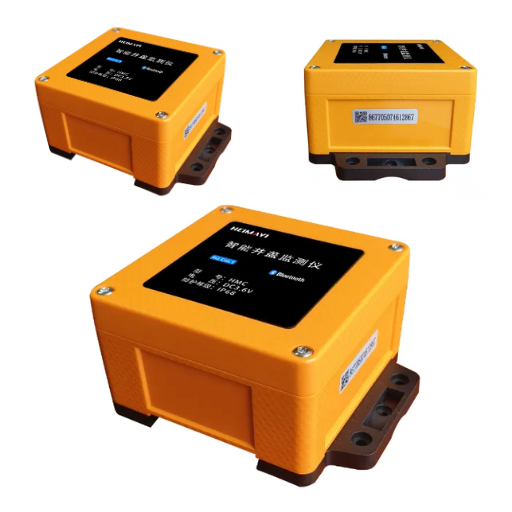
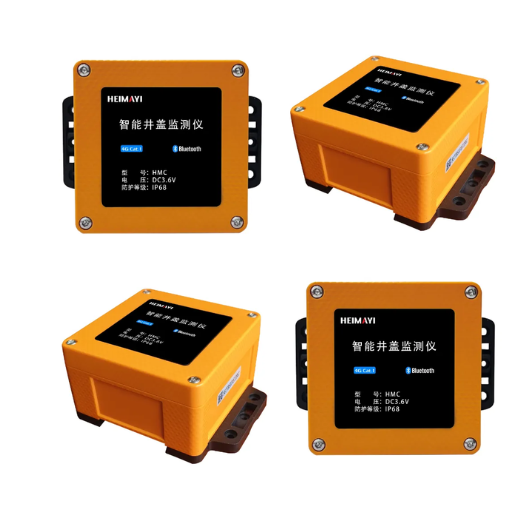
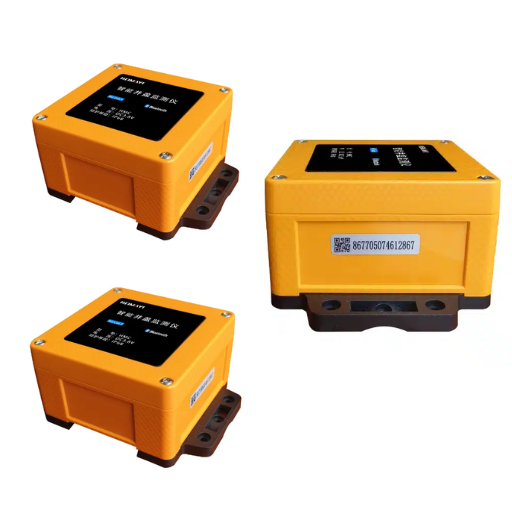
CE Certified Smart Manhole Cover: The European Procurement Guide
Elena Muller reviewed the supplier’s CE certificate at 9:00 a. m. on a Tuesday in Stuttgart. Her municipality was three weeks from awarding a EUR 1.2 million tender for 500 smart manhole covers across the city’s combined sewer network. The certificate looked legitimate. It bore the CE mark, a signature, and a test-lab stamp. Then Elena read the model number. The Declaration of Conformity referenced a 2019 domestic gas alarm. Not a manhole cover. Not even close.
The supplier had sent the wrong document. Or worse, they had sent the only CE document they possessed, hoping no one would check the fine print. Elena rejected the bid. The project slipped by six weeks. The lesson was expensive and simple: a CE certified smart manhole cover is not a single sticker. It is a stack of directives, physical standards, and documentation that most buyers do not know how to verify.
If you are procuring connected manhole infrastructure for a European tender, a smart city pilot, or a distributor portfolio, this guide gives you the complete certification framework. You will learn the four CE directives that apply, the structural and environmental standards that sit alongside them, the seven documents you should demand before signing a purchase order, and the connectivity specifications that determine whether your devices will actually function on European networks.
Want to see how a certified manufacturing partner handles documentation? Explore Black Ant’s smart manhole cover OEM capabilities and certification package.
What “CE Certified” Actually Means for a Smart Manhole Cover

The CE mark on a smart manhole cover means the manufacturer has declared conformity with one or more European Union directives. For an IoT-enabled underground device with NB-IoT or LoRaWAN radios, sensors, and a battery system, four directives are mandatory.
RED 2014/53/EU: Radio Equipment Directive
Any device that transmits or receives radio signals in Europe must comply with RED. This covers the NB-IoT module, the LoRaWAN transceiver, and any Bluetooth or NFC elements. RED ensures the device uses spectrum efficiently, meets RF exposure limits, and implements adequate encryption. Without a RED test report from an accredited or notified body, the device cannot legally be placed on the European market.
EMC 2014/30/EU: Electromagnetic Compatibility
Manhole covers sit in dense urban RF environments. They must not interfere with traffic signals, emergency radios, or nearby cellular infrastructure. They must also withstand electromagnetic disturbances without false alarms or data corruption. EMC testing verifies both emission limits and immunity resilience.
LVD 2014/35/EU: Low Voltage Directive
Battery-powered sensor modules and charging circuits must meet electrical safety requirements. LVD applies even to low-voltage DC systems if they operate within specific voltage ranges. The directive prevents fire risk, thermal runaway, and insulation failure.
RoHS 2011/65/EU: Restriction of Hazardous Substances
RoHS limits lead, cadmium, mercury, and other hazardous materials in electronic components. For municipal infrastructure that may sit in groundwater-adjacent environments for ten years or more, this is both a regulatory and an environmental requirement.
What the CE Mark Does Not Cover
CE marking does not certify structural load capacity. It does not certify waterproofing depth. It does not verify gas sensor accuracy. It is a self-declared regulatory compliance statement, which is why the supporting documentation matters more than the mark itself. A supplier can legally affix a CE mark without third-party testing if they believe their product meets the directives. For a municipal procurement officer, that is not enough.
If you are evaluating IP68 claims specifically, our IP68 smart manhole cover certification guide explains exactly what depth, duration, and temperature to verify before you buy.
The Full Certification Stack for European Deployment
A CE certified smart manhole cover that is truly ready for European roads needs more than RED and RoHS. Municipal engineers and smart city project developers should verify four layers of compliance.
EN 124 D400: Structural Load Rating for Road Traffic
EN 124 is the harmonized European standard for gully tops and manhole tops, developed by CEN, the European Committee for Standardization. It defines six load classes from A15 (pedestrian only) to F900 (aircraft pavements). For carriageways, hard shoulders, and any road open to all vehicle types, D400 is the minimum. D400 means the cover and frame assembly has passed a 400 kN static test load, equivalent to approximately 40 tonnes.
To verify EN 124 compliance, demand a test certificate from an ISO 17025 accredited laboratory or a national standards body such as BSI, TUV, or Bureau Veritas. The certificate must reference the exact cover model, including frame design, material grade, and manufacturing site. Generic EN 124 claims without model-specific documentation should disqualify a supplier.
IP68: Ingress Protection for Underground Survival
IP68 under IEC 60529 is the standard benchmark for smart manhole covers. The “6” means dust-tight. The “8” means protected against continuous submersion in water under conditions specified by the manufacturer. Here is the critical detail: IP68 is not a single test. The depth, duration, and water temperature are defined by the manufacturer, not the standard.
A credible IP68 test report for a smart manhole cover should specify at least 1.5 meters depth for 72 hours. Some manufacturers test to 2 meters or longer. Ask for the exact test parameters. If the supplier cannot produce a report that names the specific smart manhole cover model, the IP68 claim is unverified.
ATEX / IECEx: When Gas Sensors Require Hazardous Area Certification
Sewer environments contain methane and hydrogen sulfide. If the smart manhole cover includes gas sensors or if the electronics could act as an ignition source in a flammable atmosphere, ATEX certification may be required. ATEX Zone 1 or Zone 2 classification is common for sewer monitoring applications. Not every deployment needs ATEX, but if your project includes gas detection in confined spaces, verify this layer before procurement.
ISO 9001: Manufacturing Quality Assurance
CE marking tests the product design. ISO 9001 tests the factory. A supplier with ISO 9001 certification has documented quality management processes for incoming inspection, production control, final testing, and non-conformance handling. For repeat orders, warranty claims, and long-term municipal supply agreements, this factory-level certification matters as much as the product-level CE mark.
| Certification Layer | Standard / Directive | What It Verifies | Procurement Red Flag |
|---|---|---|---|
| Radio & Electrical Safety | RED 2014/53/EU, EMC, LVD, RoHS | Legal market access in EU | Self-declared mark with no accredited test report |
| Structural Load | EN 124 D400 | 40-tonne road traffic capability | Generic certificate without model number |
| Environmental Sealing | IP68 (IEC 60529) | Dust-tight, submersion resistant | No depth/duration specified on test report |
| Hazardous Atmosphere | ATEX / IECEx | Safe in flammable gas environments | Gas sensors present but no ATEX documentation |
| Factory Quality | ISO 9001 | Consistent manufacturing processes | Trading company with no factory audit records |
How to Verify Your CE Certified Smart Manhole Cover Supplier: The 7-Document Checklist

When Marco Voss, a systems integrator in Milan, sourced 200 smart manhole covers for a Lombardy smart city pilot, he asked every supplier for the same seven documents. Two of the five suppliers could not produce more than three. One sent a CE certificate for an entirely different product line. Marco’s diligence prevented a EUR 150,000 procurement mistake.
Before you issue a purchase order for a CE certified smart manhole cover, demand the following:
- EU Declaration of Conformity referencing the exact smart manhole cover model, serial number range, and applicable directives (RED, EMC, LVD, RoHS).
- RED test report from an accredited or notified body, with the product model clearly stated in the report header and test photographs.
- EMC test report showing emission and immunity compliance for the relevant product category.
- LVD test report covering electrical safety of the battery and charging system.
- RoHS Declaration of Conformity or material test report for electronic assemblies.
- EN 124 D400 load test certificate from an ISO 17025 accredited lab, naming the exact cover model and frame configuration.
- IP68 test report specifying the depth, duration, and temperature conditions tested, with the product model referenced.
If a supplier delays more than three business days, produces reports with conflicting model numbers, or offers only a single generic CE certificate that covers their entire product range, treat that as a warning. Professional manufacturers keep these documents ready for procurement reviews.
Need a framework for calculating ROI on smart infrastructure? Our municipal savings guide breaks down payback periods from real deployments.
NB-IoT and LoRaWAN: European Connectivity Requirements
A CE certified smart manhole cover with the wrong radio bands is a paperweight. European NB-IoT networks operate on specific bands. Your device must support them.
NB-IoT Band Support for Europe
For reliable operation across European mobile networks, the NB-IoT module should support bands B1 (2100 MHz), B3 (1800 MHz), B5 (850 MHz), B8 (900 MHz), B20 (800 MHz), and B28 (700 MHz). Band B20 is particularly important for rural and semi-urban coverage in Central and Eastern Europe. The device should also support 3GPP encryption and SIM or eSIM authentication.
LoRaWAN as a Scalable Alternative
For city-wide deployments exceeding 1,000 units, LoRaWAN often delivers lower total cost of ownership after gateway infrastructure is installed. A single gateway can cover several kilometers in urban environments. LoRaWAN devices also avoid ongoing cellular data plans. Black Ant’s smart manhole covers support both NB-IoT and LoRaWAN, with protocol configuration available during OEM customization.
Platform Integration
Connectivity is only half the requirement. The device must push data into your existing management infrastructure. Black Ant smart manhole covers support MQTT, Modbus, and proprietary API integration. This means alerts for tilt, water level, gas presence, and temperature can flow directly into municipal GIS platforms, SCADA systems, or third-party smart city dashboards without middleware conversion.
Not sure which protocol fits your project? Our NB-IoT vs. LoRaWAN comparison covers range, cost, and scalability for underground IoT.
Where CE Certified Smart Manhole Covers Deliver ROI
Marco’s 200-unit Lombardy pilot delivered results within eleven months. Two early flood alerts prevented combined sewer overflows that would have cost the municipality EUR 45,000 each in cleanup, remediation, and regulatory reporting. The system also eliminated bi-weekly manual patrols across the pilot zone, redirecting 1,200 labor hours annually to predictive maintenance.
The business case for smart manhole infrastructure is increasingly well documented across Europe and beyond.
Primary Application Areas
- Wastewater and drainage monitoring accounts for the largest deployment segment. Water level sensors predict blockages before they backflow into streets.
- Water supply network protection uses pressure and leak detection to identify main-line failures within minutes rather than days.
- Telecom and power cable vaults monitor unauthorized access, flooding, and fire risk in underground infrastructure.
- Gas network safety combines methane detection with real-time alerts to maintenance teams.
Documented Municipal Outcomes
| Deployment | Scale | Key Result | Payback Period |
|---|---|---|---|
| Phoenix, Arizona | High-risk sewer corridors | 67% reduction in inspection hours; $2.3M annual savings | 14 months |
| Fond du Lac, Wisconsin | 45-unit downtown pilot | 3 prevented water releases in first season | 11 months |
| Hamburg Smart City | City-wide IoT monitoring | 41% reduction in road closure time | 18 months |
| Tokyo Metropolitan | Pilot district | 83% reduction in overflow incidents | 12 months |
| Chicago, Illinois | Methane monitoring | 3 potential explosion alerts; $18M damage prevented | Immediate |
Unit Economics
A comprehensive CE certified smart manhole cover with tilt, water level, gas, and temperature sensors typically costs between $450 and $650 per unit. Installation and site preparation add $120 to $180. A 50-unit pilot in a high-risk district therefore requires roughly $38,350 in capital expenditure but can deliver $91,750 in annual savings. The payback period for focused pilots is often under six months.
Sourcing a CE Certified Smart Manhole Cover from China

Johan Eriksson, a Nordic distributor building a private-label smart city hardware range, spent eight months evaluating Chinese manufacturers. He visited three factories. Only one, Black Ant in Beijing, could produce the full documentation stack on request and walk him through the RED test photographs line by line. Johan’s white-label smart manhole covers now carry his brand, his firmware configuration, and CE, RoHS, and ISO 9001 documentation that satisfies Scandinavian municipal procurement standards.
What to Look for in a Manufacturing Partner
End-to-end in-house R&D and manufacturing is the baseline requirement when you source a CE certified smart manhole cover. Assembly-only trading companies cannot control component sourcing, firmware versioning, or test traceability. Verify that your supplier operates their own factory under ISO 9001 quality management.
Custom protocol configuration matters. European distributors often need specific NB-IoT band locking, custom MQTT payload formats, or integration with local LoRaWAN networks. A true OEM partner provides engineering support from specification through first-article inspection to serial production.
Private-label branding and packaging should be available without prohibitive minimum order quantities. The supplier should also offer flexible production scheduling for repeat orders with agreed lead times and spare parts programs for critical infrastructure deployments.
Black Ant’s Certification and OEM Capability
Black Ant manufactures smart manhole covers in Beijing with full in-house R&D, tooling, and production control. Our devices carry CE marking under RED, EMC, LVD, and RoHS. We hold ISO 9001 quality management, ISO 14001 environmental management, and OHSAS 18001 health and safety certifications.
For OEM and ODM partners, we provide:
- Custom NB-IoT/LoRaWAN protocol configuration and firmware customization
- Private-label branding, packaging, and documentation in your language
- Engineering liaison from specification through first-article approval
- CE and RoHS documentation package included with every shipment
- Pre-tested integration notes for GIS platform and SCADA connectivity
EN vs. GB vs. ANSI: Multi-Market Certification
Some projects span multiple regulatory regions. A systems integrator supplying infrastructure to both European and Middle Eastern markets, for example, may need to satisfy multiple standards from a single product platform.
EN 124 is the European load-class standard. GB/T 23858 is the Chinese equivalent. ASTM standards govern North American load ratings. The test methodologies differ in load application geometry and acceptance criteria. A cover rated D400 under EN 124 is not automatically equivalent to an ASTM rating, and vice versa.
Black Ant’s smart manhole covers are manufactured with multi-market compliance in mind. We provide test documentation for EN 124 D400 as standard and can support additional regional certification requirements for OEM partners targeting multiple export markets. This eliminates the need to source different hardware for different regions.
Frequently Asked Questions

What is the difference between CE marking and EN 124 certification?
CE marking on a smart manhole cover is a regulatory compliance declaration for the European Economic Area. It covers electrical safety, radio equipment, electromagnetic compatibility, and hazardous substance restrictions. EN 124 is a structural performance standard for manhole tops and gully tops. A CE certified smart manhole cover needs both: CE for the electronics, EN 124 for the physical cover.
Can a smart manhole cover be CE certified without IP68?
Technically, yes. CE marking does not require IP68 for a smart manhole cover to enter the European market. However, a device without validated IP68 ingress protection will fail in underground deployment. Water ingress destroys electronics. Dust blocks sensors. For any real-world application, IP68 is a practical requirement even if it is not a legal one.
Which NB-IoT bands are required for European deployment?
For broad European coverage, the device should support B1, B3, B5, B8, B20, and B28. B20 is critical for rural coverage. B3 and B1 serve dense urban areas. Always confirm band support against the specific mobile operators in your target deployment region.
How long does CE certification take for a new IoT device?
For a product based on an existing certified radio module, RED and EMC testing typically takes four to six weeks. LVD and RoHS documentation can run in parallel. If the product requires a custom radio design, the timeline extends to three to six months. Reputable manufacturers complete certification before offering products for sale, not after receiving orders.
What is the typical battery life of a CE certified NB-IoT manhole cover?
Battery life depends on reporting interval, sensor activation frequency, and radio environment. At two-hour reporting intervals with standard sensor polling, Black Ant’s smart manhole cover operates for up to six years on its internal lithium battery. Longer intervals extend life further. Always verify battery capacity and standby current draw in the technical datasheet.
Is ATEX certification mandatory for all smart manhole covers?
No. ATEX is required only when the device contains electronics that could ignite flammable atmospheres or when gas sensors are deployed in Zone 1 or Zone 2 hazardous areas. For basic tilt and water level monitoring in low-risk drainage manholes, ATEX is typically not required. Assess the specific sewer environment before specifying.
Conclusion
Elena Muller in Stuttgart learned the hard way that CE marking is a starting point, not a guarantee. The suppliers who won her municipality’s eventual tender were the ones who delivered the full documentation stack: RED test reports with matching model numbers, EN 124 D400 certificates from accredited labs, IP68 reports with specific depth and duration data, and ISO 9001 factory certification.
The framework is straightforward. Verify the four certification layers: CE and RoHS for regulatory compliance, EN 124 D400 for structural integrity, IP68 for environmental sealing, and ATEX where gas hazards exist. Demand the seven documents before you sign. Confirm European NB-IoT band support. And choose a manufacturing partner who controls the full product lifecycle from R&D to serial production. To learn more about Smart Manhole Cover OEM Manufacturer China and How to Verify a Chinese Smart Manhole Cover Manufacturer, please click to refer to our accompanying guide.
A CE certified smart manhole cover is only as good as the documentation behind the mark. Do the verification once, and your smart city infrastructure will operate reliably for the decade ahead. To learn more about Smart City IoT Infrastructure Sensors, please see our accompanying guide: Smart City IoT Infrastructure Sensors: How to Choose a China Manufacturer
Ready to specify CE certified smart manhole covers for your next project? Download Black Ant’s full certification documentation package or contact our engineering team to discuss your deployment requirements, protocol needs, and OEM customization options.