IP68 vs IP67 vs IP69K: Choosing the Right Ingress Protection for Outdoor and Underground IoT
Two enclosures leave the factory with the same three characters printed on the label: IP68. One sits in a manhole chamber that fills with water for hours at a time and keeps reporting for years. The other passes every lab test and fails within a season, fogged from the inside and shorted at the connector. The label told the specifier nothing about which one they were buying.
That gap between an IP68 vs IP67 vs IP69K rating on a datasheet and what actually survives in the field is where most enclosure decisions go wrong. Many buyers assume the numbers rank from worse to better and simply pick the biggest one. They are not a ranking. They are three different physical tests, and a bare “IP68” is not even a complete specification until the depth and the duration are stated.
This guide takes the ratings apart. You will see exactly how each one is tested, why higher is not automatically better, and what an IP rating does not cover, even at the highest grade. Then we map deployment environments, from a dry indoor panel to a flooded sewer chamber, to the minimum rating you should specify. You will finish with a selection matrix and the exact wording to put in a purchase order so a supplier quote cannot hide behind a single number.
What the IP Code Actually Tells You
Ingress protection, or IP, is defined by the international standard IEC 60529. The code has two digits, and they describe two separate tests. The IEC 60529 publication is the canonical reference, and it is worth getting the structure right before comparing any two ratings.
The first digit covers solids, from 0 (no protection) to 6 (dust-tight). The second digit covers water, from 0 to 9K. So 6 in the first position means the enclosure kept dust out during the test, and 7 or 8 or 9K in the second position describes how it handled water.
Here is the detail most datasheets blur: the IP68 vs IP67 vs IP69K ratings all share the same first digit, 6. All three are dust-tight, so the entire difference between them lives in the water digit.
Two letters sit outside the numbers and are easy to misread too. An X replaces an untested digit, as in IPX8, which tells you the water protection was tested but solids were not. A K flags a high-temperature, high-pressure jet variant, which is a different test again.
So the right question is never “which number is bigger.” It is “which of these water tests does my installation actually face?” That reframing is the whole article.
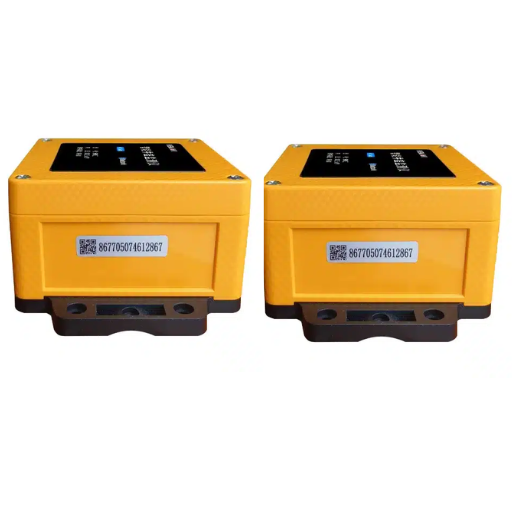
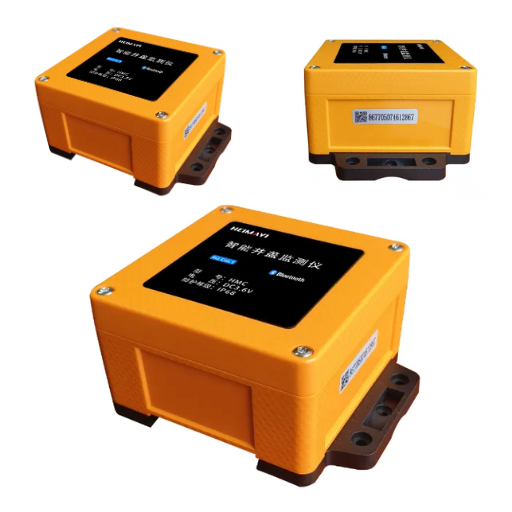
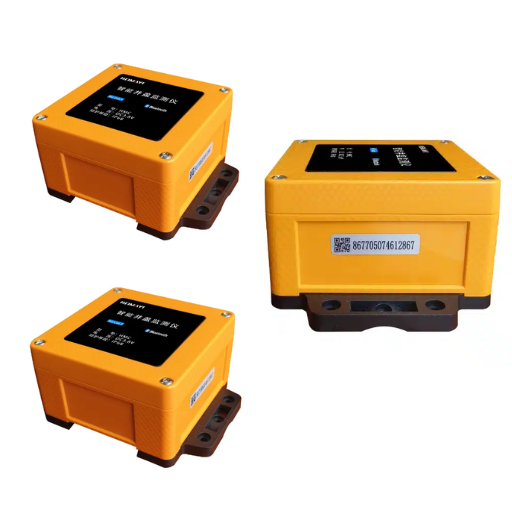
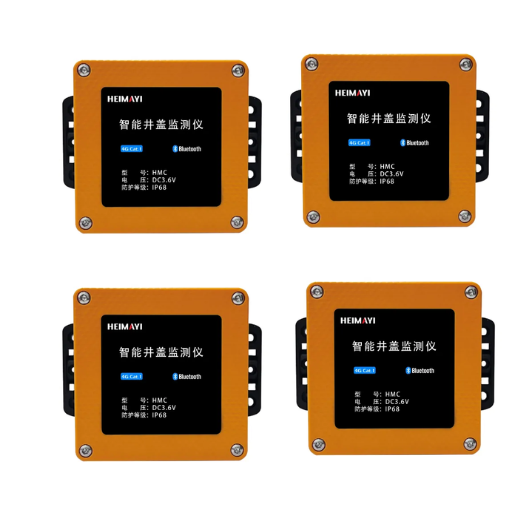
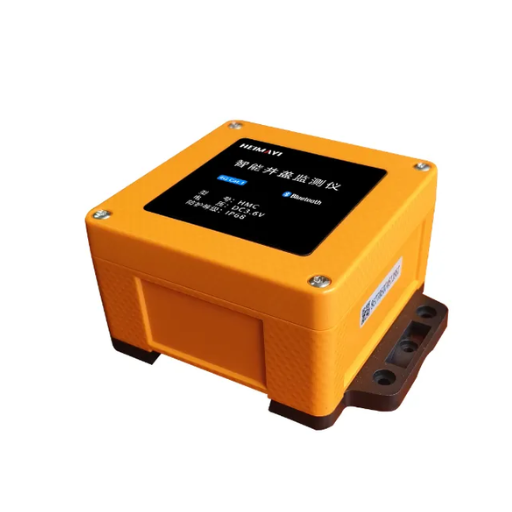
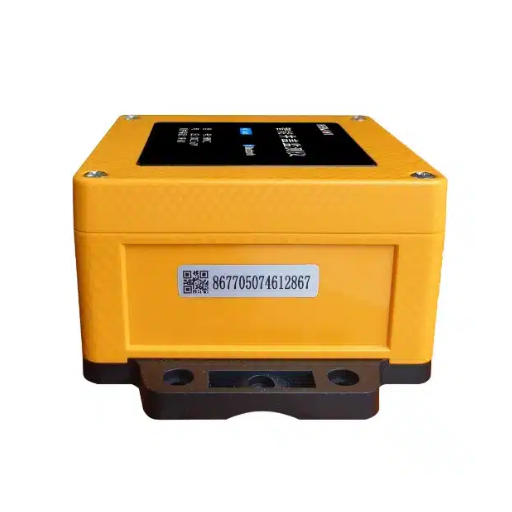
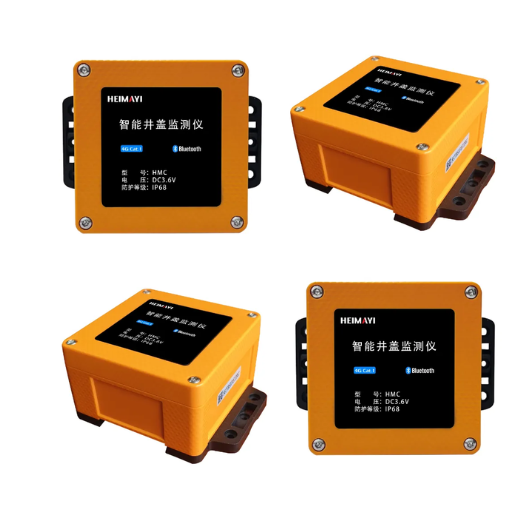
Specifying a rating for a live project? We rate our enclosures across the range and can tell you which one fits your site. See the IP68-rated smart manhole cover range for one worked example.
IP68 vs IP67 vs IP69K: The Tests Side by Side
Before the detail, here is the comparison in one view. This is the table to keep next to your BOM.
| Rating | Water test | Governing standard | Typical environment |
|---|---|---|---|
| IP67 | Immersion in fresh water, ~1 m for 30 min (fixed) | IEC 60529 | Rain, splashes, brief flooding |
| IP68 | Continuous immersion, depth and duration declared by the manufacturer | IEC 60529 | Standing water, underground chambers |
| IP69K | High-pressure, high-temperature water jets (80 °C, 80–100 bar) | ISO 20653 (originally DIN 40050-9) | High-pressure washdown |
IP67: Temporary, Fixed, Comparable
IP67 is the only one of the three with a pass criterion fixed by the standard itself: immersion in fresh water to about 1 meter for 30 minutes. Any two IP67 products were tested to the same depth and the same time, so the rating is directly comparable between suppliers.
That fixed criterion is also its limit. IP67 is a temporary immersion test. It suits a device that sees rain, hose spray at ground level, or a brief flash flood in a meter pit. It does not describe a device that stays submerged, and it makes no claim about pressure at depth.
IP68: Continuous, Manufacturer-Declared, “Floating”
IP68 is the rating that causes the most procurement confusion, because it is a floating specification. The standard requires continuous immersion testing, but the depth and the duration are not fixed. They are agreed between the manufacturer and the user, with only one constraint: the test must be more demanding than IP67.
In practice, real IP68 declarations run across a wide range. You will see 1.5 m for 30 minutes on some datasheets, 2 m for 48 hours on others, and 10 m for a full hour on ruggedized equipment. All of them can legitimately be called IP68.
That’s why a bare “IP68” on a quote is not a specification. It is a placeholder. When a manhole chamber floods to a meter for several hours, only a device labeled with a depth and duration that exceeds that condition is actually qualified for the job. The number on the box means nothing until you know the depth and the time.
If you want the testing procedure behind those declarations, a companion article of ours covers how the chamber, the water depth, and the pass criteria are set. The takeaway for now is an action, not a definition: never accept a bare IP68. Demand the exact depth and duration. To learn more about IP68 Smart Manhole Cover Certification: What It Really Means and What to Verify Before You Buy, please refer to our accompanying guide.
IP69K: A Different Standard, Not a Higher Rank
IP69K is not an IEC 60529 rating at all. It was created by German standard DIN 40050-9 in the early 1990s and now lives in ISO 20653, which governs road-vehicle protection.
The test is severe but specific. A nozzle sprays heated water at 80 °C and 80 to 100 bar from 10 to 15 cm away, at a flow of 14 to 16 liters per minute. The sample sits on a turntable turning at about 5 rpm while the jet sweeps it at 0°, 30°, 60° and 90° for 30 seconds at each angle.
Notice what kind of force that is. IP69K is a mechanical stress test, and that jet can shear a seal, drive water past a gasket, and peel a label off a housing.
And crucially, it says nothing about immersion. A device built only for IP69K protection has no rated protection against being submerged at all.
Is IP69K Better Than IP68? Why IP68 vs IP67 vs IP69K Is Not a Hierarchy
Short answer: no. IP69K isn’t better than IP68, and IP68 isn’t better than IP69K. They test different forces, so neither contains the other.
High-pressure jets and deep water load a seal in opposite ways. A jet delivers kinetic pressure: a fast, concentrated strike against one point of the housing. Immersion delivers hydrostatic pressure: a slow, uniform push that grows with depth and stays for as long as the water remains. A seal that shrugs off a washdown can still weep under a meter of standing water, and a chamber-sealed unit can have its gaskets cut by a 100-bar jet.
If a project involves a dual rating, a companion article of ours explains how two codes are declared on a single test report.
There’s a second reason the numbers don’t rank, and it lives in the standard itself. IEC 60529, clause 6, states that an enclosure is deemed compliant with all lower water ratings only up to the second characteristic numeral 6. The ladder of cumulativity stops at IPX6. Water grades 7, 8, 9 and 9K are excluded, so each must be tested and listed separately.
The consequences are concrete. An IP68 rating does not imply IP66 jet protection. An IP69K rating implies no immersion protection whatsoever. And if a site both washes down and floods, the product must carry both codes, written as IP66/IP67 or IP68/IP69K, because a supplier cannot certify one from the other.
This is the single most useful correction to carry into a specification meeting. Most product pages treat the ratings as a staircase. The standard treats them as separate tests stacked on a common dust rating, and only the lower rungs roll up automatically.
What IP Ratings Do Not Cover
An IP rating is a narrow promise, and knowing its edges prevents expensive assumptions. The SICK knowledge base states the caveat plainly, and it is worth repeating.
First, the water in every IP test is clean and fresh. The rating says nothing about oils, coolants, detergents, solvents, salt water, or acids and alkalis. A coastal installation faces chloride attack that an IP68 test never evaluated, and a food plant’s caustic wash water has chemical properties the standard ignores.
Second, condensation. A fully sealed enclosure can still fail from the inside. As daytime heat and night-time cooling cycle the air within the housing, moisture can condense on cold internal surfaces, where it corrodes a board or shorts a terminal.
This is not an IP test failure, but it is a field failure, and it explains a large share of “the rating said it was sealed” returns. The practical fix is a venting or breather membrane that equalizes pressure while blocking liquid water. Our IP68 outdoor installation guide walks through that detail for field-deployed hardware.
Third, the rating covers none of the mechanical and environmental exposure that ages a real installation: impact, UV degradation, vibration, and chemical attack on gaskets over time. A datasheet that lists a rating and stops there has told you about the lab, not the site.
Finally, two scope rules that trip people up. The rating applies to the device after removal from the test, not to a claim that the device operates while submerged. And it applies only when the enclosure is mated and installed correctly. Leave a connector open or a port uncapped, and the protection can drop as low as IP20, which is essentially no protection at all.
Choosing the Right Rating for Outdoor and Underground IoT
Here is a workflow you can run for any outdoor or underground deployment. It works for data terminals, gateways, manhole-cover sensors, and monitoring stations alike.
- Define the worst-case water exposure at the installed location, not the lab. Ask what happens on the wettest day of the decade, not on an average day.
- Decide whether that exposure is jets or immersion (or both). Washdown is a jet problem. Flooding is an immersion problem. Many sites are both.
- Match to the minimum rating, and for IP68, state the depth and duration explicitly. A requirement of “IP68 (2 m / 24 h)” is verifiable. “IP68” is not.
- Add the second code when both exposures apply. A washdown bay that also floods needs
IP68/IP69K, not either one alone. - Add the non-IP requirements the code does not carry: chemical compatibility for the site’s fluids, condensation control, and mechanical protection.
The point of running the workflow in this order is that it forces the specification to describe the site rather than the shelf. A rating chosen for the shelf is a rating chosen for the wrong problem.
The Application Selection Matrix
The matrix below maps common deployment environments to a minimum rating, and grounds each row in a real product specification so the guidance is concrete rather than abstract.
| Deployment | Minimum rating | Why | Example product (rated spec) |
|---|---|---|---|
| Indoor mechanical room / BMS panel | IP54–IP65 | Dust plus drip, dry location | Electric butterfly-valve actuator (IP54), pressure transmitter (IP65) |
| Sheltered outdoor cabinet / pole | IP65–IP67 | Rain and occasional wash | Outdoor environmental monitoring stations (IP65), radar level gauge (IP67) |
| Exposed outdoor, meter pit / vault | IP67 | Splash and brief submergence | IP67-rated IoT data collection terminals |
| Flooded manhole chamber / sewer | IP68 (depth + duration stated) | Continuous immersion | Smart manhole cover (IP68), edge data acquisition computer (IP68) |
| Food plant / tunnel washdown | IP69K (plus IP67/68 if also wet) | 80 °C, 80–100 bar jets | Dual-code requirement |
Read the bottom two rows together and the logic of the article appears at a glance. A sewer chamber is an immersion problem, so IP68 with a stated depth and duration is the right call. A washdown line is a jet problem, so IP69K is the right call, and if that line also floods overnight, the device needs both codes.
Three Specification Mistakes That Cause Field Failures
The same three errors show up again and again in post-incident reviews, and each one traces back to a misread of the IP68 vs IP67 vs IP69K ranking.
Mistake one: specifying “IP68” with no depth or duration. This creates a requirement a supplier cannot fail and a buyer cannot verify. Two different IP68 quotes can describe wildly different devices, and the cheaper one may be qualified only for 1.5 m for 30 minutes. Always write the number with its depth and time.
Mistake two: assuming the highest number wins. Buying IP69K for a device that only ever sees rain pays for a jet test the site will never apply. The reverse is worse: shipping a plain IP67 device into a high-pressure washdown line leads to premature seal failure, because the jet delivers a force IP67 never claimed to withstand. Match the test to the exposure, not to the size of the number.
Mistake three: ignoring condensation and chemical exposure. A device can pass its IP test cleanly and still fail in the field, because the enclosure seals water out but traps moisture in, or because a gasket material meets the rating yet degrades against the site’s specific fluids. Industry selection guides attribute more than half of outdoor and industrial equipment failures to non-electrical causes like moisture, dust, temperature swings and washdown, which is exactly the territory an IP rating doesn’t fully cover.
Put together, these mistakes explain why “it was rated IP68” is a common line in a failure report and a poor defense of the original choice.
How to Specify an IP Rating in a Tender or Purchase Order
Everything above, from the IP68 vs IP67 vs IP69K comparison to the selection matrix, becomes useful only if it reaches the paperwork. Four lines of specification hygiene will close most of the gap.
Write the requirement as IP67 or as IP68 (X m / Y h), never as a bare “IP68”. Require dual coding wherever two exposures apply, such as IP66/IP67 or IP68/IP69K, and say plainly that one code does not imply the other. Demand the test report and the laboratory accreditation behind the claim, so the rating is traceable rather than asserted. And state the chemical and condensation environment explicitly, so the supplier is obliged to address gasket material, venting, and surface protection rather than silently ignoring them.
Those four habits turn a rating from a marketing phrase into a testable contract term.
Conclusion: Match the Rating to the Mission
The IP68 vs IP67 vs IP69K question has one clean answer: they are three different tests, not three ranks. IP67 is a fixed immersion test at 1 m for 30 minutes, IP68 is a floating specification whose depth and duration are declared by the manufacturer, and IP69K is a separate washdown standard from ISO 20653 that says nothing about immersion.
Clause 6 of IEC 60529 confirms the asymmetry: the ratings roll up automatically only up to IPX6, and 7, 8, 9 and 9K must each be tested and listed on their own.
Carry that into your next project and two habits will do most of the work. State depth and duration every time you write IP68, and pick the rating that matches the site’s worst-case exposure rather than the biggest number on the page.
If you tell us where your device will be installed and what it will face, we will help you specify the enclosure rating to match, then stand behind that rating with the hardware to support it. Explore the IP68-rated smart manhole cover range to see how the rating logic is applied to real hardware, and bring us your deployment environment when you’re ready to spec it. To learn more about How to Read an IP68 Test Report: Verifying IEC 60529 Certification, please refer to our accompanying guide.
IP68 vs IP67 vs IP69K: Frequently Asked Questions
Is IP69K better than IP68?
No. They test different forces. IP69K measures resistance to high-pressure, high-temperature water jets. IP68 measures resistance to continuous immersion. Neither contains the other, and a device rated only IP69K has no rated immersion protection, so a site that both washes down and floods needs both codes.
What is the difference between IP67 and IP68?
IP67 is a fixed immersion test: 1 meter of fresh water for 30 minutes. IP68 is continuous immersion, but the depth and duration are declared by the manufacturer, with the only rule being that the test must be more demanding than IP67. IP68 declarations range from 1.5 m for 30 minutes up to 10 m for an hour.
Does IP68 include IP67 and IP66?
Only partly, and this is widely misunderstood. IEC 60529 clause 6 makes ratings cumulative only up to the water grade 6. So IPX8 would not follow from IPX6, and IP68 does not imply IP66 jet protection. Water grades 7, 8, 9 and 9K must each be tested and listed separately on the product.
Does IP69K protect against immersion?
No. IP69K is defined by ISO 20653 and tests high-pressure, high-temperature jets, not submersion. It carries no immersion protection at all. If an installation faces both washdown and flooding, the product must be certified to both codes, such as IP68/IP69K.
What IP rating do I need for an outdoor IoT sensor?
It depends on the worst-case exposure at the installed location. A sheltered pole or cabinet typically needs IP65 to IP67. An exposed meter pit or vault usually calls for IP67. A flooded manhole chamber or sewer needs IP68 with the depth and duration stated. A washdown area needs IP69K, plus an immersion code if it also floods.