3-Way Control Valve: Understanding Its Functionality and Importance in Systems
A 3-way control valve is an indispensable element in many industrial and commercial applications, enabling precise control of fluid flow and temperature. This multifunctional valve, whether used in HVAC systems, manufacturing processes, or other critical applications, primarily maximizes efficiency, balances the system, and reduces operational costs. This comprehensive guide will unravel the mechanics of 3-way control valves and their areas of application, giving you a clear idea of their importance and the benefits they bring to modern systems.
Introduction to 3-Way Control Valves
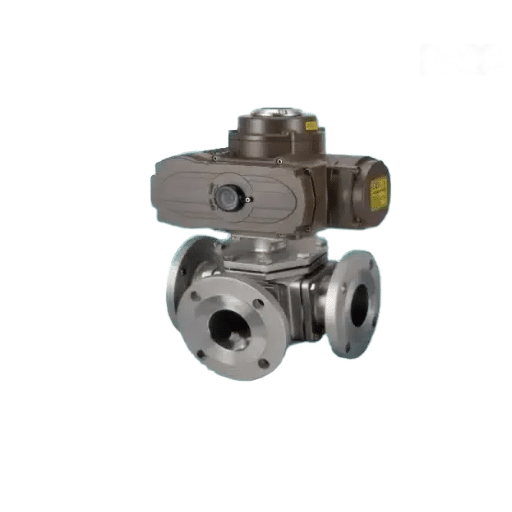
One of the most critical elements of control is the 3-way valve, which modifies fluid flow in the system. The valve has three ports that allow it to combine or redirect the flow as required by the application. These valves are most commonly found in the control loops for temperature, pressure, or flow rate in heating, cooling, or industrial processes. The valve’s internal mechanism for adjusting position ensures accurate fluid distribution, which in turn improves the system’s efficiency and performance. Their ability to control and balance the flow has made them a must-have across a variety of applications.
Definition and Overview of Control Valves
Control valves are essential components of industrial and mechanical systems that regulate the flow, pressure, and temperature of liquids or gases. These valves operate by changing the size of the flow opening in response to a control signal, which can be electrical, pneumatic, or hydraulic. The main aim is to control the process variables to make the overall system more powerful and accurate.
Modern control valves feature advanced features such as smart actuators, positioners, and sensors, enabling real-time monitoring and automation. According to the latest reports, control valves are used in many industries, including oil and gas, water treatment, power generation, and chemical manufacturing. The reason is that these industries need to control certain variables for safety and efficiency strictly.
Industry Insight: The control valve market is poised for significant growth, with a market value of $14.5 billion by 2030, driven by demand for automation in industrial applications and technological advancements.
Importance in Various Industries
Control valves are among the most essential components in the pipeline and process control systems of many industries, ensuring that systems run efficiently, safely, and accurately. The following discusses five key sectors where control valves are a necessity.
🛢️ Oil and Gas Industry
The oil and gas industry relies heavily on control valves at every stage of the process: from extraction to refining and, finally, transportation. They control the movement of crude oil, natural gas, and chemicals through the piping and at the refineries in a manner that safety and efficiency are maintained.
Performance Impact: Sophisticated control valve systems can increase operational efficiency by up to 20%.
⚡ Power Generation
The control valves in power plants regulate the flow of steam, water, and fuel, ensuring proper turbine operation and maximum electricity generation. In nuclear and thermal power plants, accurate control systems can lead to a drastic reduction in energy losses and the avoidance of unsafe situations.
🧪 Chemical and Petrochemical Industry
Control valves support the accurate control of temperature and pressure in reactors, distillation columns and other chemical processes. The installation of smart, IoT-enabled valves in the chemical industry can enable real-time monitoring, thereby increasing production yield.
Efficiency Gain: Can reduce chemical waste by up to 15%.
💧 Water and Wastewater Treatment
Water treatment plants use control valves to regulate the flow of water, chemicals, and air throughout the different stages of the purification process. In this manner, clean water distribution and waste management are ensured.
Cost Reduction: Efficient valve systems reduce water leakage and treatment costs by 10-15%.
🍔 Food and Beverage Industry
The food and beverage sector has strict requirements for hygiene and precision, and the flow of ingredients, along with control valves, is a major contributor to sterile processing environments. Automated valves reduce the risk of contamination and ensure product quality remains consistent on mass production lines.
Applications of 3-Way Control Valves
3-way control valves are adaptable elements that find application across several industries due to their ability to manage and redirect flow effectively. The five significant areas of application for 3-way control valves are listed below:
-
HVAC Systems
3-way control valves are commonly used in HVAC systems, regulating water or steam flow through boilers, chillers, and heat exchangers. As a result, the temperature controls in both residential and commercial buildings are maintained accurately, thereby improving energy efficiency and comfort.
-
Chemical Processing
With the aid of these valves, the flow of reactive or corrosive chemicals is controlled during mixing or diversion operations, resulting in accurate proportioning and safe operational conditions. The use of their durability and precision is critical for chemical reactors and distillation units.
-
Pharmaceutical Manufacturing
3-way control valves control flow in sterile environments. There is exact dosing and mixing of ingredients, resulting in consistent product quality and, at the same time, compliance with stringent cleanliness and hygiene standards.
-
Food and Beverage Industry
The pasteurization and beverage processing lines are among the places where 3-way control valves are used the most widely. These valves are precise in diverting flows between operations. Their sanitary designs meet regulatory requirements and prevent contamination while increasing operational speed.
-
Water Treatment Plants
At water treatment plants, switching flows between different filtration or treatment processes is greatly enabled by these control valves. The control valves ensure optimal flow rates for filtering, chemical dosing, and waste management, thereby improving the efficiency and reliability of large-scale water treatment operations.
How 3-Way Control Valves Function
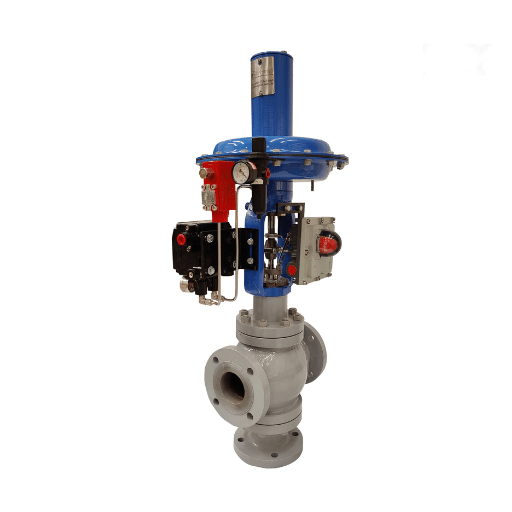
A 3-way control valve can regulate both the flow and the direction of the fluid by connecting three distinct pipes. Depending on its needs, the valve either mixes the two incoming fluids into a single output or diverts one of them to two different outputs. In general, these control valves are equipped with three ports, an actuator, and a valve body, with a plug or ball mechanism governing the flow path.
Basic Operation of a Three-Way Valve
A three-way valve is a fluid control device with three ports —usually labeled A, B, and AB —that either routes fluid through them or mixes fluid from them. The three-way valve has two main types: mixing and diverting.
Mixing Valves
Working fluid enters at A and B ports, is mixed, and the resultant fluid is taken out from AB port. Perfect for combining two fluid streams to achieve desired proportions.
Diverting Valves
Fluid enters through port AB, and the flow is split to ports A or B based on the system’s requirements. Ideal for redirecting flow between different process lines.
Usually, the valve’s functioning is regulated by an actuator, which can be either manually operated or automated. Actuator automation is commonly achieved through electrical, pneumatic, or hydraulic systems and involves adjusting the valve’s internal mechanism, such as a ball or plug, to achieve the desired flow path.
Technical Specifications and Performance Data
Latest Technology: Cutting-edge technology has enabled smart actuators to be part of three-way valve systems. These actuators provide real-time flow data and diagnostic predictions, reducing downtime and improving system performance. The use of IoT (Internet of Things) not only enables remote supervision and regulation but also enhances overall control and efficiency in complex systems.
Flow Control Mechanisms
Flow control mechanisms are of great importance in manufacturing and commerce, as they enable the regulation of gases and fluids with high accuracy to meet the operational needs of these sectors. One of the most popular flow controllers, the three-way valve, works by either sending the fluid to the right place or mixing it, depending on the situation.
Market Growth and Innovation
A 2023 report by MarketsandMarkets states that the global smart valve market will reach $8.1 billion by 2026, growing at a CAGR of 4.7%. This growth is driven by industries such as oil and gas, water treatment, chemical processing, and HVAC systems seeking more automated, precise flow-control solutions.
Role of Actuators in Valve Operation
Actuators are a crucial part of the valve operation system, as they provide the power needed to move the valve and thus control its position. The force, which is often hydraulic, pneumatic, or electric, is converted into mechanical motion, enabling precise control of the fluid in a system.
| Actuator Type | Power Source | Key Benefits | Best Applications |
|---|---|---|---|
| Pneumatic | Compressed air | Fast, reliable, cost-effective | Oil and gas industries |
| Hydraulic | Pressurized liquid | Enormous output, heavy-duty capability | High-torque applications |
| Electric | Electrical power | Precise positioning, energy-efficient | Automated circuits, remote control |
| Manual | Human operation | Simple, reliable, cost-effective | Non-automated applications |
| Smart | Electrical with sensors | Remote operation, predictive maintenance | Modern automated systems |
Types of 3-Way Control Valves

Three-way control valves are essential components in fluid management systems and are mainly used for diverting or mixing liquids, gases, or steam. Their efficiency and versatility make them commonly used in HVAC systems, chemical processing, and industrial automation applications.
1. Mixing Valves
Function: Allows for the joining of two fluid streams that can be routed through a standard outlet. Blending fluids in the desired proportions guarantees accurate temperature or flow control.
Key Specifications:
- Temperature range: -40°F to 400°F
- Cv values: 0.5 to 250
2. Diverting Valves
Function: Allows the input stream to be divided into two separate output streams. Perfect for switching between different process lines.
Key Specifications:
- Maximum pressure: ~300 PSI
- Applications: Steam systems, water treatment
3. Motorized 3-Way Valves
Function: Using an electric, pneumatic, or hydraulic actuator, these valves enable remote, automated control with precise monitoring and adjustment.
Key Specifications:
- Fail-safe features with spring return
- Flow rate: Up to 10,000 GPM
4. Ball Type 3-Way Valves
Function: Utilizes a ball that rotates to control fluid flow direction. Preferred for long life and considerable flow rates.
Key Specifications:
- Materials: Stainless steel or brass
- Leak-proof designs with lower pressure drop
5. Globe 3-Way Valves
Function: Provides better control of process parameters with a wider range of applications. Frequently installed in systems demanding exact pressure or temperature regulation.
Key Specifications:
- Pressure tolerance: Often exceeding 600 PSI
- Lower flow coefficients for precise control
Different Configurations of Three-Way Valves
Three-way valves are very flexible and an essential part of the whole lineup of components that make up fluid control systems for a wide range of processes. These valves come in a variety of configurations, each specifically built for a particular application and with specific operational requirements.
Series Globe vs. Other Valve Types: Comparative Analysis
Key Features and Benefits of 3-Way Control Valves

3-way control valves are the industrial applications best suited for mixing and diverting flows. They come with many advantages which make them a vital element in different industrial applications.
🔄 Versatility
- Facilitate processing flows and can be reconfigured for mixing or diverting
- Allow seamless integration into complex systems where multi-stream flow control is required
⚡ Efficient Flow Optimization
- Deal with exact flow rates to maintain constant system performance
- Minimize energy consumption and operational costs through good distribution
📦 Compact Design
- Occupy less space due to compact structure
- Easier installation in areas with tight or restricted space
- More accessible for maintenance and servicing
💪 Enhanced Durability
- Made of strong materials to withstand harsh conditions
- Resistant to corrosion, high pressure, and temperature changes
- Reliable over long periods even in rough settings
🎯 Improved Process Control
- Capability of modulation and control of multiple fluid streams
- Significantly contribute to process efficiency and stability
- Key in maintaining balanced pressure in changing systems
Advantages Over Other Valve Types
✅ Versatility in Applications
The 3-way control valves are multifunctional, mixing or diverting, while single-purpose valves are limited to a single application. They are adaptable for the mixing and diverting processes and their design would not restrict them to a specific type of application, ranging from HVAC systems, industrial processes, to water treatment areas.
💰 Space and Cost Efficiency
The use of 3-way valves reduces the space initially planned for two separate valves, as it is just one valve with two functions. Hence, the integration saves not only physical space but also installation and maintenance costs, which are overall lower than maintaining two separate systems.
🎯 Enhanced Process Control Accuracy
Compared to traditional 2-way valves, they can reduce flow variability by up to 25%. 3-way valves provide absolute modulation and fluid stream equilibrium, thereby enhancing system stability.
⚡ Reduced Energy Consumption
In optimized design and subsequent control, the 3-way valve system guarantees operational efficiency at which energy intake in fluid systems is greatly reduced. For instance, a switch to 3-way valve setups is already yielding energy savings of up to 15-20% in some industries.
🔧 Simplified System Design
Using 3-way valves, engineers can design piping systems that are much simpler by using fewer valves and connections. This consequently minimizes the leak or failure risks, thus, over time, lesser repairs and troubleshooting will mean more reliability of the system.
Key Features to Consider When Selecting a 3-Way Valve
It is important to select the right 3-way valve by considering characteristics that will deliver the best performance and efficiency across the whole system. The points below indicate the most critical aspects:
-
1
Flow Control AccuracyContemporary 3-way valves benefit from modern design and can precisely control flow through clever features. Quality valves are capable of ±1% flow setting at the ultimate setpoint, which is very important for applications that require strict precision, such as HVAC systems or chemical processing.
-
2
Material CompatibilityThe valve material must be suitable for the operating conditions. For instance, stainless steel valves offer high strength and excellent corrosion resistance, making them well-suited for the food processing and pharmaceutical industries. Latest reports suggest that the use of stainless steel valves has increased, as they now account for over 30% of the total industrial valve market, owing to their durability and reliability.
-
3
Pressure and Temperature RatingsIt is essential to select a valve that meets the system’s pressure and temperature specifications. Presently, state-of-the-art 3-way valves can operate at up to 600 PSI and temperatures from -40°F to 400°F, making them suitable for oil and gas as well as other sectors.
-
4
Energy Efficiency3-way valves equipped with energy-efficient features can lead to significant savings in operational costs. According to studies, energy-efficient valves have recorded overall energy demand in fluid management operations reduced by up to 30%.
-
5
Ease of MaintenanceThere are valves built that require no tools for maintenance or are easy to disassemble. A better maintenance design not only reduces the time the machine is down but also lowers long-term operating expenses. A recent industry survey found that maintenance-friendly valves can cut servicing time by up to 50%.
-
6
Automation CapabilitiesNowadays, many 3-way valves are equipped with intelligent actuators and IoT-based sensors, enabling remote monitoring and automatic adjustment. It has been found that applying such features has resulted in 25% performance gains in plants that have adopted automation.
-
7
Compliance with Industry StandardsCheck whether the valve complies with the relevant standards, such as ASME, API, and ISO. The use of compliant valves reduces the risk of failure and ensures reliability and safety in critical applications. A recent market analysis revealed that compliance-certified valves are 40% more likely to last longer without failure under operational performance.
Impact on System Efficiency
Quality 3-way valves have a marked positive impact on the entire system because they control liquid flow more accurately and prevent energy waste. The following are the five effects that system efficiency will benefit from to a great extent:
🎯
Flow Regulation Accuracy
Top-notch 3-way valves allow precise flow regulation with minimal pressure drop, resulting in even system performance.
⚡
Energy Consumption Reduction
By improving fluid distribution, these valves reduce the pumping required.
Up to 15% Energy Savings
⏱️
Minimized Downtime
Valves with durability and compliance characteristics require less frequent maintenance or replacement.
25% Less Downtime
🔧
Improved Product Lifespan
Devices using good 3-way valves experience an extended life of hardware due to a reduction of wear and tear.
12% Lifespan Increase
📊
Enhanced Process Stability
Uniform flow control promotes system stability.
10-20% Quality Improvement
Selecting the Right 3-Way Control Valve
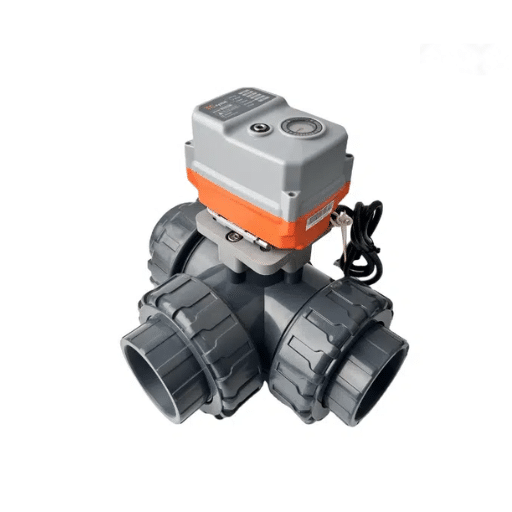
A key choice in a 3-way control valve can significantly determine the overall operating efficiency, reliability, and performance of your installation. Besides many important factors to consider, it is necessary to assess the specific needs of your application and correlate them with the valve’s technical capabilities.
📋 Selection Checklist
Follow this comprehensive checklist to ensure you choose the right valve for your application:
1
Application Requirements
Flow Characteristics: The flow rate and pattern need to be determined. Some 3-way valves are suitable for mixing, and others for diverting. A typical case would be a mixing valve that could control a total flow of up to 30 GPM, depending on the size and the materials.
Temperature and Pressure Ratings: The operating conditions need to be evaluated. The most modern 3-way control valves can withstand temperature ranges of -40°F to 400°F and working pressures of up to 600 psi, although these figures depend on the valve material (stainless steel, brass, etc.).
2
Material Selection
The valve’s material should be compatible with the fluid it will be in contact with. For example:
- Stainless Steel: Perfect for corrosive fluids or high-temperature applications, with evidence of up to 60% longer life in harsh conditions.
- Brass: Perfect for water or non-corrosive fluids, offering cost-effective, reliable performance.
- PVC: Perfect for non-corrosive fluids in low-pressure and low-temperature applications.
3
Control Mechanism
Decide whether you need a manual, electric or pneumatic actuator according to your automation and responsiveness requirements. Research indicates that pneumatic actuators have the fastest response times, while electric actuators offer the highest precision.
4
Maintenance and Accessibility
Choose models that provide easy access to internal parts for regular maintenance or replacement. In some cases, due to the modular design of valves, downtime in industrial settings can be reduced by as much as 30%.
5
Efficiency Metrics
A report from the industry states that using 3-way control valves in HVAC systems for optimized temperature regulation can lead to an energy saving of up to 15%.
6
Budget and Long-Term Costs
Take into account not only the initial purchase price but also the total cost of ownership, including energy savings, durability, and maintenance costs. Spending more on high-quality valves can actually lead to long-term savings.
Practical Tips for Selection Based on Application
-
💡 Understand the Process Requirements
Determine the specific parameters of your application, such as temperature, pressure, and flow rate. For example, applications with high temperatures may require valves made of stainless steel or bronze.
-
🧪 Fluid Compatibility
It is necessary to verify that the valve materials are suitable for the fluid or gas being controlled. Some corrosive fluids, for instance, pose challenges for standard materials and thus require specialized coatings or PTFE liners to protect the underlying material.
-
📐 Flow Characteristics
Select the Cv value (flow capacity of the valve) that fits the system requirements well. If a valve is not sized correctly, it could either adversely affect the system or make it inefficient. To be precise, rely on manufacturer-provided charts and calculations.
-
⚙️ Actuation Options
Determine the appropriate actuation style for the application. Manual, electric, pneumatic, or hydraulic actuators could each offer different benefits depending on the requirements of the operation and the level of automation expected.
-
🌍 Operating Environment
Consider the environmental factors at the site where the valve will be installed. To illustrate, outdoor locations may require the use of weatherproof or explosion-proof actuators to ensure reliability and safety under challenging conditions.
Frequently Asked Questions (FAQ)
References and Additional Resources
-
🎓 Worcester Polytechnic Institute (WPI)
Information on fluid flow control valves, including 3-way valves.
-
🏛️ University of Pennsylvania
Detailed documentation on 3-way water coil piping and control valves.
-
📚 University of Michigan
Visual Encyclopedia of Chemical Engineering, covering various valve types, including 3-way valves.
Conclusion
By carefully considering these crucial features and accounting for application requirements, material compatibility, control mechanisms, and long-term efficiency metrics, companies can select 3-way valves that not only meet technical specifications but also enhance the overall system’s efficiency and reliability. The versatility and functionality of 3-way control valves make them indispensable in modern industrial and commercial systems, delivering substantial benefits in energy savings, operational efficiency, and system longevity.