

Smart Manhole Covers: A Complete Guide to IoT-Enabled Urban Infrastructure
The biosensor started to show a 15 cm water-level increase by Tuesday at 02: 47, in March, within Manhole Cover #2847. By 3: 15 a.m., the city’s public works department had dispatched a crew that had begun to extricate a partial blockage. Or else: sanitary sewer overflow flowing into downtown’s business district during the early morning hours, the subsequent, $75,000 clean-up expenditure, and environmental fees together with a headline the mayor would not have wanted to talk about.
It is facilities such as intelligent manhole cover IoT technology that have in you a possibility to convert invisible underground infrastructure into an intelligent monitoring mechanism that avoids problems from happening in the first place.
It is so that for decades, maybe you have been managing the sewage networks the same—performing scheduled inspections, responding to emergency call-outs when the situation flares up, and hoping that a critical breakdown will happen where someone will notice it on time. This approach is not only expensive but, as the budget constraints and revenue shortfalls of the city governments only grow tighter every day, it is increasingly unacceptable. The strictest environmental regulations now in place to preserve some much-coveted public spaces and the glaring age of infrastructure have made such occurrences demand even more attention than ever.
This book will discuss the exact working procedure of intelligent manhole covers for you so as to determine the sensor you require for your infrastructure challenge and then build the business case for gaining budget approval. This will first cover sensor technologies, connectivity options, and interfacing with a platform, followed by live ROI calculations based in practical experience from deployments on three continents.
Want to see the technical specifications first? Explore Black Ant’s smart manhole cover solutions →
What Is a Smart Manhole Cover?

This smart manhole cover integrates sensors, wireless communication module, and a battery power source on a conventional municipal manhole cover so it monitors the conditions of underground infrastructure in real time.
Aside from establishing access and physical protection usually, these intelligent covers play an active and continuous role as environmental sentinels because they look out for possible conditions of unauthorized entry, level changes in liquids, increase in hazardous gases, and develop structural stress through transmission of alerts to central management platforms through either cellular or LPWAN networks.
Core Components Explained
Here is a list of preferred system elements required for an intelligent manhole unit:
A robust sensor enclosure (IP68-rated)
The housing should be one of the hardiest when it comes to electronics working on the ground level, exposed to dampness mechanisms, corrosiveness of the air, conditions of extreme temperatures, and a variable loading of up to 40 tons vehicle. Therefore, it is of paramount importance that it offers protection from the elements under an ingress protection rating of IP68, e.g., dust-tight and not even bothered by full immersion at two meters. Carefully programmed enclosures for Black Ant withstand long salt fog conditions and changes in temperature-specific testing, suggesting 10 years of uncamouflaged service when provided under real and ordinary municipal applications.
Multi-sensor module
The sensors vary based on use but generally consist of the following:
- Accelerometer/tilt sensor: Primarily used as triggers for such as cover displacement, vehicle vibration impactful on covers, and removal attempts
- Ultrasonic level sensor: Repairs dynamo liquid depth beneath the cover with an accuracy of +1 centimeter.
- Natural gas detectors: Monitors the methane (CH₄), hydrogen sulfide (H₂S), and oxygen levels emitted for safety and leak detection.
- Temperature and humidity sensors: They are responsible for counting environmental conditions that affect the asset.
A Wireless Communication Unit
NB-IoT (Narrowband Internet of Things) has emerged as the dominant smart manhole cover technology protocol that extends very well into the underground environment where standard cellular technologies do not, securely leverages already-paid carriers’ infrastructures, and serves with impressive power efficiency to annually attract users.
Battery and Power Management
Long service interval is crucial as crews cannot keep replacing batteries on a monthly basis over thousands of manholes. Loggers can give five to ten years of battery life through the use of an aggressive management of power- sensors sleep in between readings, and the radio wakes up only when threshold levels are exceeded or scheduled time, and fast firmware optimization down to every microampere of energy matters.
How Smart Manhole Covers Differ from Traditional Monitoring
Traditional sewer sanitation systems depend on check-ups performed in routine-liking intervals, complaints from consumers, and emergency service management. Cities usually inspect 5% of the manholes per year among the many manholes, those inspections being visual checks, guaranteeing that a manhole receives attention once in 20 years on average.
Contrary to the foresaid urban methods, smart manhole covers mean complete attention in situations requiring 24/7 monitoring and continuous automatic management activities in terms of assets and assets. These manhole covers can detect any deviation or irregularity long before an actual problem, hence permitting more extended notice to operators before generating alarms and work orders. Work orders generated at this stage come with enough information including the sensor readings and the order of urgency. Thus, the diagnostic phase of the emergency response is skipped altogether.
The replacement of reactive maintenance with predictive maintenance will typically realize a reduction in sewer overflow incidents around 40–60% and a cost cut of around 30–50% in the area of inspection-conducting work”.
Key Sensors and Monitoring Capabilities
Not every manhole needs every sensor. Understanding what each sensor type detects helps you specify the right configuration for different asset categories in your network.
Tilt and Displacement Detection
The accelerometer symbolizes nearly every Smart Manhole cover deployment. In order to perform several crucial tasks:
Notification about Unauthorized Entries
If someone tries to displace the manhole cover (for example, a maintenance crew cutting corners on the work order, or a personnel trying to enter the manhole without official permission), the accelerometer detects the change in orientation and consequently issues an almost instantaneous warning. Needless to say, this feature would prevent theft of the cover itself (the cover can be valuable as a scrap-metal item), illegal dumping into the manhole, and would allow a trail of legitimate entrance.
Tracking Traffic Impact
The vibration signatures expose heavy vehicles causing excessive stress on manhole covers. These impacts may uncover degradation of the manhole frame or erosion of the underneath, requiring reinforcement. In the Midwest, one city identified a commercial truck route that damaged manhole covers, faster than the current inspection cycle could detect, allowing the city to improve the cover rating and route traffic patterns accordingly before catastrophic failures began to result.
Case Study on Preventing Robbery
In another case, in 2023, a Southeast Asian city put into service a batch of 500 smart manhole covers in an area that had been the scene of chronic cover thefts-so much as 20–30 covers were stolen some months. This situation lasted for 90 days with the gravity sensor greatly reducing its occurrences to near zero. Thieves had taken one cover to test; the trigger of an immediate alert with GPS coordinates resulted in the police apprehending the crew. The news spread quickly in the scrap market that they were the “hot items”.
Liquid Level Monitoring
This ultrasonic level sensor converts ordinary manhole covers into an early warning system for sewers at risk of a backup, flooding, or flare-up.
Stopping a Backup
These sensors function by measuring liquid depth relative to the cover so that, by the time upon reaching either high headway interfaces of the pipes, their extremely sudden alerts would have woken up the concerned personnel: warnings from early on in yellow signals whenever the fluid levels rise to above normal but stay within the carrying capacity of the pipes; however red alert–mode pilot alarms shortly before about 2 and 6 hours before any actual spillage actually happens. Streets do arrive in time to let the tickets flow because of the prompt alerts, allowing people to mitigate and minimize their pollutants and sampling flow stress. Lumimaitsa provides a handy way to schedule a Baton Alert or make bolt-alarm coverage adaptable as a resource.
Traffic Analysis of Flow Patterns.
Continuous logging on levels of such visible discrimination even to casual eyes is offering some untold dreariness, instance is short to stable levels holes and then a few times burst-what was there in case this proved despite the fact that explosive flowage otherwise gives the notion of a process plant. Consequently in the developed European country, that good amount of flow data had allowed the utility to identify and remove any one of 47 illicit connections feeding the treatment plant. They had been smuggling in sewage to the trickling backwash system during inflow.
AvoidingOverflowedFlowCosts
The EPA estimates that there are between 23,000-75,000 spills per year recorded under the Clean Water Act and they range from $10,000 for a one-hour cleanup on a paved street to over $100,000 because fringes tipped waterways—let alone regulatory fines or court costs. Level sensors pay for themselves by preventing a single incident.
Gas Detection Systems
Indeed, there are always some hazardous gases in underground infrastructure. Methane produced as a result of anaerobic decomposition, hydrogen sulfide from bacterial activity, and oxygen displacement all always present risks to workers and the communities around.
Methane Detection
Two purposes are served by monitoring the concentration of methane in this way; increasing levels may indicate gas leaks in gas distribution systems passing under the sewers creating a very serious explosion hazard, necessitating the coordination of services immediately. In the case of wastewater systems, the collection of methane would imply stagnant conditions or obstructions necessary to be addressed. Black Ant’s sensors can detect methane at concentrations as low as 1000 ppm, with alarm thresholds that can be configured to your safety standards.
Hydrogen Sulfide Monitoring
H₂S gives off the nasty sewer smell that can be picked out by just about anyone-but this gas becomes hazardous at levels of 100 ppm, is fatal within minutes at 300+ ppm, and you can’t detect even slight amounts of it in free air from 700 ppm and above. Continuous monitoring saves the maintenance crew from getting sick while working on the manholes, whilst alerting the operators to the presence of conditions accelerating further infrastructure destruction.
Worker Safety Integration
Veteran deployments require the integration of manhole gas readings with work order systems. Upon an issue debited to the access of manholes and a crew check out the work order, current systems commence checking when the last recorded gas reading was recorded for keeping transactions within safety plans. If it was detected within the last 24-hour period regarding denote or H₂S above acceptable limits, the work order is denied and the system calls the Asset Management & Dispatch (AM&D) to ventilate for some time prior to asking technicians, using gas detectors, for another reading.
Ready to evaluate sensor configurations for your infrastructure? Download our smart manhole specification guide →
Connectivity: NB-IoT vs LoRaWAN
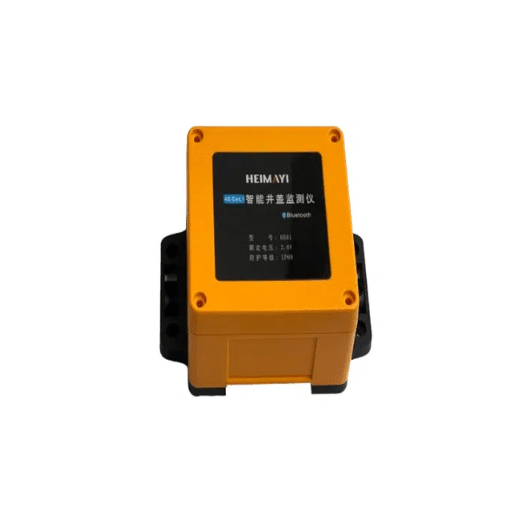
The choice of wireless protocol fundamentally affects deployment cost, coverage reliability, and ongoing operations. Understanding the trade-offs will help in picking up the right connectivity for the local environment.
NB-IoT for Smart Manhole Covers
NB-IoT operates in licensed cellular frequencies and utilizes the already-deployed carriers and their infrastructures, thus, offering the fastest deployment path for most municipalities that, accordingly, have the widest coverage.
Underground Penetration
This technology uses a narrowband modulation that displays better penetration than standard LTE or 5G when in buildings and underground. Even at street level, signal strength is maintained high enough to enable reliable communication in a manhole located as much as 3 or 4 meters below street grade. If your urban center has cellular coverage for mobile phones, NB-IoT will work well for underground sensors.
Infrastructure Requirements
NB-IoT does not require any base station infrastructure as it builds on existing carrier towers. These underground nodes essentially operate as standalone cellular devices that directly transmit to the network of the carrier. This means, while it limits the capital expenditure and maintenance that is required for gateway deployments, it will require the ongoing SIM card plans.
Power Consumption Characteristics
To ensure a great battery-saving mode and a continuous cycle of Discontinuous Reception pattern, which in this case is suitable for NB-IoT devices, with a generic scenario, one could possibly assume a smart manhole would wake up about every six hours merely to send a status report and then go back to sleep again. If the system detects any emergency alerts, it should wake up immediately and trigger a transmission cycle by this very unusual condition, regardless of schedule.
Limitations Retrieved on Coverage
The NB-IoT is a regional program, and availability depends on regions and carriers. The best availability and coverage are found across most European, Chinese, and Southeast Asian regions; the North American sector is showing signs of better coverage as providers maintain and expand offerings. Lacking the above-mentioned verification knowledge, it is not possible to say much about the providers in place. They include AT&T and T-Mobile, promising to provide extensive NB-IoT coverage and usability. Verizon Wireless is harder to predict as to what the company will provide. It may or may not provide US-wide NB-IoT coverage. Areas in-between are enhanced by LoRaWAN and satellite support as needed.
LoRaWAN Alternatives
LoRaWAN (Long Range Wide Area Network) is a private network that uses a gateway system for unlicensed wireless spectrum. It remains in place as a deployment option when the local cellular provider doesn’t have good enough coverage locally or the local council wishes to maintain full control over the network.
Deployment of Private Networks
One of the critical elements in a LoRaWAN deployment is the gateway infrastructure with typically one gateway at every 2–5 kilometer perimeter, depending on terrain and building density; hence, for a city of 100 square kilometers to be covered by a network, it might necessitate 15–25 gateways placed on existing infrastructure (i.e., streetlight poles, building rooftops, water towers). The cost is upfront capital but eliminates all other cellular subscription fees.
Cost Comparison: TCO Over 5 Years
With the deployment of 1,000 smart manhole covers:
- NB-IoT:3–5 per device per month × 1,000 × 60 months = 180,000–$300,000
- LoRaWAN:15,000–15,000–25,000 gateway infrastructure+1/device/monthnetworkmanagement=1/device/monthnetworkmanagement=75,000–$85,000
Typically, LoRaWAN breaks even at around 500-700 devices across 5 years. Below that range, NB-IoT usually brings down costs. Once your device number is over 1,000, LoRaWAN starts offering very considerable savings.
Control and Security
With a private LoRaWAN network, all data stays within municipal infrastructure—no third-party carrier handling your sensor readings. For security-sensitive applications or municipalities with strict data sovereignty requirements, this control is valuable. Black Ant offers support for both protocols and can advise on the optimal architecture for your specific security and operational requirements.
Protocol Selection Guide
Choose NB-IoT when:
-You have good cellular coverage from major carriers
-Deployment is under 500 devices
-You want the fastest time-to-deployment without the build-out of any supporting infrastructure
-You prefer higher operational expenses as opposed to capital expenses
Choose LoRaWAN when:
-Cellular coverage is inadequate in target areas
-Deployment exceeds 1,000 devices
-You want full network control as well as security
-You already have gateway infrastructure from other IoT deployments
-You already have technical staff who are capable of network management
Quite a few cities may choose both, with NB-IoT for initial deployments and scattered locations and LoRaWAN with the desired level of density downtown in which a single gateway serves hundreds of devices.
Platform Integration and Data Management
Sensor data becomes valuable only when it reaches the right audience at the right time. Moreover, the information should be seamlessly integrated with the platform to convert the raw sensor data into meaningful operational insights.
GIS Integration
Smart manhole covers should be employed as intelligent assets on your GIS repository, rather than simply appearing as scattered lonely dots of data.
Underground Asset Mapping
Every manhole of the intelligent variety transmits its GPS coordinates during installation (to be accompanied by field verification). This affords an up-to-date and plausible inventory of manhole locations that integrates into sewer system mapping, stormwater system records, and utility corridor data. In case an alert is triggered, dispatchers will have a real-time display of the specific manhole, specific street intersection, and the particular upstream and downstream assets affected.
Mobile Workforce Integration
The competent public worksmen, who make use of tablet-based work request systems, get push notifications with reference to manhole location taken to their current position. Navigation commands on the interface guide all to the exact cover. Once finally located, they scan a QR code visible on the cover to confirm their presence with physical evidence and also to see the very latest sensor data stored prior to removing the cover.
Asset Condition Record
Without regard to trends, we offer detailed historical information about an asset’s condition. A tag that has popped up three high-priority alerts within the past six-month period may seem to suggest recurring problems further upstream, like the ones that, interestingly, are so conspicuous when the emergency services come and go. Upon analyzing smart manhole data over an 18-month period, one utility from Down Under identified and replaced 12 pipe segments, namely undersized sections, that were causing repeated blockages all over the network.
Alert Management Systems
Raw sensor data seems prolific. Remember that intelligent threshold setting deals with defining what may qualify as what needs immediate attention by someone and what could be taken with lighter steps.
Threshold Configuration
Our manhole covers allow for the settings of thresholds at multiple levels:
- Info (Green): No attention is paid unless the alert status changes every 6 hours by means of sensor readings.
- Warning (Yellow): Selected critical threatening levels (such as liquid rising to 60% of the pipe) generate a Dashboard alert, there being no immediate dispatch to the respective departments.
- Critical (Red): Imminent overflow or hazardous conditions caude-inert contacts and really make service people send SMS, email, phone integrations.
Threshold levels must vary by manhole location. Example: a manhole position in a low-lying, flood-prone area might have lower warning thresholds. Broad, seasonal adjustments are required in taking into account patterns of wet weather.
Escalation Workflows
When a critical alert is generated, the system should carry the following work order:
- Create an automatic work order in your CMMS (Computerized Maintenance Management System)
- SMS Notify on-duty supervisor the manhole ID, location, and sensor reading.
- Email crew maintenance a link to the map and recent maintenance history.
- In case of non-response within 15 minutes, escalate to department head.
- Log all callout times for regulatory compliance.
False Positive Management
A sound system learns from false positives. As an example, after crews respond to ten “high level” alerts that turned out to be normal flow variations, threshold values should automatically adjust or a review should be conducted on the sensor configuration by supervisors. Black Ant’s platform includes machine learning modules for clarification of actual blockages and normal hydraulic variations based upon flow patterns and weather correlation.
API Connectivity
Your smart manhole data shall coalesce with existing municipal systems rather than push users toward yet another islanded system.
SCADA Integration
The water and wastewater utilities benefitting from SCADA (Supervisory Control and Data Acquisition) systems end up receiving the input of smart manhole data straight through their regular control room displays. By being able to make their manhole monitoring an additional telemetry source probably set over pump stations and treatment plant instruments, thanks to the standard Modbus or OPC-UA protocols.
Cloud Platform Compatibility
An option for faster deployment for municipalities whose SCADA systems are not behind them is a cloud-based platform. By using MQTT and HTTPS APIs bridged to Microsoft Azure IoT Hub, AWS IoT Core, Google Cloud IoT, and standard municipal IT, the IoT data collecting terminals of Black Ant make the best out of this compatibility. JSON-formatted data being fed into this system will make it work even better in combination with business intelligence tools like Power BI or Tableau for executive reporting.
Third-Party Integration
Smart city platforms of the present day bring about the aggregation of data across domains such as traffic sensors, air quality monitors, smart lighting systems, and even sewage infrastructure. Useful insights can be drawn from the data coming from manholes regarding such larger perspective urban intelligence. Thus, for instance, flood warnings may be correlated with data from storm drain sensors, or thefts involving manhole covers may be linked up with street cameras feed. The aim is a unified urban nervous system founded on system-wide fractals and not a collection of siloed sensor approaches.
Municipal Benefits and ROI

Municipal budgets are very limited. Therefore, making a great case for ROI requires proof of savings either by showing cost avoidance, operational efficiency, or regulatory compliance for each dollar spent on maintaining and repairing manhole cover fraud.
Overflow Preventions and Environmental Protection
The biggest returns for manhole cover investment are from mitigating overflow events.
Cost of Overflows from Combined Sewers
During wet weather events, untreated wastewaters rush directly onto the streets, rivers, lakes, and even storm drains when stormwater overwhelms the systems. One major CSO event will cost on cleanup.
- Immediate Cleanup: 10,000-50,000 USD on street washing, debris removal, and disinfecting
- Environmental Remediation: 25,000-25,000-100,000+ if contamination connects watersheds
- Regulatory Penalties: Regular EPA enforcement actions contain fines spanning 100,000-1,000,000 dollars for repeat offenders
- Legal Risk: Claims for property damage from private individuals; Public health: An anguished state.
- Brand Damage: Media circus and erosion of public trust
Early Detection Value
Level sensors offer a valid time frame of 2 to 6 hours before possible overflows; therefore, the crew can react before certain floods take place. Temporary pumping could be arranged by the crew to clear blockages or divert some of the flow away from the frontline blocks before the streets fill with water. That alone would pay back for at least one year the whole smart manhole deployment cost of just two CSO incidents in one northeastern U. S. city.
Compliance Benefits
EPA consent decrees are requiring progressively proactive monitoring of the sewer system. In order to substantiate compliance, those entities that are under regulation must submit monitoring data that indicates the response time, levels of incident prevention, and trends in the functioning of the system. The smart manhole will give the administrative-scientific documentation that is invincible to periodic inspection.
Maintenance Cost Reduction
Condition-based maintenance fundamentally changes the way limited human resources are more efficiently distributed.
Transition from Scheduled to Condition-Based Maintenance
Old programs use scheduled inspections of manholes are executed irrespective of their real conditions. Meanwhile, an inspection regime that sees a manhole located in stable sandy soil and unaffected by traffic inspected as frequently as the collapsing manhole in eroding clay under heavy truck routes is inefficient.
Smart manhole covers set up prioritized condition-based maintenance. Tilt sensors can reveal when a manhole cover is under very heavy stress, because of being opened regularly or through any kind of obstructions. Level measurement sensors have been used successfully to point out specific manholes that have chronic flow issues. Gas sensors have provided early warnings of corrosion accelerated environments. Crews have been able to focus on important assets that need attention.
Calculation of Savings on Labor Costs
For 10,000 manholes, a typical manual inspection program might include:
- Traditional method: 2,000 inspections annually (20% of inventory) at 150 per inspection =300,000 a year
- Intelligent manhole deployment: 500 targeted inspections based on sensor alerts for 150 each=75,000 per year.
- Total Savings: $225,000
Moreover, around 40−60% of the callouts made from comfort and safe maintenance work that cost a lot in an emergency become considerably fewer in number when problems are earlier caught before they quickly turnaround into a manifest failure.
Asset Life extension
The early identification of stress on the frame, corrosion disorders, and flow anomalies would result in preventive repairs that would extend infrastructure life. Replacing a stressed manhole frame at the first sign of stress might cost, say, around $2,000. Waiting until failure to damage the surrounding pavement might be well over 15,000 to 25,000. These differences get huge across a huge number of assets.
Public Safety Improvements
Manhole covers give a direct saving but also benefit the safety of society in measurable ways.
Early Detection of Gas Leaks
In the sewers, methane sensors prevent the possibility of explosions due to gas line leaks being detected. With about three gas leaks identified in the first half of the year, a European gas sensor network could be signaling the presence of such risk in potential sources and utilities. Repairs would follow, so the operational ability integrates with a utilities control system to respond to threats automatically.
Prevention of Unauthorized Entry
Manhole covers removed without authorization pose an immediate public threat. Pedestrians, cyclists, and driver are the potential victims when the manhole is left open. Real-time theft alerts allow the police to snag the perps before they run off. No more injuries and theft losses stopped.
Finally, he can grow old again when the flood warning is appropriated.
For regions prone to flooding, the attainment of a manhole level sensor is invaluable as it can be integrated into wider flood warning systems. Thereby, with a high level given on several manholes across a watershed to indicate an impending flood, emergency managers can then instigate evacuations and close roads—this all can happen even before floodwaters attain road level projections.
Want to calculate ROI for your specific deployment? Contact our smart city solutions team →
Installation and Deployment Considerations
Successful smart manhole cover deployment requires attention to physical installation, power management, and regulatory compliance.
Retrofit vs. New Installation
It’s the choice offered to municipalities: either to adapt existing manhole covers with retrofit sensor kits, or to specify smart covers for new installations and replacement schedules.
Retrofitting Existing Manhole Covers
Retrofit kits attach sensor modules to the underside of existing covers using magnetic or mechanical mounting systems. Advantages include:
- Immediate coverage without waiting for replacement cycles
- Lower per-unit cost (approximately 40-60% of new smart cover cost)
- Flexibility to test technology before full deployment
Challenges include variable fit across different cover designs, potential interference with cover removal tools, and limited protection against vandalism or tampering. Retrofit kits work best for pilot deployments and emergency coverage of high-risk locations.
New Smart Manhole Cover Specifications
During planned infrastructure replacement, it is wiser to specify the installation of integrated smart covers right from the ouaning. The benefits include:
- Optimized antenna placement for maximum signal strength
- A useful and robust are available for protecting the circuit of the tire sensor.
- One year inclusive warranty covering both physical & electronic
- Appearance discouraging tampering.
Black Ant offers retrofitted kits or commercial add ons and integrated garbage smart covers. Let our engineering team check out your existing platform and suggest the best course in your scale of deployment.
Power and Battery Management
Several reports have hinted at the possibility that battery life directly impacts the maintenance burden. Markedly a system of thousands of manholes with yearly battery replacements would work counterproductive toward the monitoring benefits.
The Technical Requirement for 5–10 Years Battery Life
The driving force behind the long life of modern smart manhole covers is the design of the sensor in low power:
- The use of low-power sensors: MEMS accelerometers and ultrasonic sensors continuously drawing mere microamp in the sleep mode.
- Transmission scheduling: transmission solitary status reports irregularly at intervals of 6 to 12 hours against streaming continuously.
- Event-triggered sending of alerts: In the event of any threshold breach, the manhole sends immediate rather than routine data.
- Efficient power management: firmware consumes the minimum amount of power during its wake cycles.
In Field Standard, the black Ant transmits status every 6 hours by default. Battery life under normal conditions would exceed 8 years. There is immediate transmission for emergency alerts, skipping the scheduled transmissions.
Battery Monitoring and Battery Replacement Planning.
Battery health is the function of the system itself, wherein the said system predicts battery replacement necessity. The system is set up to show the status of each and every battery in the deployment so that the maintenance schedule can be planned rather than the emergency callout for some dead sensor. With the gradual reduction of battery capacity to typically below 20% (EOL), the system proceeds with work order replacement scheduling with the required priority assigned for each sensor.
Solar Auxiliary Power Options
Auxiliary solar panels, when needed, could charge the batteries in applications demanding increased data transmission or additional sensors. Sun-facing panels in the factory cover can slow-charge the battery, existing there a week or indefinitely in sunny climes, or provide electricity for power-hungry applications like video monitoring all day.
Regulatory and Certification Requirements
There is no room for flexibility when it comes to safety, toughness, and compatibility for municipal infrastructure projects.
Rating IP68-Being Resilient to Water and Dust
IP68 is the minimum standard for protection of electrical/electronic equipment against underground entry. The “6” means no dust entry. The IP “8” number means complete submergible water protection. The manufacturer specifies his product’s test depth and duration (in hours). In the case of the underground Black Ant enclosures, that is two meters for 72 hours far above ground-induced flooding times.
Certified for Load Capacity (EN 124)
Manhole covers have to be adequate for the wheel load without allowing the structure to collapse. The load capacity includes EN 124 classification:
– A15: 1.5 tons (exclusively pedestrian designated)
– B125: 12.5 tons (car parks, pedestrian sidewalks)
– C250: 25 tons (slow traffic, residential streets)
– D400: 40 tons (principal roads, highways)
– E600: 60 tons (docks, airports)
– F900: 90 tons (heavy industrial)
In street applications moderated by the city, including a rating of at least D400, smart manhole cover electronics are not supposed to interfere with the overall structure. Sensor housings are optically recessed in the frame to provide ample protection, allowing the load-carrying surfaces to remain continuous throughout, casting iron, or composite in nature.
CE, RoHS, and FCC Issues
For international or municipally stringent procurement requirements, ascertain:
- The CE Mark: Indicates that the product complies with all relevant European health, safety, and environmental protection standards.
- RoHS Compliance: Restricts hazardous substances in electronics
- FCC Certification: Required for radio devices in the United States
Black Ant smart covers have full CE, RoHS, and FCC certifications. This represents a rigorous quality management procedure under ISO 9001 and environmental management under ISO 14001 to achieve the threshold standard by which procurement departments could evaluate the suppliers.
OEM and Customization Options

While many system integrators and distributors may demand some kind of private-label product or customization to fit their specific sugar, a sensible understanding of OEM abilities will help them scrutinized possible contract manufacturers.
Private Label Manufacturing
OEM (Original Equipment Manufacturer) partnerships for smart manhole covers imply that integrators can launch their own-branded products by capitalizing on readily available manufacturing capabilities.
Branding and Firmware Customization
The OEM programs, in general, are usually made up of the following options:
- Color and branding customization for the enclosure
- Customization of firmware for different mechanical specifications along with the associated sensor data rate
- Possibly mobile applications and the web-based control dashboards under a customer’s brand
- Packaging and user manuals customization
Black Ant’s OEM program allows for complete white-labeling projects starting from 500 units’ order where MOQs scale with complexity of customization. With the support of the OEM partner, the Black Ant engineering team takes the product from first idea through the final product, guaranteeing its full conformity with relevant standards and regulatory restrictions.
MOQ and Lead Time Considerations
Typically, smart manhole cover manufacturers have a minimum order quantity (MOQ) of 100–500 units, but it will depend on manufacturers’ capacity. Standard order lead times are around 8–16 weeks for standard configurations and up to 20–24 weeks for heavily customized products or larger deployments of 10,000 units.
Anticipate accordingly for procurement events by getting into supplier conversations 4–6 months in advance of the necessary deliveries being made with a hard stop for municipal tenders following such an aggressive timeline. This additional lead time will account for specification refinement, sample validation, and production scheduling.
Sensor Configuration Flexibility
Different applications require different sensor complements. Efficient manufacturing allows customized configurations with zero additional engineering costs.
Modular Sensor Possibilities
Standard configurations usually come with tilt and level sensors; optional modules which can be added include those for:
- Gas detection (methane, H₂S, oxygen)
- Thermometer/hygrometer
- Water ingress detection where water may be expected to seep into the cover gasket
- Acoustic sensors to remotely measure flow or detect leaks
- Camera modules for visual inspection (high-powered, short battery life)
Black Ant’s modular design allows the mixing and matching of sensors. If the order is for 1,000 covers, 600 are with the standard tilt/level for general use, 300 add gas for more hazardous locations, and 100 include all sensors at critical junctions.
Custom Thresholds for Alerts
Customized firmwares make possible alarms that are client-specific–imagine a coastal area municipality that greatly emphasizes strict level thresholds, whereas a desert town prioritizes sensory strength for depressurizing gas in dry sewer conditions. These settings are configured at the factory; hence, no need to shake hands in the fields.
Integrations Protocol Customization
Some deployments require their own in-house protocol flavors, beyond the standard NB-IoT and LoRaWAN:
- Cellular configurations for APN (access points) which aren’t public and remain private for security
- Custom LoRaWAN frequencies that fulfill regional legislation
- MQTT groups that look like those in current urban IoT platforms
- Integration of some aging SCADA systems with their actual bridges
The vendors that have internal firmware teams will provide those customizations at times. The design package might not always have these built in, however. Try to find out about the possibility when considering suppliers. Some manufacturers can provide only out-of-the-box solutions.
Conclusion: The Business Case for Smart Manhole Infrastructure

Smart manhole cover IoT technology represents a fundamental shift in how municipalities manage underground infrastructure. The transformation from reactive maintenance to predictive operations delivers measurable returns across environmental protection, operational efficiency, and public safety dimensions.
Five key takeaways for your deployment planning:
- Sensor selection should match risk profile — not every manhole needs gas detection, but high-risk locations justify comprehensive monitoring
- Fastest deployment for most municipalities with NB-IoT; long-term cost savings above 1,000 devices with LoRaWAN
- Platform integration determines value realization — sensor data must flow into existing work order and GIS systems, not isolate in standalone dashboards
- ROI typically manifests within 18–24 months through prevented overflows, reduced emergency callouts, and optimized maintenance labor
- Certifications and quality do matter—the encounters between all of them make for a 10-year service life, a capability IP68, a load class EN 124 D400, and a compliance of CE/RoHS, in an underground environment where the climate is, on one side, harsh.
Municipalities giving a competitive edge at present are not the ones having the latest treatment plants or the hugest pipes networks. They are the ones operating existing infrastructures in an intelligent way using data. Smart gas covers, one manhole at a time, are a starting point of this data-driven operative model.
Is your municipality ready to investigate smart manhole covers? Black Ant is the designer and vendor of smart manhole covers capacitive of NB-IoT and LoRaWAN connectivity with IP68 protection for its global deployment, hence its scale certification. Our engineering team may evaluate your infrastructure settings and suggest some sensor options to fit your needs and further support a pilot to a large-scale deploy program.
Explore Black Ant’s Smart Manhole Cover Solutions →
Need technical specifications or a deployment consultation? Contact our smart city solutions team at chinaheimayi.com/smart-manhole-covers/







