

How to Balance HVAC System: Hydronic Balancing Step-by-Step Guide
An HVAC system is important but to get the best performance out and to make it comfortable, the balance of the system must be adjusted properly. Hydronic balancing refers to a pro-depressing activity, in particular. It involves correcting heating and cooling systems by adjusting the flow of water in a way that the heating or cooling demand of each room is met. Otherwise, irregularity of the temperature distribution, energy waste, and overly high heating/cooling costs of consumption might occur. In the following instructions, you’ll discover the steps of how to balance hvac system for Dummies, and the technological challenges will be explained in an accessible form, to enhance your knowledge of the HVAC system for better efficiency and reliability. If you are an expert or want to try it out by yourself, do not worry as this manual was created to make the instructions very simple for you to get your fingers busy and sat on the system.
Introduction to HVAC System Balancing

In order to achieve a uniform balance of temperature and efficiency across a structure, or HVAC systems, all the air or water flowing in, and out should be adjusted to have the same airflow or waterflow. Therefore, it requires modification or adjustment of dampers, fans and valves in order to supply particular rooms or spaces with the required flow of conditioned air. This serves the purpose of optimized comfort, minimized energy usage as well as increased utilization time for the HVAC system. It is an important process so as to ensure adequate functionality of the system and high dependability of the system.
Importance of Balancing in HVAC
Correctly adjusting the HVAC system is crucial to achieving desired performance, cost-effectiveness, and comfort levels. The HVAC system is more efficient in the sense that the airflow and temperature are distributed more evenly throughout the building. The following five advantages and figures shed light on why balancing HVAC is so important:
Comfort Levels Increase
When the system is in balance, all the rooms and zones have the same temperatures without any hot or cold spots, which allows people to be comfortable.
Energy Efficiency
A balanced HVAC system, according to the United States Department of Energy, can bring about energy savings of 15%, cutting utility costs greatly.
Increasing the Lifetime of the Equipment
When HVAC systems are in balance, components such as fans and motors are subjected to less force, leading to their longer service life as well as reduced repair costs.
Decreased Emission
When energy saving HVAC units are installed, they help to lower the amount of greenhouse gases being released. If you adapt your systems, it becomes possible to practice ecological sustainability.
Control Of Air Pollution
By maintaining a balanced system, steady ventilation with circulation of air will be ensured raising the quality of the interior air as it reduces the level of moisture and leading to reduced damping of the air in the room.
Key Takeaway: Balancing is critical for improving system efficiency and involves engaging in environmentally sound practices. Thus, it is a requirement for how to balance hvac system.
Benefits of Proper Hydronic System Balance
- Energy Conservation: The use of hydronic balance may reduce the energy consumption on heating or cooling the entire building in the aforementioned manner. This is because it can be argued that properly balanced systems can save up to 20% energy costs.
- Comfort Levels: It is important to note that with a hydronic system, there is always even heating or cooling due to the temperatures of the fluids circulating within the system.
- Long Equipments Life Layering: Since it is always easier for the system to be within economic and efficient parameters, pump’s, valve’s and any other parts wear out more slowly. This may increase the years of service of the equipment without replacement.
- Decrease in Operating Expenses: Minimizing energy use while reducing maintenance requirements through the control of water regimes assists in decreasing both energy consumption and financial resources spent over the long term.
- Environmental Conservation: Balanced hydronics, by improving the effectiveness and reducing the power usage, lower the levels of greenhouse gasses released into the atmosphere and assist in promoting more environmentally friendly practices.
Overview of the Balancing Procedure
No matter what hydronic system it is, it should always be well-balanced and this gives better or improved performance. It is nothing else but matching water flows in the system so that heat would be even within the system and that it would not fall into chaos. Hence, the following steps are usually taken to complete the task:
1
Evaluation of the System
Before any work begins, in order to determine the current status of the hydronic system, a proper system assessment must be done. Make sure to check the parameters of the design; mainly the flow, any pressure losses/pressure heads, and the temperature. This entails doing elaborate checks so that any kind of problems are identified before they occur like imbalances or even inefficiencies in the system.
2
Preparation and mounting
These particular components are used in balancing and meter water flows. Install balancing valves whether fixed or adjustable in the right parts of the system for optimal control.
3
Determining the Flow Rate
Install flow meters or use ultrasonic flow measuring devices to measure the real flow rates in respective sections of the system and compare these figures with the design requirements and installation to identify those sections of the system that need attention.
4
Modification Using Appropriate Equipment
Use unethical means achieving gradual adjust of unnecessary pressures diminishing the flow rates across the system most optimally to provide water to every part. This approach is very effective in eliminating the cold and hot spots hence increasing client comfort as well as enhancing the functioning of the system.
5
Evaluating the Quality of Work Delivered
Even after making adjustments, one should perform a thorough assessment to determine the performance of the system. This can be done using sensors or an operational data logger measuring the temperature, pressure, energy consumption, among others.
6
Recording and Communication
All the measures where taken out, they are recorded how the system performs after the intervention. This helps to look naive the performance of the system in future issues related to maintenance and assures the company that all the operational procedures regarding the system’s use and maintenance are followed.
Results of Applying an Adequate Balance
Many studies show that hydronic systems in good balance help save energy by about 20-30% because of optimized circulation and the reduced energy attached to pumping. Thermal comfort is also improved, allowing the occupants to feel more comfortable. Recent studies prove that properly balanced systems reduce mechanical stress on components and, in some cases; even prolong the equipment’s use by up to fifteen years.
Facility managers are encouraged to follow a systematic approach and use balancing tools to not only bring about great savings but also take care of the environment by complying with the standard of energy efficient buildings. In this case, the balancing purpose would be aimed at minimizing the energy loads and waste.
Step 1: Assess Your Hydronic System

A comprehensive evaluation of a hydronic system is the first step that can be taken towards its optimization. This is necessary to gain an understanding of how well the system works currently and to identify problem areas that need addressing. The assessment can commence with checking some of the major components comprising the system such as pumps, heat exchangers, valves, piping, and other elements. Inspect them for any wear and tears of any kind, rusty parts, or even leakages which may reduce the system’s performance significantly. The most important thing is ensuring that the design of the system is appropriate for the current heating and cooling demands of the building as no one wants to operate an outdated system which in most cases is quite inefficient.
Use modern equipment such as flow-meters, thermometers, and manometers to obtain accurate measurements. For example, studies show that errors due to poor hydronic system balancing can consume energy at rates of 20%-30%. When all these factors have been considered, applicable instruments such as ultrasonic flowmeters will come in handy for last – resort operations in determining whether the actual water flow rates within the facility correspond with the designed limits.
💡 Pro Tip: Furthermore, it is strongly advised to carry out an energy evaluation. Auditing how much power is used and contrasting the audit findings against acceptable peer usage levels is one activity in this step. Recent research shows that contemporary balancing of hydronic interventions following proper examination and even optimization is capable of diminishing energy consumption by 10%-15% which falls in the obtainable standard of many energy efficient building codes including a LEED compatible design or ENERGY STAR eco-labeling for instance.
The data is collected and evaluated so that it reveals the inner flaws and outline the envelope of the services provided in order improve the following enough to make better choices on subsequent improvements. Ensure you assess and document each observation during the assessment phase to simplify the process of implementing corrective measures in the later stages.
Understanding Your System Design
The importance of the desired performance and efficiency of every system heavily relies on how well it is designed. The components integrated into a system design cover a very wide range including comfort air conditioning, lighting, water, and control systems among others. Recent studies have shown that the incorporation of smart technologies like sensors and controls able to connect with the internet of things is capable of reducing energy consumption up to 30%. As an example, modern HVAC systems that actively respond to occupancy and weather changes ensure efficient heating or cooling without excessively wasting energy.
Furthermore, sensors within a system collect and provide data that can be leveraged. As an illustration, a report from the Department of Energy of the United States of America states that the presence of such ‘smart’ building facilities lowers the average building energy cost by 15%-20% through the utilization of real-time monitoring. The evidence shows that real-time functionality should be intergrated within the system design to prevent faults like consumption peaks and breakdowns.
In addition, alternative sources of energy, for example solar energy or wind energy, are encouraged because they help to reduce the reliance on fossil fuels. These are often used together with energy storage mechanisms such as batteries to assure a steady supply of power. It is also efficient to develop systems that have modular parts since it gives room for expansion without the need to fully change existing facilities. It is necessary to ensure the systems are well documented and the assessment on how the system is performing should be done regularly since more goal based design should be applied in its continuous improvement.
Identifying Components and Layout
In order to make a productive energy system, it is important to know the elements and the arrangements. Explained in the subsequent paragraphs are the key aspects that are looked into, and recent information is provided on the advances that are currently in use:
Solar Panels
The recent photovoltaic panels (PV) are manufactured as either monocrystalline, polycrystalline or thin-film panels. A release form the Google Search states that monocrystalline therefore, has the highest effective means of performance at an optimal level since the panels have very little space. This is because for the most part, the panels are like 22.8% effective as quoted, faced with space challenges. Although polycrystalline panels are slightly lower in efficiency (15-17) but they are cheaper options. They require lower infrared heatingup for their building brackets.
Modern Wind Generators
There are more horizontal axis wind turbines today and it remains the trend as blades and generators grow in size. Nowadays, there include several new blades, including vertical ones, which are more suitable for urban areas with turbulence problems. According to the most recent statistics, the efficiency of some self-contained vertical axis fans is around 35%.
Battery Storage
A significant portion of the battery market is made up of lithium-ion batteries, which come with energy densities of 150-250 Wh/kg. In addition to being popular because of how to balance an hvac system incorporating these batteries, their price has also been falling.
Flow batteries, which are cumbersome to operate, are increasingly being used to assist renewables in their power grid as they are large, have high energy content outage time and can operate off the grid. The market for these batteries is expected to go up at a pace of more than 25% CAGR over the forecast period. While looking forward to utilizing solid-state batteries, which have higher capacity and are safer than the present ones, the technology is still at the level of development towards mass production, due to constraints on this innovation as of the moment.
Grid-Tie Systems and Off-Grid Systems
Grid-tie systems include inverters, controllers, and provision for parallel connection with the public grid which helps to redistribute the extra power or how to balance any power shortage. However, off-grid systems use a combination of hybrid inverters and specialized batteries which allows self-sufficiency but implies that the energy consumption is properly calculated to the last detail.
Intelligent Management of Energy
As a matter of fact, the recent trends include the development of artificial intelligence-assisted energy management systems that optimize load and carry out predictive maintenance. According to what is known about these systems in the industry, energy consumption is reduced by as much as 30% by managing the generation of power and the level of consumption in a manner that synchronizes them.
Best Diagram
The configuration of the system should be optimized so that it is the most effective, taking into consideration site location, environment and any other embedded constraints. In practical terms, the optimum operation of solar panels generally put them at the angles equal to the locations’ latitude. In case of wind turbines, the minimum distance needs to be at least between seven and ten rotor diameters in order to reduce the power loss due to the wake effect. Proper sizing for cable logs is essential to reducing high power consumption of energy storage affected by the power source. In a case of mixed facilities, which include the solar and wind power generation, both can be configured in a way that one source of energy is always available, the status of operations being displayed on the monitoring tools.
By applying recent advances in technology and incorporating big data analytics, the most innovative solutions can be developed and implemented by the organizations to meet their specific requirements.
Common System Issues to Look For
Power Variations
The energy output, being erratic as a result of changing weather conditions or even the inefficiency of equipment, is likely to affect system reliability. The patterns that are abnormal can be determined by monitoring the power output in realtime as well as studying data over a period of time.
Battery Wear and Tear
Energy storing devices (batteries) lose their storage capacity over a period of time. Certain aspects of battery use – such as the number of cycles the battery is put through, the temperatures experienced and poor maintenance – have been observed to hasten this process.
Errors while synchronizing with the power grid
Failure to effectively integrate renewable systems with the grid may cause out of phase conditions or result in a waivering power supply. Techniques of inverter technology and periodic testing of synchronized operation, however, will help to address these problems.
System Malfunctions
Dashboard or Central monitoring software may be challenged or suffers backlash from malfunctioning. Malfunctions and obsolete software versions may cause an early warning system to misinform the data.
Component Worn Out and Component Fatigue
Every element of structure regardless of its material will reach the limit of wear and tear at some point. The question is whether that time can be estimated more or less accurately.
When balancing the system it is quite difficult to explain the reason why there is a temptation to reduce the airflow volume in the supply ducts causing an uneven distribution of temperature within a room. Generally, humidity, which needs to be at the lower end of the plastic material range, is a problem due to sensitivity to cold weather.
As well, physical deterioration resulting from the likes of corrosion, loose connections or even broken blades, especially in the case of wind turbine rotors, can contribute to a significant reduction in efficiency. Implementation of frequent exams and maintenance in accordance with set schedules is useful in prolonging the life of the system.
Step 2: Gather Necessary Tools

The importance of having suitable equipment cannot be overstated when it comes to doing installation or maintenance work in renewable energy systems. Enlisted below is the detailed checklist of tools needed for various functions as updated to incorporate new information and the latest advice.
🔧 Hand Tools
These are tools such as wrenches, screwdrivers, hammers and pliers that may be helpful. Pulling things together aims at resolving such matters as assembling the panels or putting any loose fittings together. Its consideration for tools involving any level of electricity is neither concluded nor discouraged.
⚡ Multimeter/Clamp meter
These are also important instruments for certain operations as voltmeters/ ammeters and ohmmeters. The new type even offers more advanced features such as Bluetooth capability that can be used for monitoring and keeping track of target variables.
🌡️ Thermometer- infrared or camera
Effective analysis of potential high warm zones in solar panels, inverters, or cabling. The evolution of thermographic devices, which possess enhanced resolution and stringent temperature measurement, which brings prognostic management closer to reality.
🔩 Torque Wrench
Underpins the securement of bolts and screws within manufacturers’ torsional demands. If excessive or insufficient torque is applied, components can not function or break down. Digital torque wrenches are now available with displays for greater accuracy.
🦺 Safety Gear and Equipment
Wearing of helmets, safety glasses, gloves, harnesses and other such personal protection equipment is especially advisable while working at heights or around high voltage electrical systems. It is in line with current recommendations to use protective equipment with ANSI or EU marking given the stringent requirements of industry and safety experts.
📊 Data Logger or Monitoring Hardware
Even more improvements have been made to these equipment ranging from assisting in the balance of central systems to the estimation of how to balance hvac system. Since many critical devices are used for monitoring the system, especially in present situations, devices such as portable data loggers and IoT sensors can be used to store and restore any information of the system in real time. These new cloud-based solutions grant remote access without any technical requirement for human intervention or analysis.
🧹 Equipment used for cleaning
A soft-hooved brush should be used, because this is most efficient, along with bio-degradable cleaning liquid and several distilled water rinses. According to studies, the regular washing of the panels is the most important and can increase the effectiveness by as much as 15% even in places where they do get dusty or affected by pollen in the atmosphere.
Labor tools and keeping abreast of ever-evolving technologies and standards even more than ever before in regenerative energy applications. This will ultimately bring about perfect how to balance hvac system fidelity building and operating.
Essential Tools for Hydronic Balancing
Efficiency of heating and cooling systems is maintained by hydronic balance. In hydronic balance water is distributed within the components in such a way that flow rate within each component is kept even. For this purpose, application of several devices and methods, which correspond to the modern requirements, is necessary.
⚙️ Balancing Valves
Balancing valves, both manual and automatic, are of major importance in regulation and measurement of the water flow. They provide reasonable facilitation of the hydronic system in precision operation, energy economy and comfort. Of late, digital balancing valves ,which include sensors, have been introduced for constant monitoring purposes.
📏 Flow Meters
To continue, it should be mentioned that flow measuring devices also play vital roles in instances where there is need to measure the amount of water moving through a pipe or a circuit. Convenient transverse flow monitoring is possible with ultrasonic meters now, and there is a guarantee of accuracy without any interruption of the system. Some types may be able to connect to outboard instrumentation and provide a built in response.
🔍 Differential pressure gauges
And more importantly, how to balance hvac system to ensure its efficiency of operation is more of art. Understanding performace ofthe system is not possiblle without measureing diferential pressure. Most one’s today use digital pressure gauges for wear and tear and accuracy of a mechanical oranalog gauge is not convenient anymore. Digital gauges make trouble diagnosis simplifying and system functional changes enhancing thanks to their lcd readouts and data recording.
💨 Thermal Anemometers
Thermal anemometers are designed for measuring the velocity and temperature of air flowing in hydronic systems. Wireless transceivers and software applicable in use of these new devices have been introduced to facilitate effective gathering and dissemination of the gathered information.
🤖 Smart Controls and Sensors
Hydronics applications more often feature smart controls and sensors as well supply and return water outlet balancing control. These measure the system performance constantly and automatically change rates of flow for best performance. Organizations with such tools as AI systems are able to make useful decisions basing on the data collected.
💻 Software Platforms for the control of Hydronic Balance
Are you fed up with schedules, is the thought of trying to work out how to balance hvac system out of count and BMS of every zone? Some users are currently up-to-date with the sophisticated development of tools to better model complex systems and investigate them in real time. These poked technologies enable engineers to model, simulate, and undertake necessary tests without making any compromises on how to balance hvac system cost and performance, whereby such practices help to minimize the time and costs of development.
📈 Supporting Data and Statistics
According to the research of experts, the balancing of hydronic systems can achieve energy savings of up to 15%-20%. On top of that, literature further notes that the use of balanced tools reduces HVAC costs by about 10%, and it also improves the service life of system elements. These developments emphasize the significance of taking advantage of modern tools alongside conventional methods to ensure that hydronic systems cover the needs of greater performance.
With these integral techniques and new technological innovation, accurate hydronic balancing is all but guaranteed, energy losses are minimized while performance of the system is improved.
Optional Equipment for Enhanced Accuracy
There are additional instruments and accessories for better balance of hydronic system and optimisation. These instruments increase the precision and speed the process up with the application of results for better decisions. Below described are the main particularly within the range of such capabilities:
🔊 Ultrasonic Flow Meters
Non contacting ultrasonic flow meters can give accurate non invasive methods for flow measurements. It is based on the measure of how fast the liquid moves through the pipe calculating the velocity of the flow using sound waves as the liquid travels within the pipe. Recent developments have improved the measurement accuracy to ±1-2% of the reading accuracy resulting in less impact on system design.
📱 Bluetooth Differential Pressure Meters
The utilization of Bluetooth in differential pressure meters allows the devices to connect wireless with the display element of such instrumentation through the mobile phone or personal computer. It is often the case that the range hosted by these particular instruments exceeds 0.01 to 10 inches of water column enabling the use of such devices for proper diagnosis and pressure balancing of the hydronic heating system. Or devices with remote control in which monitoring can make alterations to their functioning, involves the use and history data can be saved for future and used for analysis.
🎯 Smart Thermostatic Balancing Valves (TBVs)
TBVs with a sensor and smart technologies adjust themselves to the prevailing temperatures and flows automatically. Literature reveals that these valves could result in reducing the energy requirements of some HVAC systems by up to15%, thereby saving on costs as well as the environment.
📷 Handheld Thermal Imagers-Cameras
The Temperature Balancing Skills that are currently in use in modern systems how to balance hvac system are contained in this device. Thermal engineers are able to see disparities in heat distribution in all the piping and components using thermal imagers. This aids workers in detecting excessive or insufficient temperatures, facilitating energy distribution, and rectifying circumstances that may give rise to problems. Modern cameras boast of 160 by 120 pixels or more and can measure temperatures from -20 to 350 degrees Celsius, which allows for effective system analysis.
🔄 The Use of Systems with Automatic Balancing
They are IoT systems that can automatically regulate hydraulic parameters equipment in real-time. Such self-adjusting balancing systems help in controlling systems that were regular to manually controlling and it has been found out that they enhance effective saving of energy by up to 20%. These functions usually may be enhanced to include capabilities such as predictive maintenance and energy consumption patterns that increase understanding of how to balance hvac system.
💡 Key Insight: The use of such optional tools not only facilitates more precise hydronic balancing, but it also helps improve energy efficiency in the long term and reduce the costs associated with operations. Investing in appropriate equipment will bring substantial improvements with regard to both system operations and achieving sustainability goals.
Safety Precautions When Using Tools
⚠️ SAFETY FIRST
- Wear Appropriate Personal Protective Equipment (PPE): Safety apparels like gloves, eye protector, and boots are key in protecting oneself from injuries. For instance, it has been shown that wearing safety goggles decreases the incidence of eye injuries at work by 90%.
- Inspect Tools before Work Placement: Tools must be checked instantly for any impairments, detachment or deformities in the tools. For example, a cracked wrench handle may cause an incident or an accident in the course of working – such happenings are averted with regular checks.
- Stick to Manufacturer Specifications: Utilization of tools as defined by the manufacturer’s instructions is a key step. Research indicates that one in every four work related injuries involving tools is due to their misuse or disregard of instructions.
- Ensure Work Environments are Tidy: The absence of clutter eliminates numerous risks such as one tripping over hazardous objects or perhaps accidentally using tools. Adhering to proper tool storage and organization also cuts down the events of workplace accidents by up to 30%.
- Injuries are Preventable: Get equipment selected for the specific apparatus or task to be accomplished in order to avoid any inappropriate strain or handling. In the case of more hefty tools, such as those designed ergonomically or mannerly supported ones, the discomfort to the body can easily be relieved by 40%.
Step 3: Perform Initial Measurements

Firstly, determine as accurately as possible the parameters that need to be measured, for example, dimensions, distances, weights, volumes. Among the examples of the most widely used precise tools are distance laser meters, calipers, digital scales, which improve accuracy of taken measures remarkably. Today’s laser gauges have very high precision within ± 1/16 inch in comparison with earlier generations that assure the reliability of the results useful when making a plan and working.
Measurement errors can be avoided by confirming every measurement, at least twice. Research shows that a person can achieve incorrect dimensional accuracy or measure incorrectly by as high as 3% due to conventional measuring. This percentage can be further reduced if the measuring devices used are regularly calibrated and properly functioning. The results of the measurement also have to be checked with the help of virtual simulations, when possible, to verify accuracy.
📝 Important: It is important to record all of the measurements taken in order to have them for whenever they might need to be referred to, and to remain consistent throughout the assignment. Moreover, placing all the data in a given structure for instance using tables such as Excel sheet alerts one of any inconsistencies masquerading as potential pitfalls well beforehand. It is worth repeating that in addition to the spare time enjoyed in the later phases of the activity in the absence of wrong expertise and inaccurate estimations, accurate citation enhances such people’s ethics relatively. It is why an introduction to hvac diagrams,time to learn how to balance hvac system does not come easy to all entrepreneurs passages for a period.
How to Measure Flow Rates
Accurate flow measurements are important in a wide range of fields, from ensuring system improvement in factories to monitoring ecological processes and performing research work. The following section describes the practice of flow measurement in a sequence accompanied by recent data and information:
📊 Construction of Flow Rate
Flow rate can be defined as the amount of liquid or gas that passes through a surface area within a certain time frame. It is usually measured in the following units: l/s (liters per second), m^3/h (cubic meters per hour) or GPM (gallons per minute). This measurement is very helpful when there is a need to check the effectiveness of hydraulic systems.
Primary Measurement Techniques
1. Displacement flow meters
These include mechanical devices like positive displacement flow meters (pdf) which simply measure the total volume of the fluid flowing through. In fuel pipelines, constant volumetric flow meters can be installed as they do not require any sophisticated methods or instruments to carry out the measurements.
2. Velocity Meters
They are instruments such as the ultrasonic flow meters or electromagnetic meters, which take the flow measurement by the velocity of the fluid. On the other hand, ultrasonic detectors are notably accurate even for indicators such as foggy liquids.
3. Mass Meters
These are devices such as Coriolis meters that measure the mass flow rate rather than the volume. This is more suitable in cases that involve tracking a certain material flow like in pharmaceuticals or chemical processing.
The Use of Flow Meters: Guide
- Understanding and Evaluation: Ensure you select a flow meter for the particular liquid gas substance that will be used in the process.
- Explanation: Mount appropriately following the provided manufacturers’ instructions. Such items as pressure, angle of bed, length of pipes upstream and downstream can affect accuracy.
- Adjustment: Always assess the flow meter and adjust it in practice. Rather rely on the calibration table of the equipment itself, or connect to the external resources.
- Measure: Take measurements when operating normally, so as not to introduce errors, correct only if no alternate possible discrepancies.
⚠️ Important Considerations
In order to raise the accuracy, it is recommended to focus on the following aspects, taking into account recent academic research in the field:
- Fluctuations in Temperature or Pressure: These can cause erratic fluctuations in readings, especially with gases. In such a case, pressure-compensated systems exhibit a better performance than those without compensation.
- Presence of Any Foreign Objects In The Flow: Any foreign substance presence such as grit can skew the readings or cause malfunctioning of the equipment. Time-to-time inspection is very necessary.
- Viscosity And Structural Properties: Flow rate can change with temperature, therefore refrigerators construction workers also must be ready to adjust air handling units upon the discovery of discrepancies in the defrost mode. For example, contractors doing comfort air HVAC systems face a lot of queries and complaints such as how to balance HVAC system in summer where airconditioners run 24/7.
📋 Practical Illustrative Example
Hydronic System Example
In Another Setting – Measufluid Or Hydronic Systak Meters, Use Hand Guns Spraying Water For Trenches. Renders Or Jets Higher At 5 Galm ins When Maximum Demand Water, Such Is The Existence Of The System. Importantly, The Rate At Which The Fluid Can Be Delivered Inside The Spacemaker Depends On The Sizes Of Its Nozzles E.g. Its Pipe Diameter And The Fluid’s Volume Inside A Given Capacity System.
Environmental Monitoring
Various ultrasonic flow meters placed in natural water bodies like rivers, streams and others have shown the presence of bulk velocity, which goes as low as 0.3 m/s at lower flows and can exceed 5 m/s at higher runoff flows.
Consistent control, as well as records of any increase or decrease in the flow, helps prevent any mischaos in the operations and also facilitates apprehension at the earliest indicators. The use of proper and effective equipment and a consistent approach improves the effectiveness of measurement.
Determining Temperature Differences
Differences Based on Temperature: Effects to Various Industrial and Environmental Applications, and Also Systems Performance, Fluid Dynamics and Heat Transfer Capabilities. Instrumentations Enabling Temperature Differences Measurement Will Be Discussed In Depth With The Focus Being On The Necessary Equipment. With the current temperature sensors, known as thermocouples and Resistance Temperature Detectors (RTDs), it becomes easy to control temperatures within particular limits without causing changes in readings below or exceeding certain temperatures.
Moreover, temperature could be established with the use of infrared thermometers and thermal imaging cameras as contactless devices. Their presence becomes valuable in certain application areas where sensors are unable to measure, such as in the case where parts are in motion, electrical devices, or any dangerous environment.
Now, from the convergence of technology and strategic projections, the potential of maintaining the equipment proactively on the basis of temperature differences has been explored. As the temperature gradient along a pipeline is constantly rising, this may be a result of a degradation of thermal insulation or friction between the elements of the piping. In the HVAC systems also, the amount of heat that must be added to the process must be taken into account, tun, comfortably, how to balance hvac system during its operations to safe energy in the long run.
Optimized efficiency and longevity of systems incorporate the ability to make right decisions, reduce possible operation hazards, and with the help of real-time temperature analysis combine past and present eras. Current industrial improvements help in understanding the processes more fully, in particular, dealing with rapid changes in temperature fluctuations.
Documenting Initial Data for Reference
Tracking the initial values of physical quantities accurately is important for efficient monitoring, fault detection and control. First, gather conventional data such as temperatures, flow rates, pressures and energies. Such parameters are necessary because they allow comparison of the dynamic parameters with established standards.
Let us take the case of a HVAC system in a business building. In the beginning, data sheets should imply the maximum inletoutlet water temperature, maximum heat exchanger water flow rate and the external air temperature. As one of the recent approaches in the industry, it is also suggested that narrower time intervals (frequently an hour, a day, etc.) for how to balance hvac system in order to detect patterns and deviations.
🔬 Modern Technology Integration
Furthermore, with the invention of IoT connected sensors and cloud computing, the way data is collected, processed and retrieved has changed drastically. These devices are able to provide minuscule detail related to how systems work in order to assess better and carry out maintenance in advance. For example, using google search statistics it is possible to see many cases where this deviation can be observed, particularly in the use of AI based analytics in her HVAC system which is used to predict change in temperature and help utilizing energy more efficiently and prolong the working life of the equipment.
The importance of reliable base information combined with the introduction of new technologies helps to protect the systems form hindrance in other changes as well as efficient operation. Good documentation ‘troubleshooters’ in the system, and improves the performance of such system as time goes by.
Step 4: Adjust Balancing Valves
Balancing valves are an integral part of how heating, ventilation and air-conditioning systems operate as they allow and help in adjusting the flow of water or air to the desired levels. Instead, these functions are only achieved after adjustments of valves to the right levels of energy use are done to achieve comfort and allow all the elements to be under the correct pressure and flow control.
The Process of Balancing Valves:
1
Get the System Ready
Make sure the system is up to and functioning under its normal conditions. Ensure that there is no obstruction and clean the part when it is required.
2
Examine the System
Attach the dipolar manometer or, a hand-held flow meter to essential orifices in the system and take pressure and flow measurements. For accurate measurements, check out the criteria given by the maker relating to required flow rates.
3
Modify Gradually
Initially, modify the pressure within branches minimally before equalizing it. After making adjustments, measure the flow rates again to see if there are any differences.
Why Proper Adjustment Matters:
According to a survey held in the year 2023, which focused on optimization of HVAC systems, balancing valve adjusted systems had 15 to 20 percent energy saving on average over those with imbalanced adjustments. In addition, these systems were found to have an increased operational life because each component was not overstressed.
Balancing valves should be checked and adjusted on a routine basis by the managers in order to achieve efficient operations and meet minimal maintenance costs. More important is to force everyone making adjustments to record them for later evaluation and correctness.
Understanding the Role of Balancing Valves
The efficient operation of HVAC and water supply systems are heavily dependent on balancing valves. They assist in limiting the quantity of liquid flowing into specific system sections, thereby assisting in maitaing the designed level of fluid at different sections of the system with no spillage or gaps. Appropriately set balancing valves reduce energy usage, increase support for the system’s functions and decline operational expense. These are the few examples of why balancing valves are essential:
⚡
Energy Efficiency
As balancing valves control excess flow output, they also ensure that extra energy is not expended in pumping unnecessary fluids. It is known that in a properly balanced system, energy usage can be cut down by 15-20%.
📈
Performance Optimization
Uniform flow rates provided by the balancing valves safeguard the normal operation of the system, enhancing system potential especially for HVAC and fluid systems.
🛠️
System’s Degradation Minimization
Good flow control helps to ensure that components like pumps pipes or heat exchangers do not wear quickly and thereby saves on replacement sooner than is necessary.
💰
Cost Reduction
Houses, buildings, and facilities fitted with balancing valves that have the most efficient values save on operating costs as well as on maintenance costs.
✅
Legislative Standards
With balancing valves in place, one can reduce the energy consumption of systems, which aims for compliance with energy efficiency as well as environmental issues.
Such notions assist management especially in learning how to balance hvac system institutions through identifying priority areas for supporting infrastructure with balancing valves and their upkeep.
Techniques for Adjusting Valves
One of such devices is popularly called resulting effect is that the HVAC system is comfortably optimised. Below are five recommendations on how to balance and adjusting HVAC system valves:
🔧 Analog System
The analog approach relies simple mechanics to regulate the position of the valve blade. Worms, means, and flow velocity traps are introduced within the system to measure such flow rates then the damping factor readings are considered in order to damp the system responses sufficiently.
📊 Flow Control Devices
This device has an integrated flow rate indicator. Most of the valves are equipped with a built-in flow meter that can measure the flow rate so that the user can adjust the valve to the measured flow, if any additional equipment out of any reach, is not required.
🔄 Balancing System Circuits
This method emphasizes the controlling of every circuit or branch in the network, such that the amount of fluid in each is equal. Allocating the dominant branch with its appropriate discharge flow rate also eliminates balancing problems which also impacts overall effectiveness.
📉 Valve Pressure Test
In this case, a seemingly simple course of action helps to monitor the pressure difference within limits of the nominal fall across the valve. The pressure drop is changed in accordance with the pressure requirements of the original system in practice.
🤖 No More Struggles in Balancing
It is currently easy to make systems with automatic balancing valves, because such designs do not require purposeful intervention. Inlet control removable or non-removable automatic valves modify themselves with variations in environments for a proportionate flow reducing the base rate.
Hence these practices bring better flow management in the system that enhances the economy of performance and cost minimization.
⚠️ Common Errors and How to Avoid Them
Step 5: Fine-Tuning the System

System optimization and performance enhancement are two most important components for every mechanical system. These last ones are discussed in detail within this chapter which presents the methodology for this purpose.
🎯 Five Key Optimization Strategies
1. Advanced control systems
Nowadays, many systems have artificial intelligence-based applications or smart sensor system which provide continuous monitoring and feedback mechanism. It is reported that the optimization of the energy automated control oriented systems provides up to 30% in energy savings achieved through technological precision. Implement such systems to locate problems and solve them instantly.
2. Minimizing Power Usage
The Google publication highlights that every faire usage of energy in ahu and heat consuming systems or other heavy working machine lowers the load even much more. Taking for instance the use of Variable Speed Drive motors, the energy consumed in operation would be reduced by 40%. Controlling peak hours and lowering operational parameter during off-peak hours is also encouraged. Stress levels will be higher than every day wear stress in the shorter day, more strenuous activities like hiking or running, especially up or down hill add to the stress, however, how to balance hvac system instead of adding, prolonged duration when certain situations occur play the major role.
3. Keep an eye on your Key Performance Indicators (KPIs)
Design and identify Key Performance Indicators based on criteria such as system ecr (specific energy consumption), temperature delta, and energy consumption. Industry trends suggest that preventive activities enhance equipment functionality and prolong operational lifespan. Some concepts that can be applied include the use of Google Sheets or dashboards with IoT enablers, where the desired KPIs can be displayed.
4. Calibrate Often
Specialists in the sector advise observing at least two-year intervals in the calibration process because wear and tear affec the instruments in a very subtle manner. As an instance, the sensors start to give erroneous readings over time, which affects the overall performance of the system. Research indicates that annual recalibration can boost output quality by around 15% on average.
5. Use Timely Feedback
Improving systems continuously entails receiving and incorporating either the user’s feedback or that derived from the system itself into process adjustments. Recent research has shown that these systems experience improvement faster as they have feedback occurring within themselves and thus retaining stability in performance.
With technology and data adjustments/analysis as well as changes/ enhancements being incorporated into the model to attain balance and without compromising efficacy any longer, optimization is attained in the system. This process should also be included in maintenance procedures of the system. If I were to address your query from a very basic point of view I would consider how to balance hvac system to be related to the process of load/pressure balancing within an enclosed space.
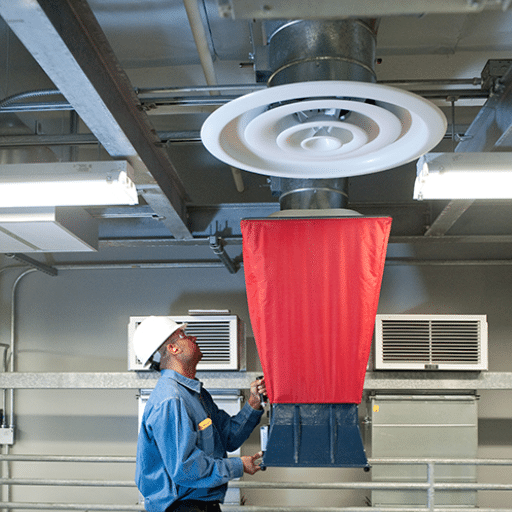
How to Use Dampers for Air Balancing
Balancing the air distribution is a vital process that enhances the overall functioning of the HVAC systems. This process can be made by providing an equal amount of air to all parts of the building. Dampers are defined as the adjustable plates inside the duct systems. They are essential in manipulating and regulating air movements. In order to make an adjustment to the flow of air with the application of dampers, certain steps or factors must be put into consideration.
①
Check Up on the Damper Locations
Once you have visualised the layout of the ducts within the system, proceed to locate the damper openings. They are normally found as handles or dials sticking out of the ducts near the grilles or in some other regions.
②
Assess Airflow
Vent levels should be measured using an air velocity meter or an anemometer to get the exact airflow at each respective point. The measured airflow must ideally adhere to the specified design quantity requirements of the installed HVAC system. For instance, the majority of home air conditioning units have a design supply airflow of about 400 cubic feet per minute (CFM) for every ton of cooling loads.
③
Dampers Changes
Now that it has been explained how to balance hvac system with the previously mentioned methods, adjustments can be carried out from airflow patterns and pressure gradients depending on demand. Every damper should be incrementally adjusted – be it opening or closing the damper – to increase or decrease the volume of air flow inside any room. The purpose of air flow balancing is to assume the orders of hot and cold in a room. In between, also care should be taken as not to close so much the dampers for, in an extreme situation, excessive pressure would be developed in the supply gases systems which can have negative effects including but not limited to inefficiency or bruises in the component or appliance.
④
Re-Crossed Measurements
This is a gain or loss of air and after each of this step, airflow from each vent is being gotten again to bring things into balance if there are distortions incurred. A net drift may accumulate, thus the adjustments may be repeated to instill the precise balance.
⑤
Observe The Unit Operation
Upon completion of balancing, for few days longer, the unit. It is too early yet to state that there are no over-therm or over-cool zones and the operation is reasonably free of audible ring and other wasteful abnormalities.
Getting the proper distribution of air in different sections of a building using dampers may sound important in spinning tower fans within big buildings but is more crucial. This is so because if there is an imbalance in the release of air throughout the structure, this often translates into energy inefficiency. This in turn is why the balancing of the air systems and equipment is done even at a computer simulation level every few years to boost energy evacuation systems. Statistics indicate that if systems are properly balanced, then energy consumption might decrease by up to 10-15 percent therefore saving more on costs over a long period of time.
There are several ways to balance HVAC systems. These include balancing the equipment manually using extreme patience and training, balancing the system using a computer program as well as optimizing the system dynamically. In this article, I am going to address balancing the system using dynamic parameters for optimization.
Adjusting Pump Speed for Optimal Performance
Knowing when and how much to adjust the speed of a pump is a key aspect of energy efficiency, as well as improving performance of the equipment. It is accomplished by employing a variable frequency drive (also known as VFD) to control the speed of the pump in order to balance the capacity provided by the pump(s) with the load. Practically, much energy can be saved by slowing down the rotation in low-year period as the power decreases significantly with reduction in speed. As an example, in certain findings, about 87% energy savings can be achieved if a pump’s speed is reduced by half.
Regarding the issue of how to balance HVAC systems one must note that it has been established that HVAC systems with VFD-controlled pumps have the advantage of being able to save 20-30% of the energy costs in comparison to the conventional fixed-speed systems. Moreover, factor improvement of using the pump loosely means changing the gap between the pump and the other elements and due to this fact, the pump parts do not wear away thus increasing the longevity of the equipment as well as cutting down on maintenance expenses. Sophisticated control systems could utilize the latest real-time information and estimation techniques that are often used by algorithms optimizing pump operations even more to enable both reliability and sustainability.
Today’s technology and tightly kept operating requirements allow the building systems to have or sacrifice less operational expenses and/or produce lesser environmental costs.
Testing System Balance After Adjustments
Once modifications have been made, testing the balance of the system necessitates the observation of the functional parameters, in real time, for eliminating any non-functional operations. I shall be checking flow rates, pressure annotations, energy usage among others to affirm no deviation from expected operational limits. I would also employ information from the control system on how to balance hvac system if any irregular situations are in existence and if it is compulsory to effect more adjustments to balance the system.
Common Challenges in Hydronic Balancing
The bigger part of hydronic balancing is technical since challenges are numerous but they all converge to technicians or engineers. The five most common examples and in most cases details are provided, as well as the relevant data when they can be used are:
🏚️ Outdated or Ineffectively Designed Systems
Quite a number of hydronic systems are composed of years old designs, which may not be effective, efficient or performant in the current times, and technology and science had evolved. Embedded awkward designs can further waste heat or cooling and make it hard to balance out the system as intended. As an illustration, According to a case presented by Energy Efficiency Reports, infirmities in functionality of thermodynamic systems indirectly waste about 40% of aging parts of buildings.
💧 High Flow Rates
Regulating the flow rates in the system is very vital, however, altering the setting of the valves or maybe changing the adjustments of the pumps process tends to be rather very easy and making working the system few levels over or under the given range. Several results obtained by the HVAC Performance Metrics Association Monitoring syst Where the existence of the poor correction flow rate consumed among ra showing controls every other system that demands 25% of the energy than that the correctly balanced one. Understanding how to balance hvac system mainly involves ensuring that air is combated/depressed within the system.
💨 Air Pockets
In the case of pipes water flow may be impeded as a result of formation of air pockets; therefore the hydronic balancing is then in jeopardy. Since entrapped air stimulates the elevation of the system and uneven distribution of temperatures, the frequently makes it necessary to vent the system regularly.
🔧 Inadequate Tools
Duties of accurate balancing require instruments suitable for any accurate measurement of the flow rate, and pressures observed. The majority of those involved in balancing of systems have neither equipment, nor any manometers or flow meters, which can guarantee sufficiently accurate results, and thus there are problems in the very process of performing the balancing.
🔄 Dynamic Distribution System
There can also be variations in the balancing of hydronic systems as these systems are sometimes operated under dynamic conditions. There can be varying single or multiple factor situations such as change of users of the building, changes in weather patterns, fluctuations in business hours, etc., which can always vary the required temperatures and flow rates that make it impossible to achieve balance at all points which are space over time.
The updated designs, new tools that are more advanced and monitoring that is proactive helps professionals overcome these challenges so that the performance and efficiency of hydronic systems can be improved.
References
- Danfoss: Basics of Hydronic Balancing and Types
A comprehensive guide on hydronic balancing solutions and their implementation. - Ebara Pumps: Balancing Hydronic Systems
Detailed insights into balancing hydronic systems for comfort and efficiency. - TSI Incorporated: Hydronic System Balancing
A resource on mastering tools like balancing valves and flow meters for precise adjustments.
❓ Frequently Asked Questions (FAQ)
❔ How do I balance my air conditioning system?
It is important to understand how to balance an air conditioning system in order to maintain efficient operation over its life span. Start from the size and construction of your unit and check for equal distribution of flow among the units. Then, see if the system’s net water flow, expressed in gallons per minute – GPM, is balanced to each arm of the hydronic system. Close or open balancing valves in proper order to shutdown the heat effectively throughout a given region.
❔ How does one balance a hydronic system correctly?
There is a correct order of steps that must be taken when performing hydronic balancing. You have to determine the flow rate that is required by each of the devices. Purchase a flow sensor to the strategic ground and assess the flow, then vary the balancing valves so that there is balance. This exerts control over the heating levels or cooling energy in a given space.
❔ In which parameters are all your heating and cooling appliances made?
The efficacy of your central heating and air conditioning system is determined by several factors, including the size of equipment present, ductwork arrangement, and condition of the equipment as well. Furthermore, use of appropriate balancing valves and correct positioning of the dampers is also equally effective in achieving equilibrium of the system so that every area gets the required heat/air.
❔ What is the functioning principle of balance valves in a hydraulic system?
Balance valves affect the dynamics within a hydraulic system by adjusting the flow of fluid. There are manual adjustments of the valves to either bypass or direct fall a branch’s heating or cooling needs. The resulting deviation facilitates the heating of the areas which is appropriate for the function, thereby improving the effectiveness of the system. Balancing valves enable the regulation of the temperature in the entire building by limiting the flow in some parts.
❔ Under what conditions do I need to seek the services of a professional technician how to balance hvac system?
It is advisable to avoid experimenting with the system, especially if there are instances of uneven distribution, or other deficiencies interfering with the optimum comfort level of the system. Qualified and certified, the technician will provide all the necessary analysis and installation needed to optimize functional efficiency of the cost effective hydronic system. Experienced technicians will be able to assist you to the utmost when it comes to energy efficiency in the house and preservation of heat.
❔ What use does a flow meter have in the context of hydronic balancing?
In the hydronic balancing process, a flow meter is used to calculate the flow of water within the system, which aids in the balancing of the flow rates. Thus, by measuring the flow in Cubic Feet per Minute (CFM) or liters per second (L/s), one can determine whether any balancing valves need adjustment. It is very important to have this information in order to keep the system operating within the expected limits while efficiently delivering the heat to all of the areas.
❔ Is it Possible for Me to learn how to balance hvac system without engaging professionals?
Although a homeowner can learn how to balance hvac system on his/her own, it is quite a complicated task that necessitates knowledge of hydronic systems and design of such system. It implicates calculating flow rates and adjusting the valves and dampers manually. If these operations are foreign to you, it is advised to seek expert intervention to mitigate problems.
❔ What is the impact of less than optimal balance on the use of energy?
When an HVAC system is unbalanced, it will cause an excessive usage of energy. For example, if there is heat surplus in some areas while others experience scarcity, the system will tend to operate more in effort to balance the heat loads, which is inefficient. A condition referred to as frequent short-cycling will increase the average gas bill or cause premature replacement of the equipment in the short-term. Balancing an HVAC system efficiently¸utilizes only necessary amounts of energy and enhances HVAC equipment durability.
🎯 Final Thoughts
Mastering how to balance HVAC systems is essential for achieving optimal comfort, energy efficiency, and system longevity. By following this comprehensive step-by-step guide, you can ensure your hydronic system operates at peak performance while minimizing energy costs and environmental impact. Whether you’re a professional technician or a motivated homeowner, the principles and techniques outlined here will help you create a balanced, efficient HVAC system that serves your needs for years to come.







