

RoHS and REACH Compliance for IoT Hardware: What European Buyers Must Verify
Sophie Laurent had two documents open side by side on a Monday morning in Lyon. Both said “RoHS compliant.” Both carried a logo, a date, and a signature. Her supplier had sent them as proof that a shipment of connected environmental monitors met the rules for the European market. One document was a supplier’s own statement that nothing in the device was restricted. The other was an accredited laboratory’s measurement of the exact materials in the product. They looked almost identical. They proved completely different things.
This is the gap where most sourcing problems in connected hardware begin. RoHS and REACH are two different regulations, measured two different ways, and a device can pass one while quietly failing the other. For any buyer importing IoT hardware into Europe, knowing the difference is not academic. It decides whether a shipment clears customs, survives a retailer audit, and stays on a customer’s shelf.
This guide gives importers, procurement teams, and compliance managers a plain-language framework. You will learn the 10 RoHS restricted substances, why REACH SVHC declarations matter for cables and gaskets, the difference between a Declaration of Conformity and a test report, and exactly what to demand from a supplier. By the end, you will be able to tell evidence from decoration in a single page.
Sourcing connected hardware and unsure what documentation to request? See how Black Ant provides RoHS and REACH documentation for its smart manhole cover range.
What Is RoHS Compliance for an IoT Device?
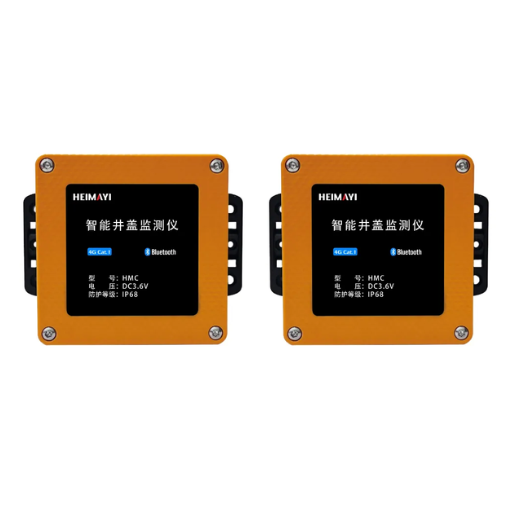
RoHS compliance means an IoT device, and every homogeneous material inside it, stays below the European Union’s maximum concentrations for 10 restricted substances. The rule sits in Directive 2011/65/EU, amended by Delegated Directive (EU) 2015/863, often called RoHS 2 and RoHS 3. A connected device can’t carry the CE mark without it.
The limits apply per homogeneous material, not to the whole product. A solder joint, an IC lead frame, or a plastic housing each gets its own pass or fail. A device weighing two kilograms still fails if one tiny brass connector contains too much lead.
The 10 Restricted Substances and Their Limits
The list is short and fixed. Nine substances are capped at 0.1% by weight; cadmium is stricter.
| # | Substance | Symbol | Max concentration (per homogeneous material) |
|---|---|---|---|
| 1 | Lead | Pb | 0.1% (1,000 ppm) |
| 2 | Mercury | Hg | 0.1% (1,000 ppm) |
| 3 | Cadmium | Cd | 0.01% (100 ppm) |
| 4 | Hexavalent chromium | Cr6+ | 0.1% (1,000 ppm) |
| 5 | Polybrominated biphenyls | PBB | 0.1% (1,000 ppm) |
| 6 | Polybrominated diphenyl ethers | PBDE | 0.1% (1,000 ppm) |
| 7 | Bis(2-ethylhexyl) phthalate | DEHP | 0.1% (1,000 ppm) |
| 8 | Butyl benzyl phthalate | BBP | 0.1% (1,000 ppm) |
| 9 | Dibutyl phthalate | DBP | 0.1% (1,000 ppm) |
| 10 | Diisobutyl phthalate | DIBP | 0.1% (1,000 ppm) |
The last four, all phthalates, were added by (EU) 2015/863 and have applied since 22 July 2019. They are the substances most often missed, because older test reports and older supplier declarations predate them.
If your project also involves underground or gas-exposed hardware, our certification guide explains how RoHS sits alongside ingress protection and load-class standards.
RoHS vs REACH: Two Regimes, Two Rules
Here is the mistake that costs buyers the most: treating RoHS and REACH as the same thing. They are not, and passing one does not pass the other.
RoHS is a ban. It lists 10 substances and forbids them above the limit. REACH, under Regulation (EC) 1907/2006, is mostly about communication and tracking. For its Substances of Very High Concern, or SVHCs, REACH doesn’t ban the substance. It requires you to disclose it, track it, and keep records.
The two also measure differently. RoHS checks concentration per homogeneous material. REACH checks concentration per article at 0.1% weight by weight. In 2015, the Court of Justice of the European Union confirmed in Case C-106/14 that an article is assessed on its own, not averaged across the whole product. The principle is remembered as “once an article, always an article.”
| RoHS | REACH (SVHC) | |
|---|---|---|
| Legal basis | Directive 2011/65/EU (+ (EU) 2015/863) | Regulation (EC) 1907/2006 |
| Measured per | Homogeneous material | Article |
| Duty | Ban above the limit | Communicate, notify, track |
| Number of substances | 10 restricted | 253 on the Candidate List |
| Scope | Electrical and electronic equipment | All articles on the EU market |
| Key document | Declaration of Conformity + technical file | Article 33 declaration + SCIP number |
Why a RoHS-Compliant Device Can Still Breach REACH
Consider a real pattern. A board is designed, tested, and documented as fully RoHS-compliant. Lead-free solder, compliant components, clean test reports. The device ships with a soft PVC cable whose insulation contains DEHP above 0.1% by weight.
The cable is an article. DEHP is on the Candidate List. Suddenly the device carries a REACH duty the buyer never planned for, even though every RoHS document is genuine and correct. This is why the paperwork must reach the module, the cable, and the gasket, not just “the product.”
What REACH Requires from Hardware Suppliers
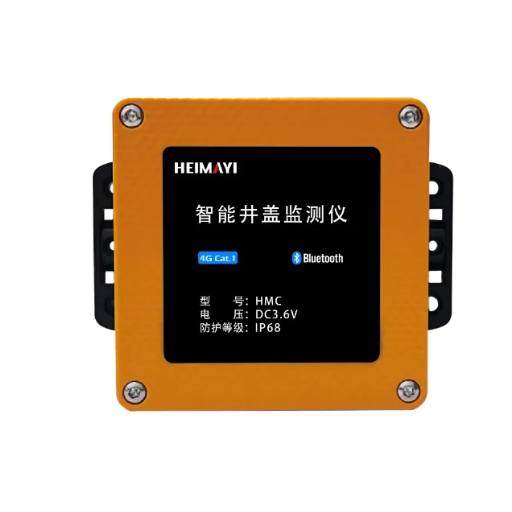
REACH obligations run on their own clock, separate from RoHS entirely.
The SVHC Candidate List
ECHA maintains the Candidate List of substances that may harm human health or the environment. As of 4 February 2026 it holds 253 entries, and it is updated roughly twice a year, in January and July. A declaration of compliance is only meaningful if it is anchored to a specific version of this list, not to a vague claim of being “currently compliant.”
Article 33 and the 45-Day Rule
If an article contains an SVHC above 0.1% w/w, the supplier must give the recipient enough information to use it safely, including the substance name. A consumer who asks must receive an answer within 45 days. This duty applies to EU importers and distributors, which is precisely why an importer needs the data from the factory before the goods arrive.
SCIP and Why It Is Not an Alternative to REACH
Since 5 January 2021, the Waste Framework Directive requires a separate SCIP notification to ECHA for articles containing an SVHC above 0.1% w/w. Each submission generates a SCIP number. This isn’t a replacement for Article 33. It’s an additional duty, and it is one that many buyers discover only after a customer asks.
Where SVHCs Hide in Connected Hardware
The risks cluster in a few predictable places. Phthalates such as DEHP appear in soft PVC cable insulation, gaskets, sleeving, and labels. Lead shows up in solder and brass. Brominated and chlorinated flame retardants sit in enclosures. For a sensor-bearing device, these parts matter as much as the board.
Wondering which module in your device carries the exposure? Our guide to smart manhole cover sensors explains the sensing stack and its materials.
Declaration of Conformity vs Test Report vs EN IEC 63000
Three documents get confused constantly. They aren’t interchangeable, and only one of them is a legal requirement.
The Declaration of Conformity, or DoC, is the legal output. Under RoHS it must reference the correct directive, name the precise product, and be signed by the manufacturer or authorized representative. Customs and retailers can demand it.
EN IEC 63000:2018 is the framework. It is the harmonized standard that tells a manufacturer how to assemble the technical documentation behind the claim. It replaced EN 50581:2012, which was withdrawn on 18 November 2021. A current DoC should cite EN IEC 63000:2018, not the older standard.
A test report is only one possible input. It comes from a laboratory and shows measured concentrations, usually according to the IEC 62321 series. Under EN IEC 63000, a manufacturer may gather evidence from supplier declarations, material declarations such as IEC 62474, or analytical test results. The choice is risk-based, and a single document type is rarely enough for a high-risk component.
| Document | What it is | Legal status | What it proves |
|---|---|---|---|
| Declaration of Conformity | The signed legal declaration | Required | The manufacturer claims conformity |
| EN IEC 63000 technical file | The documentation framework | Harmonized standard | How the claim was assembled |
| Test report | Laboratory measurement (IEC 62321) | One optional input | Actual concentrations in a material |
The Phthalate Blind Spot
Many buyers assume a factory XRF scan settles the question. It does not. XRF screening detects heavy metals such as lead, cadmium, mercury, and chromium, plus bromine. It cannot detect phthalates. Those require chemical analysis under IEC 62321-8. This is exactly how a cable slips through a “compliant” verdict.
What to Demand from a Supplier (and How to Check It)
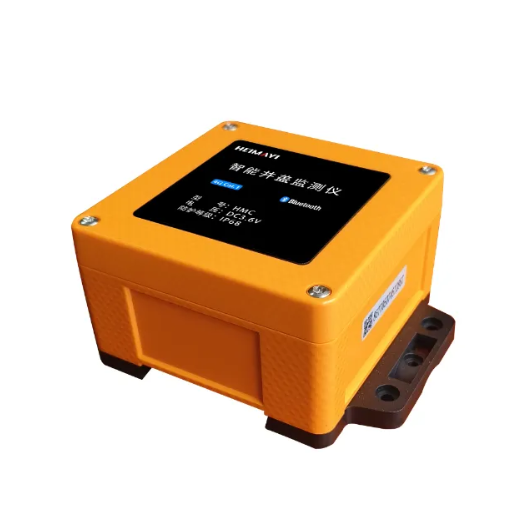
When Daniel Kuipers, a procurement lead in Rotterdam, received a one-page “RoHS compliant” certificate for a batch of connected meters, he asked one question: which model does this cover? The supplier could not say. The certificate named no product, cited no test method, and carried no authorized signature. Daniel rejected the batch and rebuilt the requirement from scratch.
The lesson generalizes. Use this sequence for every supplier.
- Demand the EU Declaration of Conformity and confirm it names the exact model or SKU.
- Ask for the EN IEC 63000:2018 technical documentation, not just a certificate.
- Request material declarations in a standard format such as IEC 62474 or IPC-1752A, covering the sub-assemblies: sensor module, cable, gasket, and cable gland.
- For higher-risk parts, require IEC 62321 test reports from an ISO/IEC 17025-accredited laboratory.
- Confirm the report references your exact model, batch, and revision, not a sibling product.
- Reassess at each Candidate List update, twice a year.
Red Flags That Should Stop a Purchase
A generic one-page declaration with no substance data proves nothing. So does a test report that covers only the original six substances and ignores the four phthalates, or one dated more than about twelve months ago with no evidence of re-testing. Watch for references to obsolete directives such as 2002/95/EC, missing model numbers, and unsigned statements. Any of these means the compliance program has not been maintained.
China RoHS Is Not EU RoHS
Chinese suppliers often provide a GB declaration. China’s regime uses its own concentration-limit standard, GB/T 26572, and a conformity-assessment approach in GB/T 37876, with a self-declaration model and an environment-friendly-use-period marking. It isn’t the same as an EU DoC and doesn’t replace one. When you import into Europe, you need EU documentation, not just a Chinese certificate. For a deeper look at this distinction, see how to verify a Chinese smart manhole cover manufacturer.
Need hardware whose documentation holds up? Explore Black Ant’s IoT data collection terminals and their compliance pack.
RoHS and REACH Compliance Across Black Ant’s Connected Devices
Documentation is only as good as the manufacturer behind it. A supplier that builds the sensor module, the board, the cable, and the enclosure in-house can trace materials to the source, which is what any RoHS or REACH claim ultimately depends on.
Black Ant manufactures the full connected range in Beijing under ISO 9001 and ISO 14001 quality and environmental management. That range includes smart manhole covers, IoT data collection terminals, environmental monitoring stations, and edge data acquisition computers.
For importers and OEM partners, the practical value is the sub-assembly view. Because the module, cable, and gasket are produced under the same roof, material declarations can cover each one rather than stopping at the finished product. That is the difference between paperwork that passes an audit and paperwork that merely sits in a folder.
- RoHS and REACH declarations prepared to reference the correct directives and standards
- Documentation scope that reaches the sensor module, cable, and gasket
- CE documentation supplied alongside RoHS material, since RoHS is one input into the CE file
- OEM and ODM support, including private-label branding and documentation in your language
For distributors building a private-label range, our smart manhole cover OEM page explains how custom documentation is handled.
Frequently Asked Questions
Is RoHS the same as REACH?
No. RoHS restricts 10 substances in electrical and electronic equipment and is enforced through the CE mark. REACH is broader, covers all articles on the EU market, and for SVHCs requires disclosure and tracking rather than a ban. A product can comply with one and not the other.
Do I need a test report, or is a declaration enough?
A declaration is a claim; a test report is evidence. Under EN IEC 63000:2018, evidence can come from supplier declarations, material declarations, or analytical tests, chosen by risk. For high-risk parts and for products with soft PVC cables, a declaration alone is usually not enough.
What are the 10 RoHS restricted substances?
Lead, mercury, cadmium, hexavalent chromium, PBB, PBDE, and four phthalates: DEHP, BBP, DBP, and DIBP. Nine are limited to 0.1% per homogeneous material; cadmium is limited to 0.01%.
What is the REACH SVHC threshold?
0.1% by weight, assessed per article. The Candidate List held 253 entries as of 4 February 2026 and is updated about twice a year.
What is the SCIP database, and is it the same as REACH?
SCIP is a separate notification duty under the Waste Framework Directive, required since 5 January 2021 for articles containing an SVHC above 0.1% w/w. It does not replace the REACH Article 33 duty; it adds to it.
Is China RoHS the same as EU RoHS?
No. China RoHS uses different standards and a self-declaration model with an environment-friendly-use-period marking. It does not replace an EU Declaration of Conformity for goods placed on the European market.
How long is RoHS documentation valid?
RoHS requires the technical documentation and DoC to be kept for 10 years. But compliance is tied to specific materials and production runs. If components change, or the Candidate List is updated, the documentation needs to be reassessed, not simply retained.
Conclusion
Sophie Laurent in Lyon learned to stop reading the logo and start reading the model number, the directive reference, and the test method. That single habit separates a buyer who gets burned from one who does not.
The framework is simple to remember. RoHS bans 10 substances per homogeneous material; REACH tracks 253 per article and asks you to disclose, not just avoid. A Declaration of Conformity is the legal output, EN IEC 63000 is the framework, and a test report is only one input. Demand all of it down to the sensor module, the cable, and the gasket, and reassess twice a year as the Candidate List grows.
Substance compliance is a process, not a certificate. Importers who build that process into their purchasing now will be the ones whose hardware clears customs, satisfies their customers, and stays on the shelf as the rules tighten.
Ready to verify before you buy? Download Black Ant’s RoHS and REACH documentation request pack or contact our engineering team to confirm the declaration scope for your connected product. To learn more about CE Certified Smart Manhole Cover: The European Procurement Guide, please click to refer to our accompanying guide.







