

Ultrasonic vs. Electromagnetic Flow Meters for Industrial Water: A Comprehensive Comparison
Introduction

The two technologies deliver precise results which maintain operational reliability yet their effectiveness depends on the specific characteristics of fluids and the conditions where they will be used and the expenses that must be covered. The proper flow meter selection process for your system requirements begins with learning about the core principles and benefits of each flow meter.
The Importance of Accurate Flow Measurement
Multiple industries need accurate flow measurement because it provides essential value which supports their operations and product standards and their need to follow regulations. The five essential reasons which demonstrate the importance of accurate flow measurement explain its vital role in operations.
- 1
Process Efficiency
The system achieves its highest performance through proper flow measurement which combines optimal energy use with minimal resource waste. - 2
Product Quality
Various industries, including food and beverage, pharmaceuticals, and chemical manufacturing, need to maintain steady flow rates for their products to remain consistent throughout their production processes. - 3
Cost Control
Accurate flow monitoring enables organizations to pinpoint operational inefficiencies which lead to revenue losses while decreasing expenses through precise cost control of their pipeline operations. - 4
Environmental Compliance
The accurate measurement process enables organizations to meet environmental regulations by maintaining their emissions, discharges, and resource consumption within acceptable limits. - 5
System Reliability and Safety
The system generates alerts through flow rate changes which enable operators to identify potential system problems and perform necessary maintenance to prevent equipment failures and operational interruptions.
Current State of Industrial Water Flow Measurement
The current industrial water flow measurement system requires modern technological solutions which can deliver the required high accuracy measurement results. The existing systems employ various flow measurement techniques which consist of ultrasonic meters and electromagnetic flow meters and Coriolis meters. The systems deliver industrial applications with their enhanced accuracy which enables system growth and operational reliability.
Market Growth Rate
5.8%
CAGR (2023–2030)
Ultrasonic ROI
6 mo.
Typical retrofit payback
EM Error Detection
95%
vs. mechanical systems
According to recent industry reports the global water flow meter market will achieve a 5.8 percent compound annual growth rate between 2023 and 2030. The market growth results from companies which implement automated systems requiring water conservation methods and environmental regulations demanding accurate water and emission measurement.
Ultrasonic flow meters have become popular because their sound wave technology measures water velocity through non-invasive installation methods which decrease both downtime and maintenance requirements. The market for electromagnetic flow meters maintains its leadership position because these devices provide exceptional accuracy in testing conductive fluids used in water treatment plants and chemical production facilities.
Digital integration has further transformed the industry through advanced flow meters today which include IoT capabilities. Organizations use these smart meters to gather real-time information which they can monitor from a distance and use to forecast maintenance needs while discovering ways to boost their operational productivity. The utilities use their immediate access to information which enables them to detect leaks or operational problems that result in water loss.
The current technological advancements have not overcome two main obstacles which include expensive installation for particular technologies and the requirement for skilled operators to handle advanced system operations. The development of industrial water flow measurement systems continues to progress because sustainable water management methods and intelligent water management systems have become essential for water management systems.
Core Technical Comparison
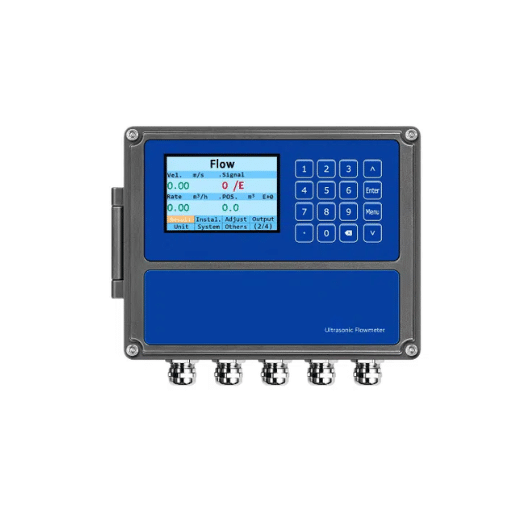
The current assessment of industrial water flow measurement technologies used in modern industrial applications relies on three primary measurement systems which are electromagnetic flowmeters and ultrasonic flowmeters and differential pressure flowmeters. Each system operates differently which results in distinct advantages for its particular operational circumstances.
Comparative Insights
- ✓
Electromagnetic flowmeters measure flow with extreme accuracy which they maintain for their entire operational lifespan. The technology remains inaccessible to small businesses because of its high acquisition costs. - ✓
Ultrasonic flowmeters enable quick installation through their non-destructive methods, but they face difficulties when testing fluids that include solid particles and air bubbles. - ✓
DP flowmeters remain popular among users because they provide affordable solutions that enable multiple uses, although users must perform system upkeep.
Technology Performance Data
| Technology | Key Metric | Value |
|---|---|---|
| Electromagnetic | Error detection vs. mechanical | Up to 95% |
| Ultrasonic | ROI in retrofitting scenarios | Within 6 months |
| DP Flowmeters | Cost vs. electromagnetic | 30–40% lower initial cost |
Working Principles and Technology
Ultrasonic Flowmeters
Ultrasonic flowmeters use sound waves which travel through fluids to measure flow rates. The devices calculate measurements by measuring the duration which sound waves need to travel through the fluid in both upstream and downstream directions. The system uses time measurement to determine flow rate which offers precise results without requiring actual system access. According to recent studies modern ultrasonic flowmeters achieve accuracy levels that reach ±0.5% while effectively measuring the flow of liquids gases and steam. They are particularly favored in retrofitting scenarios since they do not require a direct pipeline cut which helps to maintain system components and decrease operational outages.
Differential Pressure (DP) Flowmeters
DP flowmeters use Bernoulli’s law which states that pressure lost from one point on a pipe decreases across all pipe sections. The resulting differential pressure establishes a direct relationship with the flow rate. Industries prefer these flowmeters because they offer low-priced solutions which users can operate without needing advanced technical skills. Recent advancements have improved their operational capabilities which resulted in lower measurement errors that research indicates achieve an accuracy rate of ±1%. DP flowmeters serve as the perfect solution for industries that need economical options which maintain high levels of system dependability.
Electromagnetic Flowmeters
Electromagnetic flowmeters use Faraday’s Law of Electromagnetic Induction to measure flow rates in conductive fluids. A magnetic field generates a voltage when a conductive liquid flows through it which depends on how fast the liquid moves. The flowmeters demonstrate high accuracy which allows their operation within an error range of ±0.2–0.5%. The recent product enhancements include smart technologies which allow users to monitor their systems from distant locations while they receive current system status updates.
Fluid Compatibility: Conductivity and Particulates
Flowmeters need to function effectively when they encounter all different liquid types present in multiple industrial applications. The usability of specific flowmeter types depends on their primary property which is conductivity. The operation of electromagnetic flowmeters requires an essential minimum conductivity threshold which typically falls between 5 µS/cm for accurate measurement and system functionality. The equipment operates effectively with all conductive liquids which include water and slurries and sewage but it cannot function with non-conductive fluids which include oils and distilled water.
Flowmeters use their operational principles to create designs that enable them to handle different levels of particulate matter. Ultrasonic and Coriolis flowmeters demonstrate exceptional performance because they can detect both clean liquids and liquids containing suspended particles up to high viscosity levels. The industry report shows that ultrasonic meters can measure fluids which contain up to 30% particulate matter without losing reliability in operations which require demanding performance during wastewater treatment and chemical processing.
The latest developments in flowmeter technology enable better management of non-homogeneous mixtures because their conductivity and particulate content levels change throughout the process. The system achieves accurate measurements through its combination of real-time data monitoring and advanced signal processing technology which operates successfully even in difficult environments. The system achieves operational flexibility through its fluid compatibility focus which enables industries to reach their goals of establishing optimal control and achieving operational efficiency.
Accuracy and Flow Range
The flowmeter accuracy determines its capacity to deliver correct and reliable performance across multiple operational scenarios. Modern flowmeters that utilize electromagnetic and ultrasonic technologies achieve measurement accuracy which reaches ±0.1% of the actual measured value. Industrial electromagnetic flowmeters maintain their precise performance when they encounter conductive liquids and non-homogeneous liquids which contain slurries. The thermal mass flowmeters deliver precise gas measurements which reach an accuracy level of ±0.5% under controlled testing conditions.
The flow range requirement represents a critical operational need for industries which operate at both high and low flow volumes. Modern flowmeters can measure their complete operational range because they function with turndown ratio which ranges from 100:1 to their total measurement capability. Ultrasonic flowmeters function at flow rates which begin from a few milliliters per second and reach multiple thousand liters per second making them suitable for pipeline monitoring and chemical processing applications.
The combination of digital signal processing with real-time calibration methods has brought enhancements to both measurement accuracy and system performance capabilities. Recent data demonstrates the way IoT-enabled sensors and machine learning technologies combine to improve flow measurement accuracy by decreasing errors from fluid turbulence and particulate interference and pipeline vibrations. These advancements create operational efficiencies, ensure compliance with regulations, and maintain budgetary efficiency throughout the water treatment and oil and gas and pharmaceutical sectors.
Installation Requirements: Pipe Runs and Material
The installation process of pipe flow measurement devices needs precise pipe run configuration and correct material choice to succeed. The industry guidelines establish that operators should keep their flow meter system piping straight for both upstream and downstream sections to achieve optimal flow measurement results. The system requires at least 10 pipe diameters of straight upstream piping and 5 pipe diameters of straight downstream piping which must remain clear of all bends and valves and fittings to achieve stable flow measurement through the system.
⚠ Installation Warning
Recent industry reports demonstrate that measurement errors between 5% and 10% occur because of inconsistent pipe materials or improper pipe runs. Studies show that creating a laminar flow profile improves measurement accuracy by 15% in high-flow situations and turbulent conditions.
The selection of suitable piping materials stands as the primary requirement for accurate measurement results which need to maintain operational stability throughout their lifespan. The market uses stainless steel and PVC and high-performance plastics because these materials provide protection against both corrosion and abrasion and extreme temperature conditions. The pharmaceutical and food processing industries select stainless steel because it offers both hygiene protection and contamination resistance, while water treatment facilities use PVC because it provides cost-effective chemical corrosion resistance.
The implementation of proper pipe installation techniques stands as the crucial factor which determines the operational efficiency and system reliability of flow metering equipment.
Maintenance and Long-Term Costs
The industrial sector achieves cost savings through proper maintenance of flow metering systems because they prevent operational interruptions and increase equipment durability. The system needs its parts to undergo scheduled inspections together with calibration and cleaning work because these actions prevent dirt build-up and help the system function correctly. The calibration schedule for flow meters should occur at regular intervals because industry data shows that uncalibrated flow meters lose 1–2% accuracy for each year they remain uncalibrated.
25%
Maintenance savings via real-time monitoring & self-calibration
20%
Energy consumption reduction with energy-efficient designs
1–2%
Annual accuracy loss per year without calibration
The long-term expenses of operating flow meters depend on their construction materials which determine their strength. Equipment replacement costs decrease when stainless steel and high-grade alloys serve as corrosion-resistant materials because they reduce the need for equipment replacement. The provided options enable industries that deal with high-pressure situations and chemically dangerous fluids to achieve both reliable operations and greater returns on their investments throughout their operating period.
Specific Use Cases

Water and Wastewater Treatment
Flow meters serve an essential function for water and wastewater treatment facilities because their precise flow measurement systems enable operators to better manage resources while meeting their regulatory requirements. The flow meters which provide operational efficiency verification help the sector with their water distribution and filtration processes and chemical dosing operations. The systems use electromagnetic flow meters because these devices maintain their accuracy for measuring flow in conductive liquids when operating under extreme conditions.
The recent research results demonstrate that water treatment plants which use modern flow monitoring systems experience operational efficiency increases of up to 15 percent while their water loss rates decrease significantly. Digitalized flow meters which integrate with IoT systems enable continuous data gathering and remote system supervision, which enhances operational choices and enables maintenance forecasting, so organizations can achieve higher availability rates.
20%
International Water Association (IWA)
Smart water management systems, which include accurate flow measurement devices, will reduce annual freshwater losses from leaks and inefficiencies by 20 percent if implemented worldwide.
Cooling Towers and Industrial Processes
Cooling towers serve vital functions in industrial systems because they enable industrial facilities to dispose their operational heat. The towers operate by transferring their waste heat to the outside air while their water system undergoes temperature reduction through the cooling process. The recent research findings show that cooling towers consume around 20 percent of water resources used by major industrial plants which makes them both vital components and water-intensive systems.
Modern cooling tower designs which have been developed through recent design advancements enable systems to function with lower water consumption. Modern closed-loop cooling systems achieve water savings of up to 90 percent when compared with traditional open-loop technologies. The implementation of new water treatment technologies prevents scaling and corrosion as well as microbial growth which leads to longer equipment life and better operational performance.
The U.S. Department of Energy data shows that cooling tower optimization results in energy savings between 2 percent and 5 percent because each 2°F decrease in condenser water temperature. Industries now adopt sustainable methods which leads to the widespread use of smart monitoring systems for cooling tower systems. The systems display water consumption and temperature and efficiency metrics which help businesses decrease their environmental footprint and save money on operational expenses.
Ultrapure Water Applications
Industries and technologies that require supreme cleanliness need ultrapure water as their basic operational need. The following five applications demonstrate the primary uses of ultrapure water:
- 1
Semiconductor Manufacturing
The manufacturing process of semiconductors requires ultrapure water which serves the purpose of cleaning wafers. The presence of any contaminants becomes critical because it can disturb the precise microchip elements which makes ultrapure water essential for achieving precise results. - 2
Pharmaceutical Production
The pharmaceutical industry uses ultrapure water for testing medication safety and effectiveness. The injectable drug formulation process and equipment cleaning procedures and solution preparation process all require equipment which maintains strict purity requirements for contamination protection. - 3
Power Generation
Power plants which operate steam turbines utilize ultrapure water to protect their boilers and cooling systems from scaling and corrosion damage. This process enables equipment to operate at maximum efficiency while extending its operational lifespan and reducing the need for repairs. - 4
Laboratory and Research
Research and laboratory facilities need ultrapure water for their chemical experiments because even small contaminants will disrupt their research results. The scientific studies depend on the highest purity levels to produce accurate and consistent research data. - 5
Solar Panel Production
The solar cell production process requires ultrapure water to support all cleaning and etching processes which make silicon wafers. The final solar panels maintain their operational capacity because the manufacturing process prevents any material contamination.
The essential function of ultrapure water enables industrial sectors to create new technologies while maintaining their operational standards.
Ultrapure Water Systems: Pros and Cons

✓ Pros
- High Accuracy & Contamination Prevention: The semiconductor industry and pharmaceutical production fields use ultrapure water because it delivers high accuracy results while preventing any contamination which would decrease product standards. The research demonstrates that ultrapure water helps achieve 90% contamination reduction during essential operations.
- Improved Equipment Longevity: The use of ultrapure water for steam generators and cooling systems provides better operational performance because it eliminates all contaminants which create equipment faults through scaling and corrosion. The method allows equipment to work beyond its standard usage duration by 20 to 30 percent.
- Water Conservation: Companies that use ultrapure water systems for their operations depend on recycling technologies which enable them to conserve water resources. Certain systems permit up to 80% of ultrapure water to be reclaimed and reused.
- Research Consistency: The laboratories receive essential support from ultrapure water because it enables them to produce consistent experimental results while reducing the impact of contaminants. Scientists need this consistency to establish dependable scientific evidence for their research work.
- Supports Sustainable Energy: The production of solar panels and batteries requires ultrapure water because it helps create effective energy solutions that enable sustainable energy development. The global solar energy market, supported by ultrapure water, is projected to grow by over 20% annually through 2030.
✕ Cons
- The production of ultrapure water requires multiple filtration and purification steps which result in high energy consumption and expensive operational costs.
- The cost to build an ultrapure water production facility reaches millions of dollars because both facility size and technological choice determine its expenses.
- The process of producing ultrapure water needs substantial quantities of untreated water and energy resources which results in extensive resource consumption.
- The production systems which create ultrapure water need special knowledge together with ongoing system evaluations since contamination can happen at any time which makes their operation difficult for small businesses.
- The ultrapure water systems need cleaning and conditioning chemicals for their operation which creates handling and disposal difficulties during production maintenance operations.
- The use of ultrapure water systems remains restricted to advanced industries and research facilities because their high costs and technical requirements create a barrier that prohibits smaller or less-developed sectors from using them.
Advantages and Disadvantages of Ultrasonic Flow Meters
✓ Advantages
- Non-Intrusive Measurement
Ultrasonic flow meters operate without the need for sensors or probes to directly contact the fluid, which helps to decrease equipment deterioration and decrease replacement expenses of equipment. - Wide Range of Applications
These meters can measure liquid and gas and slurry flow in multiple industrial applications which include water treatment and oil and gas and chemical processing industries. - High Accuracy and Repeatability
Ultrasonic flow meters use time-of-flight or Doppler methods to reach their highest accuracy level which measures flow with an error range of ±1% and provides reliable performance throughout different time periods. - No Moving Parts
The system maintains operational integrity because it lacks any functional parts which results in reduced mechanical failures and extended system longevity while preventing both corrosion and clogging problems. - Easy Installation
Clamp-on models allow external mounting because they maintain uninterrupted flow while operating without creating any need for system downtime which makes them suitable for retrofitting purposes and challenging-access installations.
✕ Disadvantages
- High Initial Cost
Ultrasonic flow meters need more money for their initial purchase than traditional flow measurement systems. - Sensitivity to Fluid Properties
The measurement system needs constant observation because any variation in fluid composition or temperature or air bubble presence will create measurement errors. - Limited Effectiveness for Low Flow Rates
The instruments face challenges in measuring flow correctly when they operate at their lowest speed because this restriction stops them from functioning in multiple situations. - Dependence on Proper Installation
The sensor readings will show major errors unless the correct sensor alignment and installation procedures and calibration techniques get verified. - Specialized Knowledge Required
The system needs advanced technical skills for operation and maintenance which creates operational difficulties in facilities without personnel who possess the necessary technical expertise.
Advantages and Disadvantages of Electromagnetic Flow Meters
✓ Advantages
- Electromagnetic flow meters provide accurate measurement results which achieve an accuracy level below 0.5 percent in their measurement range.
- The meters function through their design which uses no moving internal parts and this enables them to operate for extended periods with minimal need for maintenance.
- The system supports multiple fluids including corrosive materials and viscous substances to fulfill the operational requirements of various industrial processes.
- The system enables flow measurement in both directions which becomes necessary for operations that require monitoring fluid movement in different directions.
- The sensors maintain complete pipeline access which results in negligible pressure loss that sustains system operational efficiency.
✕ Disadvantages
- Electromagnetic flow meters require electrically conductive fluids because they cannot measure non-conductive substances which include hydrocarbons and gases.
- The upfront expenses of these meters exceed those of alternative flow meter types which creates difficulties for locations that need to maintain budget limits.
- The system will not achieve maximum efficiency when it operates in conditions of extreme heat or extreme pressure.
- The flow meter needs proper grounding because improper grounding creates significant noise which leads to errors that decrease overall accuracy.
- Electromagnetic flow meters require a steady power source because they need electricity to operate in locations that lack power supply systems.
Side-by-Side Technology Comparison
| Criteria | Electromagnetic | Ultrasonic | Differential Pressure |
|---|---|---|---|
| Accuracy | ±0.2% – ±0.5% | ±0.5% – ±1% | ±1% |
| Fluid Type | Conductive liquids only | Clean & non-conductive liquids | Multiple fluid types |
| Moving Parts | None | None | Yes (orifice plates) |
| Installation | Inline (pipe cut required) | Clamp-on (no pipe cut) | Inline |
| Maintenance | Very Low | Low | Moderate–High |
| Initial Cost | High | Medium–High | Low (30–40% less) |
| Turndown Ratio | High | Up to 100:1 | Limited |
| Best For | Wastewater, slurries, chemical processing | Retrofitting, clean fluids, non-conductive media | Budget-constrained, multi-fluid applications |
Selection Checklist

The selection process for the appropriate flow meter and water system equipment requires assessment of critical elements which will determine operational performance and financial outcomes for the particular application. The following selection process needs to be conducted through this complete checklist.
📈 Application and Medium
- The measurement needs to identify which fluid will be measured with options including water and oil and chemicals and slurry.
- The assessment needs to determine the fluid’s physical characteristics which include viscosity and conductivity and temperature.
- Electromagnetic flow meters provide optimal performance for conductive fluids which include water and slurry while ultrasonic flow meters deliver better performance for clean fluids which do not conduct electricity.
🎯 Accuracy Requirements
- The application needs to have its accuracy standard established through the specification process.
- The different meter types need to be evaluated based on their accuracy ratings.
- Ultrasonic flow meters deliver accuracy results which reach ±0.5% of the flow rate, while electromagnetic meters provide equivalent accuracy results for conductive liquids.
- The expected flow rates need to be determined through assessment of both minimum and maximum flow rate values.
- All operational flow requirements must be met by the selected meter’s turndown ratio. Advanced ultrasonic flow meters use 100:1 turndown ratios which enable operators to manage different flow situations.
🌋 Environmental Conditions
- The assessment needs to evaluate the installation space, which includes both indoor and outdoor settings, and areas where extreme temperatures and corrosive substances might occur.
- We need to select flow meters which employ special coatings or protective enclosures for use in extreme operational conditions.
- Industrial applications require stainless steel equipment which provides protection against corrosion and high-temperature sensors.
💵 Cost Parameters
- The financial analysis requires the inclusion of both initial meter costs and all subsequent operational expenditures.
- The evaluation process needs to include three main factors which are maintenance requirements and calibration frequency and replacement part availability.
- Electromagnetic meters require higher initial expenses than mechanical meters but need less maintenance throughout their operational life.
🔧 Installation Space & Pipe Configuration
- The meter installation needs to determine whether it can fit within the designated space while taking pipe dimensions and installation angles into account.
- The process needs to determine whether straight pipe run requirements exist because they will provide the best performance results.
- Ultrasonic flow meters often need only a small amount of straight piping which makes them ideal for use in limited space arrangements.
🔌 Power & Connectivity
- The system needs to confirm power source compatibility together with its essential output signal requirements which include analog and digital and pulse signals.
- Many modern meters now incorporate wireless and IoT capabilities for enhanced monitoring and data transmission.
✅ Certifications & Compliance
- The flow meter needs to demonstrate compliance with all applicable industry standards and certification requirements.
- ISO 17025 compliance guarantees precise measurements whereas specific models meet FDA and NSF standards applicable to food and beverage testing.
Key Criteria for Choosing the Right Flow Meter
You need to evaluate critical elements together with required data when you want to select the best flow meter for your business operations. The processes will achieve accurate results through efficient operations when you implement these criteria together with current technological advancements.
| Criterion | Key Consideration | Notable Benchmark |
|---|---|---|
| Flow Range & Accuracy | Must cover all operational min/max rates; sensor must minimize errors across conditions | ±0.5% – ±1% depending on meter type |
| Fluid Characteristics | Consider viscosity, density, chemical composition; match meter materials to fluid | Min. conductivity 5 µS/cm for EM meters |
| Environmental Conditions | Temperature, pressure, particulate matter, IP rating for outdoor use | -40°F to over 400°F (-40°C to over 204°C) |
| Connectivity & Integration | IoT sensors, Bluetooth/Wi-Fi options; real-time monitoring, remote diagnostics | Modbus, HART, Profibus compatibility |
| Installation Requirements | Space restrictions, pipe access; clamp-on vs. inline | Ultrasonic needs minimal straight piping |
| Cost & ROI | Balance initial cost vs. long-term savings from accuracy, longevity, reduced maintenance | Thermal mass meters: higher upfront, lower gas ops costs |
| Certifications & Compliance | Must meet ISO 17025, FDA, NSF, or ATEX as applicable | NSF-certified EM meters for potable water |
| Customization | Bidirectional measurement, batch control, alarm systems, self-calibration | Self-calibrating models reduce downtime |
Organizations can reach their operational requirements through decision-making based on these criteria together with the most recent flow meter technology advancements. The validation of your selection needs to be performed by manufacturers or industry experts to establish its appropriateness for your specific operational requirements.
Frequently Asked Questions (FAQ)
What are the main differences between electromagnetic and ultrasonic flowmeters?
Electromagnetic flowmeters (magnetic or mag meters) use electromagnetic induction law to create voltage which varies according to the speed of conductive liquid flowing through a complete pipeline system. Ultrasonic flowmeters use ultrasonic waves—either transit-time or Doppler—to measure flow velocity through timing or frequency shift of ultrasonic signals. The two systems differ from each other through their abilities to handle different fluids as magnetic systems detect conductive liquids while ultrasonic systems can detect various liquids which include non-conductive materials. The two systems also differ concerning installation methods because magnetic systems require inline setup while ultrasonic systems use clamp-on installation. The two systems differ from each other because they have different abilities to detect pipe conditions while their flow rate measurement accuracy shows different results.
How does a clamp-on ultrasonic flow meter measure flow without cutting the pipe?
Clamp-on ultrasonic meters use ultrasonic transit time or Doppler techniques to measure fluid velocity through transducer sensors which they attach to the outside of pipes. Transit-time ultrasonic meters send pulses upstream and downstream and compute flow velocity from time differences; they provide accurate measurement for clean liquids. The clamp-on ultrasonic system enables measurement without stopping the process while serving as a practical tool for portable ultrasonic testing and measuring systems which water and wastewater facilities use to obtain non-invasive readings.
When should I choose a magnetic flow meter for water or wastewater?
The selection of a magnetic flow meter for measuring conductive liquids requires you to choose a meter which can measure both water and wastewater and slurries and multiple process streams that need to meet conductivity standards. The flow measurement system of magnetic meters delivers accurate results which depend on flow velocity while requiring almost no maintenance because their design uses no moving parts and the system operates in water treatment and chemical dosing and industrial flow applications through electromagnetic induction which measures liquid flow throughout the entire meter contact area.
What are the accuracy and limitations of ultrasonic and magnetic flow meters?
Electromagnetic flowmeters provide accurate measurements when they operate with conductive fluids that flow through a full pipe at constant speed. Ultrasonic transit-time meters achieve high measurement accuracy with clean liquids that maintain fixed flow patterns; however, their performance decreases with aerated or turbulent fluids. Magnetic meters require specific conductivity levels as their core restriction while ultrasonic meters stop operating when pipe material contacts them and wall attachment occurs and air bubbles enter their system.
How do ultrasonic versus electromagnetic flow meters compare for industrial water applications?
The construction of magnetic flow meters serves as the main selection for industrial water systems because these devices deliver accurate measurements when water displays conductive characteristics while their flow measurement system needs direct installation inside pipes. The ultrasonic meters which include their clamp-on version function as the best solution for non-destructive applications that need installation and retrofitting together with their ability to handle non-conductive liquids. The selection process between ultrasonic systems and electromagnetic systems requires budgeting dial installation requirements and solid or air presence and accuracy needs and system upkeep needs.
Can ultrasonic and magnetic sensors work in the same plant and how do meters work together?
The facility enables the usage of ultrasonic and magnetic sensors because they function on different production lines through distinct operational applications. The best application for magnetic flowmeters occurs in conductive water treatment lines while ultrasonic clamp-on sensors provide portable ultrasonic monitoring. The organizations establish their measurement system requirements through the implementation of both measurement methods because they need to achieve accurate results while managing their expenses and installation needs.
Are clamp-on ultrasonic flowmeters or electromagnetic flowmeters better for low flow or variable flow velocity?
Magnetic flowmeters achieve accurate flow measurements at minimum flow rates when their dimensions match actual operating conditions because their flow velocity produces direct measurement results. Some transit-time ultrasonic and specialized ultrasonic clamp-on meters can also measure low flow but performance depends on pipe size transducer coupling and signal-to-noise ratio. The suitable technology for handling highly variable flow velocity with entrained air or solids requires magnetic technology to handle conductive materials and ultrasonic transit-time technology to manage clean lines and Doppler ultrasonic technology to handle aerated and slurry flows.
What installation, maintenance, and operational differences should I expect between ultrasonic and electromagnetic flow meters?
The installation process requires magnetic meters to be installed through inline pipe cutting whereas clamp-on ultrasonic meters need no pipe access because they can be installed through quick attachment. Magnetic meters need basic maintenance which includes upkeep because their systems function without moving parts except for their need to have electrodes kept clean. The operational requirements force magnetic meters to require conductive liquids whereas they remain functional under all conditions that involve ultrasonic signals through air or foam. The ultrasonic meters can measure non-conductive liquids while their portable ultrasonic options enable temporary surveys through portable equipment. The selection of a meter for your application requires you to evaluate lifecycle costs and process compatibility and desired accuracy.







