

Optimizing Energy Consumption with Ultrasonic Heat Meters
The world today needs to assess and improve its energy use patterns, as effective operations and sustainable outcomes depend on meeting these two requirements. The ultrasonic heat meter system delivers an advanced solution that functions as a vital element for driving this complete transformation. The advanced technology of these devices enables accurate energy usage tracking which allows users to detect energy waste and make precise energy consumption choices. This blog post will explore the key benefits and features of ultrasonic heat meters which demonstrate their ability to improve energy efficiency in residential, commercial, and industrial systems while advancing sustainability objectives. Ultrasonic heat meters function as essential instruments that energy managers, together with property owners and resource-efficient professionals, use to develop intelligent energy management solutions.
🌊
Introduction to Ultrasonic Heat Meters

Ultrasonic heat meters serve as contemporary tools which determine the quantity of thermal energy utilized in both heating and cooling systems. The system uses ultrasonic sound waves to measure water and fluid movement while it combines temperature measurements from both entrance and exit points. The system uses this data to generate precise energy consumption calculations. Ultrasonic heat meters provide high reliability and durability which makes them suitable for residential and commercial and industrial applications. The technology functions as a fundamental component which enables organizations to achieve better energy management while minimizing waste and advancing their sustainability initiatives.
⚡
Current Challenges in Energy Management
Energy management needs solutions because the world experiences multiple ongoing problems at present.
📈 Rising Global Energy Demand
The energy demands which increase from worldwide population growth and urban development and industrial growth create the most significant challenge. The International Energy Agency (IEA) forecasts that global energy demand will increase by 25% from 2023 until 2040 which will create excessive strain on current energy resources and infrastructure systems.
🌱 Renewable Energy Transition
The transition to renewable energy sources requires organizations to overcome multiple complex challenges. The grid integration process for solar and wind and other clean energy technologies has become more challenging because these energy systems create intermittent power supply patterns. Energy storage systems need to operate at peak demand times which requires development of new storage technologies and investment in infrastructure components like battery systems and smart grids.
⚙️ Energy Efficiency Crisis
The problem of energy efficiency needs fast resolution. The World Energy Council calculates that approximately two-thirds of worldwide energy production gets wasted because power generation and transmission processes lose heat. Energy system efficiency needs enhancement through industrial operations and building construction and transportation network upgrades which will result in energy savings and carbon footprint reduction.
🌍 Energy Accessibility
Energy accessibility issues create ongoing obstacles which need to be solved. The United Nations reports that approximately 759 million people throughout the world especially in sub-Saharan Africa and South Asia still do not have electricity access. The world faces a difficult challenge which requires balancing the growth of energy access against the requirements for reducing fossil fuel consumption.
🔒 Cybersecurity Threats
The importance of cybersecurity threats to energy infrastructure has reached a critical level. Digital technologies now control energy management systems which use IoT devices to create new vulnerabilities which cybercriminals can exploit. The 2021 Colonial Pipeline ransomware attack in the United States serves as a stark reminder of how vulnerable energy systems can be to such threats.
♻️
Relevance of Ultrasonic Technology in Sustainability
The different industries achieve sustainable development through their use of ultrasonic technology which protects the environment. The technology uses high-frequency sound waves to deliver accurate results through its environmentally safe and efficient operational capabilities. The following five essential sections demonstrate how ultrasonic technology contributes to achieving the Sustainable Development Goals.
💧
Water and Wastewater Treatment
Ultrasonic systems find their application in water treatment because they enable the destruction of pollutants which leads to better purification results while decreasing the need for chemicals. The process uses ultrasonic cavitation to destroy dangerous microorganisms in wastewater which produces clean water for the public while achieving energy and chemical savings.
🔬
Non-Destructive Testing in Manufacturing
Ultrasonic testing (UT) allows manufacturers to inspect materials and detect defects without causing damage. The process helps increase resource efficiency by reducing material waste and extending the useful life of industrial components in the aerospace and automotive and construction sectors.
🧹
Energy Savings in Cleaning Processes
Ultrasonic cleaning uses sound waves in liquid to remove contaminants from surfaces. The method achieves excellent energy efficiency because it consumes less power and needs fewer chemical substances than conventional cleaning techniques which makes it suitable for industries that want to decrease energy consumption while protecting the environment.
🍽️
Enhanced Food Preservation
Food companies use ultrasonic technology for their processes which include emulsification and drying and microbial inactivation. The methods extend the shelf life of food products while decreasing waste and maintaining nutritional content because they require less energy than traditional methods.
⛽
Improved Biodiesel Production
Ultrasound-assisted biodiesel production accelerates the transesterification process which results in increased production volumes and decreased operation time. The method achieves sustainable biodiesel production through its use of minimal energy and limited chemical substances while delivering cost-effective results.
Industrial sectors that use ultrasonic technology in their operations will experience decreased environmental emissions through the application of this technology.
📊
Overview of Ultrasonic Flow and Heat Meters
The industrial applications and energy production facilities use advanced ultrasonic flow and heat meters to measure thermal energy and fluid flow rates. The devices operate through ultrasonic wave propagation which requires sound waves to interact with liquids and gases while researchers need to analyze their transit time and frequency shift. The meters deliver accurate measurements through non-invasive methods which make them suitable for HVAC systems and water and energy management and industrial operations.
±0.5%
Flow Measurement Accuracy
±1%
Heat Measurement Accuracy
6.5%
Market CAGR (2023–2030)
The primary advantage of ultrasonic flow and heat meters for customers exists in their capacity to deliver accurate measurements which remain constant throughout all operational time. Modern devices achieve an accuracy level which reaches ±0.5% for flow measurement and ±1% for heat measurement according to their technical specifications. The system can process flow rates which range between 0.03 m/s and 12 m/s which makes it suitable for different operational needs. The system maintains its functionality during challenging conditions which involve both pressure and temperature variations and multiple fluid types.
The meters use modern technologies which enable them to process data instantly and track their operations from a distance. The ultrasonic meters now include wireless capabilities which enable users to connect their devices with IoT platforms. The system provides real-time analytics which allows for predictive maintenance to enhance system performance while decreasing operational downtime. According to industry reports the ultrasonic flow meter market is expected to grow at a Compound Annual Growth Rate (CAGR) of 6.5% from 2023 to 2030 because of rising demand for energy-efficient solutions used in water and heat management systems.
Ultrasonic meters contribute to environmental protection by decreasing both water and energy consumption. The system operates without moving parts which decreases its need for maintenance and increases its operational lifespan. The system enables users to measure bidirectional flow while calculating thermal energy which makes it essential for energy distribution networks.
⚙️
Understanding How Ultrasonic Heat Meters Work

Ultrasonic heat meters use ultrasonic sound wave technology to measure both fluid movement and thermal energy transfer. The system consists of three primary elements which include ultrasonic sensors and flow computer and temperature measurement devices. The process begins with ultrasonic sensors that emit and receive sound waves along the flow of liquid, such as water, within a pipe.
The Measurement Process
1
Ultrasonic Signal Transmission
Two ultrasonic transducers, positioned upstream and downstream, send and receive sound waves through the flowing fluid. The system measures the arrival time of these sound waves.
2
Transit Time Difference
The sound wave travels through the fluid flow until it reaches its destination while the wave moves in the opposite direction until its destination. The difference in these times is directly proportional to the fluid’s velocity.
3
Flow Rate Calculation
The system calculates the liquid flow rate by analyzing transit time information.
4
Temperature Sensors
The system uses two highly sensitive temperature sensors which are located at both the inlet and outlet points to monitor temperature changes throughout the fluid pathway.
Thermal Energy Formula
Q = V × ρ × c × ΔT
Q = Thermal Energy
V = Volume Flow Rate
ρ = Fluid Density
ΔT = Temperature Difference
Key Advantages and Data
The system operates with its primary advantages which consist of its main benefits supported by their respective measurement data. The standard flow measurement accuracy of ultrasonic meters ranges from ±0.5% to ±1% which enables their use in both residential and industrial settings. The system can measure flow rates from 0.01 m³/h to 5000 m³/h because it needs to meet various system specifications. Modern ultrasonic meters operate with advanced monitoring systems to provide users with present energy usage information and uninterrupted monitoring of real-time flow variations. The devices operate without any moving parts which enables them to function for about 15 years or more with very low maintenance needs. The precise management of heating and cooling resources leads to waste reduction which supports energy conservation initiatives in residential and commercial and industrial spaces.
Application Examples
Ultrasonic heat meters serve as essential operational tools for district heating systems which rely on these devices to carry out their main functions. The system uses real-time data together with real-time data to help energy providers balance their energy loads while improving their billing procedures for customers. The latest meters which feature advanced IoT connectivity work within smart city systems to enable stakeholders to access vital operational data which helps them boost sustainability and operational efficiency. The organizations that implement ultrasonic heat meter technology can run their operations with maximum resource efficiency while they work to achieve their environmental protection and energy conservation goals.
⚖️
Comparison with Traditional Flow Meters
Ultrasonic heat meters provide better benefits than traditional flow meters. The two technologies show five main differences which experts use to assess their performance.
| Category | 🔵 Ultrasonic Heat Meters | 🔴 Traditional Flow Meters |
|---|---|---|
| Accuracy | Use ultrasonic technology to measure flow rates with high precision through sound wave detection that operates under all fluid conditions. | Experience measurement errors because mechanical flow meters break down and their internal parts become contaminated by particulate matter. |
| Maintenance | Require minimal maintenance because they operate without moving components which leads to better durability and reduced operational expenses. | Include mechanical components which lose functional capacity over time and require periodic maintenance together with parts replacement. |
| Low Flow Efficiency | Can precisely measure low flow rates which enables them to maintain accurate data during periods of minimal flow. | Struggle to detect low flow rates which leads to significant measurement errors. |
| Lifespan | Use solid-state technology to measure flow non-invasively thus extending their operational capacity beyond that of traditional mechanical flow meters. | Contain components that undergo natural wear and tear which increases the chance of system failures as time progresses. |
| Smart Systems | Provide full support for both Internet of Things and smart technology systems which enables users to observe system performance while performing live data analysis. | Most traditional flow meters lack essential smart system connectivity which restricts their application in modern technologies. |
📡
Measurement Techniques of Ultrasonic Meters
Ultrasonic flow meters use sound waves to detect how fast a liquid moves through pipes which results in precise measurements that do not interfere with the flow. The two primary measurement techniques utilized are the Transit-Time Method and the Doppler Method which each serve different purposes and require specific fluid conditions for their operation.
⏱️ Transit-Time Method
The technique tracks how long it takes ultrasonic signals to travel downstream and upstream through the fluid. The change in transit time is directly proportional to the velocity of the fluid.
ACCURACY
±0.5% when installed correctly
RESPONSE TIME
50 milliseconds
BEST FOR
Clean liquids — drinking water, natural gas, specific chemical substances
〰️ Doppler Method
The Doppler method relies on measuring the frequency shift of ultrasonic waves reflected off particles or bubbles within the fluid. The shift shows how fast the fluid moves.
ACCURACY
±1–2% (slightly less precise)
MAX FLOW RATE
Up to 30 feet per second
BEST FOR
Wastewater, slurry, crude oil — fluids containing solids or gas bubbles
🔀 Hybrid & Multi-Path Measurement
The advanced ultrasonic meters use both transit-time and Doppler techniques to create flexible systems which automatically choose their measurement method according to the current fluid conditions. The hybrid method combines different methods to deliver trustworthy results across all operational settings while it decreases the time required for measurement activities to complete.
Most ultrasonic meter designs use multi-path configurations which allow multiple ultrasonic signals to travel through different routes that extend throughout the piping system. This method effectively reduces errors which occur from alterations in flow patterns and turbulent conditions.
MULTI-PATH ACCURACY
±0.2% — ideal for power plants and oil pipelines
WITH TEMP/PRESSURE SENSORS
±0.1% — maintained even during extreme environmental conditions
🌡️
The Role of Thermal Measurement in Energy Efficiency
The building industries use thermal measurement as an essential tool which helps them improve their energy efficiency performance. Organizations achieve energy waste reduction and system performance enhancement and operational cost reduction through effective temperature monitoring and management. The following list presents five important thermal measurement facts which demonstrate its value for achieving energy efficiency goals.
| Application Area | Energy Saving | Description |
|---|---|---|
| HVAC Systems | Up to 30% | Precise thermal measurement enables HVAC systems to run at their maximum operational efficiency through proper temperature control. |
| Industrial Process Optimization | Up to 20% | Accurate temperature monitoring in industrial processes such as manufacturing or refining ensures proper heat management and energy savings. |
| Building Energy Management | Up to 40% | Thermal sensors in smart buildings help keep indoor temperatures stable and adjust heating or cooling based on occupancy and environmental conditions. |
| Renewable Energy Systems | +10% Output | All renewable energy systems, including solar panels and thermal power plants, require thermal measurement as their basic measurement standard for optimal temperature control. |
| Equipment Life Extension | 15% Cost Savings | Monitoring and managing equipment temperatures enables industries to extend equipment life while achieving energy efficiency improvements. |
💡
Enhancing Energy Efficiency with Ultrasonic Heat Meters

Organizations use ultrasonic heat meters across their three operational sectors of residential, commercial and industrial activities to achieve energy efficiency improvements. The devices operate by using sound waves to measure water flow rates and other fluid movements within heating and cooling systems which allows for accurate energy monitoring and control. The accurate data collection of heat and energy transfer through ultrasonic heat meters leads to reduced energy waste while enhancing system performance.
Advantages of Ultrasonic Heat Meters
🎯
Precision Measurement
Ultrasonic heat meters use their advanced flow measurement technology to achieve precise results which measure all heat and energy transfers. The system can achieve its highest precision levels which result in measurement errors that stay below 1 percent because it performs better than standard mechanical heat meters.
🔧
Durability Without Moving Parts
Ultrasonic heat meters operate differently from mechanical heat meters because their design omits moving components which reduces equipment damage. The system requires only basic maintenance for its complete operational lifetime which lasts between 10 and 15 years.
📱
IoT and Smart System Integration
The ultrasonic heat meters of today come equipped with Internet of Things and intelligent system features which allow them to track real-time heat usage. The system enables users to access collected data through mobile and desktop devices which helps both consumers and facility managers understand their energy consumption patterns.
⚠️
Early Problem Detection
The ultrasonic heat meters deliver immediate system performance information which supports users in identifying operational problems like leaks and blockages. Industry reports indicate that discovering these issues at an early stage can decrease energy waste by 30 percent which enables businesses to save money throughout the project duration.
🌿
Carbon Footprint Reduction
The measurement data enables property owners and industrial facilities to implement carbon footprint reduction strategies. A study in 2022 found that districts implementing ultrasonic heat meters reduced CO₂ emissions by an average of 20% compared to those using older mechanical systems.
Application Areas
🏙️
District Heating and Cooling
District heating and cooling networks depend on ultrasonic heat meters to track their energy consumption because precise energy measurements allow engineers to manage system operations which need to match energy input with energy output.
🏢
Residential and Commercial Buildings
Through intelligent ultrasonic heat meters tenants and building owners can track their energy usage which enables them to implement energy-efficient solutions that reduce their power billing costs.
🏭
Industrial Systems
The meters provide advantages to factories and plants because they enhance thermal control for production activities while they improve equipment performance and decrease operational expenses.
Supporting Data from Recent Studies
- The 2023 energy audit results showed that European district heating systems achieved energy savings between 25% and 30% after they implemented ultrasonic heat meters.
- Through the installation of ultrasonic heat meters the Chinese government program accomplished 22% energy efficiency improvements in public buildings.
- The global market for ultrasonic heat meters will experience a compound annual growth rate of 7.8% from 2023 to 2030 because more people need energy-efficient products.
Ultrasonic heat meters provide essential modern energy management technology. The world will adopt their usage because technological progress and sustainability awareness advance, which will result in more effective energy consumption practices and a sustainable environmental outcome.
Specific Contributions to Energy Savings
Ultrasonic heat meters save energy through their accurate thermal energy measurements which enable their data analysis to provide essential operational insights. The ultrasonic heat meters use sound waves for thermal energy measurement while traditional mechanical meters depend on physical moving parts which create measurement errors through their normal usage. Studies have proven that using ultrasonic heat meters in large residential and industrial heating systems helps businesses save energy because the technology improves their ability to monitor resource usage throughout their operations.
The meters establish smooth connections with smart grids and IoT systems which enable users to monitor their energy consumption in real time while controlling their energy use from remote locations. The system provides users with essential information which enables them to identify unnecessary usage and cut their expenses. Smart ultrasonic meters which European district heating systems have adopted save their networks approximately 500 million dollars each year because the technology enhances power distribution efficiency according to a recent report. The new technologies help cities meet their environmental targets while supporting worldwide energy reduction initiatives and urban sustainability objectives.
📋
Case Studies in HVAC Systems
Impact on Building Energy Management
The implementation of advanced energy systems and sustainable technologies has improved building energy management through its energy efficiency improvements. The following section demonstrates five key impacts through specific details and data evidence.
| Impact Area | Improvement | Detail |
|---|---|---|
| Energy Cost Reduction | 25% | Buildings which operate real-time data analysis systems achieved energy cost reductions resulting in multiple facilities saving millions of dollars every year. |
| Improved System Efficiency | 35% | The system achieved better performance results through optimized HVAC systems which delivered efficiency gains while conserving power. |
| Carbon Footprint Reduction | 40% | The implementation of solar panels and geothermal systems as renewable energy solutions resulted in greenhouse gas emission reduction across multiple buildings. |
| Enhanced Temperature Regulation | 20% | Smart climate control systems achieved precise temperature regulation which decreased heating and cooling energy use. |
| Operational Cost Savings | 15% | The use of automated energy management systems resulted in operational cost reductions for facilities during extended periods. |
🏗️
Integration with Smart Building Technologies

Smart building technologies bring operational improvements to facilities because they provide better energy management systems which create smarter building systems. The combination of Internet of Things (IoT) devices with advanced sensors and AI-driven analytics systems enables buildings to achieve their sustainability targets and operate at maximum efficiency.
🌐
IoT-Enabled Energy Management
IoT technologies enable organizations to monitor and control their energy systems because these technologies provide real-time monitoring capabilities. The 2023 Deloitte report states that IoT-enabled buildings achieve energy savings of up to 30% through their use of data from connected devices to improve lighting and HVAC and other system operations.
🤖
AI-Powered Predictive Maintenance
Organizations use artificial intelligence to detect operational patterns which help them determine their upcoming maintenance requirements before equipment breakdowns happen. McKinsey research shows that organizations can decrease their maintenance expenditures by 25% through AI-based predictive maintenance while achieving a 35% decrease in equipment downtime which improves overall business performance.
💡
Smart Lighting Systems
Advanced lighting technologies which include motion sensor systems and daylight harvesting solutions deliver substantial energy efficiency benefits. The U.S. Department of Energy showed that smart lighting systems achieve energy savings of up to 50% based on actual occupancy and available daylight conditions.
🏛️
Building Information Modeling (BIM) Integration
BIM technology creates a digital model which displays both the physical attributes and operational functions of buildings. Building Information Modeling (BIM) systems enable organizations to create accurate energy consumption predictions through their connection with smart building systems.
📶
Enhanced Connectivity with 5G
5G networks provide better wireless connections which enable all smart building devices to connect without any interruptions. This system allows devices to share their information instantly which improves energy efficiency while decreasing delays that affect automation systems.
By combining these advanced smart technologies with sustainable energy solutions, modern buildings are becoming more adaptable, energy-efficient, and capable of meeting carbon neutrality targets in the years to come.
📲
IoT Applications for Energy Metering
The Internet of Things (IoT) technology introduces a fundamental transformation to energy meter operations because it provides precise energy usage tracking together with continuous performance evaluation which produces superior energy control methods. The five main Internet of Things (IoT) energy meter applications include the following technologies:
1
Smart Energy Meters
Smart meters enable both consumers and utility companies to access current energy consumption information. The system provides users with energy-saving insights while it delivers precise billing data and improved demand forecasting capabilities.
2
Remote Energy Monitoring
The energy usage monitoring process operates through IoT-enabled devices which make it possible to track electricity consumption from distant locations. App and dashboard systems enable facility managers and homeowners to check their energy consumption while discovering which devices consume the most power. People who learn this information will use it to improve their energy efficiency.
3
Predictive Maintenance of Equipment
Energy system equipment maintenance scheduling depends on IoT sensors which detect equipment failures and operational inefficiencies. The system enables organizations to conduct required maintenance work at the right moment which prevents energy loss and operational interruptions.
4
Energy Usage Analytics
IoT platforms gather energy consumption data and perform analysis work to discover existing trends and patterns. The system assists businesses and households to identify their most energy-intensive operational areas for energy cost reduction through optimization work.
5
Demand Response Management
The system enables energy suppliers and consumers to make real-time energy supply adjustments through IoT technology. The utility industry implements IoT technology to gain insights which lets them control peak demand times. This process helps maintain grid stability while saving energy.
Benefits of Smart Ultrasonic Meters
🎯 Accuracy Up to ±0.5%
The smart ultrasonic meter system utilizes its advanced ultrasonic technology for precise measurement of water and energy usage. The system provides accurate data which establishes trust between consumers and utility companies while minimizing billing differences.
🔧 Minimal Maintenance
Smart ultrasonic meters use advanced technology because their system consists of fixed components that do not require maintenance which protects the equipment from operational damage resulting in less operational downtime. The product’s durability results in reduced maintenance expenses throughout its entire operational period.
📡 Remote Monitoring — 30% Cost Savings
These meters enable remote data collection through IoT connectivity which eliminates the need for manual readings. Utility companies can access real-time consumption data which allows them to quickly identify problems like leaks and tampering. Reports show that remote monitoring reduces operational costs by up to 30 percent.
🔋 Low Power — 10–15 Year Battery Life
The ultrasonic meter system operates on low power requirements because its devices use batteries that provide power for 10 to 15 years. The system design helps reduce energy expenses for operations which supports their sustainable energy objectives.
💧 Early Leak Detection — 20% Water Waste Reduction
Smart ultrasonic meters continuously monitor their environment to provide immediate detection of plumbing leaks and unusual water consumption patterns. The system detects leaks early which helps to decrease water and energy losses while protecting against expensive infrastructure harm. Research indicates that early leak detection systems can reduce water waste by up to 20 percent.
🚀
Future Trends in Energy Consumption Monitoring
The development of energy consumption monitoring systems will create a base which supports the development of sustainable energy solutions. The new technological advancements together with the innovative breakthroughs lead to monitoring systems which possess enhanced intelligence and better operational performance and adaptable system capabilities.
The energy monitoring systems have achieved progress toward smarter systems which develop their capabilities and maintain operational integrity through real-time data processing. The energy monitoring sector will advance through new technologies which will bring benefits of increased operational performance and environmentally friendly practices and complete system visibility.
🔩
Technical Advantages of Ultrasonic Heat Meters
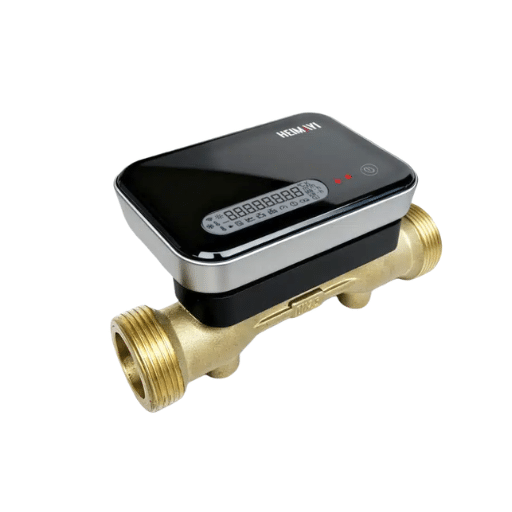
The ultrasonic heat meters have advanced technical capabilities which enable precise energy measurement and effective energy utilization.
| # | Advantage | Description |
|---|---|---|
| 1 | High Measurement Accuracy | The ultrasonic heat meters use their non-mechanical measuring system to achieve precise readings which remain within minimal error margins. The meters use ultrasonic waves to track flow and temperature changes which enables them to maintain accurate readings throughout different flow level variations. |
| 2 | No Moving Parts | Ultrasonic heat meters function through their design which does not require any moving components while traditional mechanical meters depend on moving elements to operate. The system experiences decreased damage because of this feature which results in extended equipment lifespan and reduced need for upkeep work. The system maintains constant operational efficiency because there are no elements that move within its structure. |
| 3 | Wide Flow Range | The ultrasonic heat meters function effectively across a broad spectrum of flow rates. The system can handle different operational requirements which range from residential single-family homes to large-scale business facilities. |
| 4 | Durability and Reliability | The design of ultrasonic heat meters includes strong materials which protect against corrosion and fouling when water quality changes in operational systems. The system maintains dependable performance through its solid design which protects it from extreme operational conditions. |
| 5 | Real-Time Data Transmission | Ultrasonic heat meters include modern communication systems which support M-Bus and Modbus and wireless technology to provide real-time data access and smart energy management system integration. The system allows users to monitor their electricity usage which results in improved energy management choices. |
Accuracy and Reliability in Measurement
Scientists have developed ultrasonic heat meters as the most precise way to measure energy consumption because they provide reliable results. The devices use advanced ultrasonic technology to achieve precise measurements of both flow rates and temperature differences. The design of ultrasonic meters allows them to operate without moving parts which enables the equipment to maintain measurement precision throughout its service duration.
Recent studies and industrial research reports prove that contemporary ultrasonic heat meters attain an accuracy rating of 0.5% across multiple equipment types and operational conditions. The equipment delivers precise measurements which suit applications in district heating systems and cooling systems and industrial energy monitoring operations. The ultrasonic meters maintain their operational efficiency because they operate without being affected by waterborne impurities and particulates which create difficult testing conditions.
Research data shows that energy systems which use ultrasonic meters achieve benefits in operational efficiency through their implementation. The application of ultrasonic meters at a leading utility provider resulted in a 15% increase in billing transparency which led to fewer customer disputes. The meters enable operators and consumers to monitor their energy use patterns which enables them to reduce energy waste through more efficient energy management.
Ultrasonic meters achieve greater reliability because their strong construction supports contemporary communication systems which include M-Bus and Modbus and wireless networks. The system enables smart grid and energy management system integration through real-time data analysis which supports effective decision-making and enhances energy efficiency.
🛠️
Maintenance Considerations for Sustainable Use
The ultrasonic meters require proper maintenance to achieve their extended operational life and their operational reliability. The following list presents five essential factors which must be considered when performing maintenance on these devices.
1
Regular Calibration (Every 12–18 Months)
The measurement system requires its components to undergo calibration at regular intervals because this process ensures accurate measurement results. The industry standards require calibration to occur between 12 and 18 months based on how equipment gets used and the manufacturer’s specific recommendations.
2
Sensor Cleaning (Twice Per Year)
The sensor surfaces need cleaning because dirt and debris on these surfaces create a barrier which blocks ultrasonic waves from passing through. The sensors require cleaning two times per year to maintain their operational efficiency and to avoid measurement errors.
3
Physical Inspection (Every 3 Months for High-Stress Locations)
The inspection process requires checking both the housing and internal parts for any evidence of physical harm or material degradation. The inspection process needs to occur every three months for locations that experience intense vibration and rapid temperature changes to decrease the possibility of equipment breakdowns.
4
Software and Firmware Updates
The metering software must operate with its latest version which the manufacturer has released as the most recent update. The system updates deliver security fixes together with new functionalities which enable better system operation and compatibility with newer technological advancements.
5
Power Supply and Communication Network Monitoring
The team needs to conduct power supply and communication network monitoring which includes wireless connections to protect against potential operational breaks. The organization needs to address any problems with power or data transmission immediately to protect continuous data collection operations.
The ultrasonic meters will achieve increased operational efficiency through your maintenance procedures which will also support environmentally sustainable energy management methods.
Data Integration for Enhanced Decision-Making
Data integration functions as a crucial element for improving decision-making processes because it delivers a single platform which enables users to analyze and interpret data. When connecting ultrasonic meter data with existing management systems, one gains complete access to all energy consumption information. The system enables discovery of operational weaknesses while predicting future energy usage patterns which can be used to implement data-based solutions for process improvement and cost reduction. The integration tools allow access to accurate real-time data which is used to create sustainable energy management solutions.
❓
Frequently Asked Questions (FAQ)
📚 References
- ENERGY MANAGEMENT — A case study on energy management using ultrasonic systems for heat flow measurement.
- Ultrasonic Sensing For Water Flow Meters And Heat Meters — Discusses the role of ultrasonic heat meters in precise energy consumption measurement and efficiency.
- District energy efficiency through flow metering — Explores the use of ultrasonic flow meters in district energy systems for accurate energy calculations.







