Control Valve Actuator Selection Guide: Electric vs Electro-Hydraulic
In the industrial realm of automation and flow control, one critical decision is selecting an actuator for control valves, which significantly affects system performance, efficiency, and reliability. Electric and electro-hydraulic actuators are among the options that are extensively considered, both with unique benefits that make them suitable for specific applications. Nevertheless, how can you be certain which of the two is the right one for your requirements? This publication will clarify the key differences, advantages, and considerations for electric and electro-hydraulic control valve actuators, helping you make a suitable choice. Whether you are after control accuracy, resilience in harsh conditions, or ease of operation, this article will guide you to the best solution for your system.
Introduction to Valve Actuators

Valve actuators are devices that automate valve operation, providing very accurate control of fluid, gas, or steam flow within the system. They automatically cease valve operation, eliminating manual operation and making the processes quicker, safer, and more efficient. Actuators can be divided into two main categories based on their power source: electric and electro-hydraulic. Electric actuators obtain their power from electricity, making them very easy to operate and providing very consistent performance. On the other hand, electro-hydraulic actuators power through both electrical and hydraulic forces, resulting in high power output and reliability even in harsh conditions. The choice of the correct actuator is determined by factors such as the application, operating environment, and desired control accuracy.
The Importance of Actuator Selection
Correctly selecting an actuator is very important for achieving the best performance from the system and ensuring reliable operation across different applications. The actual selection of the actuator is always influenced by many factors, which, in turn, directly affect the system’s efficiency and functionality. There are five main aspects listed below to take into consideration when picking an actuator:
Application Requirements
It is necessary to know the specific application scenario and its requirements. This means that the actuator must be able to supply the vital force at the required speed and the required type of motion.
Operating Environment
Environmental parameters like the temperature range, humidity level and the risk of dust or chemicals have to be considered. For instance, heavy-duty or outdoor applications often require actuators made of tough materials that can withstand the elements.
Control Precision
There is a marked difference in the actuators’ ability to achieve control accuracy. Fine movement or position control might favor the use of high-precision electric actuators in systems that require very sensitive control. In contrast, other applications might be more interested in power alone.
Power Consumption
The actuator’s energy needs may contribute to overall operational costs and affect sustainability targets. Electric actuators, in general, are less power-consuming than their hydraulic counterparts, which, on the other hand, may use more energy but, at the same time, provide a greater output force.
Cost and Maintenance
The decision is heavily influenced by the initial outlay, ongoing maintenance, and life-cycle costs, among others. At times, actuators can be quite expensive when first purchased, but they can reduce maintenance costs later, making them more economical over the years.
Considering these factors, companies can choose actuators that not only meet operational criteria but also ensure efficiency and minimal downtime, ensuring the system lasts long and is successful.
Overview of Control Valve Applications
Control valves are essential elements in industrial processes, allowing the accurate manipulation of fluid flow, pressure, and temperature. Their use spans several industries, including oil and gas, chemical processing, power generation, water treatment, and food and drink. Every industry uses control valves to increase operational efficiency, ensure safety, and enable process automation.
1. Oil and Gas Sector
Valves are extensively used in upstream, midstream, and downstream processes. They control the pressure and flow rates of crude oil, natural gas, and refined products in pipelines and processing. For example, safety shut-off valves and pressure relief valves are indispensable for preventing leaks and managing high-pressure situations effectively. According to industry forecasts, the global control valve market in the oil and gas sector is expected to grow gradually, supported by rising extraction activities and pipeline expansions.
2. Chemical Processing
The accuracy of chemical reactions often relies on real-time control of flow rates and temperatures. Control valves ensure precise material dosage, thereby maintaining product quality and safety. High-tech features, such as corrosion-resistant materials, are often used in valves for the most aggressive chemicals. A market analysis report notes that the adoption of smart control valves with built-in sensors and diagnostic capabilities is becoming increasingly popular among chemical plants worldwide.
3. Power Generation
Control valves are used in power plants for applications related to boiler feedwater, steam control, and turbine bypass. These valves have to ‘battle’ high-temperature and high-pressure conditions. For example, nuclear plants rely on control valves that exhibit tremendous strength to control the reactor’s cooling. An investigation has found that the use of modern, energy-efficient valves can boost overall plant performance while simultaneously reducing emissions.
4. Water Treatment
Control valves are indispensable at both municipal and industrial water treatment sites. Their main functions include regulating fluid levels, pressure, and flow in the systems for both drinking water and wastewater. Modern valve designs not only foster water conservation but also reduce equipment wear and tear, making operations more eco-friendly. As a consequence of the growing investments in water infrastructure, the demand for dependable control valves in this sector will likely to rise significantly.
5. Food and Beverage
Hygienic control valves are essential for the cleanliness and accuracy of food and beverage production. They allow liquid ingredients to be measured very accurately, the temperature of pasteurization to be controlled and the carbon dioxide dissolved in beverages to be determined. Food manufacturers commonly adhere to stringent industry standards, such as FDA regulations, to ensure their sanitation requirements are met.
The future of industrial valve control is steadily advancing through IoT (Internet of Things) integration in control valves, and this is being embraced through the use of control valves equipped with sensors and automation capabilities. These innovations enable real-time monitoring, predictive maintenance, and easy integration with control systems, thereby improving efficiency and durability across a wide range of applications. It is predicted that the global control valve market will exceed $14B in sales by 2028, a sign of its important position in modern industrial infrastructure.
Types of Valve Actuators

Valve actuators are essential components in automated control systems that accurately control valve movement. They control fluid flow, pressure, and temperature to maintain industrial processes at their best. Below are the different types of valve actuators with their features and uses:
- Pneumatic Actuators
Pneumatic actuators work by using compressed air to make a movement and they are among the most widely used due to their low maintenance and high reliability. These actuators are perfectly safe for operation in hazardous areas, as they include a fail-safe mechanism that activates when air pressure is lost. It is reported that the global market for pneumatic actuators remains strong, with a share of more than 35%, driven by demand in the oil & gas, water treatment, and chemical manufacturing sectors.
- Electric Actuators
Electric motors serve as the power source for these actuators, which assure high accuracy and are often used in applications that require precise control and little energy consumption. They have become significantly more popular due to compatibility with IoT and automation technologies. For example, in 2023, electric actuators are expected to have a market growth rate of 7% owing to advancements in the innovative factory concept.
- Hydraulic Actuators
Hydraulic actuators use pressurized liquid to produce mechanical power and deliver high output. They are usually used for heavy-duty work, such as mining, offshore drilling, and extensive pipeline systems. Though they are not as common as other types of actuators, hydraulic actuators are used in heavy industries that require high force due to their robust design.
- Manual Actuators
Manual actuators are those that have to be operated manually and they offer fundamental solutions for situations where no automation is needed. Even though manual actuators have the lowest market share, they are still necessary for some operations that can afford to have human operators, including valve systems.
- Intelligent or Smart Actuators
Smart actuators have changed the dynamics of valve automation. They are smart devices equipped with sensors, IoT connectivity, and advanced diagnostic tools that enable real-time monitoring and predictive maintenance. The smart actuator market is projected to surpass $3 billion by 2030, a testament to its role in the ongoing digital transformation of industrial ecosystems.
The market for valve actuators is expanding as more and more industries introduce automation. The new era of actuators, which are designed with energy efficiency and sustainability at the forefront, are in line with the global drivers of lowering carbon footprint and maximizing resource usage.
Electric Valve Actuators
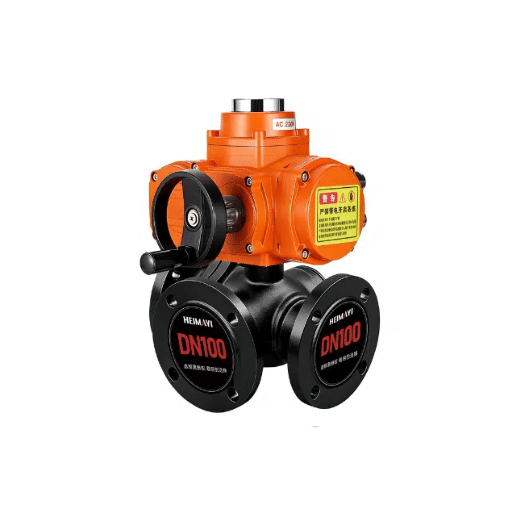
Electric valve actuators are high-tech mechanisms that use electric motors to control valve flow very accurately and efficiently. They are leading players in the processing industries, such as oil and gas, water treatment, power, and chemicals, where they eliminate manual control and offer reliable, automated flow control. These actuators are indispensable for reducing operator intervention, improving operational accuracy, and reducing downtime in industrial processes.
The latest information suggests that the electric valve actuator market worldwide is going to increase significantly, with an estimated CAGR of about 5.5% from 2023 through to 2030. The projected market value is over $2.8 billion at the end of that time span. The reasons for this increase are more machine-to-machine communication in factories, and the growing demand for solutions that use less energy, and the fact that companies are becoming more and more concerned with being eco-friendly.
Contemporary electric valve actuators feature the latest technology, including intelligent control systems, computer-based monitoring, and connectivity to the Internet of Things (IoT) devices. The transition to smart manufacturing has made it even more difficult for companies not to use these devices, since, among other things, they help with preventive maintenance and the optimal operation of the plant. The savings in energy consumption have also been a factor, making valves in this category preferred over traditional ones, particularly in areas where sustainability is a key concern.
Electric valve actuators are increasingly taking over the role of manual valves in the water and wastewater treatment sector, with nations heavily investing in infrastructure projects to replace old systems and address water scarcity. For example, automated actuators for controlling water supplies are highly beneficial, as they minimize resource loss while allowing precise control over water distribution in the networks. Just as in the water sector, in the power sector too they are used in renewable energy plants to support clean energy projects, further underlining their importance in the modern industrial scenario.
Electro-Hydraulic Actuators
Electro-hydraulic actuators are the best choice to combine the precision of electric systems with the high power density of hydraulic systems. They are also the essential tools for lot of industrial applications. The reason for their popularity in the oil and gas, aerospace, and marine industries is that they can provide high force and precise control in a small package.
Features and Benefits
One of the main features of electro-hydraulic actuators is their eco-friendly operation. They behave quite differently from the classic hydraulic systems, which were power-hungry all the time and hence there was a need for a large overall energy consumption reduction. Additionally, the high force outputs are delivered with great positional accuracy, enabling their use in even the most demanding applications, such as the handling of valves in pipelines or movement in aircraft systems, with utmost precision.
Market Insights
A current market analysis indicates that the worldwide electro-hydraulic actuator market is expected to enjoy a steady growth, i.e., approximately 4.5% compound annual growth rate (CAGR) during the years from 2022 to 2028. This trend is mainly driven by the growing preference for and reliance on various forms of automation across industries, as well as the need for lightweight, energy-efficient actuator systems. The oil and gas industry is the leading sector in terms of demand, especially in places like North America and the Middle East, and yet advancements in electro-hydraulic actuator technology continue to gain ground.
Advancements in Technology
Recent innovations are aimed at improving the reliability and scalability of these actuators by embedding intelligent sensors and adopting advanced control algorithms. The mentioned technological advances facilitate not only real-time monitoring of these actuators and, through that, predictive maintenance but also their integration into Industrial Internet of Things (IIoT) frameworks, which is the case in the majority of industries seeking to optimize performance while minimizing downtime.
Applications
Electro-hydraulic actuators have a significant role to play in different applications like:
- Valve Control: They are used in the energy and water treatment industries to control flow rates with maximum precision.
- Aerospace: They are used in critical flight systems that require compact, high-force solutions.
- Marine: They are the source of facilitation for the smooth operation of steering and the use of deck machinery on ships.
The attributes of power, efficiency, and intelligence, when combined, ensure that electro-hydraulic actuators are not only used in industrial automation but also a driving force behind innovation and productivity.
Pneumatic Actuators
Pneumatic actuators, which operate using compressed air to generate mechanical movement, are characterized by their simplicity and reliability, making them widely preferred in industries that require straightforward, dependable movement. Being productive, they are used in many sectors, such as manufacturing, food processing, and hospital equipment.
Key Features
- Cost-Effective: Pneumatic actuators are, in most cases, less expensive than hydraulic or electric ones, both in terms of purchase price and upkeep.
- High Speed: The fast response of compressed air enables pneumatic actuators to achieve quick actuation speeds, making them suitable for high-speed production lines.
- Durability: They are designed to withstand harsh conditions and can endure extremely high or low temperatures, dust, and moisture.
Common Applications
- Industrial Automation: Used in packaging, assembly, and material handling systems, among others, for clamping, lifting, or gripping.
- Pharmaceuticals: Help maintain sterile conditions with accurate control in laboratories and manufacturing plants.
- Petrochemical Industry: Able to work in dangerous locations where safety and reliability are crucial.
Performance Data
According to recent data:
- Pneumatic actuators usually function in a pressure range of 80-120 psi (5.5-8.2 bar).
- The maximum force achievable is 3,500 lbs (1,600 kg), depending on the cylinder’s dimensions.
- The efficiency rate is roughly 40-50%, as some energy is lost during air compression.
Advancements in Technology
Modern-day pneumatic systems have been integrated with sensors and IoT technology, driven by advances in actuator technology. These changes enable real-time tracking, increased precision, and lower power use. To illustrate, the now-digital pressure regulators can fine-tune air usage, thereby increasing efficiency by as much as 20%.
Pneumatic actuators are still the multifunctional and trusted answer to the fading of industries, combining ease of use and strong performance to meet changing automation demands.
Comparative Analysis of Electric and Electro-Hydraulic Actuators

|
Parameter |
Electric Actuators |
Electro-Hydraulic Actuators |
|---|---|---|
|
Power Source |
Electric motor |
Electric motor + hydraulic system |
|
Load Capacity |
Moderate, up to 1,500 kg |
High, up to 2,180 kg |
|
Precision |
High, precise motion control |
High, combines hydraulic stability and precision |
|
Speed |
Moderate, smooth operation |
High, suitable for fast applications |
|
Maintenance |
Low, minimal upkeep |
Low, self-contained system |
|
Energy Efficiency |
High, low energy consumption |
High, 30% more efficient than traditional hydraulics |
|
Installation Complexity |
Simple, requires wiring |
Moderate, compact but includes hydraulic components |
|
Environmental Impact |
Clean, no fluid leaks |
Clean, sealed system minimizes leaks |
|
Shock Handling |
Moderate |
High, absorbs shocks effectively |
|
Cost |
High initial cost, low maintenance |
Moderate initial cost, low lifecycle cost |
|
Applications |
Precision tasks, automation |
Heavy-duty, high-speed, and fail-safe tasks |
|
Space Requirements |
Compact, no external components |
Compact, integrates hydraulic and electric systems |
|
Durability |
Long-lasting, less prone to wear |
Long-lasting, durable in harsh environments |
Efficiency and Performance
Electric and electro-hydraulic actuators offer different advantages in terms of efficiency and performance, depending on the application. Electric actuators are considered the most efficient in terms of energy use, and they operate only during periods of power consumption. One can say that they are the most energy-saving devices because they mostly do not lose energy in forms other than in the mechanical motion that they produce with the help of electrical energy. For example, nowadays, the performance of electric actuators reaches 85-90% efficiency, making them suitable for applications where precise, controlled operations are required and energy efficiency is also a priority.
On the contrary, electro-hydraulic actuators are less energy-efficient due to hydraulic pump power requirements, but they are more suitable for applications that require very high forces. The output of torque and force is much stronger in the case of them than in the case of electric actuators. As an illustration, a single electro-hydraulic actuator is able to produce several tons of force without trouble, thus it is being used in oil and gas or heavy machinery industry, for instance, where such great power is required. On the downside, power consumption would be around 40-60% because the actuator loses some power to heat generation and hydraulic fluid movement.
Moreover, electric actuators are generally less maintenance-intensive than hydraulic systems because they are free of complex components such as pumps or fluid lines. Statistics show that electric actuators can be reliable up to 75% longer than the typical service interval, thereby decreasing overall downtime and operating costs. Nevertheless, electro-hydraulic actuators are still used in heavy-duty applications where their high power is more important than energy efficiency.
The decision on whether to go with electric or hydraulic actuators is based on the specific operating conditions, where electric actuators are better for accuracy and energy efficiency, while hydraulic actuators are preferred for applications requiring the highest force.
Cost-Effectiveness
The initial investment and long-term operational expenses for electric and electro-hydraulic actuators should be considered when evaluating their cost-effectiveness together. Maintenance costs for electric actuators are generally lower than those for hydraulic or pneumatic actuators, owing to their simpler design and fewer moving parts. Recent market research findings indicate that electric actuators may have maintenance costs per unit over a decade that are 20-30% less than those of electro-hydraulic equivalents. Moreover, electric actuators consume less energy and offer better energy efficiency, enabling significant savings on energy bills, particularly in applications that require continuous operation.
In contrast, electro-hydraulic actuators, although more expensive initially and in operation, still save costs for applications requiring high force or heavy-duty performance. New statistics show that the oil & gas and heavy manufacturing industries use electro-hydraulic actuators due to their ability to withstand extreme loads, even at higher operating costs. To illustrate, one study shows that electro-hydraulic systems can use 15-20% more energy than electric actuators; however, they still hold the leading position in applications where forces above 25,000 pounds are required.
It comes down to the specific needs of the application. If the industry is focusing on energy-saving and precision, electric actuators offer a cost-effective solution in the long term; on the other hand, electro-hydraulic actuators are the sure shot for high-force, demanding environments where long-term durability is more important than daily energy costs.
Maintenance Requirements
The maintenance requirements for actuators depend significantly on their type—electric or electro-hydraulic—and on their specific use cases. Electric actuators are generally maintained less often because they have fewer moving parts and do not require hydraulic fluids. Maintenance for electric actuators typically includes checking electrical connections, confirming proper operation, and updating software or control systems when necessary.
In contrast, electro-hydraulic actuators are much more demanding in terms of maintenance, as they require hydraulic components to operate. This will involve regular leak inspections, fluid-level checks, and periodic hydraulic oil changes to maintain cleanliness at the right level. Current industry data suggest that the average hydraulic fluid replacement interval can range from 2,000 to 4,000 operating hours, depending on the working environment. Moreover, seals and valves may have to be replaced periodically to ensure proper working.
The impact of downtime caused by improper maintenance is not to be overlooked. Research indicates that actuators suffering from lack of maintenance may cause the system efficiency to drop by 15% and also increase the downtime caused by unexpected failures by 20-25%. However, introducing a maintenance schedule based on the specific actuator type and proactive can greatly increase equipment life while simultaneously reducing operational disruptions.
Technical Specifications

For industrial and engineering applications, actuators are indispensable and their operations rely on specific technical parameters. Here are a few critical parameters that need to be evaluated:
- Force Output: The maximum force of an actuator is typically measured in pounds (lbs) or newtons (N), and this capacity serves as the actuator’s rating. Modern linear actuators can produce a wide array of forces from 20 N up to over 100000 N to meet different throughput scenarios.
- Stroke Length: The stroke length or the distance an actuator travels while performing its operation can differ significantly among various types. The typical range for stroke length is 1 inch (25 mm) to 40 inches (1000 mm), but custom designs often push the limits.
- Load Capacity: The actuator type determines the load that can be managed to a significant extent, e.g., hydraulic actuators are used for loads up to several tons, while electric ones typically handle loads of thousands of pounds.
- Speed: An actuator’s speed is measured in inches per second (in/s) or millimeters per second (mm/s) and varies according to the power source and design. Electric actuators, for instance, have a speed range of 0.1 in/s (2.5 mm/s) to 2 in/s (50 mm/s).
- Cycle Duty: The duty cycle, usually expressed as a percentage, is the time during which an actuator can perform its work without overheating. A duty cycle of 25%, for example, entails 15 minutes of working time per hour.
- Operating Voltage: 12V DC to 24V DC are the lowest ratings for electric actuators, while 120V AC and 220V AC are high ratings, depending on the application.
- Ingress Protection (IP) Rating: IP ratings measure the actuator’s resistance to dust and water. IP65 or higher (either IP67 or IP68) is suggested for outdoor or harsh environments.
- Temperature Range: Temperature-wise most actuators are built to work in the range of -20°C to 75°C (-4°F to 167°F), but there are specialized units for extreme weather conditions as well.
- Accuracy and Precision: Such actuators with high precision are associated with cutting-edge sensor technology that helps in micro-level positioning accuracy which is very vital for applications like robotics or medical devices and similar ones.
- Material Strength: Actuators’ stainless steel and aluminum are popular materials because of their resistance to rust and toughness in harsh conditions.
Thus, users can optimize performance by selecting actuators based on these detailed technical specs and ensuring their reliability under various operational conditions.
Key Features of Electric Actuators
Electric actuators are an essential part of modern automation systems, offering a range of features that enhance efficiency, accuracy, and flexibility across industries. The following are their main characteristics:
- Superior Precision & Control: Electric actuators ensure the most precise motion control; positioning accuracy can reach micrometer-level accuracy in some cases. Such precision is made possible by advances in motor technology and the use of feedback systems such as encoders and resolvers.
- Electric actuators are much more energy-efficient than pneumatic or hydraulic actuators. They only need energy when performing the task, thus resulting in lower energy costs and a smaller carbon footprint.
- These actuators can be programmed to give the movement profiles that the user requires. It could be speed changes, stopping at multiple points, and executing movements at the same time. The result is a versatile product that can serve a range of applications.
- Materials and engineering solutions have enabled the manufacture of electric actuators that are both compact/lightweight, allowing their easy integration into environments with limited space.
- Maintenance needs for electric actuators are not as demanding as those for hydraulic or pneumatic systems. Their operation is independent of fluids, eliminating the risk of leaks and reducing component wear and tear.
- Modern electric actuators can handle loads ranging from light weights of a few kilograms to heavy-duty industrial applications of several tons, depending on the application and model.
- Electric actuators, unlike hydraulic or pneumatic systems, are very quiet; hence, they can be used in areas where low noise is required, such as medical equipment or laboratory environments.
- The extreme conditions are not a problem for electric actuators; some models can operate from -40°F to +150°F, making them suitable for harsh industrial environments.
- Electric actuators’ IoT-enabled smart features, enabled by advanced communication protocols such as Modbus, Ethernet/IP, or CANopen, allow for the automation of the entire system. Thus, real-time monitoring, diagnostics, and predictive maintenance become available.
- According to the latest reports, the global electric actuator market will be valued at $8.6 billion by 2028, with a 6.8% CAGR increase from 2023 to 2028. Increased manufacturing automation, energy-saving practices, and improvements in actuator technologies are the main factors behind this growth.
When deciding which electric actuator to use, it is worth considering the features that concern the application’s needs, as this will probably lead to getting the most out of the product in terms of performance and efficiency.
Key Features of Electro-Hydraulic Actuators
High Power Density
Electro-hydraulic actuators have the advantage of electric control precision coupled with hydraulic system power, which enables them to deliver excellent force and torque in a miniaturized design, making them well-suited to the strictest requirements of industrial applications such as power generation and heavy oil drilling.
Energy Efficiency
These actuators are designed to consume energy only when they are working, and the whole process runs in the background. By so doing, they are reducing the company’s overall power consumption and at the same time, the company’s operational efficiency is getting enhanced. That’s why they are the very best candidates for the energy-conscious industries.
Precise Control and Modulation
Thanks to modern electronic control, electro-hydraulic actuators can provide excellent movement and speed control, making them a reliable choice for precise positioning applications.
Durability and Reliability
These actuators are not only built with but also made from rugged materials, so they will be highly reliable and very effective even in the harshest of conditions like very high temperatures and very high pressure.
Customization Flexibility
Electro-hydraulic actuators can be modified in a way that they will exactly fit the required operational conditions making the stroke length, force output, and system integration the parameters for customization thus ensuring versatility in the industry’s various needs.
Comparing Actuator Types
When choosing an actuator for a particular application, it is essential first to examine the features, benefits, and disadvantages of the available actuator types. The following are the five most common types of actuators along with their descriptions:
- Electro-Hydraulic Actuators
- Advantages: into the power of the force output, very accurate control, and appropriateness for rough conditions.
- Applications: Unmanned factories, heavy processing, and power plants.
- Limitations: A hydraulic system is a must; maintenance cost may be higher than usual.
- Pneumatic Actuators
- Advantages: Robust structure, low cost, and quick response.
- Applications: Industrial automation, controlling valves, and assembling lines.
- Limitations: Limited power output and prone to air leaking.
- Electric Actuators
- Advantages: Energy savings, easy connection to the control system, and reduced maintenance.
- Applications: Robots, accurate production, and cooling and heating systems.
- Limitations: Power output is less than that of hydraulic actuators.
- Hydraulic Actuators
- Advantages: Produces very high force and torque; reliable in cumbersome duty applications.
- Applications: Construction machines, elevating apparatus, and the marine sector.
- Limitations: Dependence on hydraulic fluid and regular maintenance; also, it takes up more space.
- Thermal Actuators
- Advantages: Tiny; for temperature control, they are reliable and don’t require an external source.
- Applications: Car engines, thermoregulators, and safety valves.
- Limitations: Response times may be longer; usually, they are designed for a specific use.
Every actuator has its own pros and cons; therefore, it is essential to know which one is best suited for your operational needs.
Advantages and Disadvantages

The selection of actuators for industrial processes must consider their pros and cons, drawing on the latest insights and technological breakthroughs. Below is the detailed analysis:
Pros
- Accuracy and Control: Actuators of the present day, mainly electric and piezoelectric types, provide exact movements. An example is that electric actuators can achieve positioning accuracy as low as 0.01 mm, making them the best option for applications that require very tight control.
- Reduced Energy Consumption: Innovations have not only improved the performance of pneumatic and electric actuators but also reduced their energy consumption. Research from 2023 showed that the new generation of models has reduced power consumption by up to 20% compared to previous versions.
- Robustness and Longevity: Hydraulic actuators are robust and sturdy, making them the best among all types of actuators for applications that require high forces, and they can even last for up to 15 years with proper maintenance. On the other hand, new designs are emerging with improved sealing methods to reduce leakage and friction-related damage.
- Tailor-Made: Manufacturers of actuators are seen to provide customised solutions that meet the demands of industries such as robotics and aerospace.
- Connectivity: The advancement of Industry 4.0 has enabled many actuators to interact with IoT devices and maintenance prediction systems, thereby increasing efficiency and reducing downtime.
Cons
- Price: The cost of electric and hydraulic actuators is very high, especially for high-precision or tool-enabled models. The price range for sophisticated electric actuators in 2023 is $400 to $10,000 per unit.
- Upkeep: The hydraulic systems, although quite strong and hardy, require constant servicing to ensure no oil is lost and the system is operating at its best. This may result in higher operational costs in the long run.
- Greenness Issues: Oil leaks from hydraulic actuators are a significant environmental hazard. Recent studies on this matter have called for either the production of oil-free actuators or better containment methods.
- Intricacy: Advanced actuators, especially in automated environments, may require a lengthy installation and setup time, which will require skilled technicians and additional resources.
- Difficulties in Extreme Conditions: Pneumatic actuators fail in the precision-based high-load situations and on the other hand, electric actuators might not be able to perform well in the high-temperature or explosive places without the use of specialized designs.
Being aware of these benefits and drawbacks is crucial when selecting the actuator type that best suits your application. By leveraging state-of-the-art developments in actuator technology, industrial sectors can reap the benefits of increased efficiency, cost savings, and environmentally friendly practices.
Pros and Cons of Electric Actuators
|
Aspect |
Pros |
Cons |
|---|---|---|
|
Precision |
High precision and repeatable motion control |
May overheat with prolonged use |
|
Maintenance |
Low maintenance, no fluid leaks |
Requires stable power supply |
|
Installation |
Quick and simple wiring setup |
High initial purchase cost |
|
Energy Efficiency |
Energy-efficient, uses power only when needed |
Limited force compared to hydraulic systems |
|
Size |
Compact, no external components needed |
Larger footprint than some alternatives |
|
Safety |
Fail-safe brakes for power failure |
Unsuitable for hazardous environments |
|
Durability |
Long-lasting with proper sizing |
Overuse can reduce efficiency |
|
Environmental Impact |
Clean, no risk of fluid contamination |
Not ideal for extreme conditions |
|
Speed |
Smooth and easily controlled |
Limited speed in high-load applications |
|
Applications |
Ideal for automation and precision tasks |
Not suitable for very heavy loads |
Pros and Cons of Electro-Hydraulic Actuators
|
Aspect |
Pros |
Cons |
|---|---|---|
|
Power |
High power density for heavy loads |
Higher initial cost than electric actuators |
|
Load Capacity |
Handles very heavy loads effectively |
Requires hydraulic components maintenance |
|
Precision |
Combines hydraulic stability with precision |
Complex system compared to electric actuators |
|
Speed |
High speed, suitable for fast applications |
May require more setup time |
|
Maintenance |
Low, self-contained system |
Hydraulic fluid may need periodic checks |
|
Energy Efficiency |
30% more efficient than traditional hydraulics |
Slightly less efficient than pure electric |
|
Shock Handling |
Excellent shock absorption capability |
May require specialized repair expertise |
|
Environmental Impact |
Sealed system minimizes fluid leaks |
Risk of fluid leaks if improperly maintained |
|
Durability |
Long-lasting, works in harsh environments |
Heavier than electric actuators |
|
Applications |
Ideal for heavy-duty and fail-safe tasks |
Not suitable for small-scale precision tasks |
When to Choose Pneumatic Actuators
When choosing pneumatic actuators, I prioritize simplicity, low cost, and fast, repetitive motion. They are also perfect in environments where clean operation is a must, such as food processing or packaging, and they work well with applications that require moderate loads. In non-hazardous, general-purpose environments with no need for precise control, I still pick pneumatic actuators because durability during high-cycle use is paramount.
References
- Control Valve Actuator Sizing and Selection
This document provides insights into the capabilities and limitations of electric actuators, including speed control and cycle times.
Link to source - Actuators – Visual Encyclopedia of Chemical Engineering
This resource from the University of Michigan provides a detailed overview of different actuator types, including electric and pneumatic actuators, and their applications.
Link to source - The When, How and Why of Actuator Selection
An academic paper discussing the advantages of electric actuators for superior positioning accuracy and the circumstances where electro-hydraulic actuators are preferred.
Link to source
Frequently Asked Questions (FAQ)
What is a control valve actuator and its kinds?
A control valve actuator is an instrument that manipulates a valve to control the passage of fluids within a system. There are different kinds of valve actuators, such as electric, hydraulic, and pneumatic actuators, each with its own pros and cons for particular applications; thus, it is necessary to determine the proper actuator for your application.
How can I know the actuator for my valve?
When discussing the proper actuator, it is a matter of an evaluation process in which the valve type, required torque, power supply, and compatibility with the control system must be determined. Electric actuators are mainly used for their control accuracy and ease of integration, while hydraulic actuators are used in force- and speed-demanding applications.
What are the pros and cons of electric actuators as compared to hydraulic actuators?
Electric actuators have benefits such as lower maintenance requirements, easy installation, and an electric motor for very accurate control. On the contrary, electric actuators may not be able to generate as much power as hydraulic actuators, which depend on pressurized hydraulic fluid and are therefore more suitable for heavy-duty work. Understanding the pros and cons of electric and hydraulic actuators is fundamental to valve solutions.
Is it possible to use an electric actuator with a hydraulic valve?
An electric actuator is not generally used for a hydraulic valve unless the valve is designed for such applications. Typically, hydraulic valves require hydraulic power for efficient operation, while electric actuators operate on electric power. Therefore, it is necessary to evaluate the actuator type and the valve’s compatibility.
What is the function of hydraulic fluid in hydraulic actuators?
Hydraulic fluid plays a vital role in the operation of hydraulic actuators because it carries the force required to move the valve. In this case, the hydraulic fluid is pressurized, generating a force that moves the actuator to open or close the valve. The performance of the actuator is highly dependent on the correct hydraulic fluid being chosen and the fluid being maintained well.
What are the various types of valve actuators?
Valve actuators come in various types, including electric, hydraulic, and pneumatic. Electric actuators use electric motors, hydraulic actuators use hydraulic power, and pneumatic actuators use compressed air. Each kind of actuator has its own characteristics and is suitable for particular control applications.
How are manual actuators different from automated valving actuators?
Humans typically control manual actuators to operate the valve using a lever or wheel; on the other hand, automated valves can operate independently or remotely, or as part of a larger control system, meaning they require no human intervention. Manual operation is less efficient than automatic solutions, which thereby states that if you want to achieve process control with precision and efficiency, the latter is the way to go.
What are the factors that should be considered when choosing electric or hydraulic actuators?
The decision between electric and hydraulic actuators will require consideration of the necessary force, speed, power source, and application-specific details. Electric actuators are often more appropriate for applications that demand accurate control and minimal maintenance, whereas hydraulic actuators are the choice for power applications where speed and strength are critical.