Miniature Pressure Transmitter Applications: A Complete Guide for Engineers and Integrators
Marcus’s portable dialysis machine required a pressure transmitter that could be installed within a case smaller than a smartphone, and still retain the ±0.5% accuracy of the large instruments used in his hospital’s main plant. However, little more than half a year ago, his team, like many others stationed in engineering, had held the perception that ‘size’ in this case meant nothing less than ‘sacrifice.’ It was a new realization that hit them at that point: MEMS piezoresistive module based pressure transducers in miniature form that achieved standard performance benchmark within one third of the standard size, as well as were deployable in the compact design. The unit thus became worthy of marketing.
Designing an OEM set, looking for instruments for a thin HVAC panel, and making an IoT node to monitor every square inch of space – do it in that situation without making the beginnings about to extend first. To these medical-device applications, sprinkled tiny factored pressure transmitter started to extend which was beyond their initial design intention. These days, small pressure sensors are incorprated in building automation, industrial process skids, smart infrastructures, automotive systems and have entire transmitter capability in the clutch as small as 50 mm. This guideline shows in what activities do small pressure transmitters work, how to inhabit specifying them, and how important a particular integration is to the project.
Want to see how compact transmitters integrate with IoT monitoring systems? Explore Black Ant’s pressure transmitter range with 4-20mA, HART, and Modbus output options →
What Is a Miniature Pressure Transmitter?
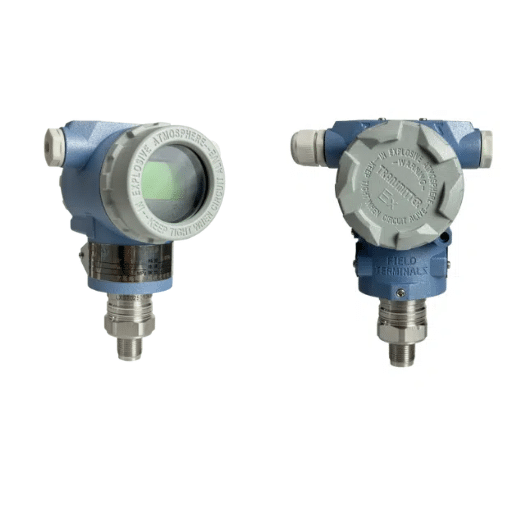
The pressure transmitter is a small-scale, miniature device that facilitates the conversion of pressure of a fluid into a signal that is commonly usable in the industrial settings. Traditional process transmitters are based on aerodynamics, therein, they would have about 80–120 mm diameters and 150–200 mm long dimensions, whereas the compact versions are 50 mm or less in face diameters and 80 mm or less lengths without compromising performance in either the measurements or the output aimed.
There is virtually always a MEMS (micro-electromechanical systems) piezoresistive primary transducer that is welded onto the corrugated metal isolated diaphragm. In some systems, when pressure is applied to the isolating diaphragm, it undergoes flexure and causes the strain sensors on the MEM sensor to flex as well. The signals are then processed by the on Integrat d circuit manufacture ASIC to the appropriate standards. When integrated, these devices are able to output 4-20mA, 0-10V, HART, RS485 or Modbus protocols from components that cannot accommodate standard transmitters.
In Black Ant’s product portfolio, one can find pressure transmitters that comprise, among other features, very compact designs, convenient measurement options of up to 600 bar with many 4-20mA as well as HART output devices with 316L stainless steel coverings, all within the confines of a CE marking and produced with ISO 9001. The major difference between a pressure sensor package and a raw sensor element is the fact that the former has electronics and attachment options such as threaded, flanged or flush–diaphragm, meaning you purchase an equipment that can be directly installed onto a pipeline or a container as opposed to a sensor element which needs additional design input.
Why Pressure Sensor Miniaturization Matters Now
Various sectors characterized by the usage of full-size instruments owing to traditional norms are witnessing a growth in demand, as three powerful factors appear to be converging towards use of the compact (miniature) pressure transmitter for smaller size applications.
IoT and Edge Device Proliferation
Low-power wide-area network (LPWAN) sensor nodes for water distribution, district heating, and environmental monitoring need instrumentation that does not dominate the device envelope. A miniature pressure transmitter with 4-20mA output draws milliamps from a battery-powered IoT data collection terminal, enabling remote pressure monitoring at locations without mains power. The global industrial IoT sensor deployment is projected to exceed 30 billion connected devices by 2028, with pressure ranking among the top-five measured variables in industrial applications, according to McKinsey’s industrial IoT outlook.
OEM Equipment Integration
Reduction in expenditure on studies and development and universal usage of embedded systems is essential for designers of medical devices, analytical machines, and mobile gear. One of these devices is a miniature transmitter which integrates with the process lines via G 1/8 or M5 connection and outputs a 0-10 VDC signal without the necessity of a massive overhaul of the existing pneumatic or hydraulic systems. Just the field of portable dialysis equipment is growing rapidly at above 10% per year, and development of ventilators and infusion or dialysis equipment may not be possible without the pressure transmitter.
HVAC & Building Controls
Contemporary fan coil units, VAV (variable air volume) terminals, or even ceiling-void hydronic panels hardly accommodate any standard instruments. A pressure transmitter that is designed to be small and can be installed within the HVAC unit itself is able to sense the pressure of air in the ductwork, the pressure in the chilled water network, or even the pressure drop across the coil with all these functions emanating from within the terminal’s casing. In refurbishment operations, where only an unused portion of panel space can still be used for additional components, miniaturized transmitters are typically the only feasible way to introduce pressure measurement without revisiting the hardware’s design completely.
Miniature Pressure Transmitter Applications by Industry

HVAC and Building Automation
Miniature pressure transmitters help overcome the space limitations posed by standard instruments in commercial HVAC systems. Monitoring duct static pressure further in the case of compact VAV controllers entails a fitting of a transmitter onto the duct wall without obstruction by any clearance zone. A device that can be incorporated in the unit casing along with the valve and coil covers for the pressure of the hydronic system at fan coil units and terminal units. Pump speed control through variable-frequency drive (VFD) is used in small mechanical rooms where chilled water loop is utilized for decision making for the pump speed control in the closed loop.
Black Ant’s compact pressure transmitters with 4-20mA output integrate directly into BACnet and Modbus building management systems via standard analogue input cards or protocol converters. For facilities that need remote monitoring without hardwired BMS infrastructure, the same transmitter connects to an IoT data collection terminal for NB-IoT or LoRaWAN uplink to a cloud dashboard.
Medical and Laboratory Equipment
In order to monitor the gas pressure within ventilators and anesthesia machines, sub-miniature pressure transmitter devices are required, which should be accurate and responsive. The pressure inside the hemodialysis machine also needs to be monitored using appropriate wetted materials – promising materials for cyclic applications. Compact sensors are employed in analytical equipment including chromatographical and mass-spectrometry equipment as there are carrier gas and sample flow which need to be controlled within a certain pressure. In all these situations, the desire for miniature infrastructure is absent; it can only be given by the necessity of structuring inside the equipment itself.
Industrial Process and Water Treatment
A chemical injection process is associated with the high-pressure operation of the dosing pump that may undergo a certain threshold, and this measure aims to address such a problem and assure exact dosage of the introduced components. There is a reverse osmosis membrane feed under pressure control, this is to maintain the given flux velocity, thus preserving the membrane. Within pneumatic systems pressure sensing plays its role in most of the compact valve manifolds, inasmuch as it regulates the pressure that feeds the actuator. In all these systems, aggressive liquids are included, and thus 316L stainless steel wetted elements and flush diaphragm result in come down of such good assemblies in small size.
Around all things IoT & smart infrastructure
Pressure monitoring of a given distribution point in a smart water system, for example, gets an alert of leaks or fracture inducing transient beforehand. If these pipelines are connected with a leak detection system, the pressure sensors can work for a decade, powered by batteries, and sending information periodically using cellular or LPWAN modules. Environmental stations integrating barometric pressure transmitter to support weather and air quality prediction models.
In these applications, the edge data acquisition computer processes pressure data locally at 10–50ms latency, triggering alerts without cloud dependency. That local processing is a critical capability for infrastructure monitoring where connectivity is intermittent.
How to Select a Miniature Pressure Transmitter

A compact pressure transmitter can be selected in the same manner a conventional instrument would be chosen, but in this case, design constraints are included as well.
Limit of pressure range and their reference:
Use your desired application to define a gauge, absolute or sealed gauge pressure. The gauge of the applied pressure is usually required in systems that require a pressure transmitter connecting to its surrounding, such as that for controlling HVAC and for process monitoring.
Absolute pressure is necessary for measurements of vacuum or barometric pressure.
Sealed gauge pressure is applicable where the atmospheric pressure cannot be vented. The wide range of a miniature pressure transmitter is usually the field from 0-1 bar about to 0- 600 bar, with a maximum pressure treated with an additional 1.5 to 3 times the standard range.
Precision and Constancy
In practice, standard industrial miniature pressure transmitter s feature an accuracy of ±0.5% full scale; the high precision versions, however, boast to ±0.25% FS. Applications with limited access for recalibration warrant long-term stability, and such quality designs provide no more than 0.2% FS drift per annum. In the case of building automation, in which repeatability is more important than accuracy, ±0.5% FS is usually adequate. In the case of medical and analytical instruments, this tolerance is generally equal to or tighter than ±0.25% FS.
Electrical Output Selection
The output signal determines how the transmitter integrates with your control system:
|
Output Type |
Best For |
Key Advantage |
|---|---|---|
|
4-20mA |
Industrial BMS, SCADA, long cable runs |
Noise immunity, two-wire simplicity, universal compatibility |
|
0-10V |
HVAC controls, short-distance panel mounting |
Easy interfacing with PLC and controller analogue inputs |
|
HART |
Diagnostic-enabled systems, remote configuration |
Device diagnostics and range adjustment over existing 4-20mA wiring |
|
Modbus RTU |
Digital networks, multi-drop IoT installations |
Multi-device bus topology, digital accuracy, no signal degradation |
For IoT and building automation projects that connect to Black Ant’s data acquisition hardware, 4-20mA and RS485/Modbus are the most direct integration paths. The IoT data collection terminal accepts both input types and transmits via NB-IoT or LoRaWAN to your management platform.
Process Connection and Media Compatibility
Several models of miniature transmitters can be ordered with different process connections such as G1/4, G1/8, M5, case of M5 or flush-diaphragm. The latter case is used for thick media or media that crystallize and it has the chamber free and sealed on a flat surface by the flush diaphragm. For processes that contain acids, caustics or any other reactive agents, the 316L ss is the basic material with less active variants: Hastelloy and tantalum (diaphragms).
Compensation of temperature is not a luxury, it is a necessity. Indicate the range of temperatures feasible for operation of your transmitter instead of temperature of the medium applied. Within the standard format −10°C to +80°C is available; in an industrial version −40°C up to +125°C is provided.
Housing and Degree of Protection
IP65 is the figure of protection for installed panels and mechanical rooms from dust and water splash. Wash down, outdoor IoT nodes, and fear activity in the liquid in IP67 or IP68 respectively. For most pressure transmitter applications, the IP65 rating from Black Ant pressure transmitters is usually adequate; however, there are variations, for specialized applications, that are rated for IP67.
Integrating Compact Transmitters into IoT and BEMS Architectures

It should be noted that a pressure transmitter in and of itself is useless unless there is a useful system behind it. One of the architectural developments of this century of energy management in buildings and IoT has made monitoring, management and control of signal paths, power sources and data very crucial.
When building management systems are hardwired, then a 4-20 mA transmitter is simply wired into the BMS analog input card or connected through a BACnet/Modbus controller. Such transmission can be done over 4-20mA signaling over distances of as much as 1,000m and hence works well with miniaturized transmitters for applications involving large distances such as district heating substations or campus-based chilled water systems.
For wireless and remote applications, the integration path runs through a data acquisition layer. The transmitter’s 4-20mA or RS485 signal connects to an IoT data collection terminal that provides protocol translation, scheduled transmission, and edge buffering.
For applications requiring local intelligence, such as real-time leak detection with sub-second alarm response, the edge data acquisition computer processes the pressure signal locally. It applies threshold logic and transmits only exception data to the cloud. With a 38,000mAh lithium battery enabling up to six years of autonomous operation and IP68 ingress protection, the edge computer supports pressure monitoring at remote pipeline stations and underground infrastructure points where mains power is unavailable.
OEM Considerations: Specifying Miniature Transmitters at Scale
For bulk purchases for compact pressure transmitters by OEM buyers as well as other systems including integrators, when the purchasers are looking at the catalogue copy, this is only the background information. The integration of the product in the targeted application will in most instances require different pressure sensor ranges together with the suitable process pipes or channels and the provision of private label solutions.
On the other hand, the development and the manufacturing capacities of Black Ant provide for all steps from the requirement specification to first article release and mass production of OEM and ODM orders with engineering assistance. This allows the use of any internal configuration – such as modbus register configurations, baud rate etc., including new Hart commands configuration already established – when analyzing a scheme put forth. One of organization’s competitive capabilities is protection and enhancement of the trademark due to product labeling, providing a diversity of packaging and a few more versions of the software.
For integrators building compact valve-and-sensor nodes, Black Ant’s miniature electric ball valve range, DN8 to DN20 with DC5V/DC12V operation and ultra-compact actuators, pairs directly with compact pressure transmitters for closed-loop flow and pressure control in IoT metering and process skid applications. The combination of valve, transmitter, and data terminal from a single ISO 9001-certified manufacturer simplifies procurement, eliminates multi-supplier compatibility issues, and ensures consistent quality across production batches.
Need a custom pressure range or process connection for your OEM design? Contact Black Ant’s engineering team for specification support and first-article samples.
The Business Case: Cost, Performance, and Supply Reliability
The decision to specify a miniature pressure transmitter often comes down to whether the compact form factor justifies any perceived trade-off in performance or price. In practice, the trade-off has largely disappeared.
Modern MEMS-based miniature transmitters achieve accuracy, stability, and temperature performance that matches conventional strain-gauge or capacitive designs for the majority of industrial and HVAC applications. The MEMS pressure sensor market is projected to grow from $2.1 billion in 2024 to $3.4 billion by 2030, driven by automotive, medical, and IoT demand, economies of scale that continue to improve price-performance ratios.
When purchasing a regulation-acceptable pressure transmitter from China, for example, OEM customers and project-specific buyers will see the Chinese version of the device costing 60% less or even more than its European counterparts yet providing the similar dimensional and protocol requirements. However, it is important to properly confirm the availability of certification and production facilities, respected standards before proceeding to bulk purchase orders which Black Ant provides as full documentation, samples tested, finished samples and specifications.
Conclusion: Small Size, Full Capability
Small pressure sensor devices were initially used mainly in medical machinery, now they can be found in air-conditioning systems, industrial robotic arms, connected handheld devices, and OEM products. The said technologies have reached a plateau, have been shown to be effective and the ways to implement them: 4-20mA signal transmission, HART, Modbus or simple plug-n-play coats, are applicable to not only every smart system existing currently but also to others in the thinking stage such as quantum computers.
The things you should be quick to note in your quest for component selection are:
- Especially no, miniaturization does not mean sacrifice of performance. MEMS piezoresistive technology offers an accuracy of ±0.5% and output 4-20mA/HART by a package less than 50 millimeters.
- The integration is determined by the output. Choose 4-20mA if the existing system is BMS, Modbus for a digital system, and HART for alarms and machine health monitoring
- Pay attention to the process connection as well as use of appropriate materials. In case of thickened fluids, order flush clamped diaphragms; in case of corrosive media, order 316L stainless steel.
- It’s easy to incorporate IoT. Small transmitters can be plugged directly into the data acquisition terminals and edge computers to perform LPWAN and cloud-connected monitoring.
- OEM customization can be done in mass volumes. Custom ranges, private labelling and protocol settings are basic assurances from an original equipment manufacturer which has its own R&D.
A few such manufacturers offer well-engineered and developed pressure transmitter models for different pressures in the defense, aviation, marine, automotive, medical, HVAC and oil and gas industries.
If you’re specifying pressure instrumentation for a space-constrained project, whether that’s a portable medical device, a retrofit HVAC panel, or a remote IoT monitoring node, Black Ant’s compact pressure transmitter range delivers the accuracy, output options, and certifications your project demands. Download the technical datasheet or request a sample to evaluate fit for your application.