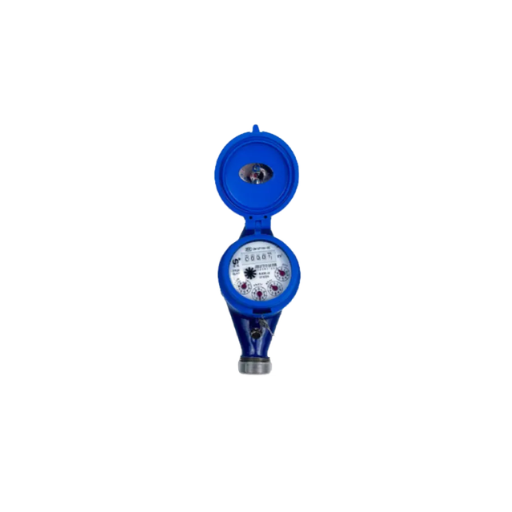
Why Ultrasonic Technology Is the Future of Industrial Water Metering
Your mechanical water meter is one of the most costly devices in the entire plant. And not because of its price. But because of what the meter doesn’t read.
In reality, mechanical meters still dominate installations worldwide. They feature rotating impellers, magnetic couplings and bearings that begin to degrade from the moment water first passes through. The meter’s accuracy drift is a typical 3-5% annually over 15 years of service life; this means the cost of ghost water, immunity to leaks, and wrongly acquired process data.
This is how Marcus Chen, facility manager of a food processing plant in Michigan, learned the hard way. He realized this when in 2024 his team installed parallel test loops to compare mechanical and ultrasonic water meter readings upon three production lines. The meters miscalculated by 8.2% when the mechanical meters tried underestimating the production of Rinse Sanitarians all night.
During that year, a quantum of $31,000 for the plant had become apparent due to the aforesaid constant: Four dollars and twenty cents for a cubic metre. The ultrasonic meters from 1 hour of litres were modified. You have the water department/residential building maintenance logs from years. Then, after paying the bills, you began to look into discrepancies in utility goodies and sub-meter data. You began to suspect leaks that have never appeared in situations where the flow rate fell too low for the meter to report anything on the mechanical register.
The worked material will explain why ultrasonic meters in essence reached a point of industrial application. Here, you will be introduced to the principle of transit-time measurement, five concrete performance advantages, a 15-year total cost of ownership case, and the primary characteristics that you should specify when ordering one.
Want to see how ultrasonic accuracy compares in your application? Explore Black Ant’s ultrasonic water meter range with NB-IoT and LoRaWAN connectivity.
The Hidden Cost of Mechanical Meters in Industrial Plants

For more than a century, a mechanical water meter has been going uncorrected as a solution. The technology is proven, the parts are within the reach of any machine-shop, quick to buy, and any maintenance person knows how to change it. It is this everyday familiarity that gives rise to more negligence up to a point.
Yet, down below the surface, they are funnelling away hidden costs accrued each financial year. Among the major points of wear is the rotating impeller, although sediment abrasion still has its effect on the bearings.
Loss of magnetic-coupling strength further adds to these drawbacks, allowing drift in measurements that the utility firms, facility managers, and even metering companies spot only when they are unable to ignore the discrepancy any longer.
Typical multi-jet mechanical meters rarely respond to initial flow rates until 6–7 L/h. The impeller must get a boost, which will not be available if the proof flow is low. The threshold of this meter in industrial activity is much of what an average engineer might not understand.
An overnight leakage in a faulty valve, slow drip from a packing gland, or low-flow process rinses all fall into that blind zone. Running 24/7 operations accumulate the facility hundreds of hours every year where water flows but the meter sees nothing.
Dubai-based systems integrator Elena Rostova faced this issue in 2023 during a hotel district cooling project. The client specified mechanical meters to save $300 per unit on a 120-meter installation. Within 18 months, the cooling plant’s make-up water consumption exceeded design calculations by 12%.
Elena traced the discrepancy to low-flow-state losses that the mechanical meters could not register. She retrofitted the system with ultrasonic units and the excess consumption dropped to 1.8%. In 14 months alone, the project paid back from recovered water costs.
Having stringent calibration needs further the expenditure. Typically, most mechanical meters necessitate inspection and recalibration after every 2–3-year cycle, based on ISO 4064. In a big industrial plant with a yearly range of 50-200 meters it warrants blocking an inspection staff time, as well as external lab fees and process downtime. Across a 15-year life, the costs of calibrating and maintaining a meter may be double the original purchase price.
In other words, the mechanical meter does not work so good. It is simply the worst thing you can carry if you want to measure water as a strategic input instead of merely as a utility hidden in the background.
How Ultrasonic Measurement Works (and Why It Changes Everything)
Ultrasonic flowmeters have two transducers that send sound pulses through the liquid stream, measuring the time differences of the signals flowing upstream and downstream. Therefore, the principle of transit time works without any moving parts- or parts that would be in contact with the fluid.
This is what happens: in terms of how it goes to the real world, there are two ultrasonic transducers; one transducer’s head emits an ultrasonic pulse downstream into the fluid, then the other transducer’s head faces upstream.
When the fluid flow accelerates the pulse moving downstream, it decelerates the pulse moving upstream. This difference in time is then measured electronically in nanoseconds.
The translated value corresponds to velocity, but at the end is converted to volumetric flow rates by multiplying with the pipe cross-sectional area.
With an electronic measurement instead of mechanical, accuracy doesn’t depend on bearing friction, magnet strength, and impeller inertia. A quality ultrasonic water meter keeps a ±0.1 percent to ±0.5 percent accuracy over its entire rated flow range. The flow canisters start as low as 1 L/h and sometimes less. Every night drip, every low-flow rinse, and every minor leak are marked. It is like no water wastage is too small for detection.
Flow direction, fluid temperature, and a spectrum of diagnostics signals can be sensed by the same electronics that meter the flow itself. It responds by saying no more bubbles in the flow stream through the pipe, notice and respond. All these diagnostics turn the good revenue meter into a process sensor feeding public building automation and SCADA platforms.
The lack of a pressure drop within this concept is something quite beneficial when felt within any sort of industrial application. An orifice plate, a turbine meter, and even certain electromagnetic designs cause a visible pressure-loss effect. The ultrasonic meter, and particularly the clamp-on form, would surprisingly cause less interference when used by the ultrasonic waveform traveling through the pipe. The pump remains unaffected, thus being able to proceed at its original performance, while system capacity is not squeezed by the measurement process, i.e., the calculation of responses and recorded flow rates would not lead to a drop in flow rate because of that.
Five Reasons Ultrasonic Meters Outperform Mechanical in Industrial Settings

1. Accuracy That Captures Every Litre
With the passage of time, precision decreases in mechanical meters. Roller bearing surfaces show wear in the running process. On the other hand, the magnets also lose their force of exertion, affecting impeller balance. By the fifth year, you are lucky if the meter is still operating at ±2%, with even worse estimates of ±5% or worse.
Ultrasonic meters are various matters compared with mechanical meters. One is that ultrasonic meter transducers do not wear as they do not move. Electronic systems adjust temperature and pipe wall effects algorithmically. Black Ant’s ultrasonic water meters keep a 0.1% error over the entire 100:1 turndown ratio from DN15 to DN300.
Industrial process control and billing depend on this accuracy. Allocating water costs across production lines or tenants renders all disputes disappear. If you monitor the makeup water use of a cooling tower, leakage generated at 1 L/h can be detected by an ultrasonic (wherein a mechanical meter would not detect it all).
2. No Moving Parts, No Mechanical Wear
Industrial water is never pristine, as it contains huge amounts of dissolved solids, particulates, or chemical treatment residuals. The mechanical meter exposes these to either the bearings or the gears.
Ultrasonic type meters have neither shaft bearings, nor gearing, nor seals of any kind. The only surfaces within the wetted contact are the pipe wall and the transducer faces. The IP68-rated perfect shielding enclosures shield electronics against the detrimental effects of humidity, condensation, and submersion. This meter has its own life with respect to the maintenance cycle, lubrication, and any parts replacement.
This kind of reliability makes the meter more of a one-time installation decision rather than a recurring burden for running operations in facilities in distant locations or with insufficient maintenance staff.
3. Native IoT Connectivity
Pulse records or display meters are motorized readings. Extra machinery needs taking readings: pulse accumulators, optical gateways, or handheld collection. This add-on method really poses a wavering source of missteps, calibration shifts, and integrating hitches.
Contemporary ultrasonic water meters have their born from water meters, complete with communication modules that can transmit readings over NB-IoT and LoRaWAN radio lines to cloud platforms with no local infrastructure. RS485 and Modbus RTU interfaces are used for straight connection to SCADA and BMS networks. While in Europe, M-Bus has been instrumental in merging with AMR and district heating control systems.
This native connectivity eliminates the gateway layer that mechanical retrofits require. A single IoT data collection terminal can aggregate readings from hundreds of meters across a campus or industrial park. The data arrives in real time, not monthly.
4. Battery Life That Matches Infrastructure Lifecycles
An obvious question about wireless connectivity is this: who is in charge for the battery changing operation? The replacement of batteries among 200 remote meters is a nontrivial task, and therefore the power cell change represents continuous issues of access, scheduling, and disposal.
The battery life of an advanced lithium battery pack in modern ultrasonic meters should run the meter throughout the entire activity of about 10–20 years. This enables the great convenience of classes instead of all of the requirement for the replacement of lists. The point of recharge at every few feet of time is a purely renewable energy option.
Compared to mechanical AMR retrofits that only replace batteries every 3-5 years and are run by a pulse module with battery power consumption. Labor savings in a bigger meter cluster would probably make the ultrasonic choice worthwhile.
5. Bidirectional Flow and Multi-Parameter Data
A mechanical meter measures flow in one direction-only. In situations such as pump shutdowns, pressure surges, or system balancing to induce backflow, the meter will turn a blind eye to the backflow, or it will measure it incorrectly.
A keen ultrasonic meter able to determine flow direction automatically, has been developed. These meters yield positive and negative volumes separately. It is not a luxury to have this in applications like cooling tower circuits, pumped storage systems, etc. It is a must.
Apart from discharge, these meters assess flow velocity, temperature temperatures, and alarm factors. These elements usually form process control loops and also trigger alerts on leakage, which is perfect for predictive maintenance algorithms, which mechanical meters are incapable of supporting.
Ready to calculate the TCO for your facility? Contact Black Ant’s engineering team for a project-specific specification and 15-year cost analysis. Our ultrasonic water meters cover DN15 to DN300 with LoRaWAN, NB-IoT, and Modbus connectivity out of the box.
The 15-Year TCO Case for Ultrasonic Industrial Metering
Most asset procurement groups tend to compare meter prices on a spreadsheet. The mechanical meter costs $200 while the ultrasonic meter costs $700. This is an easy decision when you analyze total cost of ownership.
|
Cost Factor |
Mechanical Meter (DN50) |
Ultrasonic Meter (DN50) |
|---|---|---|
|
Initial Meter Cost |
$200–350 |
$600–950 |
|
Installation Cost |
$100–200 |
$100–200 |
|
Annual Calibration (15 yr) |
$750–1,500 |
$0–375 |
|
Battery Replacement (15 yr) |
$150–300 |
$0 |
|
Maintenance / Repair (15 yr) |
$300–600 |
$0–50 |
|
Non-Revenue Water (annual) |
5–10% loss |
0.5–1% loss |
|
15-Year TCO |
$1,700–3,950 + water loss |
$700–1,575 + minimal loss |
This is only part of the picture as observed from the table. An under-signup of 5 percent with a 400,000 cubic meter site at $3.50 per cubic meter leads to $70,000 in under-billed water yearly. Over 15 years, greater than $1 million has been lost in revenue or unrecovered costs.
A simple payback of 2-4 years for ultrasonic meters is generally found in industrial submetering applications. This payback is shortened in high cost water regions, applications for process cooling with continuous flow, and for non-revenue water penalties or ESG reporting requirements.
For capital-constrained programmes that cannot replace an entire mechanical meter fleet immediately, camera direct-reading retrofit solutions offer a bridge strategy. An optical camera module reads existing dial displays and transmits data via NB-IoT without removing a single meter. This approach delivers AMR capability today while deferring full replacement to the next budget cycle.
Connecting Metering to Modern Industrial Control Systems
A water meter that only generates a monthly bill is a missed opportunity. In modern industrial facilities, water data feeds operational decisions in real time.
SCADA and BMS Integration
Ultrasonic meters equipped with RS485 and Modbus RTU electrical outputs are equipped to integrate directly with extant control apparatuses. Those belonging to the Siemens S7 family, as with above in different premises, continue feeding flow and temperature registers and the alarming objects into their memory without the need for protocol converters. BACnet MS/TP communication is also available allowing those building management systems- Honeywell, Johnson Controls, or Siemens- to thereafter formulating solutions concerning building services.
To these system integrators using the stupid pulse meter-to-Modbus gateways wiping count during communication faults, the importance of direct integration becomes paramount. The mouth of the impeller, water flowing, stomach and dissecting are always correctly integrated into the final historic figure.
Cloud and Edge Connectivity
For remote pumping stations, irrigation systems, or temporary construction dewatering sites, hardwired infrastructure is often impractical. NB-IoT and LoRaWAN connectivity solves this problem. Meters transmit hourly or daily readings over cellular or LPWAN networks to central management platforms.
Black Ant’s edge data acquisition computers add a further layer of capability. These devices collect data from multiple meters locally, perform anomaly detection at the edge, and transmit only exception reports to the cloud.
End-to-end latency stays below 50 milliseconds. The 38,000 mAh lithium battery operates for up to 6 years at 2-hour collection intervals, even at sites without mains power.
Digital Twins and Predictive Maintenance
David Okafor, a process engineer in a chemical plant in Nigeria, uses the flow data from ultrasonic meters to swallow the cooling water circuit into a digital twin model. That model identified on March 2025 a 4% gradual increase in make-up water flow-AKB-no alarm limit would have caught.
Upon the inspection of the system, David’s team discovered a cracked heat exchanger tube that was leaking cooling water to the effluent stream. The repair was carried out during a planned shutdown a fortnight later.
Without the data, the leak may have carried on until the following quarterly water balance review, reaching an estimated 8 000 cubic meters of wasted water and pushing the facility into an environmental regulatory nightmare.
This is the future of industrial water management. Regular meters should operate more as sensors. These sensors feed the models, which can predict impending failures before they turn into emergency situations.
Three Industry Trends Making Ultrasonic Adoption Inevitable
ESG Reporting and Water Stewardship
Usually now, sustainability reporting in big companies cannot be done without. Corporate sustainability reporting guidelines from CDP Water Security, GRI 303 and SASB generally call for the accurate accounting of water consumption. The reporting of Scope 3 water needs high accuracy through metering at facility and sub-facility levels.
Conventional meters only disappoint because the precision the above frameworks mandate remains unattained. As such, everything that comes with the environmental sustainability of a company dissipates. These are provided by a brand-new generation of ultrasonic meters, boasting ±0.1% accuracy, durability over the long term. That is the information bedrock necessary for tracking ESG from water consumption patterns.
Mandated Measures to Combat Non-Revenue Water
There is a worldwide non-revenue water average of 30% in developing countries and 10–15% in developed economies. The World Bank further states the global loss of 346 billion cubic meters of treated water per day represents an annual loss of economic capital in the vicinity of US$ 39 billion. Regulations from the European Union, the Middle East, and Southeast Asia are escalating NRW cessation targets, with proposed severe punitive measures.
The utilization of ultrasonic meters with 1 L/h start flow generates collections that mechanical meters have missed entirely. Often, smart metering projects based on ultrasonic technology helps entities retrieve 15-30% of the non-revenue water within three years, a direct benefit to utilities and industrial park operators in improved revenues and regulatory compliance too.
Industry 4.0 and Smart Factory Initiatives
Smart factories cannot function without utility meters that are fitted with sensors. Those are the heat generated by processes, water, gas, compressed air, and electricity, among others. Implicit to all of this is the measure of the producer costs, in real-time, on a per-unit basis. This, indeed, operates as the defining driver of a smart factory: ultrasonic meters capitalize upon this aspect.
Just consider: The author’s concept of smart meter imposes its own perpetual idea, as in: “Every drop of water that goes through an ultrasonic meter should all alone decide the fate of our planet.”
In case an ERP and MES is enforced, water could be addressed to better measure the costing per unit. More than any sensor connected directly to a purchase order, alerts can be generated post-close upon any batch sequence that sees irreversible water variances from the standard up to any values, thus arising a review at once rather than waiting till quarter-end. And that power to act in prompt response is the keystone of operations with Industry 4.0.
What to Specify When Selecting an Industrial Ultrasonic Water Meter

A proper industrial ultrasonic water meter has to be examined for five specification areas.
Flow Rate and Range: Evaluate how far the meter matches Q3 (maximum flow) and Q1 (minimum flow) of the application. It is preferable to opt for a very wide range with industrial forecasts, which can actually work in several processes with wide range. The ultrasonic water meters from Black Ant have an extremely high resolution, achieving a 100:1 range that can accumulate any kind of flow, from overnight leakage to the peak demand in industrial process.
Communication Protocol: Cross-check compatibility with existing infrastructure. Modbus RTU and 4-20mA are good for interfacing for SCADA and PLC systems. M-Bus is suitable for companies deploying AMR in Europe. NB-IoT and LoRaWAN are best suited for projects with remote locations in absence of wired infrastructure. It is important to ask for register maps and protocol documentation along with the procurement.
Installation Orientation: The inline ultrasonic meters operate typically in horizontal or vertical pipes with flow running upstream. Check the manufacturer’s guidelines of the meters’ orientation and the upstream straight pipe-run requirements. However, clamp-on models can be used in temporary installations or in pipes where cutting or stopping flow is not advisable.
Certification and Compliance: OIML/MID certified meters should be ordered for custody transfer or billing applications. For general industrial discretions, CE marking and ISO 9001 manufacturing certificate are acceptable. The IP rating of the device must meet the rating of the mechanical room or outdoor site in which it is installed; IP68 is the best for burying or any flooding location.
Regarding OEM and private label factors: When you are a distributor, systems integrator, or private-label manufacturer, ask yourself very shortly about the OEM capability of the manufacturer. Modifications of the firm-ware, label, protocol configurations can add value to the differentiation of your product in the local markets, without affecting the manufacturer’s not-so-good notification. Black Ant appreciates OEM and ODM orders for an ultrasonic water meter complete with dedicated engineering support from specification up till poly production.
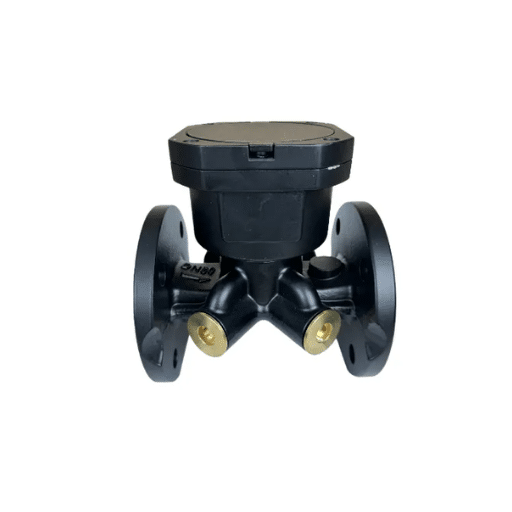
Large-diameter industrial mains require specialised attention. Black Ant’s large-diameter water meters cover DN50 to DN500 with electromagnetic and ultrasonic measurement options, RS485 and M-Bus outputs, and flange connections for municipal and industrial main-line applications.
Conclusion
Shifting from mechanical to ultrasonic water metering is not a technology trend but an economic dictate. Any facility holding to the mechanical metering process is undergoing hidden costs forming from the unbilled water ways, man-hours of maintenance, calibration programs, and possible leak detection. These costs gain momentum quietly until at a point they cannot be ignored.
Compared to mechanical meters, ultrasonic meters guarantee you accuracy given by ±0.1%, no moving parts, a battery and meter that can last for 10-20 years, besides native connectivity to the IoT. If considered over a period of 15 years, the TCO puts the ultrasonic ahead of everything else for industrial plants from the second to fourth years. Industry trends, ESG reporting, NRW mandates, and 4.0 instrumentation are accelerating this spending irrespective of any facility’s preference.
The debate is not about when the ultrasonic technology will knock out industrial water metering. It is about how fast your facility can join in the added accuracy, connectivity, and affordability the pioneers have just gained.
Explore Black Ant’s ultrasonic water meter range or request a datasheet and sample pricing. Our engineering team responds within one business day.