NB-IoT Water Meter Smart Metering: A Utility Deployment Guide (2026)
A water utility can treat, pump, and distribute millions of litres every day, and still lose nearly one-third of it before it reaches a paying customer. The World Bank estimates that global non-revenue water (NRW) averages 30–35% of everything that enters piped distribution networks. In some regions, that figure climbs past 50%.
Most of those losses are not dramatic main breaks. They are slow leaks, meter inaccuracies, unauthorised use, and billing errors that accumulate quietly between monthly or quarterly manual readings. By the time a utility notices a problem, weeks of water, and revenue, have already disappeared.
NB-IoT water meter smart metering changes that equation. It replaces door-to-door reading cycles with automated, cellular-connected data capture. It turns a blind distribution network into a monitored system that reports consumption, detects leaks, and flags tampering in near real time, all over existing mobile operator infrastructure.
In this guide, we will explain how NB-IoT smart water metering works, what benefits it delivers for utilities, how to read and compare meter specifications, and what to consider when planning a deployment. We will also look at real projects that prove the business case, from Singapore’s hybrid rollout to China’s city-scale installations.
What Is NB-IoT Water Meter Smart Metering?

An NB-IoT smart water meter is a water meter with a built-in Narrowband Internet of Things (NB-IoT) communication module. NB-IoT is a low-power wide-area network (LPWAN) cellular technology designed for small, infrequent data transmissions. It uses licensed mobile operator spectrum, so each meter connects directly to the nearest cellular base station and sends data to a cloud-based utility management platform, no concentrators, gateways, or field wiring required.
Smart metering refers to the complete infrastructure: the connected meters, the communication network, the data platform, and the analytics that turn raw readings into actionable insight. Depending on capability, this is described as either AMR (Automated Meter Reading, typically one-way data collection) or AMI (Advanced Metering Infrastructure, with two-way communication enabling remote commands such as valve shut-off or tariff updates).
For water utilities, NB-IoT water meter smart metering is the fastest route to AMI-grade visibility without building a private radio network. It is particularly attractive in dense urban areas, high-rise buildings, and underground meter pits where other wireless technologies struggle to maintain reliable coverage.
Want to understand the protocol choice first? Read our NB-IoT vs LoRaWAN water meter comparison for a side-by-side decision framework. If your network leans toward an unlicensed LPWAN approach instead, our LoRaWAN Water Meters for AMR & AMI: 2026 Utility Deployment Guide walks through gateway planning, AMR versus AMI capability, and rollout best practices.
How an NB-IoT Smart Water Meter Works
A typical NB-IoT smart water meter operates in four stages:
1. Flow Measurement
The meter measures water flow using one of three technologies:
- Ultrasonic: Uses transit-time or Doppler principles to measure flow velocity with no moving parts. Black Ant’s ultrasonic water meters use this approach to achieve ±0.1% accuracy and detect flow from as low as 1 L/h.
- Mechanical: A traditional turbine or multi-jet mechanism with a magnet or reed switch that generates pulses. Lower cost but higher wear and lower low-flow sensitivity.
- Electromagnetic: Uses Faraday’s law of induction for highly accurate, obstruction-free measurement. Common in large-diameter municipal mains.
2. On-Device Processing
A microcontroller inside the meter records cumulative volume, calculates flow rates, and monitors for anomalies. It can detect continuous low-flow events that indicate a leak, sudden spikes that suggest a burst, and tamper conditions such as magnetic interference or cover removal.
3. Wireless Transmission
The NB-IoT module transmits a small data packet, typically cumulative volume, daily consumption, alarms, battery voltage, and signal strength, through the cellular network to a cloud server. Transmission schedules are configurable, from once per hour to once per day, depending on the utility’s data requirements and battery budget.
4. Utility Management Platform
On the platform side, engineers can view consumption patterns, export billing data, configure alarms, and manage meters remotely. The platform can also integrate with billing systems, customer portals, and broader AMI or BEMS architectures through APIs.
Explore Black Ant’s IoT data collection terminals if your project needs to aggregate data from multiple meters, valves, or sensors into a single management interface.
Key Benefits of NB-IoT Water Meters for Utilities
Automated Meter Reading and Accurate Billing
Manual reading is labour-intensive, error-prone, and increasingly difficult to staff. NB-IoT meters eliminate walk-by or drive-by reading routes. Billing is based on actual consumption, not estimates, which reduces disputes and improves cash flow.
Real-Time Leak Detection and NRW Reduction
According to Bluefield Research via Smart Water Magazine, water losses cost U. S. utilities approximately $6.4 billion annually. NB-IoT meters help utilities identify leaks earlier by monitoring minimum night flow and continuous-flow alarms. A Zhejiang Province deployment using NB-IoT meters reported a 37% reduction in DMA leakage through real-time pressure and night-flow analysis.
Deep Indoor and Underground Coverage
NB-IoT operates in licensed cellular bands with higher transmit power and better building penetration than unlicensed alternatives. This makes it reliable in basements, meter pits, and high-rise buildings where meters are often installed far from street level. For a deeper technical look at how signal behaves below ground, see our guide on NB-IoT vs LoRaWAN coverage for water meters, which covers underground penetration and gateway planning in detail.
Long Battery Life and Low Maintenance
A well-designed NB-IoT water meter can operate for 5–10 years or more on a single lithium battery. The exact life depends on upload frequency, signal quality, and power-saving mode configuration. For utilities, this means fewer truck rolls for battery replacement and lower total operating cost. To understand what really drives these numbers in the field, read our breakdown of smart water meter battery life and how long meters really last.
Scalable City-Wide Deployment Without Gateway Infrastructure
Because NB-IoT uses existing mobile operator base stations, utilities can deploy tens of thousands of meters without installing private gateways. This is ideal for dispersed rural networks or rapid urban rollouts where building a dedicated network would be uneconomical.
Tamper Detection and Remote Valve Control
Many smart meters include anti-tamper sensors, AES-128 encryption, and over-the-air firmware updates. Models with integrated motorised valves also support remote shut-off for non-payment, emergency isolation, or prepaid account management.
NB-IoT Water Meter Technical Specifications Explained

When evaluating an NB-IoT smart water meter, look beyond the connectivity label. The meter must still perform as a precision instrument for the next decade.
| Specification | Typical Range | Why It Matters |
|---|---|---|
| Nominal size (DN) | DN15–DN25 (residential); DN50–DN300+ (municipal) | Must match pipe diameter and flow range |
| Accuracy class | Class 2 / Class B; R250–R400 (ultrasonic) | Higher R-value means better low-flow detection |
| Starting flow | 1–3 L/h (ultrasonic); 6–10 L/h (mechanical) | Lower starting flow captures leakage and low usage |
| Max working pressure | 1.0–1.6 MPa (PN10–PN16) | Must exceed peak system pressure |
| Temperature range | 0.1–30°C (cold water); up to 90°C (hot water) | Match local climate and application |
| Protection rating | IP68 | Required for submerged or pit installations |
| Battery life | 5–10+ years | Drives maintenance cost and replacement schedule |
| Communication | NB-IoT (B3/B5/B8/B20); optional M-Bus, RS-485 | Ensure local carrier band compatibility |
| Data memory | 30–90 days | Prevents data loss during network outages |
| Certifications | CE, RoHS, MID/OIML, IP68, GB/T 778 | Required for export and utility tender compliance |
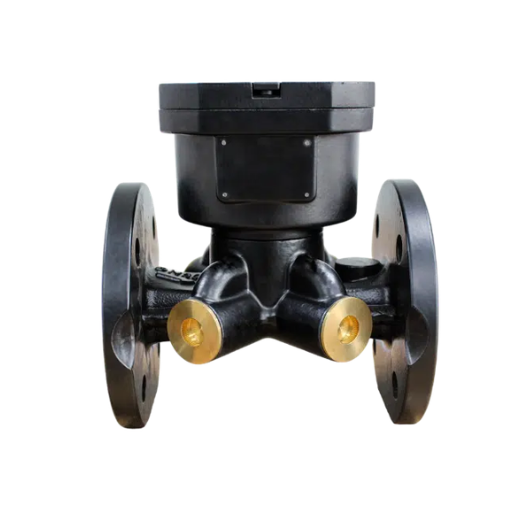
For residential and light commercial submetering, a small diameter water meter in the DN15–DN25 range is usually the right choice. For municipal mains, industrial sites, and district networks, specify a large diameter water meter with flanged connections and appropriate pressure ratings.
When to Choose NB-IoT for Smart Water Metering
NB-IoT is not the only connectivity option, but it is the right choice in several common scenarios:
- Dispersed or rural meters: Where installing LoRaWAN gateways would be expensive or impractical, NB-IoT uses existing cellular coverage.
- Deep indoor or underground locations: Basements, meter pits, and high-rise buildings benefit from NB-IoT’s superior penetration.
- Rapid rollouts: Utilities can deploy meters quickly without waiting for gateway infrastructure or RF planning.
- Outsourced network management: Utilities that prefer to pay a mobile operator for connectivity rather than operate their own radio network.
- AMI platforms requiring higher data rates: NB-IoT supports larger payloads and over-the-air firmware updates more readily than some unlicensed LPWAN alternatives.
Deployment Considerations for NB-IoT Smart Metering
A successful deployment depends on more than buying the right meter. Plan for these factors before placing a large order.
Coverage Testing and Signal Quality
Even on cellular networks, not every meter location has adequate signal. Test a representative sample of sites for RSSI and SNR before full rollout. In marginal coverage areas, meters consume more power retransmitting, which shortens battery life.
Data Plan and SIM Management
NB-IoT meters require SIM cards or embedded SIMs (eSIM/MFF2) and data plans. Consider whether the utility will manage SIMs directly or whether the meter manufacturer can supply devices with pre-integrated global connectivity.
Platform Integration and APIs
Confirm that the meter data format and communication protocol align with your existing billing or AMI platform. Black Ant meters can be configured to work with standard IoT platforms and provide documentation for integration.
Installation Orientation and Maintenance Access
Ultrasonic meters are generally less sensitive to installation orientation than mechanical meters, but every model has requirements for straight pipe runs, horizontal or vertical mounting, and valve placement. Plan meter pits or cabinets with enough access for future battery replacement or inspection.
Total Cost of Ownership
TCO includes device cost, connectivity fees, platform licensing, installation, and maintenance over 10 years. NB-IoT typically has lower upfront infrastructure cost than private networks but recurring cellular OPEX. Run the numbers for your specific meter density and deployment area.
Real-World NB-IoT Smart Metering Deployments

Singapore PUB: Hybrid NB-IoT and LoRaWAN for 30,000 Meters
Singapore’s Public Utilities Board deployed 30,000 volumetric smart water meters across four residential districts. The project used a hybrid NB-IoT and LoRaWAN approach: NB-IoT handled deep indoor and underground locations, while LoRaWAN covered large residential estates efficiently. The result was 90%+ automation of meter readings and a customer portal that gives residents real-time visibility into their water usage. If you are weighing a similar mixed-protocol strategy, our guide to hybrid NB-IoT LoRaWAN water meter networks explains how to design, deploy, and migrate these architectures.
Shenzhen Water: 50,000+ NB-IoT Meters
In 2017, Shenzhen Water deployed more than 50,000 NB-IoT smart water meters in residential communities, with planned expansion to 500,000 units. According to the Asian Development Bank, the project delivered real-time dynamic consumption data, improved leak detection, and battery life exceeding 7 years.
Yingtan, Jiangxi: The First Large-Scale Commercial NB-IoT Project
Yingtan in Jiangxi Province put 100,000 NB-IoT smart water meters into commercial use in 2017, widely reported as the world’s first 10,000-level commercial NB-IoT water meter deployment. It demonstrated that NB-IoT could support city-wide smart metering at scale.
Zhejiang Province: 37% DMA Leakage Reduction
A deployment in Zhejiang Province combined NB-IoT meters with pressure monitoring and minimum night flow analysis. The result was a 37% reduction in DMA leakage, illustrating how smart metering becomes a leakage management tool, not just a billing upgrade.
Black Ant’s NB-IoT Water Meter Solutions
Black Ant manufactures a complete range of NB-IoT-enabled water meters and data acquisition hardware for utility, building, and OEM applications.
Ultrasonic and Smart Water Meters With NB-IoT Connectivity
Black Ant’s ultrasonic water meters are available with NB-IoT, LoRaWAN, and cellular AMR options. Key specifications include ±0.1% accuracy, 100:1 turndown, starting flow from 1 L/h, and battery life of 10–20 years. DN sizes range from DN15 for residential submetering to DN300 and above for municipal applications.
Integration With Centralized Meter Readers and Data Terminals
For buildings and campuses that combine multiple meter types, Black Ant’s centralized meter reader can aggregate data from up to 1,024 downstream meters via M-Bus, RS-485, and NB-IoT. This creates a bridge between legacy meter infrastructure and modern AMI platforms.
Retrofit Without Replacement
Not every utility can afford to replace its entire mechanical meter fleet at once. Black Ant’s camera direct-reading water meter mounts over existing dial meters and transmits readings via NB-IoT, enabling AMR without removing installed meters.
OEM and Export-Certified Manufacturing
Black Ant’s ISO 9001-certified manufacturing supports OEM and ODM orders with custom firmware, labelling, and protocol configuration. Products carry CE and RoHS certification for European and international markets, and our engineering team supports projects from specification through commissioning.
FAQ: NB-IoT Water Meter Smart Metering

How long does an NB-IoT water meter battery last?
Most NB-IoT water meters are designed for 5–10 years of battery life. High-quality ultrasonic models can reach 10–20 years under typical daily transmission schedules. Real-world life depends on upload frequency, signal strength, and temperature.
Can NB-IoT water meters work underground?
Yes. NB-IoT’s licensed spectrum and higher transmit power give it strong penetration into basements, meter pits, and underground installations. However, site-specific coverage testing is recommended before large-scale deployment.
What is the difference between NB-IoT and LoRaWAN water meters?
NB-IoT uses licensed cellular networks operated by mobile carriers, while LoRaWAN uses unlicensed spectrum and privately or publicly managed gateways. NB-IoT is often better for dispersed meters and deep indoor locations; LoRaWAN can offer lower long-term OPEX in dense deployments. See our full NB-IoT vs LoRaWAN comparison for details.
How do NB-IoT water meters reduce non-revenue water?
They enable continuous monitoring of consumption patterns, minimum night flow analysis, leak alarms, and tamper detection. Utilities can identify losses within hours rather than months and target repair efforts more precisely.
What certifications should an NB-IoT water meter have?
For international projects, look for CE marking, RoHS compliance, IP68 ingress protection, and MID or OIML metrology approval where required. For the Chinese market, GB/T 778 and CJ/T 188 compliance are relevant. Black Ant provides certification documentation with every order.
Conclusion
NB-IoT water meter smart metering gives utilities something they have never had at scale: continuous visibility into the last metre of the distribution network. It replaces manual reading cycles with automated data capture, turns hidden leaks into actionable work orders, and supports accurate billing based on real consumption rather than estimates.
The technology is proven. From Singapore’s 30,000-meter hybrid deployment to China’s city-scale rollouts, NB-IoT has demonstrated that it can deliver reliable coverage, long battery life, and measurable reductions in non-revenue water.
For procurement and engineering teams, the decision is no longer whether to adopt smart metering. It is how to specify the right meter, the right connectivity, and the right integration path for your network.
Request a quote or download Black Ant’s ultrasonic water meter datasheet to discuss your NB-IoT smart metering project with our engineering team.