
Room Temperature Controllers & ThermostatsTake Control of Your Comfort & Save Energy with Intelligent Climate Solutions for 2025
By leveraging advanced IoT and wired sensors, our solutions enable data-driven optimization that reduces energy costs, enhances service reliability, and resolves user disputes effectively.


Key Features of Our Temperature Controller
In today’s energy-conscious world, operational intelligence begins with precise data.
Our solutions offer versatile connectivity options with support for NB-IoT, 4G Cat.1, and LoRa technologies, ensuring reliable, long-range data transmission. For project-specific needs, they are also compatible with 433MHz local wireless and M-Bus/RS485 wired bus modes, allowing for truly flexible networking. This multi-protocol capability ensures that data can be seamlessly integrated into any system architecture and uploaded to the cloud platform for remote management. Such robust connectivity is critical for maintaining the integrity and accessibility of environmental data, providing users with unwavering control and peace of mind across all deployments.
Engineered for maximum endurance and minimal intervention, our solutions feature an optimized ultra-low power design. By implementing advanced power management and utilizing components with static consumption as low as a few microamperes (μA), our battery-powered devices achieve an exceptionally long operational lifespan. This efficiency, combined with high-capacity lithium batteries, dramatically reduces maintenance cycles and lowers the total cost of ownership. This makes them the ideal choice for large-scale or difficult-to-access deployments, ensuring reliable, uninterrupted data collection for years on end without frequent human intervention.
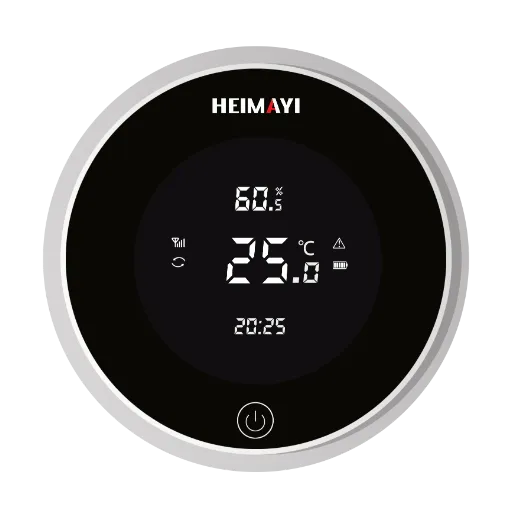
Data integrity is paramount, which is why our monitors are built around high-precision sensing elements to deliver accurate, trustworthy data. The devices feature a standard measurement accuracy of ±0.3°C, with an optional upgrade to an instrumentation-grade ±0.1°C for applications demanding the highest precision. Optional integrated humidity sensors are also available for comprehensive environmental monitoring. This commitment to accuracy provides the reliable data needed for critical decision-making—from fine-tuning energy consumption in HVAC systems to meeting strict regulatory standards and ensuring process quality control.
Our ecosystem extends beyond hardware, offering deep integration with a powerful cloud service platform for real-time data access. This allows users to remotely configure device parameters, including customizable data collection and uploading cycles, for truly refined management. The platform transforms raw data into actionable intelligence through visualization, alerts, and historical analysis. By leveraging these powerful cloud services, our solutions ensure that critical data is always accessible, enabling timely decision-making, proactive maintenance, and the achievement of significant operational and energy efficiencies.
Our Room Temperature Controller
We offer five distinct models, each designed for specific operational requirements
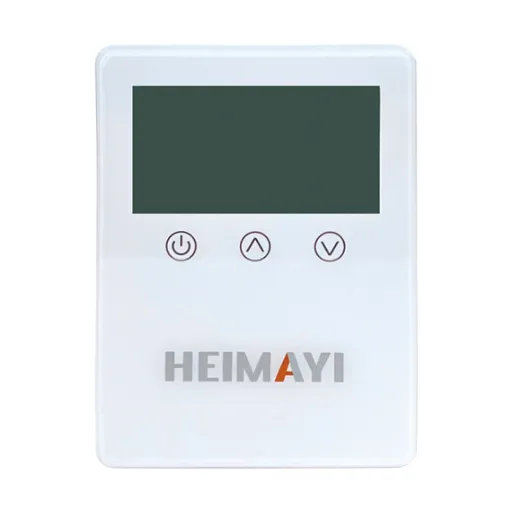
Battery Type Room Temperature Collector
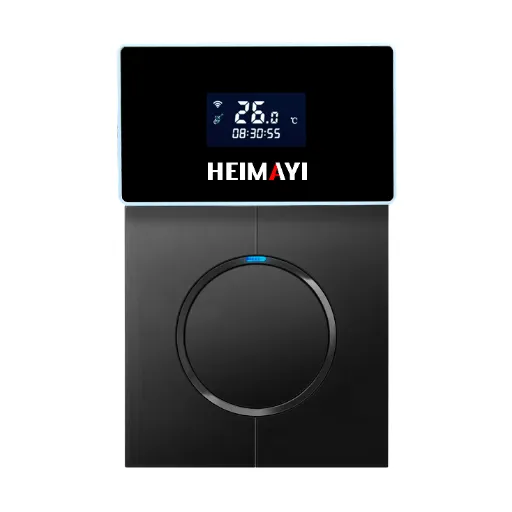
Switch Type Room Temperature Collector
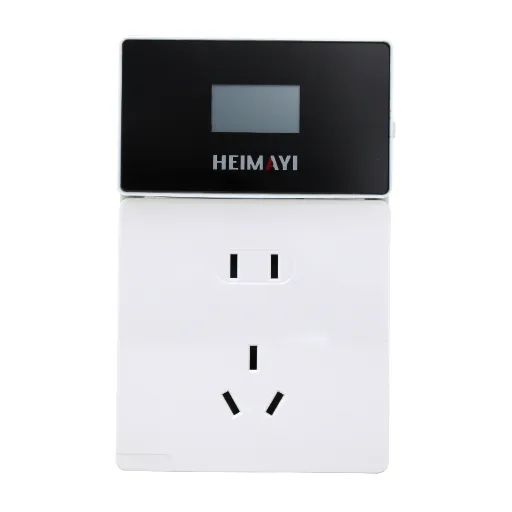
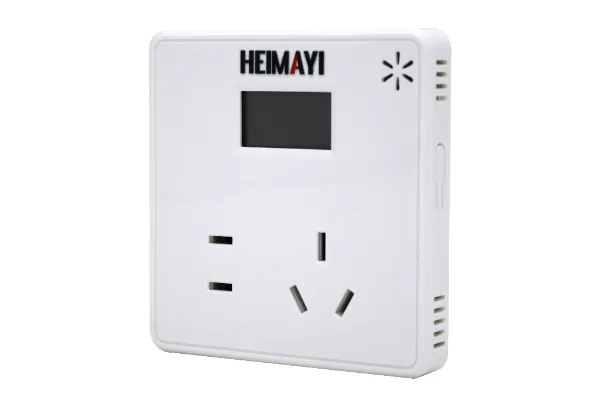
Socket Type Room Temperature Collector
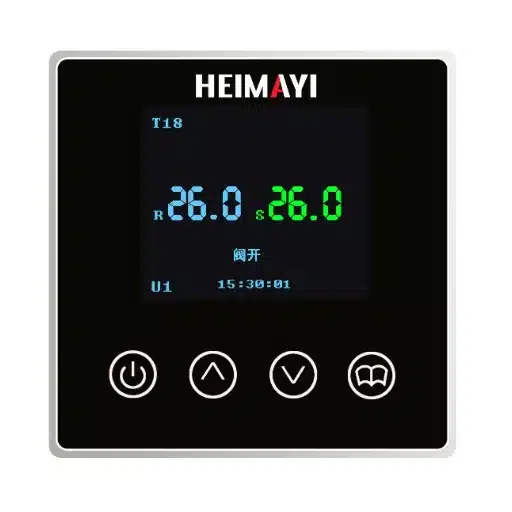
Wired Powered Room Temperature Collector
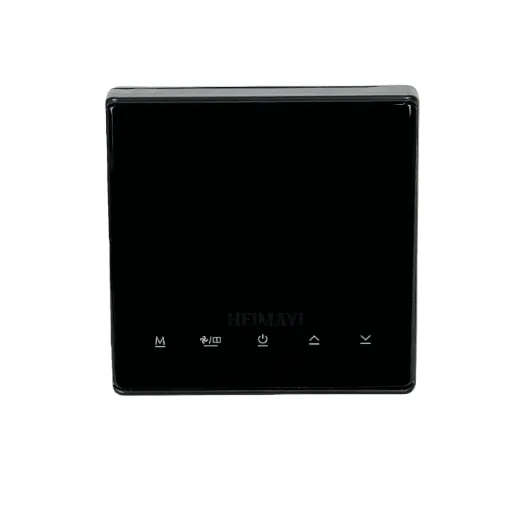
Intelligent Temperature Control Switch
Major Advantages of Smart Thermostats
Discover how modern temperature control technology solves these problems and transforms your home comfort experience
Quick Compare Our Temperature Controllers
| Item | Battery Type (T1) | Battery Type (T102Plus) | Battery Type (T2) | Switch Type | Socket Type (T401B) | Socket Type (T401C) | Socket Type (T401D) | Wired Powered (T501/T503) | Temperature Control Switch |
|---|---|---|---|---|---|---|---|---|---|
| Communication | 433MHz/NB-IoT | 433MHz/NB-IoT/4G/LoRa | NB-IoT/4G | NB-IoT/4G/LoRa | NB-IoT/4G/LoRa | NB-IoT/4G/LoRa | NB-IoT/4G/LoRa | NB-IoT/LoRa/M-BUS/RS485 | LoRa/4G |
| Display | - | - | - | LCD | LCD | LCD | LCD | LCD | - |
| Temperature Accuracy | ±0.3°C | ±0.3°C | ±0.3°C | ±0.3°C | ±0.3°C | ±0.3°C | ±0.3°C | ±0.3°C | ±1°C |
| Temperature Range | -10°C to +60°C | -10°C to +60°C | -10°C to +60°C | -10°C to +60°C | -10°C to +60°C | -10°C to +60°C | -10°C to +60°C | -10°C to +60°C | 5-35°C |
| Power Supply | Battery 3000mAh | Battery 10800mAh | Battery 11000mAh | Single live wire | AC 100-250V | AC 100-250V | AC 100-250V | AC 220V/DC 9-24V | AC 220-240V |
| Standby Power | <5μA | <5μA (6 years) | <5μA (6 years) | ≤6μA | <0.1W | <0.1W | <0.1W | <0.6mA | <1.5W |
| Load Power | - | - | - | 5-200W | - | - | - | - | 3A |
| Dimensions (mm) | 86×86×17 | 115×86×24 | 123×123×26 | 136×86×16 | 116×86×39 | 136×86×16 | 86×86×16 | 88×88×38 | 86×86×13 |
Real-World Application Scenarios
See how smart thermostats solve specific problems for different types of homeowners and living situations.
Smart Heating & Residential
Ensure optimal comfort and energy efficiency in homes with our easy-to-install Room Temperature Controller, temperature and humidity data loggers that accurately monitor indoor conditions.
Industrial & Pipeline Monitoring
Deploy our rugged, IP68-rated data loggers for reliable performance in demanding environments, ensuring accurate temperature and humidity measurement.
Commercial Building Automation
Integrate our sensors into your BAS for centralized climate control and facility management, providing real-time temperature and humidity readings.
Irrigation and Agriculture
Maintain precise environmental conditions and ensure compliance with our high-accuracy data loggers, featuring wireless connectivity for easy data transfer.
Positive Displacement Water Meters: How They Work
A worn positive displacement water meter doesn’t fail. It keeps turning, keeps billing, and quietly under-reports. A burst main gets…
Choosing a 4-20 mA Signal Isolator for Pressure Transmitters: Ground Loops and Active/Passive Inputs
Choose a 4-20 mA signal isolator by matching the power roles on both sides, the required isolation boundaries, and each…
NAMUR NE43 for Pressure Transmitters: Fault Current vs Measurement Saturation
NAMUR NE43 separates failure signals from pressure readings in an analog current loop. At saturation, the transmitter has reached its…
Understanding Communication Methods in Our Temperature Controllers
Cellular IoT: NB-IoT & 4G LTE Cat.1
These technologies leverage the extensive infrastructure of existing mobile network operators for data transmission. Their primary advantage is ease of deployment; devices can connect to the cloud “out-of-the-box” wherever cellular service is available, eliminating the need for local gateways. This is particularly useful for applications like temperature and humidity monitoring, where a temperature and humidity data logger can transmit readings efficiently.
NB-IoTexcels in ultra-low power consumption and deep signal penetration, making it ideal for challenging locations like basements or utility closets, where a temperature and humidity monitor can be deployed to ensure optimal conditions.
4G LTE Cat.1 provides higher data rates, suitable for applications that require lower latency or transfer slightly larger data packets, such as detailed humidity data logs from high-accuracy sensors.
Long Range Radio: Lora
LoRa is a non-cellular wireless technology that enables users to build and manage their own private networks. By deploying one or more LoRaWAN gateways, you can create dedicated coverage for a specific area, such as a large campus, an agricultural site, or a dense building complex. This makes it a perfect choice for remote locations without reliable cellular coverage or for projects involving environmental monitoring, where temperature and humidity data must be logged and analyzed.
433MHz RF (Radio Frequency): This is a mature and reliable short-range communication technology used for direct, point-to-point device interaction. It does not depend on any public network or gateway, allowing devices to be paired directly. For example, our T101 monitor uses 433MHz to send its temperature data directly to a nearby smart valve for localized, autonomous control. Its key benefits are fast response times, low implementation cost, and zero network subscription fees, making it ideal for temperature monitoring applications.
M-Bus / RS485: These are two of the most widely adopted standards for wired communication in Building Automation Systems (BMS) and industrial control. By connecting multiple devices along a physical cable (a “bus”), data transmission is immune to wireless interference, offering maximum reliability and stability. This makes them the definitive choice for mission-critical infrastructure like hospitals, data centers, and manufacturing facilities where system integrity is non-negotiable. Bus communication provides the most robust and standardized method for integrating our sensors and temperature data loggers into existing wired control systems, ensuring accurate monitoring of both temperature and humidity parameters.


Why Choose Us for Your Temperature Controller Needs?
We design high-performance monitors using quality components for superior accuracy and stability. From compact room temperature controllers to rugged industrial loggers, we fit every monitoring application requirement.
Frequently Asked Questions (FAQs)
Everything you need to know before making your purchase decision
01
01
Most smart thermostats are designed for DIY installation and take 20-30 minutes. If your current thermostat has a “C-wire” (common wire), installation is straightforward – just turn off power, remove the old thermostat, take a photo of the wiring, install the new base plate, connect the wires following the color-coded labels, and attach the display. The smartphone app guides you through each step with photos and videos. Many models include C-wire adapters or alternative power solutions if you don’t have one. However, if you’re uncertain about your wiring, uncomfortable with electrical work, or have an unusual HVAC system, professional installation is available for $100-$150 and ensures proper setup. Some utilities even offer free installation as part of their energy efficiency programs.
02
02
Smart thermostats are compatible with approximately 95% of HVAC systems, including gas, electric, and oil furnaces; central air conditioning; heat pumps (including dual-fuel systems); boilers and radiant systems; forced air systems; mini-split systems (with specific models); and multi-stage heating/cooling systems. They work with 24V systems, common in most homes. However, some incompatibilities exist with: line-voltage systems (120V/240V electric baseboard heaters) – though specific models like Mysa are available for these; proprietary systems from some manufacturers; and very old systems without standard wiring. Before purchasing, use the manufacturer’s online compatibility checker tool (available on Nest, Ecobee, and Honeywell websites) by entering your current thermostat’s wiring configuration. Most checkers can determine compatibility in under 2 minutes.
03
03
While Wi-Fi is required for remote control and smart features, smart thermostats continue functioning as programmable thermostats even without internet connectivity. Local features that work offline include: temperature control and adjustments, previously set schedules, basic heating/cooling cycles, and touch/button controls. Features that require Wi-Fi include: remote control via smartphone app, voice control through smart assistants, learning algorithm updates, energy reports and usage data, weather-based adjustments, and geofencing. If your internet goes down temporarily, the thermostat continues using its last-known schedule. Once connectivity returns, it syncs automatically. For homes without Wi-Fi, programmable thermostats without smart features are available but lack the convenience and energy-saving capabilities of smart models.
04
04
Learning thermostats like Google Nest typically begin adapting within the first week and become fully optimized within 2-4 weeks. During the initial learning period, the thermostat observes: your manual temperature adjustments and preferences, daily routines (wake time, departure, return, sleep time), how long your home takes to heat or cool, temperature changes throughout the day, and your response to different temperatures. Week 1: Basic pattern recognition begins; Week 2: Starts making small automatic adjustments; Week 3-4: Refined schedule matching your lifestyle; Month 2+: Continues fine-tuning and adapting to seasonal changes. You can speed up learning by manually adjusting the thermostat during the first week when your preferences differ from defaults. The system learns faster when you’re consistent with your routine. Even after initial learning, the thermostat continues adapting to changes in your schedule, seasonal preferences, and life changes (new job, retirement, etc.).
05
05
Reputable smart thermostat manufacturers use bank-level encryption, regular security updates, and secure authentication protocols to protect your data and prevent unauthorized access. Security features include: AES-256-bit encryption for data transmission, two-factor authentication (2FA) available on most platforms, regular firmware security updates, secure cloud infrastructure, and local processing of sensitive data. While no connected device is 100% immune to security risks, smart thermostats from major brands (Nest, Ecobee, Honeywell) have strong security protocols, and no significant breaches have been reported. Best practices to maximize security: use strong, unique passwords; enable two-factor authentication; keep firmware updated; use a secure home Wi-Fi network (WPA3 encryption); change default login credentials immediately; and regularly review connected devices. The risk is minimal and far outweighed by benefits, especially compared to other smart home devices. Thermostats contain less sensitive data than cameras or smart locks, making them lower-risk targets.
06
06
Smart thermostats excel at managing households with multiple occupants through several features: Multiple user profiles: Each family member can connect their smartphone to the system. The thermostat tracks who’s home using geofencing. Occupancy detection: Remote sensors detect which rooms are occupied and prioritize those areas. Temperature averaging: System balances preferences by averaging set points from different users. Schedule coordination: Recognizes patterns when multiple people are home vs. when some are away. Manual override: Anyone can adjust temperature temporarily without affecting learned patterns. Voting system: Some models allow household members to “vote” on preferred temperature. For example, if one person prefers 70°F and another prefers 74°F, the system might settle at 72°F and adjust based on who’s in which room. Room sensors are particularly helpful – the person in the home office can have their preferred temperature while the bedroom stays cooler. Most families report that smart thermostats actually reduce temperature-related conflicts because the system finds compromises automatically and provides zone-based solutions.
07
07
Smart thermostats are excellent for vacation and extended-absence management with multiple beneficial features: Automatic extended away mode: Detects when you’ve been gone for several days and enters energy-saving mode automatically. Remote monitoring: Receive alerts if the temperature reaches dangerous extremes (too hot or too cold). Freeze protection: Maintains minimum temperature (typically 50°F) to prevent frozen pipes in winter. Remote adjustment: Warm or cool your home hours before returning from vacation. Energy savings: Vacation mode can save 30-40% of normal energy costs during absence. Pre-arrival comfort: Schedule your home to reach a comfortable temperature exactly when you return. Real-world example: Program your vacation home to maintain 50°F in winter (preventing freeze damage while saving energy), then remotely set it to warm to 70°F four hours before your weekend arrival. Summer vacation example: Set to 85°F while gone (preventing mold/moisture issues), receive alert if AC fails and temperature exceeds 90°F, remotely cool to 72°F before returning home. Many users report this is their favorite feature, providing both peace of mind and significant energy savings during extended absences.
