Demand-Controlled Ventilation: CO2-Based Control Explained
Demand-controlled ventilation (DCV) is a control strategy that resets outdoor airflow to the number of people actually in a space instead of the number the design assumed. The usual implementation holds a calculated carbon dioxide setpoint in each zone and moves an outdoor-air damper, a VAV box minimum, or a fan speed to keep the reading at or below that setpoint.
Search for the setpoint, and you will find the same number everywhere: 1,000 ppm. Vendors repeat it, contractors repeat it, and sequences are written around it. ASHRAE 62.1 contains no such limit. It contains an equation that produces 1,000 ppm for an office and rather more for a conference room.
Three details decide whether a system works: the setpoint, the sensor, and the sequence between them. This article takes each in turn, then shows where the savings live and how to prove a system is working. If you are planning a retrofit and need the zone and coil side scheduled alongside the DCV work, our application engineers can review the valve and controller list with you.
Key Takeaways
- DCV resets outdoor air to actual population, with a floor. 62.1-2022 does not let breathing-zone airflow fall below the area component, Ra × Az, even in an empty room.
- The CO2 setpoint is calculated, not universal. Cmax = Camb + ΔC gives 1,000 ppm for an office and about 2,200 ppm for an auditorium.
- 62.1 permits DCV; energy codes require it. ASHRAE 90.1-2019 §6.4.3.8 and 2018 IECC §C403.7.1 set the triggers, with different airflow exceptions.
- Savings follow the occupancy profile, not the word DCV. A low-density office can turn down about 24% from design airflow; an auditorium can turn down more than 80%.
- The sensor is the weak link. In a 34-building study, 40% of sensors checked at 1,010 ppm were off by more than the ±75 ppm accuracy 62.1 requires.
What Demand-Controlled Ventilation Actually Controls

DCV is a reset, not a switch. It changes the minimum outdoor airflow a system must deliver, in one of three places:
- Single-zone rooftop unit or air handler: the outdoor-air damper minimum is reset between a design minimum and a lower DCV minimum.
- VAV air handler with zone boxes: zone CO2 signals feed a system-level calculation that resets the damper, and sometimes the minimum airflow at the VAV box.
- Dedicated outdoor-air system: supply fan speed is reset, changing the outdoor air delivered to every zone.
In all three cases, a DDC control system does the arithmetic, and in all three, the reset sets a floor. An economizer or a cooling call can still open the damper wider. DCV only decides how far it may close.
ASHRAE 62.1-2022 §6.2.6.1.3.2 asks for more than a two-position switch. Below outdoor CO2 (Camb), ventilation stays at the area component. Above it, ventilation rises proportionally. At Cmax, ventilation equals the design rate for design occupancy.
A two-point controller with the low limit at Camb and the high limit at Cmax produces the line the standard describes, provided the endpoints are right. Factory defaults rarely are.
Multiple-zone systems add a complication. The sensor sits in the zone; the damper sits at the air handler, and ventilation efficiency means the intake may need more air than the zone signals suggest. For multi-room zones, 62.1-2022 requires a sensor in each room and control to the room needing most ventilation. That is why 90.1 exempts systems without zone-level DDC.
The CO2 Setpoint Is Calculated, Not Universal
ASHRAE 62.1-2022, as amended by Addendum AB approved on 31 October 2023, defines the zone ceiling in §6.2.6.1.3.2:
Cmax = Camb + ΔC
Camb is outdoor CO2, either assumed at 400 ppm with no measurement or measured within 4 ft (1.2 m) of the outdoor-air intake. ΔC comes from Table 6-1 when design occupancy equals the table’s default density. When it doesn’t, an adjustment equation applies, rounded to the nearest 100 ppm.
| Occupancy category | People OA (cfm/person) | Area OA (cfm/ft²) | Default density (people/1,000 ft²) | ΔC (ppm) | Cmax (ppm) |
|---|---|---|---|---|---|
| Office space | 5 | 0.06 | 5 | 600 | 1,000 |
| Classrooms, age 9+ | 10 | 0.12 | 35 | 600 | 1,000 |
| Conference/meeting | 5 | 0.06 | 50 | 1,500 | 1,900 |
| Lecture classroom | 7.5 | 0.06 | 65 | 1,200 | 1,600 |
| Auditorium seating | 5 | 0.06 | 150 | 1,800 | 2,200 |
| Restaurant dining | 7.5 | 0.18 | 70 | 1,500 | 1,900 |
The 1,000 ppm figure is the office and classroom row: 400 ppm of outdoor CO2 plus 600 ppm of allowable rise. Set a conference room to the same number, and the damper stays near design minimum through most of a meeting because the code allows that room to reach 1,900 ppm. The room is ventilated, and the savings are close to zero.
The addendum is explicit that Table 6-1 values are only for implementing CO2 DCV and “should not be used as indicators of IAQ.” A setpoint is a proxy for a ventilation rate, not a measure of air quality.
Where the table shows “NA,” CO2 DCV may not be used, because non-occupant CO2 sources or removal mechanisms make CO2 an invalid proxy. That covers laboratories, animal rooms and some healthcare spaces.
A pattern worth recognising: a meeting room commissioned at a default of 1,500 ppm holds its damper at design minimum almost permanently, because its calculated ceiling is 1,900 ppm and the default never asks for more air. Nothing alarms, the trend looks steady, and the loop is a fixed-air system with extra hardware.
Where the Savings Are, and Where They Aren’t
The size of the prize depends on how much of the design airflow belongs to people rather than floor area. 62.1’s rate equation is Vbz = Rp × Pz + Ra × Az: a per-person term plus a per-square-foot term. DCV can only remove the first.
The table applies those rates to a 1,000 ft² zone at design occupancy and at roughly 10% of that occupancy. Values are breathing-zone airflow, before ventilation efficiency is applied.
| Space | Design occupants | Vbz at design | Vbz at low occupancy | Maximum turndown |
|---|---|---|---|---|
| Office | 5 | 85 cfm | 65 cfm (1 person) | 24% |
| Retail sales | 15 | 233 cfm | 143 cfm (3 people) | 39% |
| Classroom, age 9+ | 35 | 470 cfm | 220 cfm (10 people) | 53% |
| Conference/meeting | 50 | 310 cfm | 85 cfm (5 people) | 73% |
| Lecture classroom | 65 | 548 cfm | 135 cfm (10 people) | 75% |
| Auditorium seating | 150 | 810 cfm | 135 cfm (15 people) | 83% |
An empty office still needs 60 cfm per 1,000 ft² for the area term. That is why a low-density office with steady occupancy is a poor candidate, and a lecture hall or restaurant a good one. The same sensor and sequence produce a 24% turndown in one and 83% in the other.
Field measurements in four Belgian case studies, published through AIVC in 2017 and in Energy and Buildings in 2018, compared DCV with a constant-air-volume system at 29 m³/h per person. Fan energy fell 25% to 55% and ventilation heat losses 25% to 32%, with good air quality at the reduced flows. The authors noted that commissioning was needed to get and keep those results.
Simulation shows a wider spread. A PNNL study of Seattle prototypes (PNNL-ACT-10055, 2017) found DCV the top measure by total site savings in medium offices, strip-mall retail, standalone retail, and secondary schools. Secondary schools reached 21%, standalone retail 19%, and strip malls more than 16%.
In medium offices, it ranged from −2% upward, because a low-density office near design occupancy has little to turn down. Those results are simulated, and the negative end matters too.
The often-quoted 8% to 40% range comes from the IEA Annex 18 review of the early 1990s: a historical spread, not a benchmark for a building.
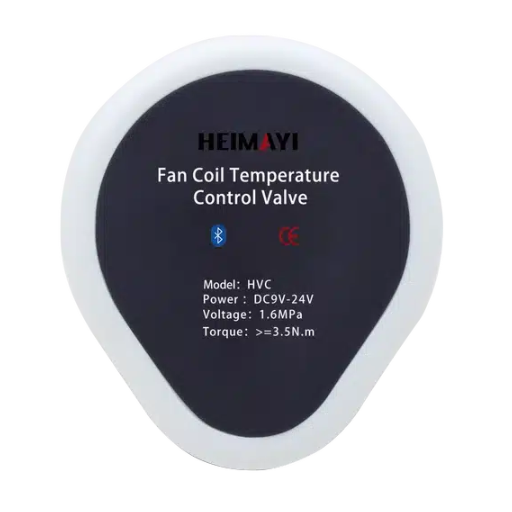
What sets the number is a short list: occupancy variance, density, climate, minimum airflow, economizer hours, and energy prices. None is a property of DCV. Reducing outdoor air also changes the remaining coil load, and the fan coil control valves see a different part-load profile after a retrofit.
What the Codes Require
Three documents matter, and they play different roles.
ASHRAE 62.1-2022 permits DCV; it does not require it. §6.2.6.1 calls DCV “an optional means of dynamic reset” and says how to do it correctly. It does not tell an owner to install it.
ASHRAE 90.1-2019 §6.4.3.8, “Ventilation Controls for High-Occupancy Areas,” requires it for spaces larger than 500 ft² with a design ventilation occupancy of at least 25 people per 1,000 ft², served by systems with one or more of: an air economizer, automatic modulating control of the outdoor-air damper, or design outdoor airflow above 3,000 cfm.
The exceptions decide most projects: qualifying exhaust-air energy recovery, multiple-zone systems without zone DDC, design outdoor airflow below 750 cfm, spaces where more than 75% of design outdoor air is makeup air, and categories such as correctional cells, daycare sickrooms and science laboratories.
The 2018 IECC §C403.7.1, “Demand controlled ventilation (Mandatory),” applies the same thresholds and system conditions. Its exceptions differ in one number: the IECC exempts design outdoor airflow below 1,200 cfm, and spaces where supply airflow minus makeup or transfer air is below 1,200 cfm. A building can sit outside the 90.1 exception at 750 cfm and inside the IECC exception at 1,200. Before 2018, the IECC carried DCV as C403.2.6.1, which guidance still cites while describing older text.
62.1-2022 also requires a written description of equipment, methods, sequences, setpoints, and functions, plus a table of minimum and maximum outdoor intake per system. That is what a commissioning agent tests against.
To fit your needs, please read our article on thermostat calibration.
Sensors: The Weak Link
62.1-2022 sets requirements stricter than most specifications reflect:
- Accuracy: certified to ±75 ppm at 600 ppm and 1,000 ppm, at sea level and 77°F (25°C).
- Calibration: factory calibrated, with certification that recalibration is needed no more frequently than every five years.
- Failure: on detecting a sensor failure, the system must reset to the design minimum outdoor air for the design zone population.
- Location: 3 ft to 6 ft (0.9 m to 1.8 m) above the floor; at least one sensor per zone and per 5,000 ft² (460 m²); a sensor in every room of a multi-room zone; sequential systems must sample each space at least every five minutes.
A Lawrence Berkeley National Laboratory study of 208 sensors in 34 commercial buildings (Fisk et al., 2010) checked 90 sensors against primary calibration gases. Mean absolute error was 118 ppm at 760 ppm and 138 ppm at 1,010 ppm. At 1,010 ppm, 40% of sensors were off by more than ±75 ppm, 19% by more than 200 ppm, and 13% by more than 300 ppm.
Sensor age was not a consistent predictor of error. Sensors do not drift politely. They foul, their optical cells degrade, and some keep reporting a plausible number after they stop responding. A loop cannot tell a room at 700 ppm from a sensor stuck at 700.
Sensor type matters. NDIR sensors measure CO2 directly and track occupancy where people are the main source. VOC sensors respond to a mixture of compounds and do not track people in proportion. Occupancy sensors detect presence, not headcount. Schedules are permitted under §6.2.6.1.1 if the result never falls below what actual population requires.
Placement is the failure calibration checks miss. In the Belgian cases, measurements showed a 100 ppm difference between the occupied zone and the extract grille, and the lecture-room sensor had to move. A sensor near a return grille reads diluted air, one above 6 ft reads the stratified layer, one beside a diffuser reads supply air. Readings usually reach the controller over BACnet points, and the trend is only as useful as the point mapping.
The Sequence, and the Economizer Overlap
A published rooftop sequence shows how DCV is normally implemented. In the Trane Symbio 700 sequence (ACC-APG002D-EN), DCV resets the outdoor-air damper minimum based on space CO2 and supply fan speed. Falling CO2 moves the minimum toward a lower DCV position; rising CO2 moves it back. The defaults are a 1,500 ppm high limit, a 10% design minimum, and a 5% DCV minimum.
Two details are worth borrowing. If the CO2 value is invalid, the controller reverts to fixed minimum-position control. The failure direction is safe, but invisible in energy data: a dead sensor looks like a space that is always occupied.
And the high limit is a factory number, not the calculated Cmax. In an office, 62.1 gives 1,000 ppm, not 1,500.
The economizer relationship is the part most often drawn wrong. When conditions suit economizer cooling, the damper modulates between a calculated minimum, based on supply-fan compensation and DCV, and 100% open. DCV sets the floor; the economizer sets the ceiling. While the economizer holds the damper open, DCV has nothing to modulate, which is correct: the outdoor air is already doing useful work. To learn more information, please read our article on HVAC economizers.
Problems start when the two are written as competing loops. A common pattern is a DCV loop closing the damper while a free-cooling loop drives it open, with both outputs summed at the actuator. The damper hunts, the space swings, and someone disables a loop. The sequence should read as a maximum function, not a sum.
A specification that avoids this reads roughly as follows: the damper minimum shall be the greater of the DCV position and the design minimum at the current fan speed; the economizer may modulate above it to 100% for cooling; on sensor failure, the minimum shall revert to design minimum outdoor airflow; a sensor fault shall be alarmed.
Why DCV Underperforms, and How to Prove Yours Works
Six causes explain many underperforming systems:
- The setpoint is a default, such as 1,500 ppm where the calculated Cmax is 1,000.
- The minimum airflow is too high. If the VAV minimum already over-ventilates, DCV cannot go below it. One Belgian case ran at minimum 67% of operating hours, suggesting the minimum was set above actual need.
- The sensor is out of tolerance or badly placed.
- The zone is not the system. Local control without a system-level calculation under-ventilates the critical zone or wastes air on the others.
- The economizer and DCV fight. Two loops, one actuator, no maximum function.
- Nobody can see it. Without CO2, damper position, and fan speed on one trend, a disabled system and a working one look identical.
Verification is mostly a matter of making the trend answer four questions. Does the minimum position move at low occupancy, or sit at design minimum? Does CO2 rise before the damper opens, at the same timestamps? Is the high limit the calculated Cmax? On a mild day, does the damper follow the economizer above the DCV floor without either loop fighting?
Sensor calibration needs its own check, because the trend cannot reveal it. A two-point gas check or a comparison against a calibrated reference is the only way to know whether the number the loop governs to is real. The 62.1 five-year interval is a maximum, not a target.
The discipline is the same as for any reset sequence: confirm the sensor, the setpoint, and the endpoints, then leave a trend the next person can read. The room controllers that hold occupancy mode and schedules matter too, because DCV only saves while the system knows the space is occupied.
If you are specifying the zone and coil layer around a retrofit, or reviewing a sequence that is not delivering, send the current sequence and a week of trend data to our application engineers.
Frequently Asked Questions
What is demand-controlled ventilation in simple terms?
Ventilation that responds to how many people are in a space. A CO2 sensor, occupancy sensor, or schedule estimates the population, and controls reduce outdoor airflow when the space is lightly used while keeping a minimum for the building itself.
What CO2 level should DCV maintain?
The ceiling is calculated. ASHRAE 62.1-2022 uses Cmax = Camb + ΔC. With outdoor air assumed at 400 ppm, an office or classroom has a ceiling of 1,000 ppm, a conference room about 1,900 ppm, and an auditorium about 2,200 ppm.
Does ASHRAE 62.1 require DCV?
No. 62.1-2022 permits DCV as an optional means of dynamic reset and specifies how to do it correctly. The requirement comes from energy codes, chiefly ASHRAE 90.1-2019 §6.4.3.8 and IECC §C403.7.1.
How much energy does DCV save?
It depends on the space. Belgian field measurements found 25% to 55% fan energy savings and 25% to 32% lower ventilation heat losses against a constant-air-volume baseline. A low-density office can only turn down about 24%.
Where should CO2 sensors be located?
Between 3 ft and 6 ft above the floor, at least one per zone and per 5,000 ft² of net occupiable area, and one in every room of a multi-room zone. Avoid return grilles, diffusers, and the stratified layer near the ceiling.
Conclusion
Demand-controlled ventilation can pay for itself on controls alone, and it is easy to install without getting the benefit. The difference is rarely the sensor brand. It is whether the setpoint was calculated for the space, whether the sensor is accurate and well placed, and whether the sequence treats DCV as a floor under the economizer rather than a second loop fighting it.
< class="ct-module-title">
Trending now