HVAC Economizer: How Free Cooling Works and When It Pays
An HVAC economizer is a damper and control assembly that cools a building with outdoor air when conditions are favourable, reducing how hard the mechanical plant works. It isn’t a separate cooling machine. It’s a mode of the air handler, and it’s only as good as its changeover logic and the dampers that execute it.
The hard part starts one level down.
Most economizers are installed, commissioned, and then never verified again. When field researchers inspect them, a majority aren’t doing what the sequence says. Some are stuck shut and waste compressor energy; some are stuck open and cool outdoor air the building didn’t want. Both look normal on a trend graph until somebody checks.
This guide covers what an economizer does, how air-side and water-side designs differ, how changeover methods compare, what the codes require, and whether one pays. If you’re holding a sequence and a valve schedule, our application engineers will review them with you.
Key Takeaways
- An air-side economizer uses outdoor air for cooling when outdoor temperature or enthalpy is below the changeover limit. It saves compressor energy, but adds fan, relief, and sometimes reheat energy.
- ASHRAE 90.1-2022 requires air economizers on cooling systems of 54,000 Btu/h and above in climate zones 2 through 8. California Title 24 uses a lower 33,000 Btu/h trigger. They’re different codes.
- The high-limit shutoff is a code value, not a comfort setpoint. Fixed dry-bulb limits range from 65°F to 75°F by climate zone; enthalpy limits are 28 Btu/lb outdoors.
- Field studies keep finding that most economizers have at least one fault. Cowan (2004) found problems in 64% of 503 rooftop units; NREL found economizer faults in 31% of the units it modelled.
- Payback isn’t a rule of thumb. It’s four terms: economizer hours, load during those hours, compressor energy avoided, and parasitic fan and reheat energy added.
What an HVAC Economizer Does
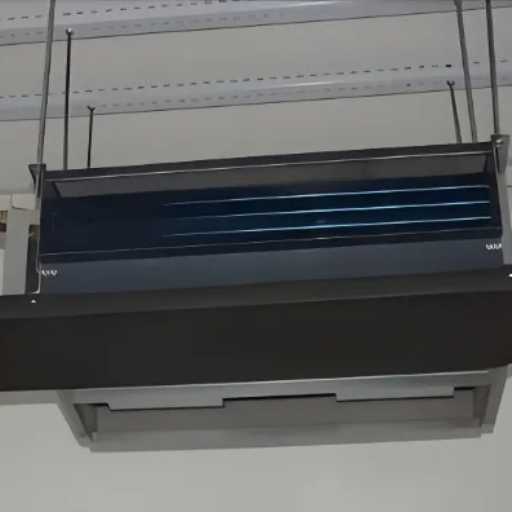
An economizer changes where the cooling comes from. Instead of returning warm room air to a coil, the air handler opens an outdoor-air damper, throttles the return damper, and uses cool outdoor air to hold the supply-air setpoint. The compressor or chiller runs less, or not at all.
Execution is where projects go wrong, because three different devices share the name.
Air-side economizer. Dampers, actuators, sensors, and logic on the supply-air side, able to deliver up to 100% outdoor air. This is what most commercial operators mean.
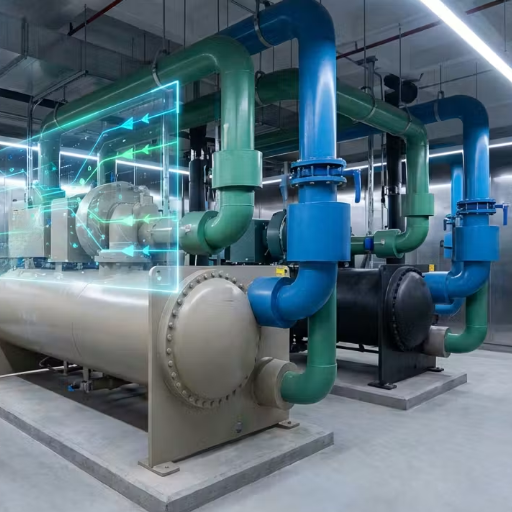
Water-side economizer. A cooling tower or dry cooler, a heat exchanger or strainer cycle, and controls that produce chilled water without running the chiller compressor. Different hardware, weather logic, and maintenance.
Refrigerant economizer. A chiller-cycle device that subcools liquid refrigerant to increase capacity. It has nothing to do with ventilation air, and search results confuse the three constantly.
Integrated versus non-integrated control matters next. Integrated operation lets mechanical cooling and economizer cooling run together, so supply-air temperature stays stable as the economizer reaches its limit. Non-integrated operation runs the economizer alone until it’s fully open, then stages mechanical cooling, which produces a temperature swing. Most current commercial code requires integrated control for that reason.
For a deep understanding, please read our article on HVAC sequence of operation.
Air-Side vs Water-Side Economizers
The two designs solve the same problem with different equipment, and the choice is usually made at system level, not at the rooftop.
| Feature | Air-side economizer | Water-side economizer |
|---|---|---|
| Cooling source | Outdoor air through the air handler | Cooling tower or dry cooler through a heat exchanger |
| Main saving | Compressor or chiller energy | Chiller compressor energy |
| Added energy | Supply and relief fan energy | Tower fan, condenser pump, heat-exchanger approach |
| Humidity risk | High if changeover is dry-bulb only | Lower, because the air side is unchanged |
| Typical application | Packaged rooftop units, AHUs with relief | Chilled-water plants with tower capacity |
| Key limit | Outdoor temperature or enthalpy | Outdoor wet-bulb and tower approach |
An air-side economizer is the default on packaged rooftop equipment because the dampers are already in the unit. A water-side economizer makes sense when a building has a chilled-water plant, spare tower capacity, and long hours of useful tower water. In humid climates, it also avoids the latent load an air-side economizer can introduce. Neither is free cooling literally: both add fan or pump energy.
Dry-Bulb vs Enthalpy Changeover
Changeover enables or disables the economizer. Four methods are common, and each measures something different.
| Method | What it compares | Strength | Weakness |
|---|---|---|---|
| Fixed dry-bulb | Outdoor temperature against a setpoint | Cheapest, simplest, easy to test | Ignores humidity; admits cool, damp air |
| Differential dry-bulb | Outdoor temperature against return temperature | Adapts to internal load | Still ignores latent load |
| Fixed enthalpy | Outdoor temperature and humidity against a fixed enthalpy | Accounts for moisture | One setpoint for all weather; sensor drift |
| Differential enthalpy | Outdoor enthalpy against return enthalpy | Best energy result in humid climates | Two sensors to calibrate; more failure points |
The high-limit table is the part to memorize. ASHRAE 90.1-2022 Table 6.5.1.1.3 sets the shutoff values, and code adoptions reproduce them:
- Fixed dry-bulb: off above 75°F outdoor air in climate zones 0B, 1B, 2B, 3B, 3C, 4B, 4C, 5B, 5C, 6B, 7, and 8; above 70°F in 5A and 6A; above 65°F in 0A, 1A, 2A, 3A, and 4A.
- Differential dry-bulb: off when outdoor air is warmer than return air, in all zones.
- Fixed enthalpy plus fixed dry-bulb: off above 28 Btu/lb outdoor enthalpy or 75°F outdoor dry-bulb.
- Differential enthalpy plus fixed dry-bulb: off when outdoor enthalpy exceeds return enthalpy or outdoor dry-bulb exceeds 75°F.
- Selectable setpoints must be capable of being set within 2°F and 2 Btu/lb of the listed value.
Enthalpy isn’t automatically better. A differential enthalpy control with two drifting sensors can lock out an economizer that would have saved energy, while a fixed dry-bulb control with one accurate sensor runs when it should. The right question isn’t which method is more advanced, but which one this maintenance team can keep calibrated. In a humid climate, enthalpy usually wins on energy. In a dry climate, the extra sensor may only add a failure point.
The Sequence: What Opens, What Closes, and When
A complete sequence has five states. Most written sequences include the first two and leave the rest to the programmer.
1. Occupied minimum outdoor air. The outdoor damper sits at its ventilation minimum, the return damper is open, and relief is closed or modulated. Where demand-controlled ventilation is fitted, the CO2 loop resets this minimum.
2. Economizer enabled. On a cooling call, with outdoor conditions below the high limit, the controller modulates the outdoor, return, and relief dampers together to hold the mixed-air or supply-air setpoint. Relief has to track the outdoor-air fraction, or the building pressurizes.
3. Integrated mechanical cooling. If the economizer alone can’t hold the setpoint, mechanical cooling stages on while the economizer stays at 100%. The transition should be bumpless. A step change in supply temperature is a sequence defect, not a tuning problem.
4. High-limit shutoff. When outdoor air rises above the table value, or enthalpy exceeds the limit, the economizer returns to minimum position and mechanical cooling carries the load. The high limit is a code value. It isn’t a comfort setpoint to be trimmed to stop complaints.
5. Freeze protection and failure position. Low outdoor-air or mixed-air temperature overrides the sequence. The outdoor damper drives closed or to minimum, the coil valve opens, and the fan may stop. An outdoor damper that fails open in a cold climate is a coil waiting to freeze.
The interaction with DCV is where two sequences collide. The outdoor damper position should be the greater of the ventilation demand and the economizer demand. One error lets the economizer reset the minimum position to zero, so ventilation disappears. Another lets the CO2 loop close the damper during economizer operation, so free cooling disappears. Both show up in trend data as a damper following the wrong signal.
The zone side is covered in our guide to HVAC control systems, and the terminal units are covered in VAV box control.
What the Code Requires
Three requirements matter at specification: when an economizer is required, how tight the dampers must be, and what diagnostics the controller must provide.
ASHRAE 90.1-2022 §6.5.1 requires an air economizer on individual cooling systems of 54,000 Btu/h and above in climate zones 2A through 8. Zones 0A, 0B, 1A, and 1B are excluded. The standard lists exceptions, including gas-phase air cleaning, condenser heat recovery, small residential-space systems, a changeover balance point at or below 60°F, operation under 20 hours per week, and refrigerated casework. A project may instead trade the economizer for the efficiency improvements in Table 6.5.1-2. The edition and local amendments govern.
Damper leakage is part of the requirement. Table 6.4.3.4.3 limits motorized damper leakage to 4 cfm/ft² in climate zones 1, 2, 5a, 6, 7, and 8, and to 10 cfm/ft² in zones 3, 4, 5b, and 5c, tested at 250 Pa (1 in. w.c.) per AMCA 500. A “closed” damper that leaks is an outdoor-air load the coil still has to treat in every mode.
California Title 24 lowered the trigger. The 2022 code requires economizers on air handlers above 33,000 Btu/h, down from 54,000, and requires fault detection and diagnostics on those units. Title 24 §120.2(i) requires the FDD to detect five faults: air-temperature sensor failure, not economizing when it should, economizing when it should not, damper not modulating, and excess outdoor air. Air-temperature sensors must be accurate to plus or minus 2°F over 40 to 80°F.
Record the correction. The 33,000 Btu/h figure that circulates in economizer articles is California Title 24, not ASHRAE 90.1, whose threshold is 54,000 Btu/h. Citing 33,000 to 90.1 changes which units a project must equip.
For a deeper look, please read our article on demand-controlled ventilation.
Why HVAC Economizers Fail So Often
The failure rate isn’t an anecdote. It’s one of the most repeated findings in commercial HVAC field research.
Cowan (2004) aggregated four field studies covering 503 rooftop units at 181 commercial sites in five Western states. 64% had economizer problems. Of the failed units, 24% wouldn’t move at all, 29% failed the cold-spray test, and 10% showed poor short-term operation. Maximum outdoor airflow averaged only 65% of full system airflow.
NREL’s ComStock analysis found economizer faults in 31% of the economizers it modelled across 3,660 AHUs and 7,974 RTUs; in a 1,416-RTU subset, 60% of those faults involved failing to use 100% outdoor air when it would have helped. Heinemeier (2014) compiled field studies reporting failure rates from 43% to 100%, averaging about 60%.
Five failure modes account for most of it.
The actuator has lost its stroke or its linkage has slipped. The controller commands 100% outdoor air, the damper reaches 60%, and the mixed-air temperature tells the story. Linkage-connected dampers fail more often than direct-drive ones because every set screw wears.
The sensor is wrong or mounted wrong. An outdoor-air sensor in direct sun reads high and locks the economizer out on a cool day; one near an exhaust louver does the same. Enthalpy sensors drift, and a drifted sensor is worse than a fixed one because it fails without an alarm.
The damper is stuck or leaking. A damper that won’t close admits outdoor air in every mode. A damper that won’t open provides no free cooling. Both are invisible unless somebody trends position against command.
The high limit is set wrong. A high limit raised to stop complaints disables the economizer for most of its useful hours. A high limit lowered below the code value wastes energy on humid days. The table value is the ceiling, not a starting point.
The sequence fights itself. Reheat runs while the economizer is open, the CO2 loop closes the outdoor damper, or the relief fan runs backward. These are programming defects, and they survive commissioning because nobody tests the interaction.
How to prove one is working. Trend outdoor condition, mixed-air temperature, damper command, and damper position at one-minute resolution, then watch a cool morning. If command and position diverge, check the actuator or linkage. If they agree but mixed air doesn’t move, the damper isn’t moving air, or the sensor is lying. Add a differential pressure transmitter if the unit has no airflow proof.
To fit your needs, please read our article on thermostat calibration.
Does It Pay?
Simple payback is installed cost divided by annual energy cost avoided. The arithmetic is easy; the inputs are where projects go wrong.
Annual energy cost avoided has four terms.
1. Economizer hours. Count hours per year when outdoor air is below the high limit and below return-air temperature or enthalpy, using bin weather data, not one national number.
2. Load during those hours. Use the load at each outdoor condition, not design load. Design load occurs for a few hours a year and overstates savings several-fold.
3. Compressor or chiller energy avoided. Convert the avoided cooling output at the part-load performance of the actual equipment. A chiller at 30% load doesn’t save energy in proportion to the load shed.
4. Parasitic energy added. Supply fan, relief fan, condenser or tower energy, and any reheat needed when the economizer overcools a zone. ASHRAE 90.1 §6.5.1.4 exists because this term can exceed the savings. A building that reheats while the economizer is open pays twice.
Two studies bracket what good operation is worth. A hospital AHU field study by Hong and coauthors found 6% to 14% cooling energy savings for differential dry-bulb control and 17% to 27% for differential enthalpy control, against no economizer. A PNNL field evaluation of 66 rooftop units found 22% to 90% normalized annual savings, averaging 57%, for an advanced-control retrofit package that included enhanced economizer control. The second is a bundle, not an economizer-alone number.
The specification checklist is short.
| Requirement | What to write | Failure it prevents |
|---|---|---|
| Changeover method | Fixed or differential, dry-bulb or enthalpy, with sensor accuracy stated | A method the team can’t calibrate |
| High-limit shutoff | The table value for the project climate zone, not a comfort setpoint | A disabled economizer or a humid building |
| Damper leakage | The Table 6.4.3.4.3 class, tested per AMCA 500 | A closed damper that still leaks outdoor air |
| Integrated control | Mechanical cooling and economizer together, bumpless transition | Supply-temperature swings |
| FDD | The five Title 24 faults where the code applies; alarms to a monitored point | A failed economizer that never reports |
| Trending | Outdoor condition, mixed-air, command, and position at one-minute resolution | Faults that can’t be seen after the fact |
The water side has to match. A chilled-water coil valve that can’t modulate down to the low loads the economizer creates will hunt, and the zone will swing even when the air side is perfect. Our fan coil valve selection guide covers terminal coils, and the electric globe control valve range covers larger coils.
Frequently Asked Questions
What is an economizer in HVAC?
An economizer is a control mode that cools with outdoor air or a water-side heat exchanger when conditions are favourable, reducing mechanical refrigeration. Air-side dampers admit outdoor air and relieve return air.
What does an economizer on a rooftop unit do?
It opens the outdoor-air damper and closes the return damper when outdoor air can meet the supply-air setpoint, so the compressor runs less. Most rooftop economizers are air-side, with a high-limit shutoff and dry-bulb or enthalpy changeover.
What is the 20 degree rule in HVAC?
The 20°F rule usually refers to the ASHRAE 90.1 limit on reheat supply air, which may not exceed the space setpoint by more than about 20°F. It isn’t an economizer changeover value; those are the high-limit table values.
What is the most basic form of economizer control?
Fixed dry-bulb control: one outdoor-air sensor, one setpoint, and a damper that opens below it. It’s the cheapest and easiest to verify, and it ignores humidity, which is why humid climates usually specify enthalpy.
What is the difference between air-side and water-side economizers?
An air-side economizer uses outdoor air through the air handler and adds fan energy. A water-side economizer uses a tower and heat exchanger to make chilled water without the chiller, adding pump and tower energy.
How is an economizer different from demand-controlled ventilation?
An economizer decides how much outdoor air to admit for free cooling. Demand-controlled ventilation sets the minimum outdoor air for occupancy, usually from CO2. They share a damper, and the control takes the greater of the two demands.
How do you know if an economizer is working?
Trend outdoor condition, mixed-air, damper command, and damper position through a cool morning. The damper should modulate, and mechanical cooling should stage down. Command not matching position points to the actuator; movement without a change in mixed air points to the sensor.
Conclusion
An HVAC economizer is a mode, not a machine. It saves compressor energy when the changeover logic is right, the dampers are tight, and the sequence doesn’t fight itself. It wastes energy when any of those fails, and the field evidence says that is common.
The two decisions that matter most are the changeover method and the high-limit value. Choose the method the maintenance team can keep calibrated, and set the high limit to the code table for the climate zone. Then trend the four points that prove operation, because a failed economizer looks exactly like one that works.
If you’re specifying the water side of an economizer retrofit, send the coil schedule to our application engineers. The room temperature controller range covers the zone side, and the electric globe control valve range covers the larger chilled-water coils.
< class="ct-module-title">
Trending now