
Environmental Monitoring Station for Real-Time Monitoring SystemsComprehensive Environmental Monitoring Station Product Overview
Reliable environmental monitoring is essential for asset protection and operational efficiency. Our systems offer real-time tracking of temperature, humidity, and air quality using advanced sensors, wireless connectivity, and cloud platforms for data-driven decisions.


Features of Environmental Monitoring Station
Our environmental monitoring station uses advanced sensor technology and durable construction to provide reliable, real-time data for demanding industrial and outdoor applications. It delivers accurate and stable monitoring of key environmental parameters.
Monitor up to 30+ environmental parameters including temperature, humidity, atmospheric pressure, wind speed and direction, rainfall, PM2.5/PM10, gaseous pollutants (SO2, NO2, CO, O3, CO2), noise levels, illuminance, and soil conditions through advanced environmental sensors with precision detection capabilities.
High-strength 3-meter carbon steel pole with 2mm wall thickness and corrosion-resistant coating withstands harsh outdoor conditions. Weatherproof metal control enclosure and IP65-rated sensor housings ensure reliable operation from -20°C to 65°C in 0-100% humidity environments.
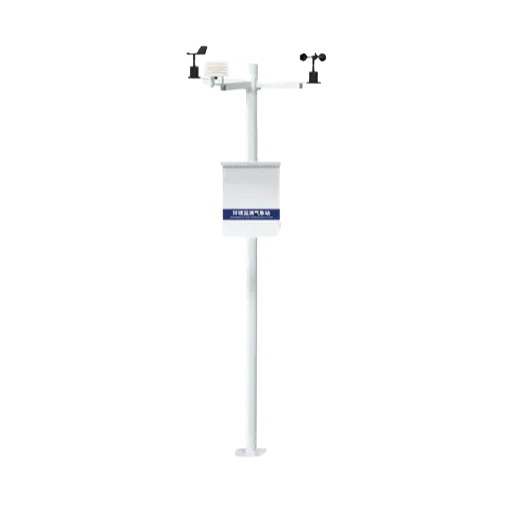
Choose between 220V AC mains power or solar power systems with 60W panels and 20AH batteries for off-grid installations. Wireless connectivity via NB-IoT or 4G networks enables remote monitoring, while RS485 Modbus-RTU interface supports wired system integration with existing infrastructure.
Automatic data transmission to cloud-based monitoring software enables real-time data visualization, historical trend analysis, and multi-site management through web platforms and mobile apps. Configurable alert thresholds trigger instant notification via push, email, or SMS when parameters exceed limits.
Our Environmental Monitoring Station Models
We offer diverse environmental monitoring station configurations tailored to specific industry requirements. Each model features customizable sensor packages, power options, and communication capabilities to meet your unique monitoring needs.
Environmental Monitoring Meteorological Station
Benefits of Using Environmental Monitoring Station
Our environmental monitoring systems provide key operational, financial, and compliance benefits for any business. By collecting and analyzing environmental data, our solutions help you make better decisions, reduce risks, and manage resources more effectively.
Detailed Technical Specifications
| Category | Basic Model |
|---|---|
| Power Supply Method | AC 220V Power Supply / Solar 12V DC Power Supply |
| Voltage Range | 220V AC Power Supply System / 9~30VDC |
| Solar Subsystem | Photovoltaic Battery 20AH Output 12V, 60W Monocrystalline Silicon Solar Panel (High Efficiency, Full Wattage) |
| Wireless Communication Method | NB-IoT, 4G |
| Wired Communication Interface | RS485 |
| Wired Communication Protocol | Modbus-RTU |
| Equipment Support | 3 meters, 114mm to 76mm Segmented, 2mm Wall Thickness High-Strength Pole |
| LED Display | Outdoor LED Plug-in Light Screen, 960x480mm, 6x3 Chinese Character Dot Matrix Display |
| Operating Environment | -20~65℃, 0%~100%RH |
Uses and Applications of Environmental Monitoring Station
Environmental monitoring stations are versatile systems used across many industries. They protect infrastructure, ensure regulatory compliance, and support research by collecting accurate environmental data in any setting.
Industrial and Manufacturing Facilities
Monitor temperature, humidity, air quality, and emissions in production environments to ensure product quality, worker safety, and environmental compliance. Protect sensitive manufacturing processes, warehouses, and cleanroom facilities from adverse environmental conditions that compromise operations.
Agriculture and Smart Farming
Track microclimate conditions, soil moisture, temperature, and nutrient levels to optimize irrigation, fertilization, and crop management. Enable precision agriculture practices that maximize yields, reduce resource consumption, and support sustainable farming through data-driven cultivation decisions.
Construction Site Monitoring
Ensure compliance with dust, noise, and environmental regulations during construction projects. Real-time monitoring enables immediate response to exceeding thresholds, protecting surrounding communities while maintaining project schedules and avoiding regulatory penalties or work stoppages.
Research and Educational Institutions
Support environmental research, meteorological studies, and educational programs with accurate long-term data collection. Campus weather stations provide valuable learning opportunities while contributing to climate research, air quality studies, and environmental science curriculum development.
Positive Displacement Water Meters: How They Work
A worn positive displacement water meter doesn’t fail. It keeps turning, keeps billing, and quietly under-reports. A burst main gets…
Choosing a 4-20 mA Signal Isolator for Pressure Transmitters: Ground Loops and Active/Passive Inputs
Choose a 4-20 mA signal isolator by matching the power roles on both sides, the required isolation boundaries, and each…
NAMUR NE43 for Pressure Transmitters: Fault Current vs Measurement Saturation
NAMUR NE43 separates failure signals from pressure readings in an analog current loop. At saturation, the transmitter has reached its…
Maintenance and Care for Environmental Monitoring Station
Inspect sensors monthly for debris, dust accumulation, or physical damage. Clean temperature and humidity sensors with soft cloth, remove particle buildup from air quality sensors, and verify wind sensors rotate freely without obstruction.
Perform annual calibration verification using certified reference standards to maintain measurement accuracy. Replace sensors approaching end-of-life specifications and maintain detailed calibration records for regulatory compliance and quality assurance documentation requirements.
Regularly update monitoring software and firmware to access latest features and security improvements. Verify cloud connectivity, review alert configurations, backup historical data periodically, and test notification systems to ensure reliable operation during critical events.



Why Choss Our Environmental Monitoring Station
Our environmental monitoring stations combine proven reliability, advanced technology, and comprehensive support to deliver superior value for international business buyers. With decades of manufacturing expertise and hundreds of successful global deployments, we provide monitoring solutions that exceed expectations.
Frequently Asked Questions (FAQs)
Choosing the right environmental monitoring system requires careful thought. Here are answers to common questions from international business buyers to help you decide.
01
01
Our environmental monitoring stations can monitor 30+ parameters including temperature (-40 to 80°C), humidity (0-100%RH), atmospheric pressure, wind speed and direction, rainfall, PM2.5/PM10 particulate matter, gaseous pollutants (SO2, NO2, CO, O3, CO2), noise levels, illuminance, and soil conditions (temperature, moisture, pH). Each system can be customized with the specific sensor combination required for your application.
02
02
We offer two power configurations: AC 220V mains power for grid-connected locations, and solar power systems featuring 60W monocrystalline silicon panels with 20AH battery banks providing 12V DC output. The solar option includes intelligent power management ensuring continuous operation with 7-14 days battery autonomy, making it ideal for remote monitoring locations without electrical infrastructure.
03
03
Data transmission is available through multiple methods: wireless connectivity via NB-IoT or 4G networks for remote monitoring applications, and wired RS485 interface using Modbus-RTU protocol for integration with existing industrial control systems. All data is automatically transmitted to cloud platforms for real-time monitoring, analysis, and multi-site management capabilities.
04
04
Our sensors meet or exceed international standards with accuracies including ±0.8°C for temperature, ±5% for humidity, ±10% for PM2.5/PM10 (at ≥100μg/m³), and ±3.5%FS for SO2/NO2. Each sensor is factory-calibrated with NIST-traceable standards and includes calibration certificates. We recommend annual calibration verification to maintain optimal accuracy for critical applications.
05
05
Yes, our environmental monitoring stations are engineered for harsh outdoor environments with operating temperature range from -20°C to 65°C and humidity tolerance from 0% to 100%RH. The high-strength carbon steel pole with 2mm wall thickness, corrosion-resistant coatings, and IP65-rated weatherproof enclosures ensure reliable continuous operation in extreme conditions including high winds, heavy precipitation, and temperature extremes.
06
06
The system features configurable multi-level alert functionality with customizable thresholds for any monitored parameter. Alerts are delivered through multiple channels including mobile push notifications, email, SMS text messages, and integration APIs for connection to security systems or building management platforms. Alert escalation chains ensure critical conditions receive immediate attention.
07
07
Yes, our monitoring systems support flexible integration through multiple methods: RS485 Modbus-RTU interface for wired industrial systems, RESTful APIs for cloud platform integration, and webhook-based alerts for connection to third-party systems. The open architecture enables seamless system integration with building management systems, SCADA platforms, and enterprise environment monitoring networks.
