
Fan Coil Control Valve: Advanced Control Solutions for Hydronic HVAC SystemsUnderstanding Fan Coil Unit Control Valve Technology
Fan coil control valves are vital for precise temperature regulation and energy efficiency in commercial HVAC systems. By managing the flow of hot or chilled water, they offer reliable, high-performance climate control for individual zones.


Features of Fan Coil Control Valve
Modern fan coil control valves incorporate advanced engineering features that deliver superior performance, reliability, and energy efficiency for commercial HVAC applications. These sophisticated components combine precision manufacturing with intelligent control capabilities to meet the demanding requirements of international building projects.
The valve automatically adjusts opening position based on real-time feedback from room temperature sensors, maintaining setpoints within ±0.5℃ accuracy. This precise control eliminates temperature fluctuations and ensures consistent occupant comfort across all operating conditions.
Electric actuators respond to thermostat commands within 2-5 seconds, quickly adjusting valve position to match changing thermal loads. This fast reaction time prevents temperature lag during sudden occupancy changes or weather transitions, maintaining optimal comfort levels continuously.
By preventing excessive hot or chilled water flow to terminal units, the control valve reduces HVAC system energy consumption by 15-30%. The intelligent flow modulation minimizes pump operation costs and decreases primary equipment runtime, delivering measurable utility cost reductions.
Built-in protection features including freeze prevention and overflow safeguards extend operational life beyond 50,000-100,000 cycles. Premium materials and robust construction ensure reliable performance in demanding commercial environments, reducing maintenance frequency and replacement costs.
Our Fan Coil Control Valve Models
As a leading manufacturer and supplier of hydronic control solutions, we offer a comprehensive range of fan coil control valves engineered to meet diverse project requirements across international markets.
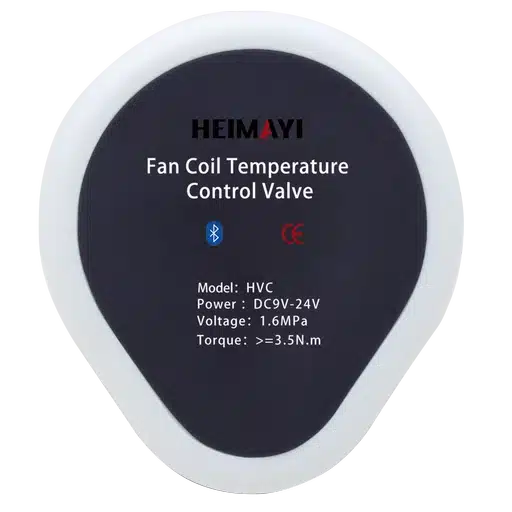
Fan Coil Temperature Control Valve
How Choosing the Right Fan Coil Control Valve
Selecting the appropriate control valve for your fan coil unit installation is a critical decision that impacts system performance, energy efficiency, and long-term operational costs. A well-matched valve ensures optimal temperature control, minimizes energy waste, and reduces maintenance requirements throughout the equipment lifecycle.
Detailed Technical Specifications
| Specification | Technical Parameters |
|---|---|
| Working Pressure | 1.6 MPa (standard type), 2.5 MPa (high-pressure type) |
| Valve Body Material | Brass (H59-1), Stainless Steel (304) |
| Leakage Rate | ≤0.01% Kv value (soft seal), ≤0.1% Kv value (hard seal) |
| Power Supply Voltage | AC220V±10%, DC24V±5% |
| Driving Power | ≤10W (operating), ≤0.1W (static) |
| Operating Life | ≥50,000 cycles (two-way valve), ≥100,000 cycles (ball valve) |
| Communication Method | RS485 |
| Control Accuracy | ±0.5℃ |
| Operating Temperature | Valve: 5-120℃, Actuator: -10-50℃ |
| Protection Rating | IP54 |
| Water Temperature | 0-95℃ |
Uses and Applications of Fan Coil Control Valve
Fan coil control valves serve as essential components across diverse commercial, institutional, and residential HVAC installations worldwide.
Commercial Office Buildings
Fan coil valves provide individualized temperature control for open offices, conference rooms, and perimeter zones. They enable energy savings through occupancy-based scheduling while maintaining comfort during business hours, making them ideal for corporate headquarters, business centers, and co-working spaces seeking efficient operations.
Hospitality and Hotels
Guest room climate control relies on fan coil control valves to deliver personalized comfort while minimizing energy waste in unoccupied rooms. These valves integrate seamlessly with hotel management systems for automated temperature adjustment, ensuring guest satisfaction while reducing operational costs across properties of all sizes.
Healthcare Facilities
Hospitals and medical centers utilize control valves for precise temperature maintenance in patient rooms, operating theaters, and laboratory spaces. The reliable performance and accurate temperature control ensure compliance with healthcare standards while supporting patient recovery and staff productivity in critical care environments.
Educational Institutions
Schools, universities, and training facilities depend on fan coil valves for classrooms, lecture halls, dormitories, and administrative buildings. These systems adapt to varying occupancy patterns throughout the day, providing comfortable learning environments while achieving significant energy savings during unoccupied periods and holiday breaks.
Positive Displacement Water Meters: How They Work
A worn positive displacement water meter doesn’t fail. It keeps turning, keeps billing, and quietly under-reports. A burst main gets…
Choosing a 4-20 mA Signal Isolator for Pressure Transmitters: Ground Loops and Active/Passive Inputs
Choose a 4-20 mA signal isolator by matching the power roles on both sides, the required isolation boundaries, and each…
NAMUR NE43 for Pressure Transmitters: Fault Current vs Measurement Saturation
NAMUR NE43 separates failure signals from pressure readings in an analog current loop. At saturation, the transmitter has reached its…
Maintenance and Troubleshooting Guidelines
Verify actuator operation through manual override or system command, observing smooth movement through full stroke without binding or unusual noise. Check for external leakage around valve body connections and gland packing. Inspect electrical terminations for tightness and corrosion.
Remove and clean strainers, inspecting for excessive sediment accumulation that might indicate system water quality issues requiring treatment. Verify control loop performance by comparing actual zone temperatures against setpoints across various load conditions. Test emergency positioning functions (normally closed or normally open failsafe behavior).
Consider valve removal and internal inspection for applications in harsh water conditions or high-cycle-count installations. Examine valve seats for erosion or scaling, replace sealing elements as needed, and verify pressure ratings remain adequate for system modifications. Update actuator firmware if applicable to ensure compatibility with evolving BAS protocols.
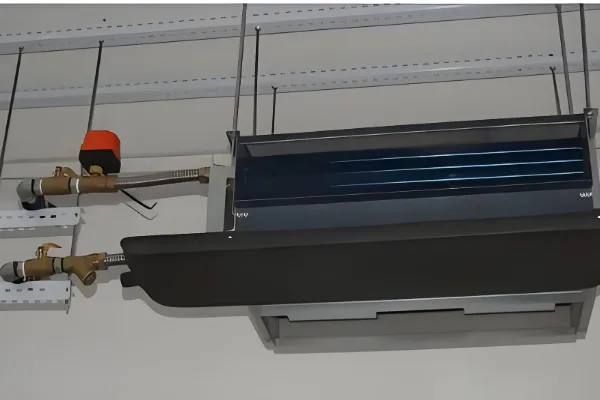




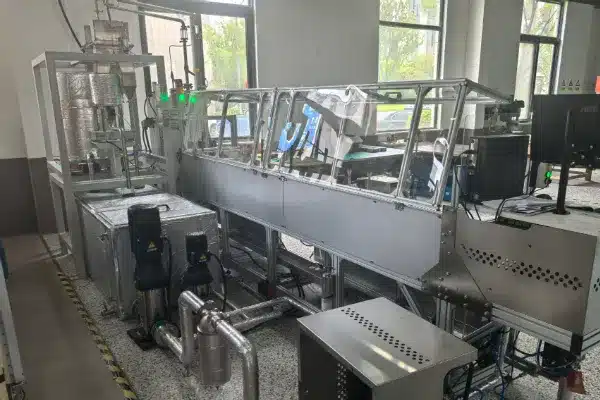
Why Choose Our Fan Coil Control Valves
We combine advanced manufacturing technology with strict quality inspection standards to ensure every valve meets international performance requirements. With extensive export experience, prompt delivery schedules, and dedicated after-sales service, we provide reliable HVAC solutions that exceed customer expectations across global markets.
Frequently Asked Questions (FAQs)
This comprehensive FAQ section addresses the most common inquiries from HVAC contractors, mechanical engineers, and procurement professionals to support informed purchasing decisions.
01
01
Calculate required flow rate using the formula: Flow (m³/h) = Coil Capacity (kW) ÷ [Water Density (kg/m³) × Specific Heat (kJ/kg·K) × Temperature Difference (K)]. For a 5kW cooling coil with 5°C ΔT, required flow is approximately 0.86 m³/h. Select valve nominal diameter (DN15/DN20/DN25) with Kv value that delivers design flow at available differential pressure, typically avoiding valve authority below 0.3.
02
02
Normally closed valves close completely when power is lost, preventing uncontrolled heating or cooling—ideal for energy conservation and safety. Normally open valves remain open during power failure, maintaining flow for freeze protection in heating systems or emergency cooling scenarios. Selection depends on fail-safe requirements, with normally closed being most common for commercial comfort applications.
03
03
Our fan coil control valves support RS485 communication and are compatible with major BAS protocols including BACnet, Modbus RTU, and proprietary systems from manufacturers like Belimo, Honeywell, Johnson Controls, and Siemens. We provide protocol conversion modules when needed and can supply stand-alone actuators for simple on/off or 0-10V analog control without BAS integration.
04
04
Quarterly visual inspections checking for leaks and verifying actuator operation suffice for most installations. Annually, inspect and clean upstream strainers, verify control loop performance, and test fail-safe operation. Every 3-5 years in harsh water conditions, consider removing valves for internal inspection and seal replacement. Proper water treatment and strainer maintenance significantly extend valve service life beyond rated cycle counts.
05
05
First verify actuator receives correct control signals and moves through full stroke. Check system differential pressure at valve location meets minimum requirements (typically 20-50 kPa). Inspect upstream strainers for blockage restricting flow. Verify coil isn’t fouled or air-bound. If valve cycles rapidly (hunting), adjust controller PID parameters or increase deadband. Persistent issues may indicate undersized valve, inadequate system pressure, or failed actuator requiring replacement.
06
06
Yes, our multilingual engineering team offers comprehensive pre-sales support including valve sizing calculations, system design review, CAD drawing packages, and BAS integration guidance. We analyze your project specifications, coil capacities, water temperatures, and available system pressure to recommend optimal valve configurations. Post-purchase support includes commissioning assistance, troubleshooting guidance, and spare parts identification throughout the equipment lifecycle.
