
Pressure Transmitters & Sensors – Industrial & HVACIndustrial & HVAC Solutions for Precision Measurement & Control
Our advanced pressure transmitters and sensors deliver unparalleled accuracy and reliability for industrial processes and HVAC systems. With cutting-edge IIoT connectivity, proven piezoresistive technology, and certifications from leading international standards bodies, our solutions help you optimize efficiency, ensure safety, and reduce operational costs across demanding environments.

Benefits of pressure transmitter
Our pressure transmitters convert pressure measurements from liquids, gases, and steam into precise electrical signals for monitoring and control. Utilizing advanced piezoresistive sensor technology, our instruments provide stable, accurate, and repeatable measurements across a wide range of industrial applications.
Reference accuracy up to ±0.05% with industry-leading long-term stability of ±0.1% over 5 years, ensuring consistent performance throughout the product lifecycle.
316L stainless steel wetted parts, IP65-IP69K ingress protection, and monolithic sensor design eliminate potential leak paths for maximum durability.

Full temperature compensation from -40°C to +85°C ensures stable accuracy year-round, with media temperature capability up to +200°C for extreme applications.
Multiple output options including 4-20mA HART, 0-10V DC, Modbus, and wireless protocols enable seamless integration with modern IIoT and Industry 4.0 systems.
Our Pressure Transmitters & Sensors
Selecting the right type is vital for achieving precise pressure measurement and ensuring the best outcomes in industrial processes.
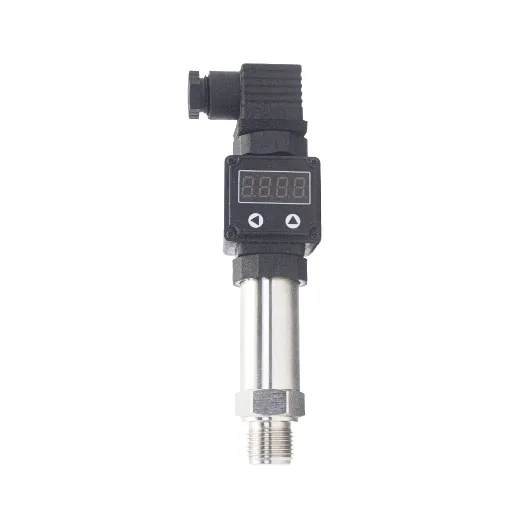
HPT Series Husman Type Pressure Transmitter

HPT Series Intelligent Pressure Transmitter
Why Choose Our Pressure Transmitters?
We’ve Been at The Forefront of Pressure Measurement Technology, Delivering Innovative Solutions that Set Industry Standards for Accuracy, Reliability, and Performance.
Detailed Technical Specifications
| Parameter | Details |
|---|---|
| Measurement Type | Gauge pressure, Absolute pressure, Differential pressure |
| Measuring Range | -0.1 MPa to 100 MPa (customizable) |
| Accuracy | ±0.075% FS to ±0.5% FS (typical: ±0.1% FS, ±0.25% FS) |
| Long-term Stability | ±0.1% FS/year |
| Process Temperature | -40°C to +125°C (standard), -196°C to +200°C (customized) |
| Ambient Temperature | -40°C to +85°C |
| Overload Capacity | 1.5 to 3 times rated pressure |
| Response Time | ≤1 ms (fastest) |
| Output Signal | 4-20 mA (2-wire), 0-10/20 mA (3-wire), 0/1-5/10 V (3-wire), RS485 |
| Communication Protocol | HART, Modbus RTU |
| Power Supply | 24V DC |
| Load Resistance | ≤(U-15)/0.02Ω for current output, >5kΩ for voltage output |
| Wetted Material | 316L stainless steel, Hastelloy C-276, Ceramic (optional) |
| Housing Material | Stainless steel |
| Seal Type | Fluorine rubber O-ring or fully welded |
| Protection Rating | IP65 (connector type), IP67/IP68 (cable type) |
| Explosion-proof Rating | ExdIICT6 Ga, Ex iaIICT6 Ga (optional) |
| Process Media | Gas, liquid, oil, and other media compatible with wetted materials |
Industry Applications & Solutions
Our Pressure Transmitters Are Engineered for Diverse Industrial Environments, from Harsh Chemical Processing to Precision Pharmaceutical Manufacturing. Each Application Benefits from Our Proven Technology and Customizable Configurations.
Oil & Gas Industry
Pipeline Monitoring, Drilling Operations, Offshore Platforms, Refinery Processes, Storage Tank Management,explosion-Proof Certifications (atex, Iec Ex), High-Pressure Capability up To 1600 Bar, Corrosion-Resistant Materials for Sour Gas, Remote Monitoring via Wireless Protocols, Prevents Leaks and Optimizes Flow.
Chemical & Petrochemical
Reactor Pressure Control, Distillation Columns, Storage Vessels, Aggressive Media Handling, Batch Processing.Superior Chemical Resistance with Tantalum/hastelloy Options, Wide Temperature Compensation, High Accuracy for Quality Control, Fda/gmp Compliance for Specialty Chemicals.
Pharmaceutical & Biotech
Sterile Processing, Clean Room Monitoring, Bioreactor Pressure Control, Filtration Systems, Aseptic Filling,3-A and Ehedg Certified for Sanitary Applications, Electropolished 316 L Surfaces, Flush Diaphragm Designs Eliminate Dead Spaces, Easy Cip/sip Validation.
Water & Wastewater Treatment
Municipal Water Distribution, Filtration Monitoring, Pump Stations, Pipeline Leak Detection, Level Measurement in Tanks,submersible Versions (ip68), Corrosion Resistance for Chlorinated Water, Long-Term Stability Reduces Maintenance, 4-20m a Signals for Long-Distance Transmission.
Positive Displacement Water Meters: How They Work
A worn positive displacement water meter doesn’t fail. It keeps turning, keeps billing, and quietly under-reports. A burst main gets…
Choosing a 4-20 mA Signal Isolator for Pressure Transmitters: Ground Loops and Active/Passive Inputs
Choose a 4-20 mA signal isolator by matching the power roles on both sides, the required isolation boundaries, and each…
NAMUR NE43 for Pressure Transmitters: Fault Current vs Measurement Saturation
NAMUR NE43 separates failure signals from pressure readings in an analog current loop. At saturation, the transmitter has reached its…
Warranty and Customer Support of Room Temperature Controller
Most Room Temperature Controllers Come with A 1 to 3-Year Warranty, Depending on The Manufacturer and Model. This Warranty Typically Covers Manufacturing Defects, Faulty Components, and Performance Issues Under Normal Usage Conditions.
Algorithms Track Calibration Drift Over Time and Predict when Recalibration Will Be Needed. Extends Verification Intervals and Ensures Measurement Accuracy Throughout Service Life.
Manufacturers Often Provide 24/7 Customer Support via Phone, Email, or Live Chat to Assist with Installation, Troubleshooting, and Operational Queries.
For Complex Issues, Some Brands Offer On-Site Support or Send Technicians to Resolve Problems Directly at The Customer’s Location.


Choosing the Right Pressure Transmitter
Our Comprehensive Range of Pressure Transmitters Covers Every Application from General Industrial to The Most Demanding Specialized Requirements. when Selecting a Pressure Transmitter for Your Industrial Applications, Several Factors Must Be Considered to Ensure Optimal Performance and Reliability.
Frequently Asked Questions (fa Qs)
Our Dedicated Team Is Ready to Assist You with Any Questions or Specific Requirements You May Have.
01
01
A Pressure Transmitter Is a Device that Converts Pressure Measurements Into an Electrical Output Signal. It Operates on Various Principles, Such as Piezoresistive or Capacitive Sensing Technologies, to Provide Accurate Readings. by Measuring Differential Pressure, These Devices Can Monitor Both Gauge and Absolute Pressure Levels, Making Them Suitable for A Wide Range of Industrial Applications.
02
02
While Pressure Gauges Provide a Visual Representation of Pressure, Pressure Transmitters Offer an Electrical Output that Can Be Integrated Into Control Systems. This Allows for Remote Monitoring and Automation, Improving Overall Operational Efficiency. Additionally, Transmitters Are Often Designed for Use in Harsh Working Environments, Whereas Gauges Are Typically Used for Direct Reading in Less Demanding Conditions.
03
03
Industrial Pressure Transmitters Are Extensively Used in Various Fields, Including Hydraulic Systems, Oil and Gas, Water Treatment, and Machine Building. They Are Crucial for Process Monitoring and Control, Ensuring Safety and Efficiency in Operations. with A Variety of Applications, These Transmitters Can Measure Different Types of Pressure, Including High Pressure and Differential Pressure.
04
04
Calibrating a Pressure Transducer Involves Comparing the Output Signal Against a Known Standard Pressure Value. This Process May Require Specialized Equipment and Procedures, Ensuring that The Measured Value Aligns with The Actual Pressure. Regular Calibration Is Essential to Maintain Accuracy and Reliability in Pressure Measurement Technology.
05
05
Pressure Transmitters Are Often Constructed from Durable Materials Like 316 L Stainless Steel, Which Provides Resistance to Corrosion and Ensures Longevity in Harsh Environments. the Choice of Materials Can Significantly Impact the Performance and Reliability of The Transmitter, Especially in High Overpressure Situations or When Dealing with Aggressive Fluids.
06
06
Yes, Many Pressure Transmitters Are Designed to Operate Effectively in High-Temperature Environments. Temperature Products Within These Transmitters Can Withstand Extreme Conditions, Ensuring Accurate Pressure Readings Even when The Operating Temperature Fluctuates. This Capability Is Essential for Processes that Involve Both Pressure and Temperature Measurement.
07
07
A Programmable Logic Controller (plc) Can Interface with Pressure Transmitters to Automate Process Control. by Receiving Data from The Transmitter, the Plc Can Make Real-Time Adjustments to Systems, Enhancing Control Over Pressure Levels and Improving Operational Efficiency. This Integration Is Vital for Modern Industrial Operations, Enabling Better Monitoring and Response to Changing Conditions.
